
 EN
EN
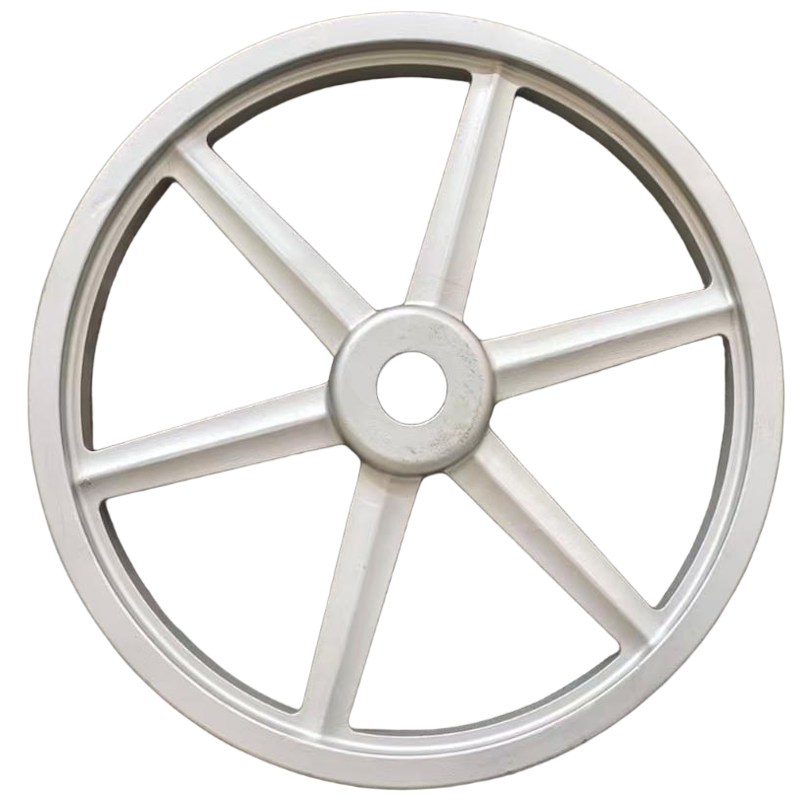
When equipment operates in seawater, tidal zones, or salt-laden offshore environments, material selection becomes one of the most consequential engineering decisions a procurement or design team will make. The question is not just about upfront cost — it is about how long critical components will perform reliably before maintenance cycles, replacements, or catastrophic failures begin to accumulate. marine grade stainless steel castings have emerged as a serious answer to this question, offering a combination of corrosion resistance, mechanical strength, and geometric flexibility that other material classes struggle to match in truly demanding marine environments.
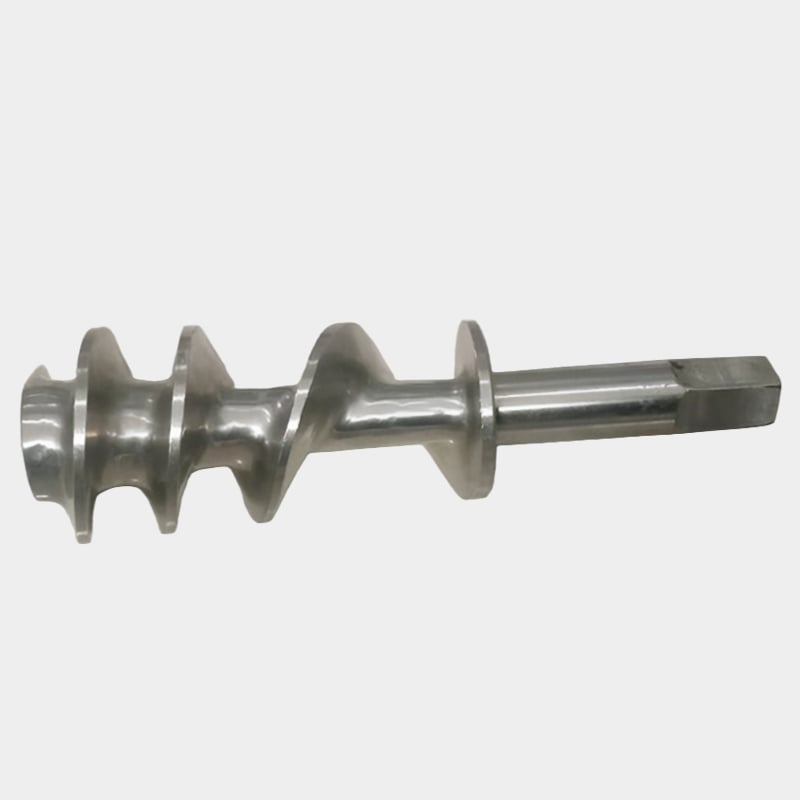
Understanding whether marine grade stainless steel castings can genuinely extend service life requires a clear-eyed look at the failure mechanisms at play in harsh marine conditions, the metallurgical properties that defend against those mechanisms, and the practical engineering contexts where this material class delivers measurable results. This article examines all three dimensions to give engineers, procurement professionals, and fleet operators the decision-useful information they need.
Understanding the Threat Landscape in Harsh Marine Environments
Why Marine Environments Are Uniquely Aggressive
Marine environments do not simply expose metal to water. They expose metal to a complex, dynamic chemical and physical system that attacks materials through multiple simultaneous pathways. Seawater contains dissolved chloride ions at concentrations that aggressively penetrate passive oxide layers, initiating pitting corrosion in materials that would otherwise resist general surface corrosion. Add to this the presence of dissolved oxygen, biological fouling organisms, and fluctuating temperatures, and the environment becomes exceptionally hostile to ordinary alloys.
Mechanical stressors compound the chemical attack. Components like propellers, pump housings, valve bodies, and structural brackets face constant hydrodynamic loading, vibration, and cavitation impacts. When cyclic mechanical stress combines with chloride-induced corrosion, stress corrosion cracking becomes a serious risk, capable of reducing the functional life of a component far below design expectations. This is why specifying marine grade stainless steel castings — rather than generic stainless or carbon steel — is not a precautionary luxury but an engineering necessity in many offshore and marine applications.
The Role of Chloride-Induced Corrosion in Component Failure
Chloride ions are the primary chemical villain in marine corrosion. They penetrate the protective passive film that forms naturally on stainless steel, particularly at grain boundaries, surface defects, or areas of stagnant flow. Once the passive film is breached locally, a self-reinforcing pit develops that can propagate through a casting wall with relative speed, especially at elevated temperatures or under mechanical load.
Standard austenitic grades like 304 stainless steel are particularly vulnerable to this mechanism in saltwater. Marine grade stainless steel castings are specifically formulated to resist chloride-induced pitting through higher molybdenum content, controlled nitrogen additions, and refined microstructures achieved during the casting and heat treatment process. The difference in real-world chloride resistance between a standard stainless casting and a properly specified marine grade stainless steel casting can translate directly into years of additional service before the first maintenance intervention is required.
Metallurgical Foundations That Enable Extended Service Life
Molybdenum and Pitting Resistance Equivalent
The corrosion performance of any stainless steel alloy can be estimated using the Pitting Resistance Equivalent Number, or PREN, which accounts for the contributions of chromium, molybdenum, and nitrogen to chloride resistance. Marine grade stainless steel castings are typically produced from alloys with PREN values well above 30, with duplex and super duplex grades reaching values above 40. This elevated PREN is not an academic number — it reflects the actual chemical barrier the alloy presents to chloride attack in service.
Molybdenum, typically present at 2.5% to 6% in marine-suitable grades, stabilizes the passive film by forming molybdate ions that preferentially migrate to pit initiation sites and suppress further dissolution. This mechanism is active continuously while the alloy is in service, meaning that marine grade stainless steel castings maintain their protective chemistry throughout their service life rather than relying on a coating that may degrade. For components that are difficult to inspect, such as submerged pump impellers or propeller shafts, this inherent self-protection is a critical reliability advantage.
Duplex Microstructures and Stress Corrosion Resistance
One of the most significant limitations of standard austenitic stainless steels in marine service is their susceptibility to chloride stress corrosion cracking. When tensile stresses — residual from fabrication or applied in service — combine with chloride exposure and temperatures above roughly 60°C, austenitic alloys can fail suddenly and with little warning. Marine grade stainless steel castings produced from duplex or super duplex alloys overcome this limitation through their dual-phase microstructure, which combines austenite and ferrite in roughly equal proportions.
The ferrite phase interrupts crack propagation pathways that would otherwise propagate quickly through a purely austenitic matrix. The result is a material that maintains high tensile strength — typically 450 to 550 MPa yield for standard duplex grades — while offering dramatically improved resistance to stress corrosion cracking in chloride-rich environments. For components operating under sustained mechanical load in warm seawater, this property is not merely a bonus; it is a prerequisite for realistic service life extension. Specifying marine grade stainless steel castings with duplex metallurgy is one of the clearest ways engineers can add years to a component's functional life.
Application Contexts Where Marine Grade Stainless Steel Castings Deliver Measurable Results
Propulsion and Hydrodynamic Components
Marine propulsion systems represent one of the most demanding application contexts for cast metal components. Propeller blades, impellers, and diffuser housings must simultaneously withstand continuous hydrodynamic load, cavitation erosion, biofouling, and seawater immersion — often without dry-dock inspection for extended operational periods. In this environment, marine grade stainless steel castings outperform traditional bronze or cast iron alternatives in several important dimensions.
The higher hardness and tensile strength of duplex stainless castings provide better resistance to cavitation erosion, a failure mode that physically removes metal from blade surfaces through the collapse of vapor bubbles at high pressure. Bronze alloys, while traditionally favored for propellers, can suffer from dezincification and selective phase corrosion in aggressive seawater chemistries. Marine grade stainless steel castings avoid these composition-specific failure modes and provide a more predictable, longer-lasting service profile for operators who prioritize reliability over first-cost optimization.
Valve Bodies, Pump Housings, and Subsea Fittings
Below the waterline, seawater-handling components face the combined challenge of internal erosion from flowing seawater, external corrosion from seawater immersion, and the mechanical demands of pressure cycling. Valve bodies and pump casings produced as marine grade stainless steel castings have demonstrated significant service life advantages over carbon steel equivalents that depend on coatings or cathodic protection systems, both of which require regular maintenance and can fail locally.
Investment casting and sand casting processes allow marine grade stainless steel castings to be produced with complex internal geometries, tight dimensional tolerances, and near-net-shape profiles that reduce the need for extensive post-casting machining. This geometric flexibility means that engineers are not forced to compromise on hydraulic efficiency or wall thickness distribution in order to accommodate material constraints. The component can be designed for optimum hydraulic performance, and the casting process can faithfully reproduce that design in a material that will sustain it throughout the component's intended service life.
Offshore Structural and Fastening Components
Structural brackets, cleats, chain guides, and fastening assemblies in offshore and coastal structures face long-term seawater immersion combined with cyclic mechanical loading from wave action, mooring forces, and thermal expansion cycles. In these applications, corrosion is not merely a surface cosmetic issue — it is a structural integrity concern. Marine grade stainless steel castings used in these roles maintain their cross-sectional area and load-bearing capacity far longer than carbon steel alternatives, even without protective coatings.
The dimensional stability of marine grade stainless steel castings under corrosive exposure also simplifies inspection and maintenance planning. Because corrosion rates are predictable and very low, inspection intervals can be extended compared to carbon steel components, reducing the total lifecycle cost of the installation even when the initial material cost is higher. For offshore operators managing large asset portfolios, this predictability has real financial value beyond the purely technical consideration of service life extension.
Key Engineering Considerations When Selecting Marine Grade Stainless Steel Castings
Grade Selection and Application Temperature
Not all marine grade stainless steel castings are equal in their resistance to specific failure modes. The selection of the appropriate alloy grade must account for the specific chloride concentration of the operating environment, the temperature range of service, the mechanical loading pattern, and whether galvanic coupling with dissimilar metals is likely. For warm tropical seawater applications, super duplex grades with high PREN values are strongly preferred over standard duplex grades, which can be borderline in particularly aggressive conditions.
Temperature is a particularly important variable because the susceptibility of stainless alloys to crevice corrosion and stress corrosion cracking increases significantly above ambient conditions. Marine grade stainless steel castings used in heat exchanger applications or equipment exposed to warm process fluids must be selected with sufficient molybdenum and nitrogen content to maintain adequate corrosion resistance at elevated temperatures. Consulting material corrosion data at the actual anticipated service temperature, rather than at room temperature, is an essential step in ensuring that the service life benefits of marine grade stainless steel castings are actually realized in service.
Casting Quality, Inspection, and Post-Processing
The service life of marine grade stainless steel castings is not determined solely by alloy chemistry. Casting quality — specifically the absence of porosity, shrinkage defects, hot tears, and segregation — has a direct impact on corrosion initiation behavior. Subsurface defects act as stress concentrators and sites of locally degraded chemistry, both of which accelerate corrosion in exactly the high-stress, high-exposure locations most critical to component integrity.
Solution annealing heat treatment after casting is essential for restoring the homogeneous microstructure and uniform passive film formation that the corrosion resistance of marine grade stainless steel castings depends upon. Castings that have not been properly solution annealed retain sensitization zones and sigma phase precipitation that dramatically reduce real-world corrosion performance relative to the base alloy specification. Non-destructive testing using radiography or ultrasonic methods should be specified for critical marine components to confirm internal soundness before installation.
FAQ
What makes a stainless steel casting genuinely marine grade rather than just corrosion resistant?
Marine grade stainless steel castings are distinguished by specific alloy compositions optimized for chloride resistance — primarily through elevated molybdenum content (typically 2.5% or higher) and controlled nitrogen additions — combined with microstructures appropriate for stress corrosion cracking resistance in seawater. Standard 304 stainless steel may resist atmospheric corrosion but is not considered marine grade because it lacks adequate resistance to chloride pitting and crevice corrosion in seawater immersion service.
How much longer can marine grade stainless steel castings last compared to carbon steel in seawater applications?
The service life advantage varies significantly with application conditions, but marine grade stainless steel castings in continuous seawater immersion typically demonstrate corrosion rates orders of magnitude lower than uncoated carbon steel. Where a carbon steel component may require replacement or major refurbishment within three to seven years depending on the severity of the environment, a properly specified and manufactured marine grade stainless steel casting in the same application can provide fifteen to twenty-five years or more of reliable service with minimal maintenance intervention.
Are there conditions under which marine grade stainless steel castings may not perform as expected?
Yes. Marine grade stainless steel castings can underperform in applications involving deep crevices with stagnant seawater, galvanic coupling with less noble metals, or elevated temperature seawater service where the alloy's PREN is marginally adequate for the chloride concentration. Castings that contain significant porosity or that have not been properly heat treated will also not achieve the full corrosion resistance their alloy grade implies. Careful attention to design detail, processing quality, and grade selection is required to realize the full service life potential of marine grade stainless steel castings.
Can marine grade stainless steel castings be used in propeller applications specifically?
Marine grade stainless steel castings are well-suited to propeller applications, offering good resistance to cavitation erosion, chloride corrosion, and the cyclic mechanical loading inherent in propulsion service. Duplex and super duplex stainless grades are particularly favored for small to medium propellers where the combination of high strength, corrosion resistance, and casting flexibility provides engineering advantages over traditional bronze alternatives. Proper casting process control and non-destructive inspection are important for ensuring that propeller castings meet the quality standards required for reliable marine propulsion service.
Table of Contents
- Understanding the Threat Landscape in Harsh Marine Environments
- Metallurgical Foundations That Enable Extended Service Life
- Application Contexts Where Marine Grade Stainless Steel Castings Deliver Measurable Results
- Key Engineering Considerations When Selecting Marine Grade Stainless Steel Castings
-
FAQ
- What makes a stainless steel casting genuinely marine grade rather than just corrosion resistant?
- How much longer can marine grade stainless steel castings last compared to carbon steel in seawater applications?
- Are there conditions under which marine grade stainless steel castings may not perform as expected?
- Can marine grade stainless steel castings be used in propeller applications specifically?