 EN
EN
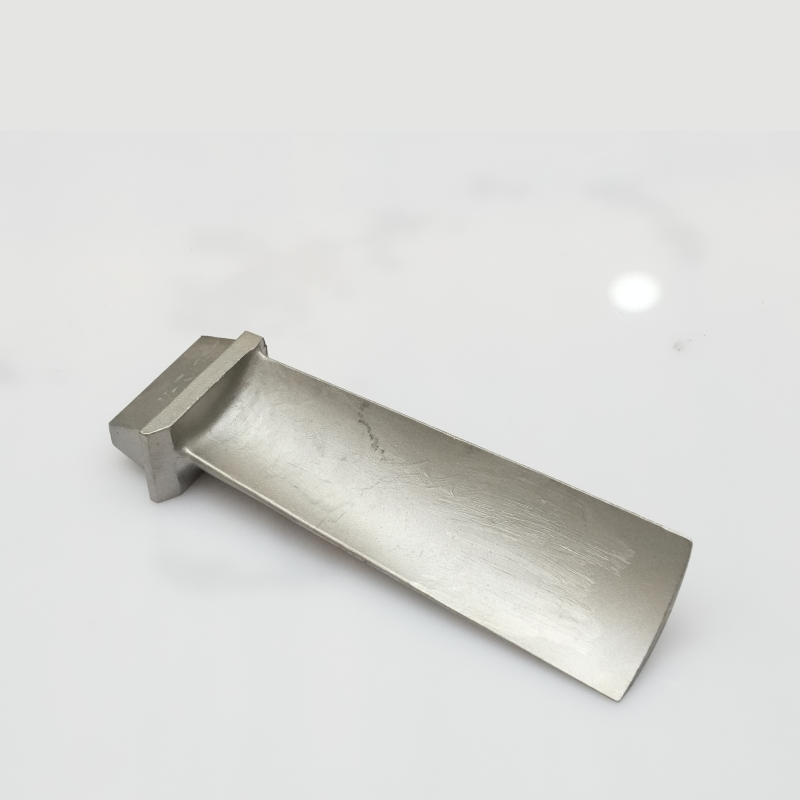
In precision industrial manufacturing, the reliability of a custom investment casting foundry is not a minor operational detail — it is a fundamental requirement that determines part integrity, production timelines, and ultimately, the safety of end-use applications. From aerospace turbine blades and medical implants to high-performance pump housings and automotive components, the industries that depend on investment casting demand nothing less than consistent dimensional accuracy, repeatable metallurgical properties, and a supplier capable of translating complex engineering specifications into flawless metal parts. Understanding what makes a foundry genuinely reliable in this context requires looking beyond marketing claims and examining the technical capabilities, process controls, and quality systems that differentiate capable partners from average vendors.
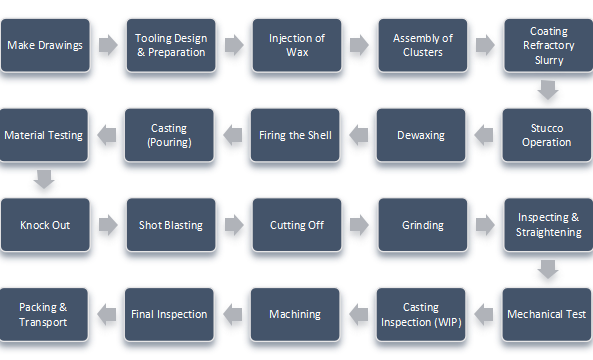
A custom investment casting foundry that serves precision industrial applications operates under significantly higher expectations than a general-purpose metal shop. The process itself — also known as investment casting — involves creating a wax pattern of the desired part, coating it in a ceramic shell, burning out the wax, and pouring molten metal into the resulting cavity. While the fundamental steps appear straightforward, achieving tight tolerances, complex geometries, and superior surface finishes across diverse alloys demands a foundry with disciplined engineering workflows, rigorous inspection protocols, and a deep understanding of how material behavior intersects with design intent. This article explores the specific criteria and capabilities that define a reliable partner for your most demanding industrial casting needs.
Engineering Capability and Design-for-Casting Expertise
Translating Complex Drawings into Manufacturable Wax Patterns
One of the first indicators of a reliable custom investment casting foundry is its ability to engage meaningfully with engineering drawings and design intent from the very beginning of a project. Foundries that simply receive a drawing and proceed without reviewing casting feasibility are more likely to produce parts that require costly rework or fail dimensional inspection. A capable foundry will analyze draft angles, wall thicknesses, core requirements, and gating systems before any tooling is committed, identifying potential casting risks early in the process.
This proactive design-for-manufacturing engagement reduces the likelihood of defects such as shrinkage porosity, cold shuts, and misruns that can compromise structural integrity. When a lost wax method supplier employs experienced metallurgical and process engineers, clients benefit from feedback that optimizes not only castability but also downstream machining and assembly operations. The value of this expertise compound significantly when orders involve complex aerospace or energy components where design changes at a late stage are prohibitively expensive.
Advanced foundries also utilize simulation software to model metal flow and solidification behavior in the mold cavity before committing to physical tooling. This digital rehearsal of the casting process allows engineers to adjust gating locations, modify runner geometry, and predict where thermal gradients might cause shrinkage — all without a single physical trial pour. This capability is a clear marker of technical maturity and contributes directly to the reliability that precision industrial customers expect.
Tooling Precision and Wax Pattern Consistency
The reliability of a lost wax method supplier is deeply rooted in the quality of its tooling. The metal dies used to produce wax patterns must be machined to exacting tolerances because any variation in the wax stage propagates through the ceramic shell and into the final casting. Foundries that invest in high-quality CNC-machined tooling and maintain strict dimensional records of their dies demonstrate a commitment to pattern-to-pattern consistency that is essential for complex industrial parts.
Wax injection parameters — including temperature, pressure, and cooling time — must be tightly controlled and documented. A reliable foundry will have established and validated parameters for each die, ensuring that every wax pattern produced reflects the intended geometry with minimal variation. This level of process discipline at the earliest stage of production is what separates a precision-capable lost wax method supplier from one that simply runs metal and hopes for acceptable results.
Beyond the die itself, pattern assembly and tree configuration are also critical variables. How wax gates and runners are attached, and how many patterns are assembled onto a single ceramic tree, affects the thermal environment experienced by each part during casting. Experienced foundries use data from previous production runs to refine tree configurations, ensuring consistent metal fill and solidification behavior across every part in a batch.
Alloy Range and Metallurgical Control
Breadth of Material Capability for Industrial Diversity
Precision industrial applications span an enormous range of operating environments. A turbine blade subjected to extreme thermal cycling requires different alloy characteristics than a surgical implant component requiring biocompatibility or a valve body exposed to corrosive process fluids. A precision casting company that can work across nickel superalloys, stainless steels, titanium alloys, cobalt-chromium alloys, carbon steels, and aluminum alloys offers its clients the flexibility to source diverse components from a single, trusted partner.
This breadth of material capability is not just a commercial convenience. It also signals that the foundry has invested in multiple furnace systems, appropriate crucibles and refractories, and the metallurgical knowledge to manage the distinct behaviors of different alloy families. Melting superalloys, for example, requires vacuum induction furnaces and precise control over oxygen and nitrogen pickup, while stainless steel pouring demands careful attention to silicon and manganese content to preserve corrosion resistance. A foundry with genuine multi-alloy competence demonstrates the depth of technical infrastructure that reliability requires.
Melt Chemistry Verification and Heat Treatment Discipline
A precision casting company committed to metallurgical reliability verifies melt chemistry through in-process spectrometric analysis before each pour. This step ensures that the alloy composition meets the specified grade requirements and that any deviations — caused by charge material variability, contamination, or melting loss of reactive elements — are identified and corrected before metal enters the mold. Without this verification step, a foundry cannot guarantee that the parts it ships will meet the material certification requirements of demanding industrial standards.
Post-casting heat treatment is equally important. Solution annealing, aging, stress relief, and hot isostatic pressing are common thermal processing steps that transform the as-cast microstructure into one that meets mechanical property requirements. A reliable foundry either performs these operations in-house with calibrated furnaces and documented thermal cycles, or partners with qualified external processors with full traceability. The documentation chain — from melt records and pour logs to heat treatment charts and mechanical test certificates — is what allows a precision casting company to provide the material traceability that aerospace, defense, and medical customers mandate.
Quality Systems and Dimensional Inspection Rigor
Certifications as a Baseline, Not a Ceiling
Industry certifications such as ISO 9001, AS9100, or IATF 16949 provide a baseline framework that indicates a the foundry has implemented documented quality management systems, corrective action procedures, and audit cycles. These certifications are necessary but not sufficient indicators of reliability. What matters more is how deeply quality thinking is embedded into daily production behavior — whether operators and engineers proactively identify and escalate issues rather than simply reacting to customer complaints.
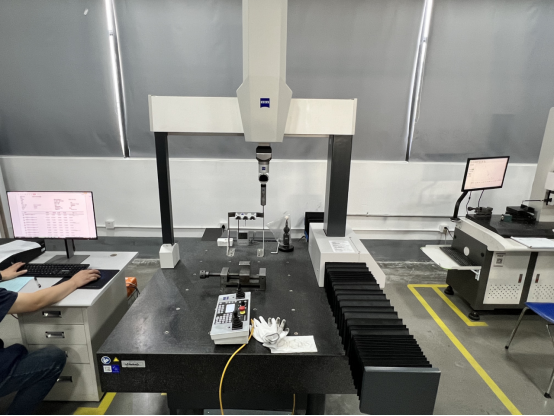
A foundry with a strong quality culture treats every production lot as an opportunity to verify and improve rather than simply fulfill. This manifests in practices such as first-article inspection reports that document dimensional compliance to GD&T callouts, regular calibration of all measurement equipment, and statistical process control charts that track key casting variables over time. When a the foundry can provide first-article inspection documentation with traceable measurement data, it demonstrates that its quality system extends beyond paperwork into actionable production control.
Non-Destructive Testing and Final Release Standards
For applications where casting integrity is safety-critical — turbine blades, structural aerospace parts, medical devices — non-destructive testing is an essential part of the acceptance process. X-ray radiography can reveal internal shrinkage, porosity, or inclusions that are invisible to the naked eye. Fluorescent penetrant inspection identifies surface-breaking cracks and seams. Ultrasonic testing assesses sub-surface integrity in thicker sections. A reliable the foundry will have either in-house NDT capability or tightly managed supplier relationships with accredited testing labs.
The willingness to reject parts that do not meet acceptance criteria — even when delivery pressure is high — is perhaps the most important behavioral marker of foundry reliability. Foundries that ship marginal parts to meet schedule often create far greater disruption downstream when those parts fail in service or are rejected at the customer's incoming inspection. A mature custom investment casting foundryunderstands that a rejected part caught internally is always less costly than a non-conformance discovered after delivery, and its release standards reflect this understanding.
Production Scalability and Process Repeatability
Consistency Across Prototype, Low Volume, and High Volume Production
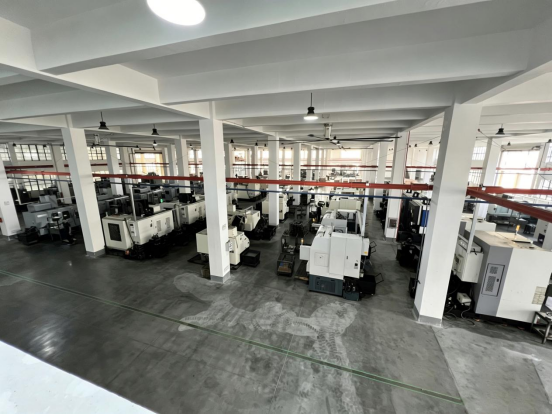
Industrial procurement teams often begin engaging a custom investment casting foundrywith prototype or development quantities, then scale to production volumes as designs are validated. A reliable foundry must be capable of maintaining the same dimensional and metallurgical standards across all production scales — not just in controlled prototype conditions. This requires documented process parameters, robust tooling maintenance schedules, and workforce training systems that transfer casting knowledge from senior technicians to newer operators consistently.
Process repeatability is not an accident. It is the product of disciplined process documentation, structured operator training, and continuous monitoring of key variables. Foundries that rely heavily on individual skill without documented procedures are inherently variable, meaning part quality fluctuates with personnel changes. A precision casting companythat codifies its process knowledge into work instructions, inspection checkpoints, and production monitoring systems creates a stable manufacturing environment where quality outcomes are predictable rather than hopeful.
Lead Time Transparency and Supply Chain Communication
Reliability in precision industrial contexts also means reliability in delivery and communication. A precision casting companythat provides accurate lead time estimates based on current capacity, communicates proactively about potential delays, and maintains buffer inventory for long-lead raw materials demonstrates supply chain discipline that industrial customers deeply value. The ability to provide realistic, data-driven delivery commitments — and then meet them — builds the trust that sustains long-term sourcing relationships.
Foundries that systematically track on-time delivery performance, analyze root causes of delays, and implement corrective actions create a feedback loop that continuously improves schedule reliability. For customers managing complex assembly schedules, knowing that their casting supplier will hit delivery milestones predictably is as important as knowing that the parts will meet dimensional and material specifications. Both dimensions of reliability — quality and delivery — must be actively managed for a custom investment casting foundryto be considered a true precision industrial partner.
Customer Collaboration and Long-Term Partnership Value
Technical Support Throughout the Product Lifecycle
A genuinely reliable precision casting companydoes not simply accept orders and ship parts. It engages as a technical partner from the design stage through the full product lifecycle, providing input on design optimizations, material selection, and process improvements that benefit the customer over time. This collaborative posture means that when a customer encounters a field performance issue or needs to modify a design, the foundry is prepared to contribute engineering knowledge rather than simply waiting for a revised drawing.
Long-term partnership also means that the foundry actively maintains institutional knowledge about a customer's specific parts, processes, and quality requirements. Retained tooling, archived process parameters, historical inspection records, and dedicated engineering contacts all contribute to the continuity that precision industrial customers need. When a custom investment casting foundrybuilds this kind of institutional memory around a customer's product portfolio, it becomes progressively more valuable over time — not just as a vendor, but as an integrated part of the customer's supply chain.
Continuous Improvement as a Cultural Commitment
The precision requirements in industries such as aerospace, energy, and medical devices evolve constantly. Tighter tolerances, new alloy systems, and novel surface finish requirements regularly challenge the capabilities of even experienced foundries. A lost wax method supplierthat demonstrates a commitment to continuous improvement — investing in new equipment, refining ceramic shell systems, adopting advanced simulation tools, and pursuing relevant new certifications — signals that it intends to grow with its customers' needs rather than plateau at its current capability level.
This forward-looking investment orientation distinguishes foundries that will remain reliable partners five and ten years from now from those that will gradually fall behind evolving precision requirements. For industrial procurement teams making long-term sourcing decisions, understanding a foundry's improvement trajectory is just as important as evaluating its current state. A precision casting companythat actively shares data on its improvement initiatives, new capabilities, and quality performance trends is demonstrating the kind of transparency and ambition that underpins enduring supplier reliability.
FAQ
What certifications should a reliable lost wax method supplierhold for aerospace applications?
For aerospace applications, a precision casting companyshould ideally hold AS9100 certification, which incorporates the requirements of ISO 9001 with additional aerospace-specific controls covering design, risk management, and first-article inspection. NADCAP accreditation for special processes such as heat treatment, non-destructive testing, and chemical processing is also highly valued by aerospace prime contractors as it provides independent verification of process discipline. Material test certifications traceable to specific heat numbers and conforming to AMS or ASTM standards are typically required at the part level.
How does a lost wax method suppliercontrol dimensional accuracy across complex part geometries?
Dimensional accuracy in a lost wax method supplieris controlled through a combination of precision tooling, validated wax injection parameters, controlled ceramic shell expansion and contraction properties, and careful calibration of casting simulation models against actual production outcomes. Coordinate measuring machines and optical scanning equipment are used during first-article and ongoing production inspection to verify that parts conform to GD&T specifications. Foundries also account for predictable alloy-specific shrinkage factors when designing tooling, ensuring the final solidified part matches the nominal drawing dimensions.
Can a precision casting companyproduce parts from multiple alloy families under one quality system?
Yes, a capable lost wax method suppliercan process multiple alloy families — including nickel superalloys, stainless steels, titanium, cobalt alloys, and carbon steels — within a single facility, provided it has the appropriate furnace equipment, segregated material handling procedures, and alloy-specific process documentation. Cross-contamination risks between alloy families are managed through dedicated crucibles, material identification systems, and strict raw material segregation protocols. A single quality management system can govern all alloy families as long as alloy-specific work instructions, inspection criteria, and acceptance standards are clearly differentiated within the system.
What is the typical lead time for a new part development at a custom lost wax casting foundry?
Lead times for new part development at a precision casting companyvary depending on part complexity, tooling requirements, alloy type, and the foundry's current workload. Tooling design and fabrication typically represents the longest single step, often ranging from four to ten weeks for moderately complex dies. Once tooling is complete, first-article casting, inspection, and any required dimensional or mechanical property testing can add another two to six weeks. Customers should expect the full new part development cycle to range from eight to sixteen weeks in most cases, with more complex alloys or parts requiring NDE adding additional time. Clear communication with the foundry during the development phase is essential for accurate scheduling.
Table of Contents
- Engineering Capability and Design-for-Casting Expertise
- Alloy Range and Metallurgical Control
- Quality Systems and Dimensional Inspection Rigor
- Production Scalability and Process Repeatability
- Customer Collaboration and Long-Term Partnership Value
-
FAQ
- What certifications should a reliable lost wax method supplierhold for aerospace applications?
- How does a lost wax method suppliercontrol dimensional accuracy across complex part geometries?
- Can a precision casting companyproduce parts from multiple alloy families under one quality system?
- What is the typical lead time for a new part development at a custom lost wax casting foundry?