 EN
EN

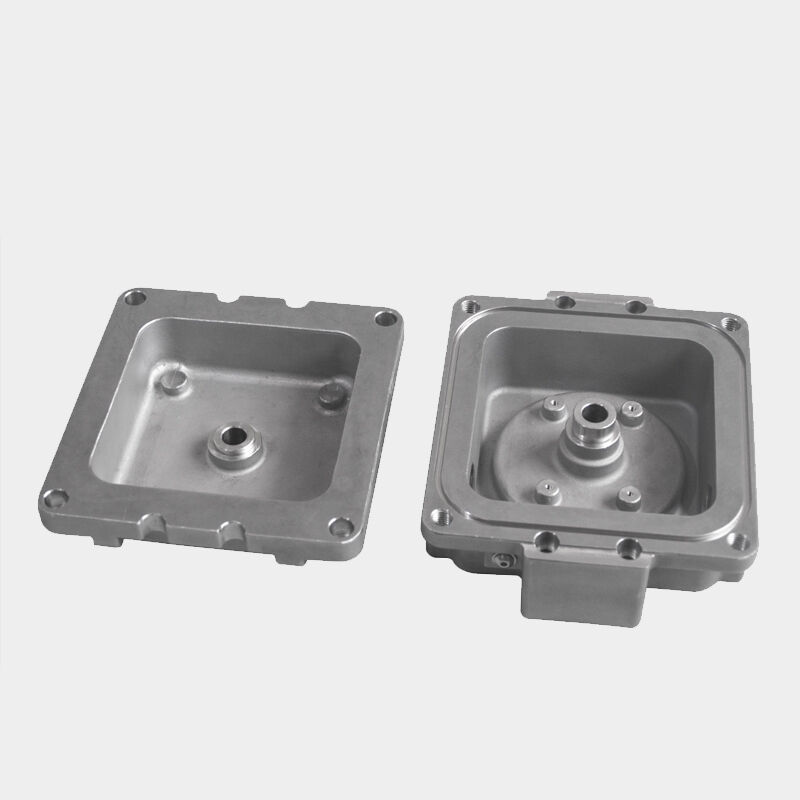
In today's interconnected industrial landscape, sourcing complex metal components across international borders presents a formidable quality challenge. the manufacturer must navigate an intricate web of raw material sourcing, multi-stage production controls, logistics variables, and customer-specific tolerances — all while maintaining the dimensional and metallurgical consistency that high-performance industries demand. The question of how consistent quality is actually achieved across global supply chains is not merely academic; it has direct implications for aerospace safety margins, energy system reliability, and medical device integrity.
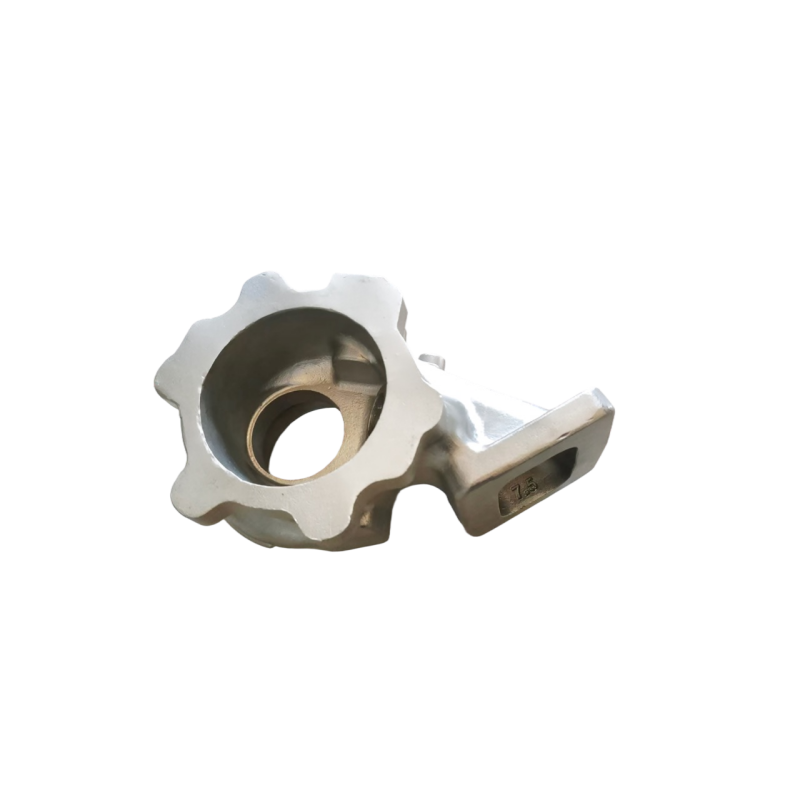
Understanding this process requires looking beyond the foundry floor. A capable precision investment casting manufacturer builds quality into every phase — from alloy selection and wax pattern fabrication through ceramic shell construction, controlled pour, post-cast finishing, and final inspection. When these disciplines are supported by robust process documentation, qualified supplier networks, and internationally recognized certifications, consistent quality becomes a repeatable outcome rather than a hopeful accident. This article examines the specific mechanisms that enable the manufacturer to deliver reliable, specification-compliant components to global buyers.
The Foundation of Quality: Process Standardization and Engineering Documentation
Why Documented Processes Are Non-Negotiable in Global Operations
the manufacturer operating at a global scale cannot rely on tacit knowledge or tribal expertise. Every critical process step must be captured in detailed work instructions, material specifications, and control plans that can be executed consistently regardless of operator or shift. This documentation discipline is the backbone of cross-border quality assurance, ensuring that a casting produced for a European aerospace customer meets the same standards as one shipped to a North American oil and gas operator.
Process standardization in investment casting covers wax injection parameters, ceramic slurry viscosity windows, stucco application sequences, dewaxing temperature profiles, and burnout cycle controls. Each parameter carries a defined tolerance band derived from historical process capability data. When deviations occur, documented corrective action procedures allow engineering teams to respond systematically rather than reactively, preserving the integrity of the production lot and reducing the risk of non-conforming parts reaching the customer.
For global supply chain participants, access to this documentation through structured supplier portals or quality management systems creates transparency. Customers can audit process parameters remotely, verify that approved procedures are being followed, and request traceability records without having to be physically present on the factory floor. This level of openness distinguishes a mature precision investment casting manufacturer from a commodity foundry.
Engineering Change Control Across Time Zones and Customers
Managing engineering changes is one of the most underappreciated quality challenges in global supply chains. such suppliers frequently serves customers across multiple industries and geographies, each with its own revision cycles, approval workflows, and first-article inspection requirements. Without a disciplined change management system, an approved design update in one region can create a misalignment with parts produced under an older revision elsewhere.
Leading manufacturers implement formal engineering change control systems that link part numbers to specific revision levels, tooling states, and approved process parameters. Changes are validated through dimensional inspection, metallurgical testing, and customer sign-off before they enter the production stream. This prevents unauthorized modifications from silently compromising the performance characteristics of a casting — a particularly critical safeguard in industries where component failure carries significant consequences.
The integration of product lifecycle management software with the production planning system further reinforces this control. When such suppliers synchronizes engineering data with shop floor execution in real time, the probability of a revision mismatch reaching a finished component drops sharply, even across facilities in different countries.
Raw Material Traceability and Alloy Qualification
Building a Traceable Material Chain from Ingot to Inspection
Material integrity is the starting point of every quality outcome in investment casting. A reputable precision investment casting manufacturer maintains strict control over alloy sourcing, requiring certified material test reports from qualified suppliers and independently verifying chemical composition through in-house spectrographic analysis before any heat is poured. This practice ensures that nickel superalloys, stainless steels, titanium alloys, and other specialty materials meet the chemistry requirements specified in customer and industry standards.
Lot traceability is equally important. Each batch of incoming raw material is assigned a unique heat number that travels with the casting through every subsequent process step — wax injection, shell building, casting, heat treatment, and final inspection. This chain of custody allows facilities to reconstruct the complete production history of any component and, if a material non-conformance is discovered, to quickly identify and quarantine all affected parts before they reach the customer.
In global supply chain contexts, this traceability is often a contractual requirement. Aerospace customers operating under AS9100 or NADCAP regulations, medical device manufacturers subject to ISO 13485, and energy sector buyers governed by API specifications all mandate documented material traceability as a condition of supply. facilities that treats this as a core operational discipline rather than a compliance checkbox gains a meaningful competitive advantage.
Alloy Qualification Programs and Their Role in Consistency
Beyond incoming inspection, the manufacturer must qualify its casting processes for each alloy system used in production. Alloy qualification involves running controlled test pours, evaluating mechanical properties through tensile and impact testing, assessing microstructural soundness through radiographic and metallographic examination, and benchmarking results against the applicable material specification. Only after this qualification work is complete can the manufacturer claim process capability for that alloy.
Regular requalification keeps the process database current, particularly when raw material sources change or production equipment is upgraded. This ongoing discipline is what allows the manufacturer to guarantee that parts produced today will match the properties of parts produced twelve months ago — a consistency requirement that global OEM customers often formalize in their approved supplier agreements.
Ceramic Shell Technology and Dimensional Repeatability
Shell Building as a Critical Dimension-Control Step
The ceramic shell is the mold that gives an investment casting its final shape, and the quality of that shell directly determines the dimensional accuracy and surface finish of the finished part. facilities invests significant resources in controlling shell slurry chemistry, dip sequences, drying conditions, and backup coat thickness. These variables collectively determine how faithfully the ceramic replicates the wax pattern geometry and how well it resists distortion during the high-temperature casting cycle.
Environmental controls within the shell room — temperature, humidity, and airflow — are carefully managed because ceramic slurry properties are highly sensitive to ambient conditions. Automated slurry mixing systems with viscosity monitoring maintain consistent dip coating behavior batch to batch. These controls are especially important when the manufacturer runs high-volume production for global customers who require tight dimensional tolerances on features such as airfoil profiles, cooling hole locations, and mating surface geometries.
Statistical process control applied to shell thickness measurements, drying times, and green shell strength provides the manufacturer with real-time visibility into shell quality before the pour even begins. This proactive approach reduces scrap rates and prevents the delivery of out-of-tolerance castings to customers, which is a key cost driver in global supply chain relationships.
Tooling Investment and Wax Pattern Accuracy
Dimensional consistency in investment casting starts with the wax pattern, which is itself produced from precision-machined injection tooling. facilities maintains rigorous tooling qualification protocols that establish the dimensional baseline for each new tool. Injection parameters including wax temperature, injection pressure, and hold time are documented and controlled to minimize pattern-to-pattern variation.
Tooling maintenance schedules ensure that worn or damaged tooling is identified and remediated before it degrades pattern quality. For global customers, tooling custody and storage agreements formalize who owns the tooling, where it is stored, and what maintenance obligations the manufacturer must fulfill. This governance layer protects the customer's investment and ensures that replacement tooling produced in the future will match the approved dimensional baseline.
Inspection Technology and Globally Recognized Certification
Advanced Metrology and Non-Destructive Testing Capabilities
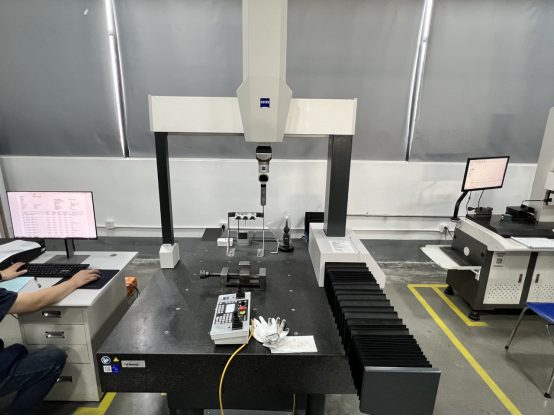
such suppliers serving global markets must possess inspection capabilities that match the complexity and precision of the parts being produced. Coordinate measuring machines, optical comparators, laser scanning systems, and computed tomography provide comprehensive dimensional verification for complex casting geometries. These instruments are calibrated to national and international standards, ensuring that measurement results are legally traceable and mutually recognized across borders.
Non-destructive testing plays an equally important role. Radiographic testing reveals internal shrinkage porosity, inclusions, and cracking that are invisible to surface inspection. Fluorescent penetrant inspection detects fine surface cracks in non-magnetic alloys. Ultrasonic testing characterizes subsurface discontinuities in critical structural sections. For such suppliers, having these capabilities in-house reduces the delay and handling risk associated with outsourced NDT, while also enabling faster response to customer quality queries.
The systematic use of first article inspection reports, which document every characteristic of a new or revised part against the engineering drawing, gives global customers a complete dimensional and material snapshot before serial production begins. This upfront investment in verification significantly reduces the risk of receiving non-conforming production parts after high-volume orders have been placed.
International Certifications as Quality Proof Points
Certifications such as ISO 9001, AS9100, IATF 16949, and NADCAP are not just plaques on a wall — they represent independently audited evidence that facilities has institutionalized quality management practices across its operations. Each standard addresses specific risks relevant to its target industry: AS9100 focuses on configuration management and risk mitigation in aerospace, IATF 16949 emphasizes statistical process control and defect prevention in automotive, and NADCAP covers special process approval for heat treatment, NDT, and chemical processing.
For global supply chain managers evaluating such suppliers, these certifications function as a pre-qualification filter. They signal that the manufacturer's processes have survived rigorous third-party scrutiny and that corrective action systems are in place to address identified gaps. Maintaining multiple certifications simultaneously also demonstrates the organizational maturity required to sustain consistent quality across diverse customer requirements without compromising one set of standards to satisfy another.
Supply Chain Integration and Customer Communication Practices
Collaborative Planning and Demand Visibility
Consistent quality across a global supply chain requires more than excellent manufacturing — it demands transparent communication and collaborative planning between the precision investment casting manufacturer and its customers. Long-term delivery schedules, capacity reservations, and early visibility into demand fluctuations allow the manufacturer to plan material procurement, tooling preparation, and production sequencing without the shortcuts that often lead to quality compromises under schedule pressure.
facilities that participates actively in customer supply chain planning meetings — providing capacity utilization data, lead time updates, and material availability forecasts — becomes a true supply chain partner rather than a transactional vendor. This integration reduces the likelihood of emergency production runs, which are a known risk factor for process deviations and inspection shortcuts.
Digital supply chain platforms have made this collaboration more accessible. Real-time order tracking, electronic certificate of conformance delivery, and automated non-conformance notification systems give global customers the visibility they need to manage inventory and production planning confidently, regardless of the physical distance between their facility and the precision investment casting manufacturer's foundry.
Handling Non-Conformances and Continuous Improvement Across Borders
No manufacturing operation is entirely free of non-conformances, but how such suppliers responds to them distinguishes a world-class supplier from an average one. Formal 8D or CAPA processes ensure that customer complaints are investigated with root cause rigor, that containment actions are implemented immediately, and that long-term corrective actions address the underlying system weakness rather than just the surface symptom.
In global supply chain relationships, the speed and quality of corrective action responses directly affect customer confidence. facilities that provides a well-documented 8D report within the agreed timeframe, completes verification of corrective action effectiveness, and updates its control plans and work instructions demonstrates that quality management is embedded in its culture, not just performed for audit purposes.
Continuous improvement programs, including statistical process control trend monitoring, yield analysis, and scrap reduction projects, generate the ongoing process capability gains that allow facilities to progressively tighten dimensional tolerances and reduce customer-facing defect rates over time. This trajectory of improvement is precisely what global OEM customers look for when selecting and retaining suppliers for their most demanding applications.
Looking for a Reliable Precision Investment Casting Partner?
Our facilities are IATF and ISO 9001 certified, ensuring specification-compliant components for global supply chains. Contact Our Engineering Team Today or Request a Quote for your next project.
FAQ
What industries benefit most from working with facilities?
Industries with demanding material and dimensional requirements gain the most value from facilities. These include aerospace, where turbine blades and structural components require tight alloy controls and complex geometries; oil and gas, where downhole and valve components face extreme pressures and corrosive environments; medical devices, where biocompatibility and surface finish are critical; and industrial power generation, where superalloy components must maintain integrity under sustained thermal cycling. The investment casting process is particularly well-suited to these sectors because it can produce near-net-shape parts from difficult-to-machine alloys with minimal material waste.
How does facilities ensure quality when sourcing materials globally?
facilities ensures material quality through a combination of approved supplier qualification, incoming inspection protocols, and independent spectrographic verification of every alloy heat before it enters production. Certified material test reports are reviewed against applicable specifications, and any material that fails incoming inspection is quarantined and returned. Heat-number-based traceability systems link every finished casting to its originating raw material batch, enabling rapid recall and containment actions if a post-production material issue is identified.
What certifications should a global buyer look for when selecting facilities?
Global buyers should prioritize certifications that align with their specific industry requirements. AS9100 is the standard for aerospace supply chain approval and indicates compliance with stringent configuration management and risk reduction requirements. ISO 9001 provides a baseline quality management framework applicable across all industries. NADCAP approval signals process-level qualification for special processes such as NDT, heat treatment, and chemical processing. IATF 16949 is relevant for automotive supply chains. facilities holding multiple active certifications demonstrates the operational discipline to sustain quality management across diverse customer environments.
How does facilities manage quality consistency across multiple production shifts or facilities?
Consistency across shifts and facilities is achieved through standardized work instructions, automated process parameter controls, shift handover protocols, and regular internal auditing. facilities uses statistical process control charting to monitor key process indicators in real time, so deviations are detected and corrected before they produce non-conforming parts. Cross-facility quality management systems ensure that engineering documentation, approved supplier lists, and corrective action databases are synchronized, so the same quality standards apply regardless of which location or team produces the casting.
Table of Contents
- The Foundation of Quality: Process Standardization and Engineering Documentation
- Raw Material Traceability and Alloy Qualification
- Ceramic Shell Technology and Dimensional Repeatability
- Inspection Technology and Globally Recognized Certification
- Supply Chain Integration and Customer Communication Practices
-
FAQ
- What industries benefit most from working with facilities?
- How does facilities ensure quality when sourcing materials globally?
- What certifications should a global buyer look for when selecting facilities?
- How does facilities manage quality consistency across multiple production shifts or facilities?