 EN
EN
When precision, surface quality, and dimensional accuracy are non-negotiable, manufacturers consistently turn to a trusted silica sol investment casting supplier. This decision is rarely arbitrary.
It is driven by a deep understanding of what silica sol shell technology delivers versus alternative casting methods. This choice directly translates into reduced downstream machining, tighter tolerances, and superior part performance across complex geometries
The preference reflects measurable technical advantages introduced during mold building and high-temperature firing. As global supply chains demand faster lead times, understanding this specific casting approach becomes both strategically and operationally important.
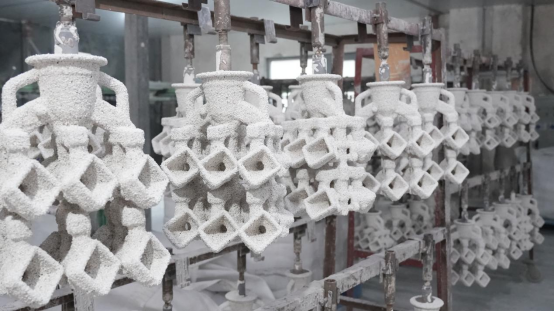
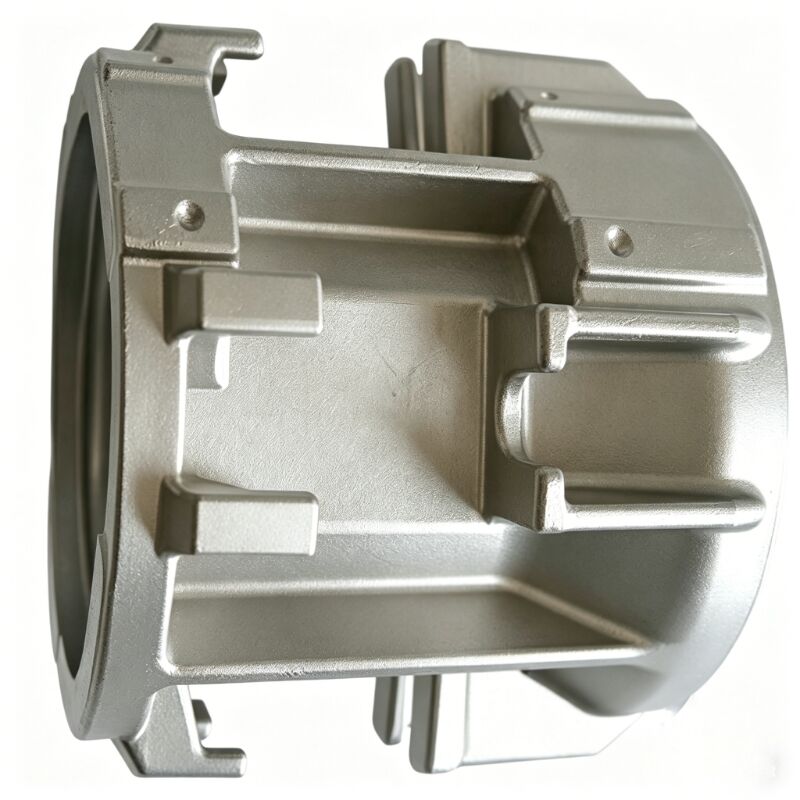
Figure 1: Complex complex fluid-handling housing component produced via silica sol investment casting, achieving Ra 3.2 surface roughness before final machining.
The Technical Foundation of Silica Sol Investment Casting
What Makes the Silica Sol Binder System Superior
The silica sol binder system uses colloidal silica as the primary bonding agent in shell construction, rather than the water-glass or ethyl silicate binders used in older investment casting processes. This distinction is foundational. Colloidal silica produces a ceramic shell with exceptional green strength, low gas permeability, and excellent thermal stability when exposed to the extreme temperatures required during metal pouring. For any serious silica sol investment casting supplier, this translates into shells that resist cracking, warping, and premature failure during casting—problems that directly compromise part accuracy.
The silica sol process also eliminates many of the drying and curing complications seen with water-glass systems. Shell layers cure more uniformly under controlled humidity and airflow conditions, resulting in a more homogeneous ceramic structure. When manufacturers specify tight wall thicknesses, thin-section castings, or undercut features, this homogeneity is what allows the mold to maintain its dimensional integrity throughout the entire firing and pouring cycle. A qualified silica sol investment casting supplier understands how to optimize layer count, stucco grain size, and drying intervals to match the specific alloy and geometry being produced.
Surface Finish Advantages That Reduce Secondary Operations
One of the most commercially significant reasons manufacturers prefer a silica sol investment casting supplier is the superior as-cast surface finish that the process inherently delivers. Silica sol shells, due to the fine particle size of the colloidal binder and the use of high-quality zircon or fused silica primary coat materials, produce surface finishes in the range of Ra 1.6 to Ra 3.2 micrometers without any post-cast grinding or polishing. For complex metal parts used in pumps, valves, turbines, or medical devices, this level of surface quality dramatically reduces the time and cost associated with secondary machining operations.
Manufacturers producing components like impellers, diffusers, or flow-critical valve bodies recognize that a smooth internal or external surface is not merely cosmetic—it directly affects hydraulic efficiency, fatigue resistance, and corrosion behavior. When a silica sol investment casting supplier consistently delivers parts at Ra 1.6 without additional intervention, the downstream production line becomes leaner and more predictable. This is a key driver of supplier preference in high-volume industrial programs where even a small reduction in machining passes translates into significant cost savings across a full production run.
Handling Complex Geometries With Confidence
Intricate Features That Challenge Other Casting Processes
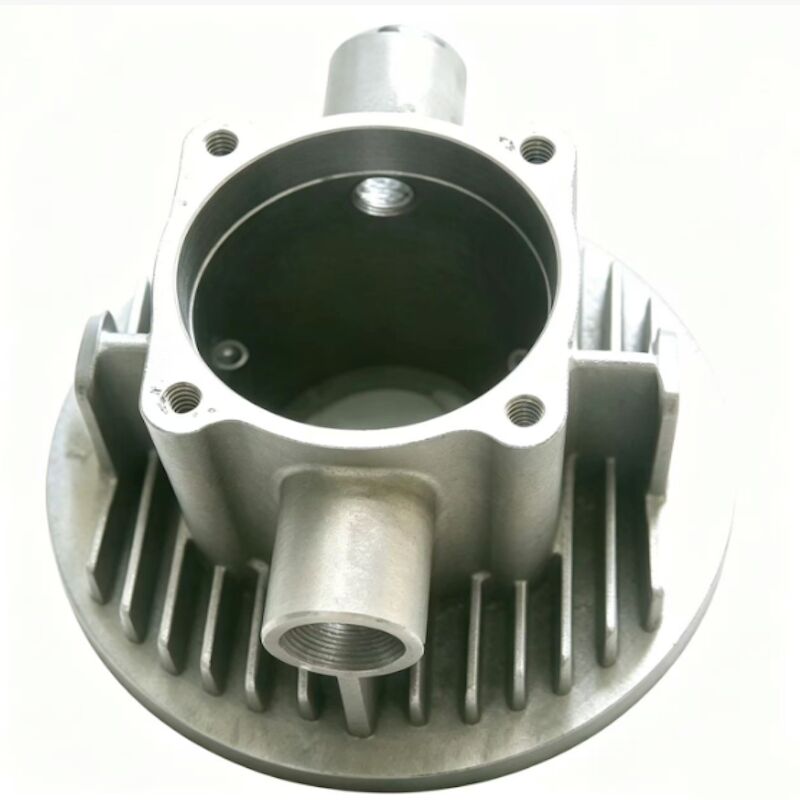
Complex metal parts often contain features that are simply impossible or economically impractical to produce through sand casting, die casting, or forging alone. Internal channels, undercuts, thin fins, re-entrant angles, and multi-plane curved surfaces are common in aerospace brackets, turbine blades, pump housings, and fluid control components. A skilled silica sol investment casting supplier has the tooling capability and process knowledge to replicate these features directly from a wax pattern, capturing detail that no other high-volume casting method can match at equivalent production rates.
The investment casting process, when powered by a silica sol binder system, allows manufacturers to consolidate multiple machined or welded subassemblies into a single near-net-shape casting. This part consolidation strategy reduces assembly time, eliminates potential leak paths at joints, and improves structural integrity by removing stress concentration points at weld seams. When a manufacturer specifies a complex multi-passage impeller or a thin-wall heat exchanger component, working with an experienced silica sol investment casting supplier means receiving a part that meets drawing intent on first article inspection rather than requiring rounds of corrective iteration.
Alloy Versatility Across Demanding Material Specifications
Another reason manufacturers consistently choose a silica sol investment casting supplier for complex metal parts is the broad alloy compatibility that the process supports. Silica sol shells are engineered to withstand pouring temperatures across a wide range of materials—from austenitic and duplex stainless steels to nickel-based superalloys, cobalt-chrome alloys, tool steels, and precipitation-hardening grades. This versatility means a single silica sol investment casting supplier can serve as a strategic partner across multiple product lines, providing consistent process discipline regardless of whether the alloy is a standard 316L or a demanding Inconel 718.
For manufacturers working in corrosive environments, high-temperature applications, or wear-intensive service conditions, alloy selection is a primary design driver. The ability to cast complex geometries in difficult-to-machine superalloys without sacrificing dimensional accuracy or surface quality is a distinguishing capability that positions the silica sol investment casting supplier as an indispensable resource in the supply chain. This is particularly relevant for industries such as oil and gas, chemical processing, and power generation, where material compliance is mandatory and substitution is not permitted.
Quality Consistency and Dimensional Repeatability
Process Controls That Ensure Batch-to-Batch Consistency
Manufacturers running production programs involving hundreds or thousands of identical complex parts require a supplier that can maintain dimensional consistency across every batch without drift. A reputable silica sol investment casting supplier invests heavily in process controls—wax injection parameter monitoring, slurry viscosity management, shell drying environment control, and furnace atmosphere regulation—to ensure that the variability inherent in casting processes is minimized rather than accepted. These controls are not optional quality additions; they are the operational backbone of a high-performance investment casting operation.
Statistical process control, first article inspection protocols, and coordinate measuring machine (CMM) verification are standard practices at a professional silica sol investment casting supplier facility. For complex metal parts with GD&T requirements involving true position, profile of surface, or angularity tolerances in the range of ±0.1 mm or tighter, these controls make the difference between a casting that goes directly to assembly and one that requires extensive rework. Manufacturers who understand this reality treat supplier qualification as a critical procurement step rather than a formality.
Traceability and Compliance in Regulated Industries
Industries such as aerospace, medical, and nuclear power generation require full material and process traceability as a procurement condition. A certified silica sol investment casting supplier maintains comprehensive records including heat certificates, chemical analysis reports, mechanical test data, dimensional inspection records, and non-destructive testing (NDT) results for every production lot. This traceability infrastructure is built into the supplier's quality management system and is typically validated against standards such as ISO 9001, AS9100, or customer-specific quality plans.
When manufacturers qualify a silica sol investment casting supplier for regulated applications, they are not only evaluating the technical process—they are assessing the supplier's organizational capability to sustain compliance over time. A supplier that invests in robust documentation systems, skilled metallurgical staff, and regular calibration of inspection equipment represents a lower supply chain risk than one that relies on informal quality practices. This is why manufacturers in high-stakes industries maintain long-term preferred supplier relationships with casting partners who have demonstrated sustained compliance performance.
Technical Parameter |
Silica Sol Process (Premium) |
Water-Glass Process (Economy) |
Direct Impact on Component Quality |
Primary Binder System |
Colloidal Silica (Fine particle size) |
Sodium Silicate (Coarser chemistry) |
Foundation for mold stability and replication of fine, thin-walled details. |
Tooling & Die Material |
High-grade Steel or Premium Aluminum |
Standard Aluminum or Soft Tooling |
Steel dies in silica sol resist wear, ensuring tight dimensional repeatability over long runs. |
Slurry Viscosity Control |
Tight, continuous monitoring; uniform shell building |
Variable viscosity; prone to uneven coating |
High consistency prevents flow hesitation marks, cold shuts, and thickness variation. |
Drying & Curing Window |
Strict temp/humidity controlled environment |
Accelerated chemical or ambient drying |
Controlled silica sol curing eliminates internal cracking and mold distortion during firing. |
As-Cast Surface Finish |
Ra 1.6 to Ra 3.2 μm (Smooth finish) |
Ra 6.3 to Ra 12.5 μm (Coarse finish) |
Smooth as-cast surfaces dramatically reduce or eliminate expensive secondary machining. |
Dimensional Tolerance |
ISO 8062-3 Grade DCTG 4 - 6 (Tight) |
ISO 8062-3 Grade DCTG 7 - 9 (Loose) |
Tighter near-net-shape tolerances ensure parts fit standard fixtures on first inspection. |
Economic Rationale Behind Supplier Selection
Total Cost of Ownership Versus Unit Price
A common misconception in procurement discussions is that the silica sol investment casting process is more expensive than alternatives and therefore suitable only for premium applications. In reality, when manufacturers calculate the total cost of ownership—factoring in machining reduction, scrap rates, assembly simplification, and rework elimination—choosing the right silica sol investment casting supplier frequently delivers a lower overall part cost than sourcing from a lower-capability casting method. The as-cast dimensional accuracy and surface quality of silica sol parts reduce the number of machining operations required, and that reduction compounds across high-volume programs.
A single complex casting that eliminates three secondary machining setups can easily offset a higher casting unit price. When that calculation is applied across an annual volume of several thousand parts, the economic case for working with a qualified silica sol investment casting supplier becomes straightforward. Manufacturers who adopt a total cost perspective rather than focusing exclusively on purchase price tend to build more stable and productive supplier relationships, with fewer supply disruptions and better long-term quality outcomes.
Lead Time Competitiveness and Tooling Investment
Modern investment casting tooling for silica sol processes is typically produced from aluminum or steel wax injection dies, which are more economical and faster to manufacture than hard tooling required for die casting or forging. A capable silica sol investment casting supplier can move from approved design drawings to first article samples in four to eight weeks for moderately complex parts, supporting faster product development cycles and new program launches. This speed-to-sample capability is increasingly important as manufacturers face compressed development timelines in competitive markets.
Moreover, investment casting tooling has a long service life when properly maintained, making it suitable for multi-year production programs without significant re-investment. A silica sol investment casting supplier that offers in-house tooling design and maintenance provides an additional layer of program security, ensuring that tooling modifications required by engineering change orders are handled quickly and without external coordination delays. This integrated capability is a meaningful differentiator when manufacturers evaluate potential long-term casting partners.
Application-Specific Suitability for Complex Parts
Fluid Handling Components and Impellers
Among the most demanding applications for a silica sol investment casting supplier are precision fluid handling components such as centrifugal pump impellers, turbine wheels, and volute casings. These parts combine complex three-dimensional curved surfaces with tight hydraulic passage tolerances and demanding surface finish requirements—a combination that is ideally served by the silica sol investment casting process. The ability to cast closed impeller geometries with internal vane passages, without cores or with minimal core use, is a defining advantage of this technology.
Impellers cast through the silica sol process exhibit excellent dimensional stability, repeatable vane geometry, and surface smoothness that directly translates to pump hydraulic efficiency. Manufacturers producing pumps for chemical process, water treatment, or energy applications rely on a qualified silica sol investment casting supplier to deliver impellers that meet both geometric and material specifications without requiring extensive hand finishing. The combination of tight tolerances, corrosion-resistant alloy options, and superior surface quality makes silica sol investment casting the preferred manufacturing route for high-performance fluid handling components.
Aerospace and Industrial Structural Components
In aerospace and industrial machinery applications, structural metal parts often require combinations of high strength, low weight, and complex geometry that challenge conventional manufacturing methods. Brackets, housings, actuator components, and engine structural parts produced by a silica sol investment casting supplier can achieve the near-net-shape geometry and tight tolerances demanded by aerospace design standards, often with the added benefit of significant weight reduction compared to machined billet alternatives.
The silica sol process supports casting of thin walls down to 1.5 to 2.0 mm in many alloy systems, enabling lightweight structural designs that maintain structural integrity. For industrial manufacturers designing next-generation equipment with reduced material consumption and lower operating weight targets, the silica sol investment casting supplier plays a strategic role in enabling design innovation that would otherwise be constrained by manufacturing limitations. This capability to translate engineering ambition into manufacturable reality is a core reason why forward-looking manufacturers deepen their partnerships with capable casting suppliers.
FAQ
What distinguishes a silica sol investment casting supplier from a water-glass casting supplier?
The primary distinction lies in the binder system used to build the ceramic shell. A silica sol investment casting supplier uses colloidal silica binder, which produces a denser, more thermally stable shell with better surface finish capability—typically Ra 1.6 to 3.2 micrometers. Water-glass suppliers use sodium silicate binder, which is lower cost but results in coarser surface finishes, lower dimensional accuracy, and reduced suitability for complex thin-section parts or high-temperature alloys.
Which industries most commonly rely on a silica sol investment casting supplier for complex parts?
The most active users include aerospace and defense, oil and gas, chemical processing, pump and valve manufacturing, power generation, and medical device production. These industries share common requirements for complex geometries, tight tolerances, superior surface quality, and demanding alloy specifications—all of which the silica sol investment casting process is specifically engineered to deliver.
How does working with a silica sol investment casting supplier reduce total production cost for complex parts?
The as-cast dimensional accuracy and surface quality delivered by a competent silica sol investment casting supplier significantly reduce the number of secondary machining operations required. Part consolidation—combining multiple subcomponents into a single casting—further reduces assembly labor, welding costs, and inspection points. When these savings are aggregated across a production program, the total cost advantage over alternative casting or machining approaches is often substantial, even when the casting unit price appears higher at first glance.
What quality certifications should a reputable silica sol investment casting supplier hold?
At minimum, a qualified silica sol investment casting supplier should hold ISO 9001 certification. For aerospace applications, AS9100 certification is typically required. Suppliers serving medical or nuclear markets may need additional regulatory approvals. Beyond certifications, manufacturers should evaluate a supplier's internal quality infrastructure including CMM capability, material traceability systems, NDT services, and documented process control procedures as indicators of sustained quality performance.
Table of Contents
- The Technical Foundation of Silica Sol Investment Casting
- Handling Complex Geometries With Confidence
- Quality Consistency and Dimensional Repeatability
- Economic Rationale Behind Supplier Selection
- Application-Specific Suitability for Complex Parts
-
FAQ
- What distinguishes a silica sol investment casting supplier from a water-glass casting supplier?
- Which industries most commonly rely on a silica sol investment casting supplier for complex parts?
- How does working with a silica sol investment casting supplier reduce total production cost for complex parts?
- What quality certifications should a reputable silica sol investment casting supplier hold?