Alloy Steel Lost Wax Casting: Precision Manufacturing Solutions for Complex Components

Get a Free Quote

Our representative will contact you soon.
Email
Name
Company Name
Message
0/1000

alloy steel lost wax casting

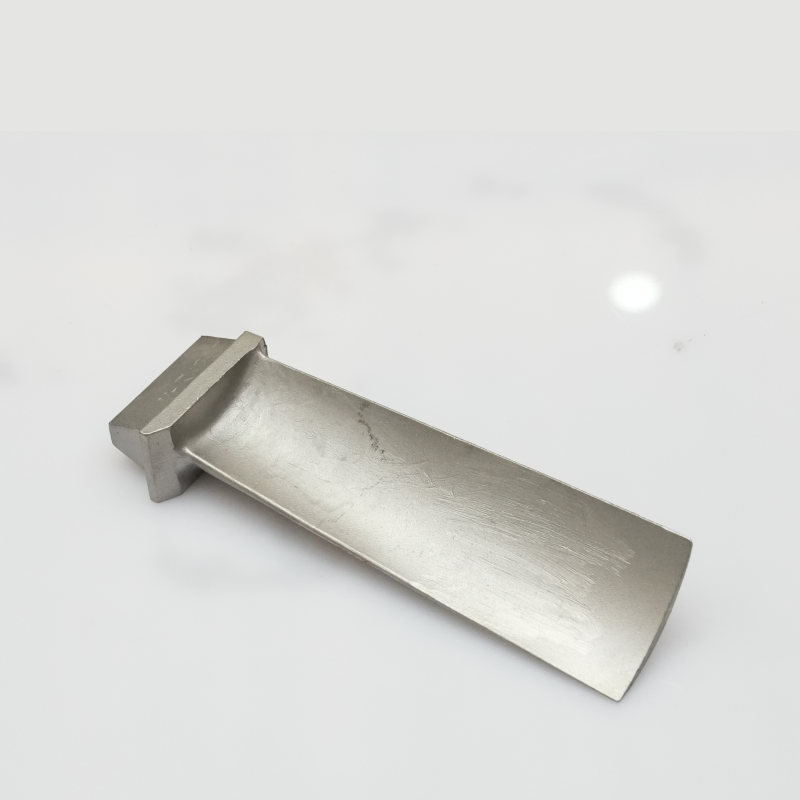
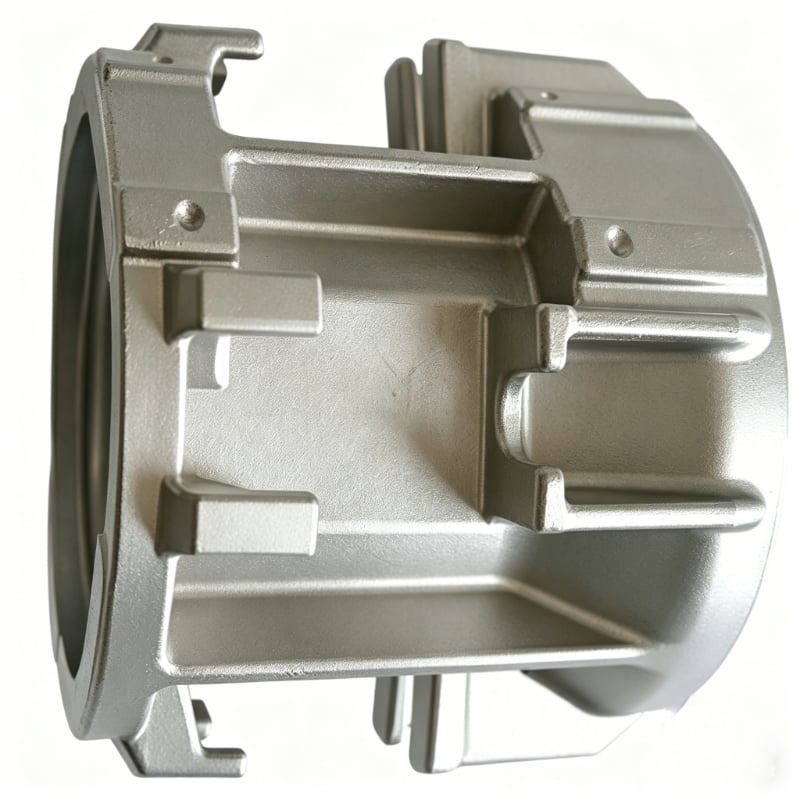
Alloy steel lost wax casting represents a sophisticated manufacturing process that combines the precision of investment casting with the superior strength characteristics of alloy steel materials. This advanced technique has revolutionized modern manufacturing by enabling the production of complex components with exceptional dimensional accuracy and mechanical properties. The alloy steel lost wax casting process begins with creating a detailed wax pattern that exactly replicates the desired final product. This pattern is then coated with multiple layers of ceramic material to form a robust mold. Once the ceramic shell hardens, the wax is melted away, leaving a precise cavity for molten alloy steel to fill. The main functions of alloy steel lost wax casting include producing intricate geometries that would be impossible or economically unfeasible through traditional machining methods. This process excels at creating components with internal passages, undercuts, and complex surface contours while maintaining tight tolerances. The technological features distinguish this method from other casting techniques through its ability to achieve surface finishes as smooth as 125 micro-inches, dimensional tolerances within plus or minus 0.005 inches per inch, and the flexibility to cast wall thicknesses ranging from remarkably thin sections to substantial structural elements. Applications span numerous industries where performance and reliability are paramount. Aerospace manufacturers utilize alloy steel lost wax casting for turbine components, structural fittings, and landing gear parts. The automotive sector employs this process for transmission components, turbocharger housings, and suspension elements. Medical device manufacturers rely on this technique for surgical instruments and implantable components. Oil and gas industries use cast alloy steel parts for valve bodies, pump components, and drilling equipment. Defense applications include weapon system components and military vehicle parts. The versatility of alloy steel lost wax casting extends to producing components weighing from mere ounces to several hundred pounds, accommodating diverse manufacturing requirements across global industries.

New Product Releases

Choosing alloy steel lost wax casting brings substantial practical benefits that directly impact your production efficiency and product quality. The first major advantage centers on design freedom. Unlike conventional manufacturing methods that impose limitations on part geometry, this process allows engineers to create virtually any shape imaginable. You can incorporate features like internal cooling channels, complex curves, and intricate details without requiring multiple assembly steps or expensive secondary operations. This design flexibility translates into lighter components with optimized strength-to-weight ratios, reducing material costs and improving end-product performance. The second significant benefit involves material efficiency and waste reduction. Traditional machining operations often remove up to seventy percent of raw material as chips and scrap. In contrast, alloy steel lost wax casting produces near-net-shape components, meaning parts emerge from the mold very close to their final dimensions. This efficiency conserves valuable alloy steel materials, lowers raw material expenses, and supports environmental sustainability by minimizing industrial waste. Your company benefits from reduced material procurement costs while contributing to responsible manufacturing practices. Another compelling advantage lies in the exceptional mechanical properties achievable through this process. The controlled solidification environment produces fine-grain microstructures within the alloy steel, resulting in superior tensile strength, impact resistance, and fatigue life compared to welded assemblies or forged alternatives. Components withstand extreme operating conditions including high temperatures, corrosive environments, and repetitive stress cycles. This durability means longer service intervals, fewer replacement parts, and enhanced reliability for your customers. Cost-effectiveness becomes apparent when considering the total manufacturing equation. While initial tooling investment exists, the elimination of extensive machining operations, reduced assembly requirements, and minimized material waste create favorable economics, especially for medium to high production volumes. Parts that would require multiple machined components welded together can be produced as single integrated castings, reducing labor costs and potential failure points. Quality consistency represents another practical advantage. Once the process parameters are established, alloy steel lost wax casting delivers repeatable results batch after batch. Every component meets the same exacting standards, reducing quality control challenges and warranty claims. The process accommodates various alloy steel grades, allowing you to select materials with specific properties tailored to application requirements. Whether you need corrosion resistance, high-temperature strength, or magnetic properties, appropriate alloy compositions can be cast using this versatile technique. Finally, faster time-to-market gives you competitive advantages. Rapid prototyping capabilities allow testing functional parts early in development cycles, and transitioning from prototype to production happens smoothly using the same fundamental process, accelerating product launches and responding quickly to market demands.

Latest News

Selection And Application Scope Of Hardness Tester

11

May

Selection And Application Scope Of Hardness Tester

View More
The Role Of Elements In Castings And The Order Of Addition

11

May

The Role Of Elements In Castings And The Order Of Addition

View More
Stainless Steel Castings for Architectural Posts

11

May

Stainless Steel Castings for Architectural Posts

View More
Stainless Steel Castings for Building Facade Systems

11

May

Stainless Steel Castings for Building Facade Systems

View More

Get a Free Quote

Our representative will contact you soon.
Email
Name
Company Name
Message
0/1000

alloy steel lost wax casting

Unmatched Precision and Surface Quality for Critical Applications

Unmatched Precision and Surface Quality for Critical Applications

The precision capabilities of alloy steel lost wax casting set industry benchmarks that competing manufacturing methods struggle to match. This exceptional accuracy stems from the fundamental process mechanics where ceramic molds capture every minute detail of the original wax pattern with remarkable fidelity. When you require components with dimensional tolerances measured in thousandths of an inch, this casting method delivers consistent results that eliminate costly secondary machining operations. The surface finish quality achieved through alloy steel lost wax casting frequently surprises first-time users. Parts emerge from the mold with surfaces smooth enough for many applications to use directly without additional finishing. This smoothness, typically ranging between 125 to 250 micro-inches, reduces friction in moving assemblies, improves aesthetic appearance, and facilitates easier cleaning in sanitary applications. For components operating in fluid systems, these smooth surfaces minimize turbulence and pressure losses, enhancing overall system efficiency. The precision extends beyond external dimensions to include internal features like holes, slots, and passages. Traditional drilling and machining operations to create these features add expense and potential misalignment issues. With alloy steel lost wax casting, these elements form integrally during the casting process, ensuring perfect positional accuracy relative to other part features. This integrated approach proves particularly valuable in hydraulic manifolds, where intersecting passages must align precisely to control fluid flow correctly. Critical dimensions maintain consistency across production runs because the ceramic mold material exhibits minimal thermal expansion during metal pouring. This stability ensures that the first casting and the thousandth casting meet identical specifications. For industries where component interchangeability is essential, such as aerospace or automotive manufacturing, this consistency reduces assembly complications and warranty issues. The dimensional accuracy also enables tighter assembly fits, which improve joint strength in mechanical connections and reduce vibration in rotating assemblies. Engineers designing components for alloy steel lost wax casting can specify features that optimize performance rather than compromising designs to accommodate manufacturing limitations. Thin wall sections that reduce weight, complex cooling passages that manage thermal loads, and organic shapes that follow stress patterns all become feasible. This design optimization translates into products that perform better, last longer, and provide greater value to end users, giving your company distinct competitive advantages in demanding markets.
Superior Strength and Material Properties for Demanding Environments

Superior Strength and Material Properties for Demanding Environments

The metallurgical advantages inherent in alloy steel lost wax casting create components with mechanical properties that exceed those achievable through many alternative manufacturing processes. Understanding these material benefits helps explain why critical applications in aerospace, defense, and energy sectors consistently specify this casting method. The controlled solidification environment during alloy steel lost wax casting promotes fine, uniform grain structures throughout the component. Unlike sand casting where rapid temperature variations can create coarse, irregular grains, the ceramic shell mold provides consistent thermal conditions. This uniformity translates directly into predictable mechanical behavior. Tensile strength, yield strength, and elongation values meet or surpass wrought material specifications, giving design engineers confidence in performance predictions. The fine grain structure also enhances fatigue resistance, a crucial property for components experiencing cyclic loading. Parts like automotive suspension components, aircraft structural fittings, and industrial machinery elements endure millions of stress cycles during service life. The metallurgical quality of alloy steel lost wax casting ensures these components resist crack initiation and propagation, preventing catastrophic failures. Rigorous testing validates fatigue life predictions, providing safety margins that protect both equipment and personnel. Alloy steel selection flexibility represents another material advantage. The process accommodates virtually any castable alloy steel grade, from standard carbon steels to exotic specialty alloys containing chromium, molybdenum, nickel, and other elements. This versatility allows matching material properties precisely to application requirements. Components requiring corrosion resistance receive stainless steel alloys. High-temperature applications utilize heat-resistant grades. Structural components benefit from high-strength low-alloy formulations. Each application gets optimized material performance without compromise. The homogeneous material structure throughout cast components eliminates concerns about welded joints or brazed connections that create weak points or stress concentrations. A single-piece casting distributes loads uniformly according to the geometric design rather than concentrating stress at artificial boundaries between assembled parts. This integrity improves reliability and extends service life, reducing maintenance costs and downtime. Impact resistance, important in applications subject to shock loading or accidental strikes, benefits from the ductility retention in properly cast alloy steel. The material absorbs impact energy through controlled deformation rather than brittle fracture, preventing sudden catastrophic failure modes. This toughness proves essential in defense applications, heavy equipment, and safety-critical systems where component failure could endanger lives. Heat treatment compatibility further enhances material properties. Cast alloy steel components respond well to hardening, tempering, and stress-relieving treatments that optimize hardness, strength, and dimensional stability. Post-casting heat treatment removes residual stresses, homogenizes microstructure, and achieves specific hardness targets that balance wear resistance with toughness according to application needs.
Economic Efficiency Through Integrated Manufacturing and Reduced Assembly

Economic Efficiency Through Integrated Manufacturing and Reduced Assembly

The economic advantages of alloy steel lost wax casting extend far beyond simple piece-part pricing, encompassing total cost of ownership calculations that reveal substantial savings throughout product lifecycles. Smart manufacturers recognize these comprehensive financial benefits when evaluating manufacturing process selection. Consolidation of multiple machined components into single cast pieces represents perhaps the most significant economic benefit. Traditional approaches often require fabricating complex assemblies from numerous parts joined through welding, bolting, or brazing. Each component adds material costs, machining time, and assembly labor. Each joint introduces potential failure modes requiring quality inspection. Alloy steel lost wax casting eliminates these complications by producing integrated components where form and function merge seamlessly. A part previously requiring ten separate pieces becomes one casting, slashing inventory complexity, reducing assembly errors, and accelerating production throughput. Tooling investment, while initially higher than simple machining setups, amortizes favorably across production volumes. The wax injection dies and associated equipment serve for thousands of cycles, and ceramic shell materials cost less than permanent metal molds required for other casting processes. For production quantities exceeding several hundred pieces, the per-part tooling cost becomes negligible while the recurring savings from reduced machining accumulate substantially. Even prototype and low-volume production benefit through rapid tooling techniques that minimize initial investment while preserving process advantages. Material utilization efficiency directly impacts profitability. Alloy steels, especially specialty grades containing expensive alloying elements, represent significant raw material investments. Machining approaches that remove seventy to eighty percent of starting material as chips waste these costly materials. Although scrap recycling recovers some value, reprocessing costs and material degradation reduce actual returns. Alloy steel lost wax casting typically achieves eighty-five to ninety-five percent material yield, using nearly all purchased material in finished components. This efficiency becomes increasingly important as alloy prices fluctuate and supply chains face disruptions. Secondary operations reduction contributes additional savings. Parts cast to near-net dimensions require minimal finish machining, perhaps just grinding a few critical surfaces or drilling mounting holes. Eliminating extensive milling, turning, and drilling operations saves machine time, tooling costs, and labor hours. Production scheduling simplifies when components flow through fewer process steps, reducing work-in-process inventory and shortening lead times. Faster delivery pleases customers and improves cash flow through quicker payment cycles. Quality costs decrease when manufacturing processes inherently produce conforming parts. The repeatability of alloy steel lost wax casting minimizes scrap and rework expenses that plague less stable processes. Inspection requirements streamline when dimensional variation stays within narrow bands, reducing quality department workload. Warranty claims decline when components perform reliably throughout expected service life, protecting brand reputation and customer relationships. Long-term lifecycle economics favor durable components that postpone replacement. The superior material properties and structural integrity of alloy steel lost wax casting extend component service life, reducing spare parts consumption and maintenance downtime. Equipment operators appreciate reliable performance that maintains productivity, while maintenance departments value predictable replacement intervals that facilitate planning and budgeting.

Get a Free Quote

Our representative will contact you soon.
Email
Name
Company Name
Message
0/1000