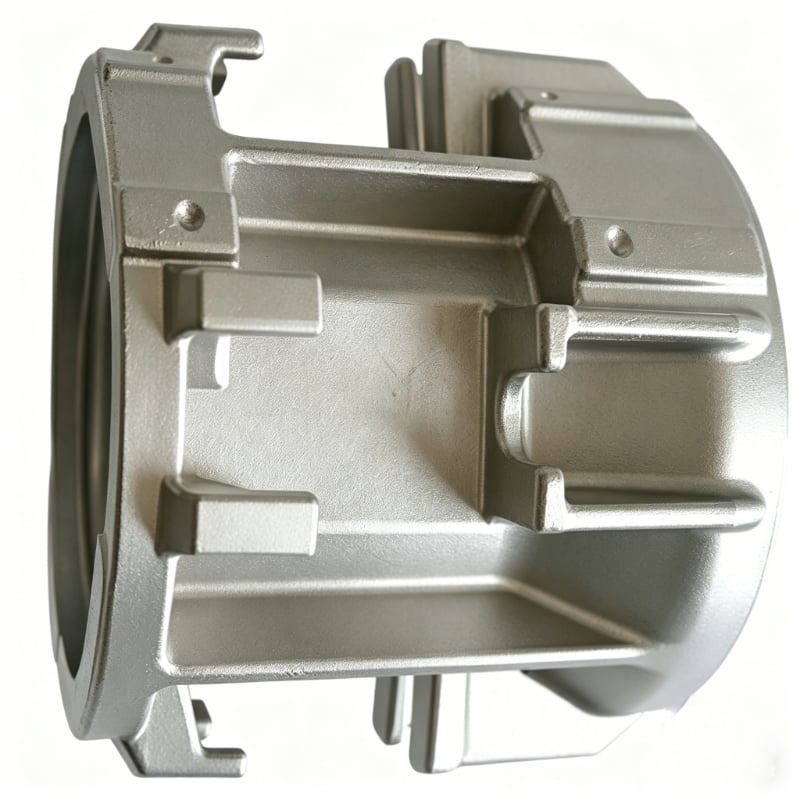
Rapid Casting Services: Fast, Cost-Effective Metal Component Manufacturing Solutions

Get a Free Quote

Our representative will contact you soon.
Email
Name
Company Name
Message
0/1000

rapid casting

Rapid casting represents a transformative manufacturing methodology that accelerates the production of metal components while maintaining exceptional quality standards. This innovative process combines advanced technological systems with streamlined workflows to deliver cast parts in significantly reduced timeframes compared to traditional casting methods. The primary function of rapid casting involves creating metal components through expedited mold preparation, faster material processing, and optimized cooling cycles. By leveraging computer-aided design integration and automated pattern generation, rapid casting eliminates many time-consuming steps associated with conventional foundry operations. The technological features underpinning rapid casting include digital pattern creation using three-dimensional printing technologies, precision tooling systems that reduce setup times, and enhanced metallurgical controls that ensure consistent material properties throughout production runs. Modern rapid casting facilities incorporate real-time monitoring equipment that tracks temperature variations, material flow characteristics, and solidification patterns to optimize every phase of the casting cycle. Applications for rapid casting span numerous industrial sectors including automotive component manufacturing, aerospace parts production, medical device fabrication, and consumer product development. Engineering teams utilize rapid casting for prototype development, allowing them to test functional metal parts before committing to full-scale production tooling investments. Product designers benefit from the ability to iterate quickly on component geometries, making design refinements based on physical testing rather than theoretical modeling alone. Manufacturing operations employ rapid casting for short-run production batches, custom component fabrication, and replacement parts manufacturing where traditional casting methods would prove economically unviable. The process accommodates various metal alloys including aluminum compositions, zinc formulations, magnesium blends, and certain bronze materials, providing flexibility for diverse application requirements. Companies seeking competitive advantages through shortened development cycles find rapid casting particularly valuable for bringing innovative products to market ahead of competitors while managing costs effectively throughout the design validation and initial production phases.

Popular Products

The advantages of rapid casting deliver substantial practical benefits that directly impact your bottom line and operational efficiency. First and foremost, the time savings achieved through rapid casting fundamentally change project timelines. Where traditional casting might require eight to twelve weeks for tooling development and initial parts delivery, rapid casting compresses this schedule to as little as one to three weeks depending on component complexity. This acceleration means you can respond to market opportunities faster, launch products ahead of schedule, and adapt to customer feedback without lengthy delays. Your engineering teams gain the ability to hold physical parts in their hands within days rather than months, enabling practical testing that reveals insights impossible to discover through computer simulations alone. The cost benefits extend beyond simple price comparisons. While the per-unit cost of rapid casting may appear higher than high-volume production casting, the total project economics often favor the rapid approach. You eliminate expensive tooling investments that can range from tens of thousands to hundreds of thousands of dollars for complex dies and molds. This financial flexibility proves especially valuable for prototyping phases, limited production runs, and custom projects where traditional tooling costs cannot be amortized across sufficient production volumes. Small and medium-sized businesses gain access to metal casting capabilities that might otherwise remain financially out of reach. The design freedom inherent in rapid casting empowers your creative teams to explore innovative geometries without worrying about tooling constraints. Complex internal passages, intricate surface details, and sophisticated organic shapes become achievable without the prohibitive costs typically associated with intricate mold making. This freedom encourages experimentation and innovation, leading to superior product designs that differentiate your offerings in competitive marketplaces. Quality improvements manifest through reduced defect rates and enhanced consistency. The digital controls and monitoring systems integrated into rapid casting operations maintain tighter process parameters than manual foundry methods. You receive parts with predictable mechanical properties, dimensional accuracy, and surface characteristics that meet stringent quality standards. Risk reduction represents another compelling advantage. By producing functional prototypes quickly, you identify potential design flaws, manufacturing challenges, and performance issues early in development cycles when corrections remain inexpensive. This early validation prevents costly mistakes during full-scale production, protecting your investment and reputation. The flexibility to produce small quantities without minimum order requirements allows you to test market reception, fulfill specialized customer needs, and maintain spare parts inventories without excessive capital tied up in obsolete stock.

Latest News

Basic Principles Of Design Of Precision Casting Gating System

11

May

Basic Principles Of Design Of Precision Casting Gating System

View More
Selection And Application Scope Of Hardness Tester

11

May

Selection And Application Scope Of Hardness Tester

View More
The Role Of Elements In Castings And The Order Of Addition

11

May

The Role Of Elements In Castings And The Order Of Addition

View More
Stainless Steel Castings for Architectural Posts

11

May

Stainless Steel Castings for Architectural Posts

View More

Get a Free Quote

Our representative will contact you soon.
Email
Name
Company Name
Message
0/1000

rapid casting

Accelerated Time-to-Market Through Streamlined Production Cycles

Accelerated Time-to-Market Through Streamlined Production Cycles

The accelerated production capability of rapid casting fundamentally transforms how quickly you can move from initial concept to finished product in hand. Traditional casting processes impose lengthy timelines that can stretch project schedules and delay market entry by months. These conventional methods require extensive tooling development, pattern making, mold preparation, and multiple trial runs before achieving acceptable production parts. Each of these stages consumes valuable time, creating bottlenecks that frustrate product development teams and limit your ability to respond to competitive pressures or emerging market opportunities. Rapid casting eliminates these traditional bottlenecks through integrated digital workflows that bypass many manual processes entirely. The production cycle begins with your three-dimensional computer models, which are directly translated into physical patterns using additive manufacturing technologies. This direct digital-to-physical transformation removes weeks of traditional pattern making craftsmanship from the critical path. Within days, your design files become tangible molds ready for metal pouring, a process that conventional methods would require extensive manual labor to accomplish. The implications for your business strategy are profound. When you can receive functional metal prototypes in one to two weeks rather than two to three months, your entire product development philosophy can shift toward rapid iteration and continuous improvement. Your engineering teams conduct physical testing on actual production-intent materials rather than relying solely on surrogate materials or computer simulations that may not accurately predict real-world performance. This hands-on validation reveals insights about structural behavior, thermal characteristics, and functional integration that inform better design decisions. Marketing teams can evaluate physical samples for customer presentations and market research activities far earlier in development cycles, gathering crucial feedback while design changes remain relatively inexpensive to implement. The competitive advantages compound when you consider time-sensitive market windows. Industries driven by seasonal demand, fashion trends, or technological innovation cycles reward companies that can deliver new products rapidly. Rapid casting enables you to capitalize on these opportunities by compressing development timelines without sacrificing quality or functionality. Your organization gains the agility to respond to customer requests for custom solutions, adapt products to address newly discovered application requirements, and introduce design improvements that competitors cannot match within similar timeframes.
Cost-Effective Solution for Low-Volume and Custom Manufacturing Needs

Cost-Effective Solution for Low-Volume and Custom Manufacturing Needs

The economic model of rapid casting delivers exceptional value for businesses pursuing low-volume production runs, custom component fabrication, and prototype development projects. Traditional casting economics rely heavily on amortizing substantial tooling investments across large production quantities, creating financial barriers that make small-batch manufacturing prohibitively expensive. Permanent mold tooling, die casting equipment, and precision investment casting systems require capital expenditures that can easily exceed fifty thousand to several hundred thousand dollars depending on component complexity and size. These fixed costs must be distributed across production volumes, meaning small quantities carry unsustainably high per-unit tooling charges. Rapid casting fundamentally restructures this economic equation by minimizing or eliminating permanent tooling requirements. The patterns and molds used in rapid casting processes can be produced directly from digital files using three-dimensional printing technologies and other rapid fabrication methods. These tools serve their purpose for limited production runs and can be created at a fraction of traditional tooling costs. For projects requiring fifty, one hundred, or even several hundred components, the economic advantage of avoiding permanent tooling investment proves decisive. Your organization can pursue specialized projects, custom customer solutions, and limited-edition products that would be financially impractical using conventional casting approaches. The financial flexibility extends to risk management during product development. When launching new products, significant uncertainty exists regarding market acceptance, optimal design configurations, and actual performance requirements. Committing substantial capital to permanent production tooling before validating these factors exposes your business to considerable financial risk. Rapid casting allows you to produce initial market test quantities, gather real-world performance data, and refine designs based on actual customer feedback before investing in expensive production infrastructure. This staged investment approach protects capital, reduces financial exposure, and ensures that when you do commit to production tooling, the design has been thoroughly validated through practical experience. Small businesses and startups gain particular advantages from the accessible economics of rapid casting. Without the capital reserves that large corporations deploy for tooling investments, smaller organizations often find themselves locked out of metal component manufacturing entirely. Rapid casting democratizes access to metal parts production, enabling innovative companies to bring sophisticated products to market regardless of their balance sheet capacity. This accessibility fosters innovation, supports entrepreneurship, and allows creative solutions to reach customers who benefit from specialized products that mass production economics would never support.
Superior Design Flexibility Enabling Innovation and Complexity

Superior Design Flexibility Enabling Innovation and Complexity

The design freedom afforded by rapid casting unleashes creative possibilities that traditional manufacturing constraints typically suppress. Conventional casting methods impose significant limitations on component geometries due to tooling requirements, draft angles necessary for part ejection, and core positioning challenges for internal features. Design engineers working within these constraints often compromise ideal functionality to accommodate manufacturing realities, resulting in products that represent the best achievable balance between performance and producibility rather than optimal solutions to technical challenges. Rapid casting relaxes many of these traditional constraints, empowering your design teams to prioritize functional excellence and innovative solutions. The pattern creation flexibility inherent in additive manufacturing enables complex geometries that would be difficult or impossible to produce using conventional tooling approaches. Organic shapes that mimic natural structures, intricate lattice configurations that optimize strength-to-weight ratios, and sophisticated internal passages that enhance fluid flow or thermal management all become achievable without prohibitive tooling costs. Your engineers can design components that truly serve their intended purposes rather than accepting compromised solutions dictated by manufacturing limitations. This expanded design envelope proves particularly valuable for lightweighting initiatives where every gram of material reduction contributes to improved performance or efficiency. Aerospace applications, automotive components, and portable equipment all benefit from optimized material distribution that places metal only where structural analysis indicates necessity. Rapid casting accommodates the complex geometries resulting from topology optimization algorithms, allowing you to realize the full potential of advanced engineering analysis tools. The biological and organic forms these optimization processes generate would be nearly impossible to manufacture using traditional casting methods, but rapid casting processes handle them with relative ease. Integration opportunities multiply when design constraints relax. Components that previously required assembly from multiple pieces can potentially be consolidated into single cast parts, eliminating fasteners, reducing assembly labor, and improving structural integrity. Consolidating parts reduces component counts, simplifies supply chain management, and decreases the opportunities for assembly errors that compromise quality. Your products become more robust, more reliable, and less expensive to manufacture despite the sophisticated geometries involved. The iterative design refinement that rapid casting facilitates leads to superior final products. Because you can produce and test multiple design variations without incurring substantial tooling costs for each iteration, your development process can explore a broader solution space. Engineers test different approaches to challenging technical problems, comparing actual performance rather than relying solely on predictive models. This empirical validation process identifies optimal solutions that theoretical analysis alone might overlook, resulting in products that deliver superior performance, enhanced reliability, and better customer satisfaction.

Get a Free Quote

Our representative will contact you soon.
Email
Name
Company Name
Message
0/1000