Professional Investment Casting Services - Precision Metal Parts Manufacturing Solutions

Get a Free Quote

Our representative will contact you soon.
Email
Name
Company Name
Message
0/1000

investment casting services

Investment casting services represent a sophisticated manufacturing process that transforms molten metal into precise, complex components through a multi-step procedure. This ancient technique, modernized with contemporary technology, begins by creating a detailed wax pattern that mirrors the final product's exact specifications. Manufacturers coat this pattern with a ceramic shell material, building up multiple layers to form a robust mold. Once the shell hardens, they melt away the wax, leaving a hollow cavity that perfectly captures every intricate detail. The process derives its name from the way manufacturers invest, or surround, the pattern with refractory material. Investment casting services excel at producing parts with exceptional dimensional accuracy, smooth surface finishes, and intricate geometries that would prove difficult or impossible through alternative manufacturing methods. The technology supports a wide range of metals and alloys, including stainless steel, carbon steel, aluminum, bronze, and specialized superalloys. Modern investment casting services integrate computer-aided design software, advanced metallurgy knowledge, and quality control systems to ensure consistent results. The process accommodates both prototype development and high-volume production runs, making it versatile for various business needs. Industries worldwide rely on investment casting services to manufacture critical components where precision and reliability cannot be compromised. The method produces near-net-shape parts, meaning components require minimal machining after casting, reducing material waste and production time. Investment casting services also enable designers to consolidate multiple parts into single, integrated components, simplifying assembly processes and reducing potential failure points. This manufacturing approach bridges the gap between custom fabrication and mass production, offering flexibility that adapts to changing market demands while maintaining rigorous quality standards throughout every production phase.

Popular Products

Investment casting services deliver substantial cost savings by minimizing material waste and reducing the need for extensive secondary machining operations. Traditional manufacturing methods often require removing significant amounts of material to achieve the desired shape, but this approach produces components very close to their final dimensions from the start. Companies save money on raw materials, machine time, and labor costs while accelerating their time to market. The process accommodates complex internal passages, undercuts, and thin walls that would require multiple manufacturing steps or prove impossible with other techniques. Businesses gain design freedom to optimize component performance without being constrained by manufacturing limitations. The superior surface finish achieved through investment casting services eliminates or reduces grinding, polishing, and finishing work, further cutting production expenses and delivery times. Parts emerge from molds with smooth surfaces that often meet functional requirements immediately, allowing faster product launches and reduced inventory holding costs. Investment casting services support rapid prototyping, enabling companies to test designs quickly and make iterative improvements before committing to full production. This flexibility reduces development risks and helps businesses respond to customer feedback more effectively. The process maintains tight tolerances across production runs, ensuring consistent quality and interchangeability of parts, which proves essential for assembly operations and replacement component availability. Investment casting services accommodate both small batch orders and large-scale production, providing scalability that grows with business needs without requiring new tooling or equipment investments. The method works with an extensive range of metals and alloys, giving engineers material options to optimize strength, weight, corrosion resistance, and thermal properties for specific applications. Components produced through investment casting services often exhibit superior mechanical properties due to controlled solidification and minimal porosity. The process creates parts with uniform grain structure and fewer defects than some alternative methods, resulting in improved reliability and longer service life. Businesses reduce warranty claims and maintenance costs when using these high-quality components in their products. Investment casting services also minimize environmental impact by generating less scrap material and requiring fewer manufacturing steps, helping companies meet sustainability goals while maintaining profitability. The combination of precision, versatility, quality, and efficiency makes investment casting services an intelligent choice for manufacturers seeking competitive advantages in demanding markets.

Tips And Tricks

Selection And Application Scope Of Hardness Tester

11

May

Selection And Application Scope Of Hardness Tester

View More
The Role Of Elements In Castings And The Order Of Addition

11

May

The Role Of Elements In Castings And The Order Of Addition

View More
Stainless Steel Castings for Architectural Posts

11

May

Stainless Steel Castings for Architectural Posts

View More
Stainless Steel Castings for Building Facade Systems

11

May

Stainless Steel Castings for Building Facade Systems

View More

Get a Free Quote

Our representative will contact you soon.
Email
Name
Company Name
Message
0/1000

investment casting services

Exceptional Precision for Complex Geometries

Exceptional Precision for Complex Geometries

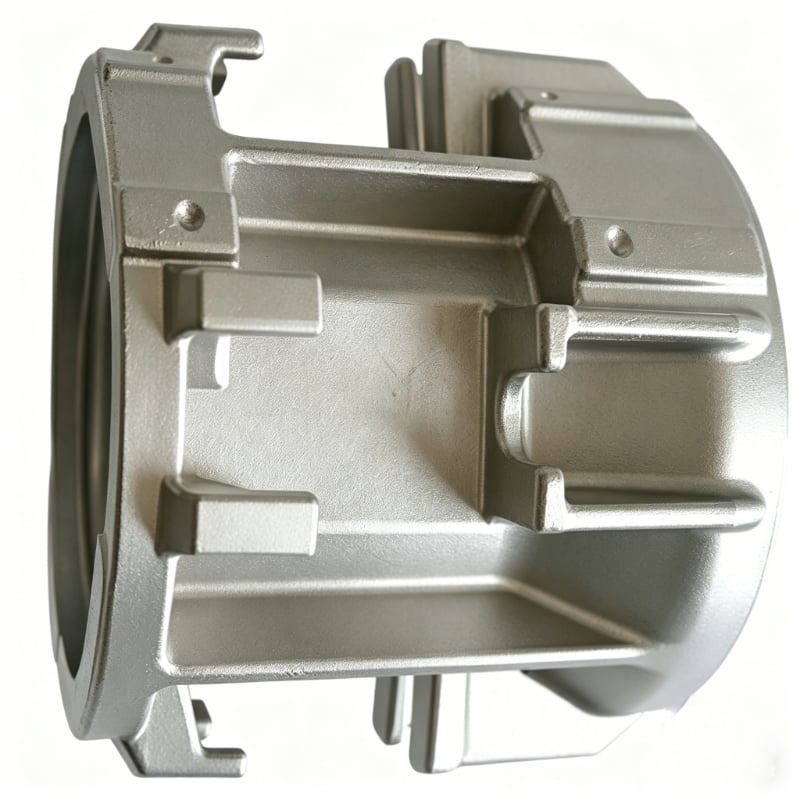
Investment casting services stand apart from other manufacturing methods through their remarkable ability to produce components with intricate geometries and exceptional dimensional accuracy. The process captures fine details down to fractions of a millimeter, replicating complex features that would challenge or defeat conventional machining, forging, or stamping operations. Engineers designing aerospace components, medical devices, or precision instruments rely on investment casting services to transform their most ambitious concepts into physical reality. The ceramic shell mold faithfully reproduces every contour, texture, and detail from the original wax pattern, including internal channels, complex curves, and delicate features that intersect at challenging angles. This precision eliminates the need for multiple manufacturing steps, assembly operations, or welding processes that could introduce dimensional variations or weak points. Investment casting services typically achieve tolerances within plus or minus 0.005 inches per inch, and specialized applications can reach even tighter specifications with appropriate process controls. The dimensional consistency across production runs ensures that parts remain interchangeable, simplifying inventory management, assembly procedures, and field service operations. Complex internal passages for fluid flow, cooling channels, or weight reduction can be incorporated directly into cast components without requiring post-casting drilling or electrical discharge machining. This capability proves especially valuable in turbine blades, pump housings, and hydraulic components where internal geometry directly impacts performance. Investment casting services also excel at producing parts with variable wall thicknesses, transitioning smoothly from thick structural sections to thin functional features within a single component. The process accommodates undercuts, reverse draft angles, and re-entrant features that would require collapsible cores or multiple-piece molds in other casting methods. These geometric capabilities enable designers to optimize components for strength, weight, and functionality without compromise. The precision of investment casting services extends to surface texture control, producing finishes that range from highly polished to deliberately textured depending on functional requirements. This control over surface characteristics affects everything from fluid dynamics to coating adhesion to aesthetic appearance in consumer products.
Material Versatility for Diverse Applications

Material Versatility for Diverse Applications

Investment casting services provide unmatched flexibility in material selection, accommodating virtually any metal or alloy that can be melted and poured, including materials that present challenges for other manufacturing processes. This versatility empowers engineers to select the optimal material for each application based on mechanical properties, environmental resistance, thermal characteristics, and cost considerations without being limited by manufacturing constraints. The process successfully casts stainless steel alloys that offer excellent corrosion resistance for marine, chemical processing, and food industry applications. Carbon steel components provide cost-effective strength for industrial machinery, automotive parts, and construction equipment. Aluminum alloys deliver exceptional strength-to-weight ratios for aerospace, transportation, and portable equipment where weight reduction translates directly to performance improvements and fuel savings. Bronze and copper alloys serve applications requiring thermal conductivity, electrical properties, or specific tribological characteristics in bearings, bushings, and electrical components. Investment casting services also work with exotic superalloys containing nickel, cobalt, or titanium that maintain strength and resist oxidation at extreme temperatures found in jet engines, gas turbines, and petrochemical processing equipment. These specialized materials often prove difficult or impossible to machine due to their hardness and work-hardening properties, making investment casting services the preferred or only viable manufacturing method. The process accommodates proprietary alloy formulations developed for specific performance requirements, giving companies the ability to leverage advanced materials science in their product development. Material traceability and certification remain integral to investment casting services, with foundries maintaining detailed records of alloy composition, heat treatment, and mechanical property testing to meet industry standards and customer specifications. This documentation proves essential in regulated industries like aerospace, medical devices, and nuclear power where material provenance and properties must be verified. Investment casting services support multiple heat treatment processes to optimize material properties, including solution annealing, precipitation hardening, stress relieving, and normalization. These thermal treatments transform the as-cast microstructure to achieve desired combinations of strength, ductility, hardness, and toughness. The material flexibility extends to surface treatments and coatings that enhance corrosion resistance, wear resistance, or aesthetic appearance without affecting the precision of underlying dimensions.
Economic Efficiency Through Design Optimization

Economic Efficiency Through Design Optimization

Investment casting services deliver compelling economic advantages by enabling component designs that consolidate multiple parts, reduce material consumption, and minimize secondary operations throughout the production cycle. The process transforms complex assemblies requiring numerous components, fasteners, and joining operations into single, integrated castings that reduce manufacturing steps, labor costs, and potential failure points. This consolidation strategy proves particularly valuable when companies analyze total cost of ownership rather than simply comparing piece prices between manufacturing methods. Investment casting services eliminate the tooling costs associated with multiple stamping dies, machining fixtures, or welding jigs needed to produce and assemble separate components. A single casting pattern and ceramic mold replace entire assembly lines, reducing capital investment, floor space requirements, and production complexity. The near-net-shape nature of components produced through investment casting services means that rough castings already closely approximate final dimensions, requiring minimal stock removal during finishing operations. Traditional machining from solid bar stock might remove 70 to 80 percent of the original material as chips, while investment casting services typically achieve 85 to 95 percent material utilization. This efficiency becomes especially significant when working with expensive alloys where material costs represent a substantial portion of component expenses. Reduced machining requirements also mean shorter production cycles, lower energy consumption, and decreased tool wear, contributing to overall cost reductions and improved environmental sustainability. Investment casting services support value engineering initiatives by enabling designers to optimize wall thicknesses, add strengthening ribs, and incorporate functional features without the geometric constraints imposed by machining or forging. Components can be lightweighted strategically, removing material from low-stress areas while reinforcing critical load paths, achieving better strength-to-weight ratios than uniform-thickness designs. The process accommodates integral features like mounting bosses, alignment pins, and attachment points that would require secondary operations or additional hardware in fabricated assemblies. Quality improvements from investment casting services also generate economic returns through reduced scrap rates, fewer warranty claims, and enhanced product reputation. The consistent dimensional accuracy and mechanical properties minimize variations that could cause assembly problems or field failures. Long-term relationships with investment casting services providers enable continuous improvement initiatives, where foundries and customers collaborate on design refinements, process optimizations, and cost reduction projects that benefit both parties. The scalability of investment casting services means that initial prototype tooling can often be adapted for production use, avoiding the complete retooling required when transitioning from prototype methods to volume manufacturing with other processes.

Get a Free Quote

Our representative will contact you soon.
Email
Name
Company Name
Message
0/1000