
 EN
EN

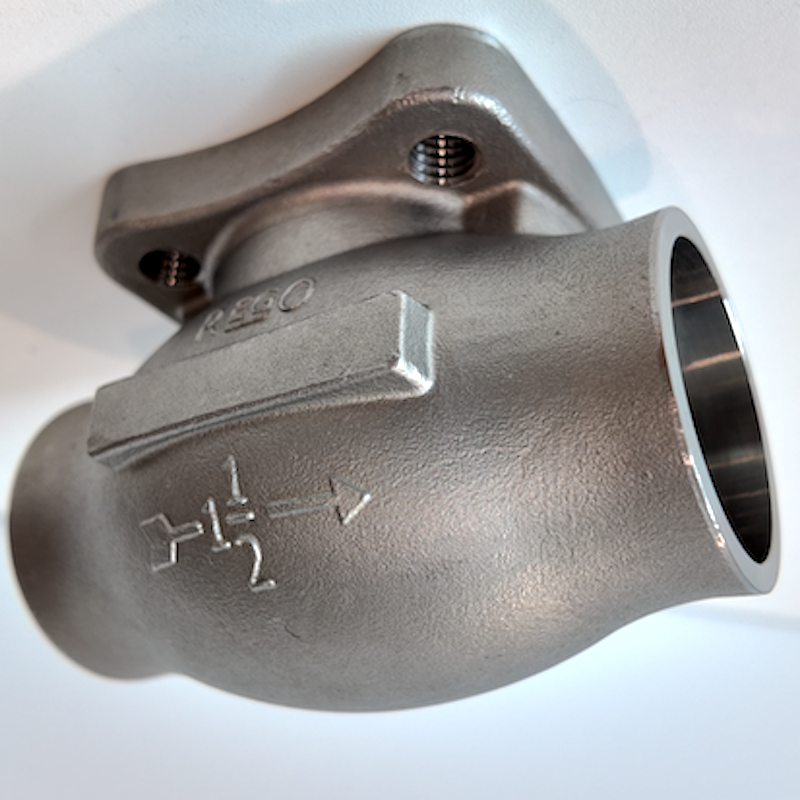
Figure 1: Custom Valve Body Fabricated via Precision Investment Casting, Featuring Crisp Surface Details and Net-Shape Integrity.
In today's fast-evolving manufacturing landscape, the ability to move from concept to production-ready component quickly and without sacrificing dimensional accuracy has become a critical competitive advantage. oem odm precision casting services have emerged as one of the most effective pathways for engineering teams and procurement managers seeking both design flexibility and accelerated development timelines. Rather than being locked into standard catalogue parts or waiting for lengthy tooling cycles, companies working with specialized casting partners can iterate rapidly, validate designs early, and bring optimized components to market with confidence.
The distinction between OEM and ODM service models matters considerably when planning a product development strategy. OEM precision casting supports clients who bring complete design specifications and rely on the casting partner to manufacture to exact requirements, while ODM precision casting goes further by involving the supplier's engineering expertise in co-developing or refining the design itself. Together, these two delivery models make oem odm precision casting services uniquely suited to support flexible product architectures and the iterative nature of modern rapid prototyping workflows. Understanding precisely how these mechanisms work helps decision-makers select the right partner and unlock the full potential of advanced casting technology.
The Core Mechanism Behind Design Flexibility in OEM ODM Precision Casting
How OEM Precision Casting Preserves Design Intent Across Iterations
When a client submits detailed 3D models, engineering drawings, and material specifications to a casting partner operating under the OEM model, the manufacturing team's responsibility is to replicate those specifications with high fidelity across every batch. This sounds straightforward, but in practice it requires sophisticated process controls, tightly managed wax injection parameters, and rigorous inspection protocols. Oem odm precision casting services operating at this level maintain dimensional tolerances typically within ±0.1 mm or better, allowing product engineers to trust that the physical cast part will faithfully represent their digital model.
This fidelity is especially valuable during iterative design phases. Engineering teams often need to run multiple design variants simultaneously—testing wall thickness modifications, geometry changes, or material substitutions—and each version must be manufactured identically within its own specification set. A precision casting partner with strong OEM capabilities creates a reliable feedback loop where design changes produce predictable physical outcomes, enabling data-driven decisions rather than guesswork. The repeatability built into oem odm precision casting services means that comparison testing between design versions is statistically meaningful.
Furthermore, advanced casting facilities leverage digital process documentation to capture every parameter used in producing a given design iteration. When a client needs to revisit a previous geometry or scale production of a validated prototype, those records ensure exact replication. This traceability is a cornerstone of how oem odm precision casting services support genuine design flexibility—not just freedom to propose new ideas, but freedom to recover, compare, and build on previous work systematically.
How ODM Engineering Involvement Accelerates Design Refinement
The ODM dimension of oem odm precision casting services introduces a collaborative engineering layer that can dramatically compress the time between initial concept and a manufacturable design. In an ODM engagement, the casting supplier's engineering team reviews client requirements—functional performance targets, load conditions, operating environment, cost constraints—and contributes expertise in casting process design, alloy selection, and geometric optimization. This means clients benefit from manufacturing feasibility insights before tooling is committed, reducing expensive late-stage redesigns.
A common scenario involves a client presenting a functional prototype made from machined billet or additive manufacturing who wants to transition to investment casting for production economics. The ODM team analyzes the geometry for draft angles, wall uniformity, gating and risering strategies, and material flow characteristics. They may recommend subtle geometry adjustments that preserve all functional requirements while dramatically improving castability and yield. This kind of upstream collaboration is one of the most undervalued aspects of oem odm precision casting services and one of the strongest contributors to rapid, successful prototyping outcomes.
ODM engineering involvement also opens the door to design-for-manufacturing optimization that clients may not possess in-house. For components like turbine blades, aerospace structural elements, or complex valve bodies, the interaction between casting process variables and final mechanical properties is highly nuanced. By drawing on the casting partner's accumulated process knowledge, clients effectively extend their own engineering capability without expanding headcount, which is a significant advantage in fast-moving development programs.
Rapid Prototyping Workflows Enabled by Precision Casting Partnerships
Tooling Strategies That Reduce Prototype Lead Times
One of the most significant ways oem odm precision casting services support rapid prototyping is through intelligent tooling strategies designed to minimize time and cost during early development phases. Traditional investment casting tooling involves precision-machined metal dies, which are highly durable and appropriate for production volumes but expensive and slow to produce for initial prototypes. Forward-thinking casting partners offer rapid tooling alternatives—including aluminum soft tooling or even 3D-printed wax patterns—that allow prototype castings to be produced in days rather than weeks.
Aluminum prototype tooling can typically be produced in one to three weeks at a fraction of the cost of hardened steel production tooling, yet it yields investment castings with the same material properties and surface finish characteristics as production parts. This is a decisive advantage because it means prototypes evaluated during development are truly representative of production intent, not just approximate models. Engineering validation data collected from these prototypes is directly applicable to production decisions, making the development process more efficient and trustworthy.
Some oem odm precision casting services providers also offer ceramic shell casting using 3D-printed patterns for ultra-fast prototype cycles. In this approach, a wax or resin pattern is produced directly from a 3D printer and used to create the ceramic shell mold without any dedicated tooling at all. While this method is limited in the number of castings it can economically produce, it is ideal for first-article verification when a client needs a single functional casting to evaluate form, fit, and function before committing to tooling investment. The ability to offer this spectrum of tooling options is a hallmark of a capable oem odm precision casting services provider.
Process Integration from CAD to First Article Inspection
The efficiency of rapid prototyping through oem odm precision casting services depends heavily on how seamlessly digital design data flows into physical manufacturing processes. Modern casting facilities accept a variety of CAD formats and apply casting simulation software to predict solidification behavior, shrinkage, and potential defect locations before any physical material is committed. This digital pre-validation step eliminates many of the trial-and-error cycles that historically made casting prototyping slow and expensive.
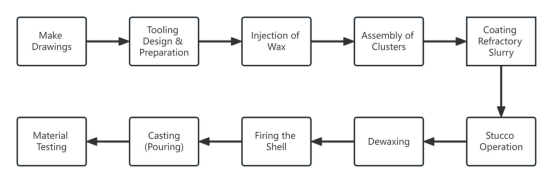
Once simulation confirms the process plan, rapid tooling or direct pattern production is initiated. From that point, the investment casting process—wax injection or pattern printing, ceramic shell building, dewaxing, pouring, and shell removal—is executed with a focus on schedule adherence rather than just throughput. Dedicated prototype production lines, available at many serious oem odm precision casting services facilities, isolate prototype work from production volume pressures, ensuring that small prototype batches receive the same attentiveness as large orders.
First article inspection (FAI) is the final gateway before a prototype is released to the client for evaluation. This process involves comprehensive dimensional verification using coordinate measuring machines (CMM), surface finish measurement, and often non-destructive testing for internal soundness. Detailed FAI reports allow clients to make informed decisions about design acceptance or modification with confidence rooted in measured data rather than visual assessment. This systematic approach is what transforms a casting capability into a genuine rapid prototyping service.
Material Selection Flexibility as a Competitive Differentiator
Alloy Breadth and Its Impact on Design Freedom
A fundamental enabler of design flexibility within oem odm precision casting services is access to a broad portfolio of castable alloys. Investment casting, which is the dominant process within precision casting, is compatible with an exceptionally wide range of metallic materials—carbon steels, low-alloy steels, stainless steels, nickel-based superalloys, cobalt alloys, titanium alloys, and various non-ferrous metals. Each alloy family brings distinct mechanical, thermal, and corrosion-resistance properties that allow designers to optimize components for their specific operating environments.
For product teams developing components across different applications—from aerospace turbine blades requiring nickel superalloy heat resistance to marine hardware demanding duplex stainless steel corrosion resistance—a single oem odm precision casting services partner capable of processing multiple alloy families eliminates the need to manage multiple specialized suppliers. This consolidation simplifies supply chain management and also encourages cross-pollination of design ideas and material knowledge between projects, which can accelerate innovation.
Material selection during prototyping is not always straightforward. Clients sometimes need to evaluate the same geometry in two or three alloy variants to identify the optimal balance of performance, weight, and cost. The ability of oem odm precision casting services providers to cast identical geometries in different materials—using the same tooling where alloy shrinkage factors allow—gives engineering teams a powerful experimental capability. Side-by-side material comparison with geometrically identical samples is enormously valuable for applications where material behavior under real operating conditions is difficult to predict analytically.
Materials We Cast for OEM/ODM Rapid Prototypes
Discover our core alloy capabilities engineered for high-performance applications:
Stainless Steels (304, 316, Duplex, 17-4 PH) Carbon & Low-Alloy Steels (1020, 8620, 4140) Nickel-Based Superalloys (Inconel 625/718) Cobalt Alloys (Stellite 6/21) Copper & Tool Steels
Looking for a specific international standard (ASTM, DIN, JIS)?
We process over 60+ specialty alloy grades. [Contact Our Engineers] to check your project’s compatibility.
Near-Net-Shape Casting and Its Role in Reducing Development Cost
One of the intrinsic advantages of precision casting that makes oem odm precision casting services particularly attractive for prototyping is the near-net-shape output. Unlike machining from billet, which removes significant material to arrive at the final form, investment casting produces components that are geometrically close to their finished shape with minimal material waste. During prototyping, this means that expensive, high-performance alloys are consumed efficiently, and post-casting machining is limited to critical surfaces requiring tight tolerances or specific surface finishes.
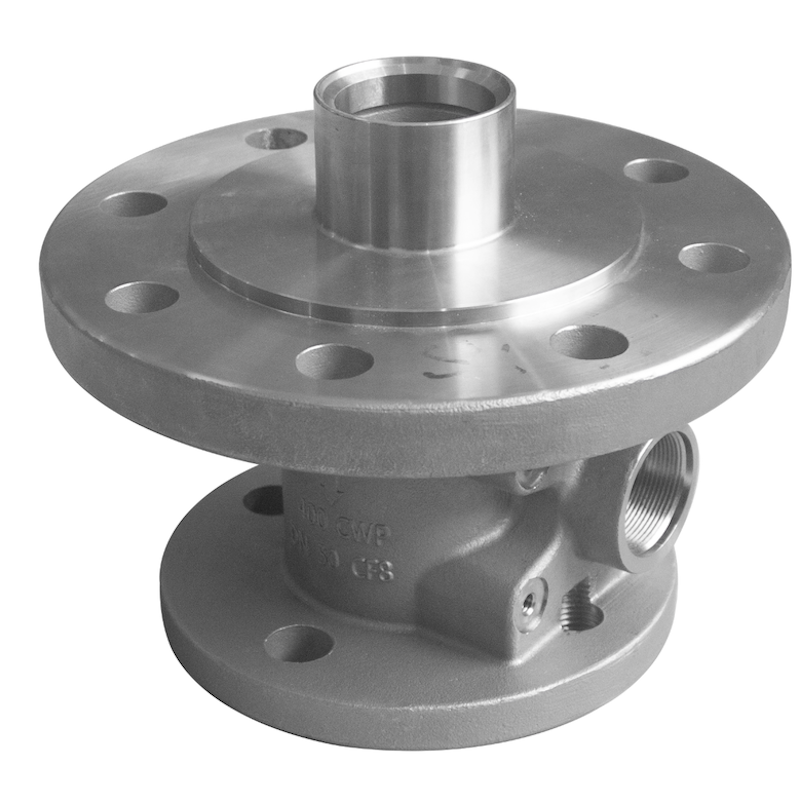
Near-net-shape capability also allows prototyping of complex internal features—passages, undercuts, hollow sections—that would be extremely costly or impossible to produce by machining alone. This is critical for components like turbine blades with internal cooling channels, complex valve bodies with integrated flow passages, or structural aerospace parts with weight-reducing internal voids. By enabling these features at the prototype stage, oem odm precision casting services allow engineering teams to test the actual final design concept rather than a simplified proxy, producing more relevant validation data.
The cost implications of near-net-shape production compound positively across the development timeline. Lower material waste reduces per-part material cost. Reduced machining requirements lower processing cost and lead time. More representative prototypes reduce the number of design iterations required before validation. Collectively, these factors mean that engaging oem odm precision casting services early in development—rather than after concept validation through other methods—often produces a faster, less expensive path to a production-ready component.
Quality Systems and Communication Practices That Sustain Long-Term Flexibility
Documentation and Change Management in OEM ODM Engagements
Design flexibility is only valuable if changes can be implemented reliably and documented thoroughly. A mature oem odm precision casting services provider maintains engineering change management systems that track design revisions, tooling modifications, and process parameter updates across the full history of a client's part. This documentation infrastructure means that when a client requests a design change—even after months or years of production—the change is implemented systematically, with full traceability to the previous design state.
This matters practically in situations such as regulatory recertification, customer-driven product improvements, or failure analysis investigations. Being able to definitively characterize exactly what changed, when, and how the manufacturing process was adjusted to accommodate it is a professional standard that serious oem odm precision casting services providers embed into their quality management systems. Clients who understand this capability recognize it as a form of risk management—the casting partner becomes not just a manufacturer but a steward of the product's manufacturing history.
Effective communication protocols are equally important. Leading oem odm precision casting services providers assign dedicated project engineers or customer liaison roles to manage client relationships, so that design change requests, timeline questions, and quality discussions are handled by knowledgeable people rather than routed through generic customer service. This direct technical communication channel accelerates decision-making and reduces the misinterpretations that can derail prototype programs.
Certifications and Quality Standards That Underpin Prototyping Confidence
For clients in regulated industries—aerospace, defense, medical devices, energy—the quality framework surrounding oem odm precision casting services is not optional; it is a prerequisite for supplier qualification. Certifications such as AS9100 for aerospace, ISO 9001 for general quality management, and NADCAP for special processes provide independent verification that a casting supplier's processes are controlled, documented, and audited against international standards. These certifications are particularly meaningful during prototyping because they ensure that the test data generated from prototype castings is credible and defensible.
When clients need to present prototype test results to internal approval committees, end customers, or regulatory bodies, the provenance of those parts—manufactured under a certified quality system—carries significant weight. It demonstrates that the prototype is not a one-off production curiosity but a genuinely controlled sample that represents achievable production quality. This credibility is one of the less-discussed but highly important contributions that oem odm precision casting services make to rapid prototyping programs in demanding industries.
Quality certifications also signal investment in measurement technology, personnel training, and process discipline that directly translate into the consistency and accuracy clients need during flexible design exploration. A provider holding multiple relevant certifications has, by definition, subjected its quality systems to external scrutiny and demonstrated conformance, which provides engineering procurement teams with a meaningful basis for supplier trust beyond marketing claims.
FAQ
What is the typical lead time for prototype castings through OEM ODM precision casting services?
Lead times for prototype castings vary based on tooling method and complexity. With 3D-printed pattern approaches, first article castings can sometimes be delivered in one to two weeks. Aluminum rapid tooling followed by investment casting typically requires three to five weeks from design approval to first article delivery. Hard steel production tooling takes longer—typically six to ten weeks—but is appropriate when high-volume production follows immediately after prototype validation. Communicating your timeline requirements clearly at the outset allows oem odm precision casting services providers to recommend the most appropriate tooling and process strategy for your specific situation.
Can OEM ODM precision casting services handle very small prototype quantities economically?
Yes, one of the strengths of precision casting for prototyping is that relatively small quantities—sometimes as few as five to twenty pieces—can be produced economically, particularly when rapid tooling or 3D-printed pattern methods are used. Production tooling amortizes more efficiently over larger quantities, but prototype-specific tooling strategies are designed precisely to make small quantities viable. Experienced oem odm precision casting services providers will advise on the most cost-effective approach based on your target quantity, material, complexity, and downstream production plans.
How involved can the ODM engineering team be in refining my initial design concept?
ODM engineering involvement can range from basic design-for-manufacturing review—checking draft angles, wall thickness uniformity, and casting feasibility—to deep collaborative co-design where the supplier's engineers contribute significantly to geometry development based on functional requirements you provide. The appropriate level of involvement depends on your internal engineering capabilities and the complexity of the component. Most oem odm precision casting services providers with genuine ODM capability will conduct an initial technical review at no charge to identify major manufacturability concerns before a formal project is established, giving clients a low-risk entry point into the collaboration.
What quality documentation is typically provided with prototype castings from OEM ODM precision casting services?
Prototype castings from capable oem odm precision casting services providers are typically accompanied by first article inspection reports (FAIR) that include dimensional measurement results for all print-controlled features, material certifications confirming the alloy composition and mechanical properties, and, where specified, non-destructive testing reports such as radiographic or dye penetrant inspection results. Some providers also supply process parameter records and casting simulation outputs as supplementary documentation. The completeness of documentation should be discussed and agreed upon at project initiation to ensure that what is provided aligns with your internal review and approval processes.
Table of Contents
- The Core Mechanism Behind Design Flexibility in OEM ODM Precision Casting
- Rapid Prototyping Workflows Enabled by Precision Casting Partnerships
- Material Selection Flexibility as a Competitive Differentiator
- Quality Systems and Communication Practices That Sustain Long-Term Flexibility
-
FAQ
- What is the typical lead time for prototype castings through OEM ODM precision casting services?
- Can OEM ODM precision casting services handle very small prototype quantities economically?
- How involved can the ODM engineering team be in refining my initial design concept?
- What quality documentation is typically provided with prototype castings from OEM ODM precision casting services?