
 EN
EN


For global buyers sourcing complex metal components, selecting a reliable partner for oem odm precision casting services is one of the most consequential procurement decisions in a production cycle. The stakes are high: dimensional inaccuracies, inconsistent metallurgy, or poor surface finishes can cascade into costly assembly failures, delayed shipments, and damaged relationships with end customers. Understanding what to genuinely expect from a qualified supplier — rather than what marketing materials promise — is the foundation of a successful long-term sourcing strategy.
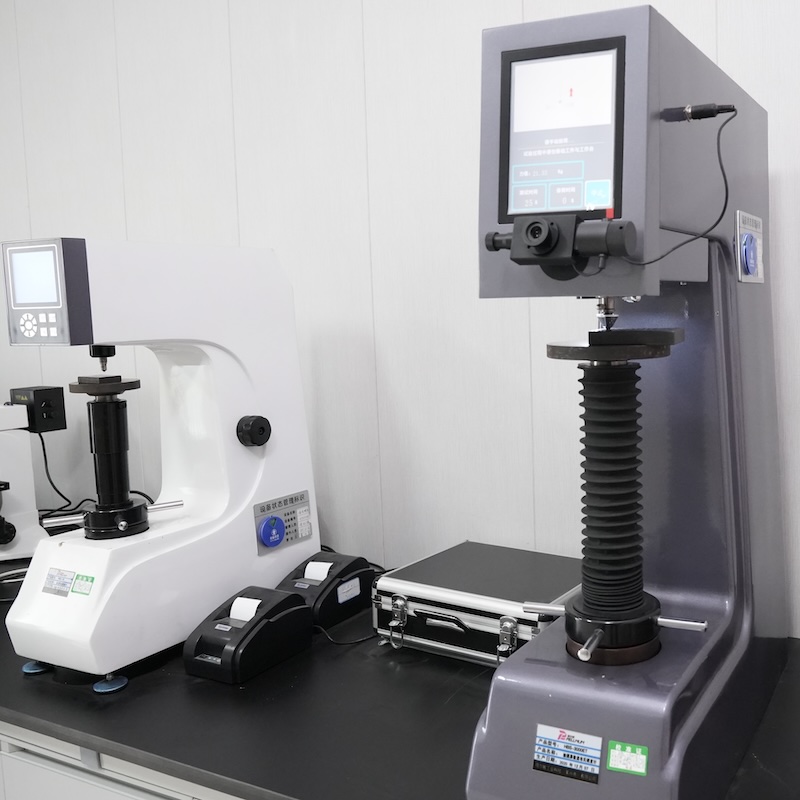
The global landscape of oem odm precision casting services spans aerospace components, industrial turbines, automotive drivetrain parts, marine hardware, and medical-grade hardware — each with unique tolerances, regulatory requirements, and lifecycle expectations. Buyers who approach this market with a structured evaluation framework consistently outperform those who rely on price alone. This article breaks down the key expectations global buyers should hold when engaging oem odm precision casting services suppliers, from technical capabilities and quality assurance to communication standards and scalability.
Core Technical Capabilities That Define a Competent Supplier
Material Mastery Across Alloy Families
A qualified provider of oem odm precision casting services must demonstrate deep metallurgical knowledge spanning a wide range of alloy families. This includes nickel-based superalloys for high-temperature aerospace applications, stainless steel grades for corrosive environments, carbon steel for structural components, and titanium alloys where weight-to-strength ratios are critical. A supplier that works predominantly with one alloy family and claims competence across all is a significant risk indicator.
Global buyers should request material certifications, composition test reports, and mechanical property data sheets for each alloy a supplier claims to process. Legitimate oem odm precision casting services operations maintain documented material traceability from raw ingot to finished casting. This is not merely a documentation formality — it is the evidence chain that allows buyers to validate performance claims under their own quality management systems.
Understanding heat treatment capabilities is equally essential. Many precision castings require post-casting thermal processes to achieve final hardness, stress relief, or grain refinement. Suppliers who perform these processes in-house offer tighter control and shorter lead times than those who subcontract them, and global buyers should factor this into their capability assessments.
Casting Process Flexibility and Tooling Expertise
Oem odm precision casting services are not monolithic — they encompass investment casting, lost-wax casting, sand casting, shell molding, and die casting, each suited to different part geometries, production volumes, and surface finish requirements. A capable supplier should be able to recommend the most appropriate process for a buyer's specific component design rather than defaulting to whatever process they operate most commonly.
Tooling expertise is especially relevant in OEM contexts where proprietary designs must be accurately translated into wax patterns or dies. Buyers should expect a supplier to manage full tooling lifecycle documentation, including first article inspection records and tool maintenance logs. For ODM engagements, where the supplier contributes engineering input to the component design, this tooling knowledge becomes even more strategically significant.
Advanced casting facilities increasingly integrate simulation software to model solidification behavior, shrinkage patterns, and potential defect zones before any physical tooling is commissioned. This simulation-driven approach reduces first-time tooling failures and shortens development cycles — a meaningful advantage for buyers operating under aggressive time-to-market pressures.
Quality Assurance Standards and Inspection Infrastructure
Certifications as a Baseline, Not a Guarantee
When evaluating oem odm precision casting services providers, certifications such as ISO 9001, AS9100 for aerospace, IATF 16949 for automotive, and ISO 13485 for medical devices serve as baseline indicators of systematic quality management. However, buyers must treat certifications as the starting point of due diligence, not the end point. A certificate confirms that a quality management system exists — it does not automatically confirm that every production run meets specification.
Buyers should request actual audit reports, nonconformance records, and corrective action documentation in addition to certificates. A supplier comfortable sharing this information signals organizational transparency and operational maturity. Conversely, a supplier that deflects such requests warrants caution regardless of which certifications they display.
For industry-specific applications, buyers should verify that certification scope covers the exact casting processes and alloy types relevant to their components. A supplier may hold aerospace certification for one casting process while another process they offer remains outside the certified scope — a distinction that carries real production risk.
In-Process and Final Inspection Capabilities
Robust oem odm precision casting services operations deploy multi-stage inspection protocols rather than relying solely on final inspection. In-process controls should include wax pattern dimensional checks, shell building consistency verification, and pour temperature monitoring. These checkpoints catch deviations early, when correction is still economical.
Final inspection capabilities should encompass coordinate measuring machine (CMM) verification for critical dimensions, non-destructive testing methods such as X-ray, fluorescent penetrant inspection (FPI), and ultrasonic testing for internal integrity, as well as surface roughness measurement. Buyers should confirm which of these capabilities are maintained in-house and which require third-party subcontracting, as subcontracting introduces scheduling variability and potential chain-of-custody risks.
Documentation practices matter enormously in high-stakes procurement. A competent provider of oem odm precision casting services should issue comprehensive inspection reports, first article inspection (FAI) packages, and material test reports with each shipment. These documents are not administrative overhead — they are contractual deliverables that protect buyers during incoming quality control and downstream traceability audits.
Engineering Collaboration and ODM Design Support
The Distinction Between OEM Execution and ODM Partnership
Global buyers must clearly understand the operational difference between engaging a supplier in a pure OEM mode versus an ODM mode. In OEM engagements, the buyer provides complete design specifications and the supplier executes to those specifications with minimal design input. In ODM engagements, the supplier contributes engineering expertise to co-develop or optimize the component design, which requires a materially different level of technical engagement from the supplier's team.
When seeking oem odm precision casting services that include meaningful ODM capability, buyers should evaluate the supplier's engineering staff depth, CAD/CAM proficiency, and casting design-for-manufacturability (DFM) experience. A supplier with strong ODM credentials will proactively identify wall thickness concerns, draft angle requirements, and gating location optimizations during the design review phase rather than waiting for problems to emerge during trial casting runs.
Intellectual property protection is a legitimate concern in ODM relationships. Professional suppliers engaged in oem odm precision casting services will maintain formal NDA frameworks, clearly defined ownership agreements for jointly developed tooling, and documented IP segregation practices to protect buyer designs from unauthorized reproduction or disclosure.
Communication Protocols and Project Management Transparency
Effective engineering collaboration requires structured communication rather than ad hoc email exchanges. Leading oem odm precision casting services suppliers assign dedicated project engineers or account managers as single points of contact for each customer program. This reduces information loss across handoffs, accelerates problem resolution, and maintains design intent throughout the production ramp.
Project milestone transparency is particularly important for global buyers managing supply chains across time zones. Suppliers should provide detailed production schedules with clear milestone gates, proactive status updates without requiring the buyer to chase information, and early warning notifications when schedule risks emerge. This level of project management discipline distinguishes world-class oem odm precision casting services operations from commodity producers.
Digital collaboration tools, 3D model sharing platforms, and real-time production dashboards are increasingly standard among competitive oem odm precision casting services suppliers. Buyers should consider a supplier's digital infrastructure as part of their capability evaluation — especially for complex programs requiring iterative design revisions or multi-site supply chain coordination.
Scalability, Lead Time Reliability, and Supply Chain Resilience
Volume Flexibility Without Quality Compromise
One of the most practical expectations global buyers should hold when sourcing oem odm precision casting services is the ability to scale production volumes without degrading quality consistency. Suppliers capable of handling small prototype batches, medium-volume development runs, and high-volume production series within the same quality management framework provide buyers with continuity across the product development lifecycle.
Volume scalability is not only about physical production capacity — it is about workforce depth, tooling redundancy, and raw material supply relationships. A supplier operating near 100% capacity is vulnerable to schedule disruptions from even minor upstream disruptions. Buyers conducting factory audits should inquire about capacity utilization rates, equipment redundancy, and contingency sourcing arrangements for critical alloys.
For programs with seasonal demand peaks or unpredictable call-off patterns, discussing blanket order arrangements and safety stock policies with oem odm precision casting services suppliers upfront can prevent lead time surprises during peak demand periods. Suppliers willing to engage in collaborative demand planning demonstrate supply chain partnership maturity rather than a purely transactional orientation.
Lead Time Commitments and On-Time Delivery Performance
Lead time reliability is consistently cited as a top supplier performance criterion by global industrial buyers. Oem odm precision casting services programs typically involve tooling fabrication phases, trial casting runs, first article approval cycles, and production lead times — each of which must be realistically quoted and consistently achieved. Buyers should request historical on-time delivery data, ideally covering twelve or more months, as part of their supplier qualification process.
Understanding where lead time variability originates is equally important. Some delays are driven by post-casting finishing operations such as machining, heat treatment, or surface coating. Others arise from third-party inspection scheduling. Suppliers that offer an integrated value chain covering casting, finishing, and inspection under one roof generally offer more predictable lead times than those relying heavily on subcontractors for downstream processing.
Global buyers should also assess a supplier's logistics capabilities and export compliance experience. Oem odm precision casting services for international shipments require proper export documentation, material certification packages aligned with destination country import requirements, and packaging standards that protect precision components from transit damage. Suppliers with established international shipping experience reduce administrative burden and customs clearance risk for buyers.
Pricing Transparency and Total Cost of Ownership Thinking
Understanding Quotation Structure Beyond Unit Price
Global buyers evaluating oem odm precision casting services quotations should move beyond unit price comparisons toward a total cost of ownership framework. The lowest unit price often conceals hidden cost drivers such as excessive scrap rates, frequent nonconformance charges, high tooling amortization fees, or below-specification components that require rework in the buyer's own facility. These downstream costs can easily erode initial unit price advantages.
A transparent supplier will clearly delineate tooling costs, non-recurring engineering charges, first article inspection fees, and per-unit production costs in their quotation. They will also be able to explain the cost drivers behind their pricing rather than presenting opaque lump-sum figures. This pricing transparency is a strong indicator of financial management maturity and organizational trustworthiness in oem odm precision casting services suppliers.
Buyers should also evaluate cost stability across multi-year supply programs. Responsible suppliers providing oem odm precision casting services will discuss commodity price indexing mechanisms for volatile alloys, tooling ownership terms, and pricing review cycles upfront rather than introducing unilateral price increases mid-program. Establishing these commercial frameworks during initial negotiations protects both parties over the long term.
Value Engineering Contributions That Reduce Buyer Costs
Beyond executing to specification, world-class oem odm precision casting services suppliers actively contribute value engineering recommendations that reduce total component cost without compromising function. This might involve suggesting a casting process change that eliminates a secondary machining operation, recommending a near-net-shape casting approach that reduces raw material consumption, or identifying a design modification that improves yield rates and reduces scrap.
Buyers should explicitly invite value engineering dialogue during program reviews and treat supplier-initiated cost reduction proposals as a sign of a commercially engaged partnership rather than a challenge to the original design intent. The most productive oem odm precision casting services relationships are collaborative, with both parties motivated to optimize the total cost equation over the program lifecycle.
Evaluating a supplier's value engineering track record with other customers — through case studies, reference conversations, or published application examples — gives buyers meaningful insight into whether this contribution is a genuine organizational competency or a marketing claim. Experienced buyers ask directly: can you show us a specific example of how you reduced a customer's component cost through a casting process or design improvement?
FAQ
How do I verify that a supplier's oem odm precision casting services certifications are genuinely applicable to my parts?
Request the full certification scope statement, not just the certificate itself. Confirm that the certification explicitly covers the casting process, alloy category, and part application relevant to your program. Ask for the most recent surveillance audit report and verify the certification body's accreditation status. Cross-check the supplier's declared scope against your own engineering specifications before proceeding to formal qualification.
What is a reasonable first article inspection process to expect from oem odm precision casting services suppliers?
A robust first article inspection (FAI) for precision castings should include full dimensional layout against the drawing, material chemical composition and mechanical property test reports, surface finish measurement, applicable non-destructive testing results, and functional test data if specified. The FAI package should be delivered in a documented format aligned with the applicable industry standard for your sector, such as AS9102 for aerospace programs. Review the FAI package thoroughly before approving production release.
How should global buyers manage intellectual property when engaging in ODM design collaboration?
Establish a formal NDA before sharing any proprietary design information. Define in writing who owns newly developed tooling, jointly created design improvements, and application-specific engineering data. Specify confidentiality obligations explicitly, including restrictions on the supplier using buyer-derived knowledge for other customers. Review these agreements with legal counsel familiar with the supplier's jurisdiction, as IP enforcement mechanisms vary significantly across different legal systems.
What lead time expectations are realistic for oem odm precision casting services with custom tooling?
Lead times vary based on component complexity, tooling type, alloy, and post-casting processing requirements. For investment casting programs with new tooling, total lead time from design approval to first article delivery commonly ranges from eight to sixteen weeks. Production lead times after tooling approval are typically shorter, often four to ten weeks depending on casting complexity and downstream operations. Always request a detailed milestone schedule rather than a single delivery date, and build contingency into your program plan for first article revision cycles.
Table of Contents
- Core Technical Capabilities That Define a Competent Supplier
- Quality Assurance Standards and Inspection Infrastructure
- Engineering Collaboration and ODM Design Support
- Scalability, Lead Time Reliability, and Supply Chain Resilience
- Pricing Transparency and Total Cost of Ownership Thinking
-
FAQ
- How do I verify that a supplier's oem odm precision casting services certifications are genuinely applicable to my parts?
- What is a reasonable first article inspection process to expect from oem odm precision casting services suppliers?
- How should global buyers manage intellectual property when engaging in ODM design collaboration?
- What lead time expectations are realistic for oem odm precision casting services with custom tooling?