
 EN
EN
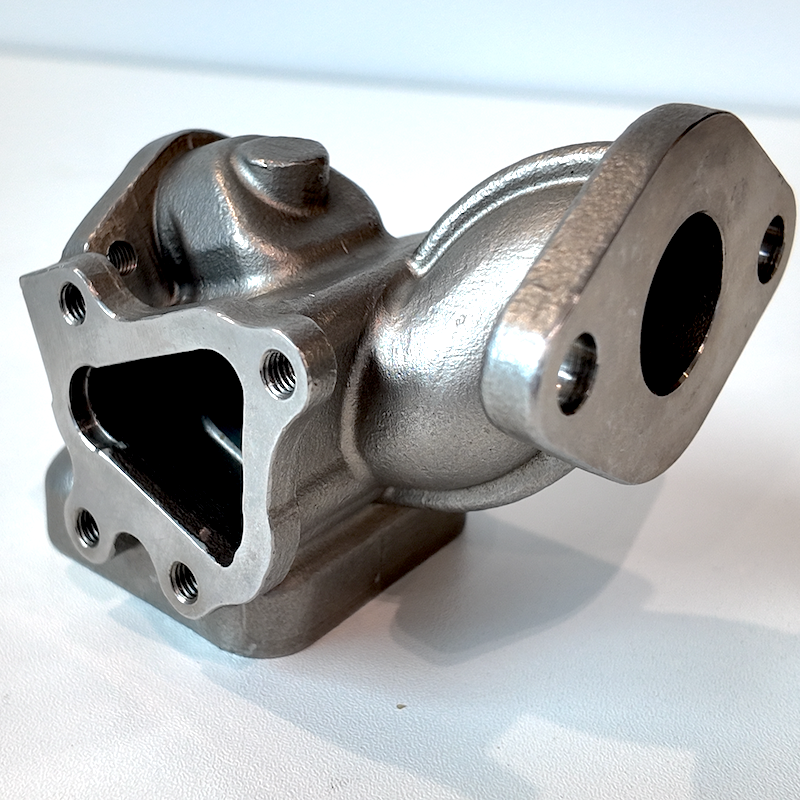
In demanding industrial environments where moisture, chemicals, and extreme temperatures are constant threats, material selection is one of the most critical engineering decisions a manufacturer can make. Among the available manufacturing methods, stainless steel investment castings have emerged as the preferred solution for components that must resist corrosion without compromising dimensional precision or mechanical integrity. From fluid handling systems to marine hardware, the preference for this manufacturing approach is not accidental — it is grounded in a combination of material science, process advantages, and long-term cost logic.
Understanding why stainless steel investment castings dominate corrosion-resistant applications requires looking at both the alloy properties and the precision manufacturing process behind them. The investment casting method — also known as lost-wax casting — allows for the production of complex near-net-shape components with tight tolerances and smooth surface finishes. When combined with stainless steel alloys renowned for their passive oxide layer, the result is a product that outperforms alternatives in corrosive service conditions over the long term. This article explores the key reasons why engineers and procurement professionals consistently specify stainless steel investment castings when corrosion resistance is a non-negotiable requirement.
The Corrosion Resistance Mechanism of Stainless Steel Alloys
The Role of Chromium and the Passive Oxide Layer
The corrosion resistance of stainless steel investment castings fundamentally originates from the chromium content within the alloy. When the chromium concentration reaches at least 10.5% by mass, it reacts with oxygen in the environment to form a thin, self-repairing chromium oxide layer on the surface. This passive film acts as an invisible barrier between the underlying metal and corrosive agents such as water, acids, chlorides, and industrial chemicals. Unlike coatings or platings that can chip or wear away, this oxide layer is an inherent property of the material itself.
What makes this mechanism particularly valuable in cast components is that stainless steel investment castings retain this passive film throughout the cross-section of the part, not merely on the surface. Because the investment casting process preserves the metallurgical integrity of the stainless steel alloy, the corrosion-resistant properties are uniform throughout the component. This is especially important for parts with complex geometries, internal passages, or thin walls where surface treatments would be impractical or inconsistent.
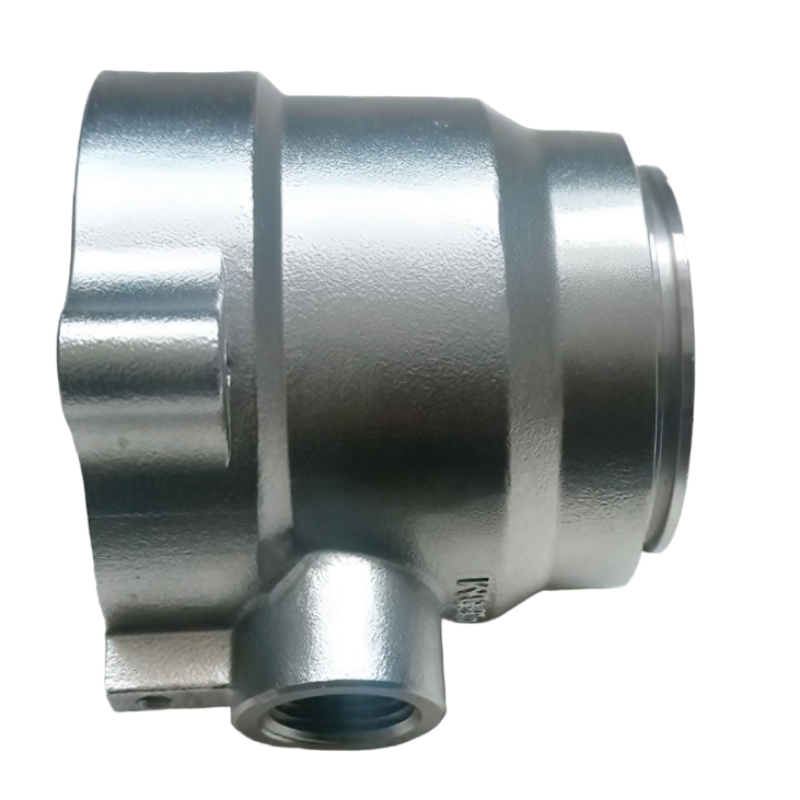
Furthermore, when the passive layer is scratched or mechanically damaged, it self-heals in the presence of oxygen. This self-passivation behavior makes stainless steel investment castings remarkably resilient in dynamic service environments where surface abrasion or mechanical contact is unavoidable. For industries such as oil and gas, chemical processing, and marine engineering, this characteristic translates directly into reduced maintenance intervals and extended component life.
Alloy Grades and Their Corrosion Performance in Investment Casting
Not all stainless steel grades perform equally across all corrosive environments, and the investment casting process accommodates a wide range of alloy selections to match specific application requirements. Austenitic grades such as CF8 and CF8M — the cast equivalents of wrought 304 and 316 stainless steel — are among the most widely used in stainless steel investment castings for general corrosion resistance. The addition of molybdenum in CF8M provides enhanced resistance to pitting and crevice corrosion, particularly in chloride-bearing environments like seawater or coastal industrial installations.
Cast Grade (Cast Equivalent) |
Wrought Equivalent |
Key Chemical Element |
Best Suited For |
CF8 |
304 Stainless Steel |
18% Cr, 8% Ni |
General atmospheric & organic acid corrosion |
CF8M |
316 Stainless Steel |
18% Cr, 9% Ni, 2-3% Mo |
High-chloride environments, marine, & seawater |
Duplex stainless steel grades offer a dual-phase microstructure that combines the corrosion resistance of austenitic alloys with higher strength, making them suitable for demanding pressure and corrosion combined loading scenarios. Martensitic grades, on the other hand, are chosen when wear resistance and moderate corrosion resistance are both required. The flexibility of the investment casting process to accommodate these varied alloys is one of the primary reasons why stainless steel investment castings are so widely specified across industries with diverse corrosion challenges.
The ability to select the precise alloy grade for a given environment — and to cast that alloy into a near-net-shape complex part — is a competitive advantage that few other manufacturing processes can match. This material selection flexibility, combined with the dimensional accuracy of the investment casting method, makes stainless steel investment castings an engineering solution rather than simply a manufacturing commodity.
Why Investment Casting Is the Ideal Process for Corrosion-Resistant Stainless Steel Parts
Near-Net-Shape Accuracy and Surface Finish Quality
The investment casting process begins with a wax pattern that is coated in ceramic shell material, burned out, and replaced with molten stainless steel. This sequence produces components with dimensional accuracy and surface detail that rival machined parts, often requiring minimal post-processing. For corrosion-resistant applications, this is significant because surface roughness directly influences corrosion initiation. Rough surfaces create micro-crevices where corrosive media can concentrate and initiate pitting. The naturally smooth surface finish of stainless steel investment castings reduces these initiation sites and contributes to longer service life.
Furthermore, the ability to cast complex geometries in a single operation eliminates the need for welds or mechanical joints in many component designs. Weld zones are notorious corrosion risk areas in stainless steel components due to heat-affected zone sensitization, where chromium carbide precipitation along grain boundaries reduces local corrosion resistance. By producing the entire component as a single stainless steel investment casting, this vulnerability is avoided altogether, resulting in a structurally and chemically uniform part.
Components like valve bodies, pump housings, impellers, and fittings — all of which are subjected to aggressive fluid environments — benefit enormously from this seamless construction. A stainless steel investment castings approach for valve bodies, for instance, enables the integration of complex internal flow paths, port features, and seating surfaces into a single corrosion-resistant body without compromise.
Microstructural Integrity and Consistency
One of the less-discussed but highly important advantages of stainless steel investment castings in corrosion-resistant applications is microstructural consistency. The controlled solidification conditions in investment casting result in fine-grained, homogeneous microstructures with minimal segregation and porosity. This is critical because microstructural discontinuities such as porosity or inclusion clusters can act as preferential corrosion sites, compromising the overall performance of the component even if the alloy composition is correct.
When compared to sand casting or die casting, investment casting produces a more refined grain structure because of the controlled thermal environment during solidification. The ceramic shell used in the investment casting process allows for directional heat dissipation that supports uniform grain development. As a result, stainless steel investment castings demonstrate consistent electrochemical behavior across the entire component surface, which means predictable corrosion resistance rather than localized weakness zones.
This consistency is especially important for safety-critical applications in chemical processing plants, offshore platforms, and food processing facilities, where a single component failure due to unexpected localized corrosion can lead to costly shutdowns or safety incidents. The reliability profile of stainless steel investment castings is therefore not just about average performance but about minimizing variance — a characteristic that quality-conscious procurement teams explicitly look for.
Applications That Drive the Preference for Stainless Steel Investment Castings
Fluid Control Components in Aggressive Environments
Valve bodies, flow control components, and pump parts represent one of the largest application categories for stainless steel investment castings. In oil refineries, chemical plants, and water treatment facilities, these components are in continuous contact with corrosive process fluids ranging from acidic solutions and brines to hydrocarbon streams with entrained moisture. The combination of tight dimensional tolerances and uniform corrosion resistance makes investment-cast stainless steel the natural engineering choice for these components.
Unlike fabricated assemblies that require welding and machining of multiple separate pieces, a single stainless steel investment casting can achieve the complete functional geometry of a valve body or pump housing. This reduces the number of potential leak paths and corrosion-vulnerable joints. In high-pressure or high-temperature service, this structural simplicity also improves mechanical integrity and fatigue resistance. Operators in these industries have learned through operational experience that stainless steel investment castings outperform alternative constructions in both initial reliability and long-term maintenance cost.
The food and beverage industry represents another strong application domain, where regulatory requirements demand materials that resist both corrosion and bacterial accumulation. Smooth surfaces and inert material characteristics make stainless steel investment castings ideal for sanitary fittings, pump components, and processing equipment that require frequent cleaning with caustic or acidic sanitizing agents.
Marine, Offshore, and Harsh Environmental Applications
Marine environments subject metal components to one of the most aggressive combinations of corrosive factors: high chloride concentrations, variable humidity, mechanical loading, and biofouling. Standard carbon steel or even certain grades of cast iron are unsuitable in these conditions without significant protective coatings, which themselves require frequent maintenance. Stainless steel investment castings, particularly those produced in molybdenum-bearing grades, offer passive corrosion resistance that requires no external protection in most marine service conditions.
For offshore oil and gas platforms, subsea infrastructure, and shipbuilding, the ability to produce complex corrosion-resistant parts through stainless steel investment castings reduces the lifecycle cost of equipment significantly. The initial investment in higher-grade material and precision casting is offset by dramatically reduced inspection intervals, coating maintenance costs, and unplanned replacement expenses. Engineering teams designing for offshore service routinely specify stainless steel investment castings for hardware such as connectors, manifold components, valve internals, and structural brackets where corrosion failure carries high operational or safety consequences.
Similarly, in chemical processing plants handling halogenated compounds, sulfuric acid environments, or high-temperature oxidizing conditions, stainless steel investment castings in specialty alloys such as super-austenitic or duplex grades provide the extended service life that process engineers require to meet both productivity targets and environmental compliance standards.
Long-Term Value Proposition of Stainless Steel Investment Castings
Total Cost of Ownership Compared to Alternative Materials
When evaluating material and manufacturing choices purely on initial component price, stainless steel investment castings may appear more expensive than components made from lower-alloy materials or produced through less precise casting methods. However, the total cost of ownership calculation tells a very different story. Components that resist corrosion do not need to be replaced frequently, do not require protective coating application or maintenance, and do not cause secondary damage to systems through corrosion product contamination or unexpected failures.
In process industries where downtime costs thousands of dollars per hour, the reliability advantage of stainless steel investment castings is directly quantifiable. A component that lasts three to five times longer than a lower-cost alternative, while requiring no maintenance interventions, delivers a compelling return even at a higher purchase price. Procurement professionals in mature industrial organizations understand this lifecycle math and build stainless steel investment casting specifications into their approved supplier lists and engineering standards accordingly.
Beyond maintenance savings, corrosion-resistant components also protect the surrounding system from degradation. Corrosion products from failing metal parts can contaminate process fluids, foul heat exchanger surfaces, clog valve seats, and trigger downstream quality failures. By specifying stainless steel investment castings in key positions within a fluid system, engineers protect not just the individual component but the integrity of the entire process stream.
Design Flexibility and Engineering Optimization
Another dimension of value that drives preference for stainless steel investment castings in corrosion-resistant applications is design freedom. The investment casting process accommodates highly complex geometries that would be impossible or prohibitively expensive to machine from solid bar stock. This allows engineers to optimize wall thicknesses, integrate functional features, and minimize material usage while still achieving the required corrosion performance in the final part geometry.
For components that need both corrosion resistance and specific flow characteristics — such as turbine blades, impellers, or complex valve internals — stainless steel investment castings enable a level of geometrical precision that directly affects functional performance. Engineers are not forced to make geometry compromises to accommodate manufacturing limitations. The casting process serves the design, not the other way around, which is a significant advantage in engineering-driven industries where performance margins are tight.
This design flexibility also enables consolidation of multi-part assemblies into single cast components, reducing assembly complexity, eliminating inter-part joints, and simplifying quality inspection. Each of these benefits compounds the corrosion resistance advantage, because every eliminated joint is a potential corrosion initiation site that no longer exists. This systems-level thinking about corrosion management is why sophisticated engineering teams consistently choose stainless steel investment castings as their preferred solution.
FAQ
What makes stainless steel investment castings more corrosion resistant than sand castings in the same alloy?
Investment casting produces a finer, more homogeneous grain structure compared to sand casting due to the controlled solidification environment of the ceramic shell mold. This results in fewer microstructural discontinuities such as shrinkage porosity and inclusion clusters, which are known corrosion initiation sites. The smoother as-cast surface finish of stainless steel investment castings also reduces crevice corrosion risk compared to the rougher surfaces typical of sand-cast components in the same alloy grade.
Which stainless steel grades are most commonly used in investment castings for corrosion resistant applications?
The most widely used grades in stainless steel investment castings for corrosion resistance include CF8 (equivalent to 304 stainless steel) and CF8M (equivalent to 316 stainless steel, with molybdenum for enhanced chloride resistance). For more aggressive environments, duplex grades such as CD4MCuN and super-austenitic alloys are selected. The investment casting process is compatible with all of these grades, allowing engineers to match the alloy precisely to the corrosive service conditions of their application.
Can stainless steel investment castings be used in both high-temperature and corrosive environments simultaneously?
Yes, many stainless steel grades used in investment castings maintain their corrosion resistance at elevated temperatures, though alloy selection becomes more critical. Certain grades offer high-temperature oxidation resistance in addition to aqueous corrosion resistance. However, sensitization at temperatures between 425°C and 860°C is a concern for standard austenitic grades, where chromium carbide precipitation can reduce grain boundary corrosion resistance. For applications combining both high temperature and corrosive media, low-carbon or stabilized grades should be specified to maintain the full performance of the stainless steel investment casting throughout its service life.
How does the investment casting process support consistent corrosion performance across production batches?
The investment casting process uses precisely controlled wax pattern production, ceramic shell preparation, and controlled pour temperatures to maintain consistency from part to part and batch to batch. Combined with chemical composition verification through melt analysis, each batch of stainless steel investment castings can be validated to meet alloy specification requirements. This production traceability and process control is critical for corrosion-resistant applications where a deviation in chromium or molybdenum content could meaningfully reduce the part's performance in service.
Table of Contents
- The Corrosion Resistance Mechanism of Stainless Steel Alloys
- Why Investment Casting Is the Ideal Process for Corrosion-Resistant Stainless Steel Parts
- Applications That Drive the Preference for Stainless Steel Investment Castings
- Long-Term Value Proposition of Stainless Steel Investment Castings
-
FAQ
- What makes stainless steel investment castings more corrosion resistant than sand castings in the same alloy?
- Which stainless steel grades are most commonly used in investment castings for corrosion resistant applications?
- Can stainless steel investment castings be used in both high-temperature and corrosive environments simultaneously?
- How does the investment casting process support consistent corrosion performance across production batches?