Buy Stainless Steel Investment Castings - Precision Components for Superior Performance and Durability

Get a Free Quote

Our representative will contact you soon.
Email
Name
Company Name
Message
0/1000

buy stainless steel investment castings

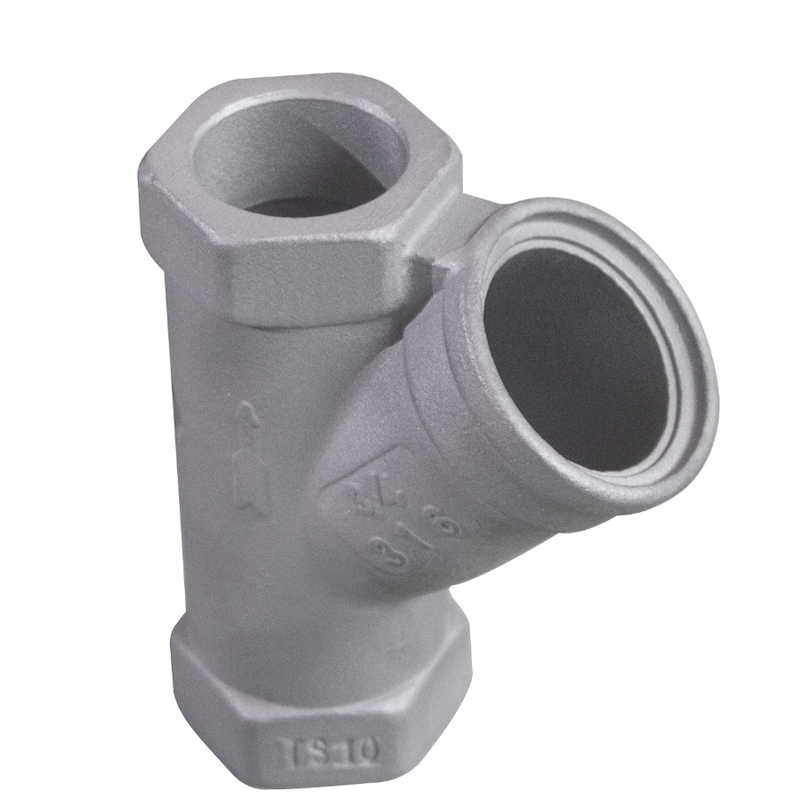
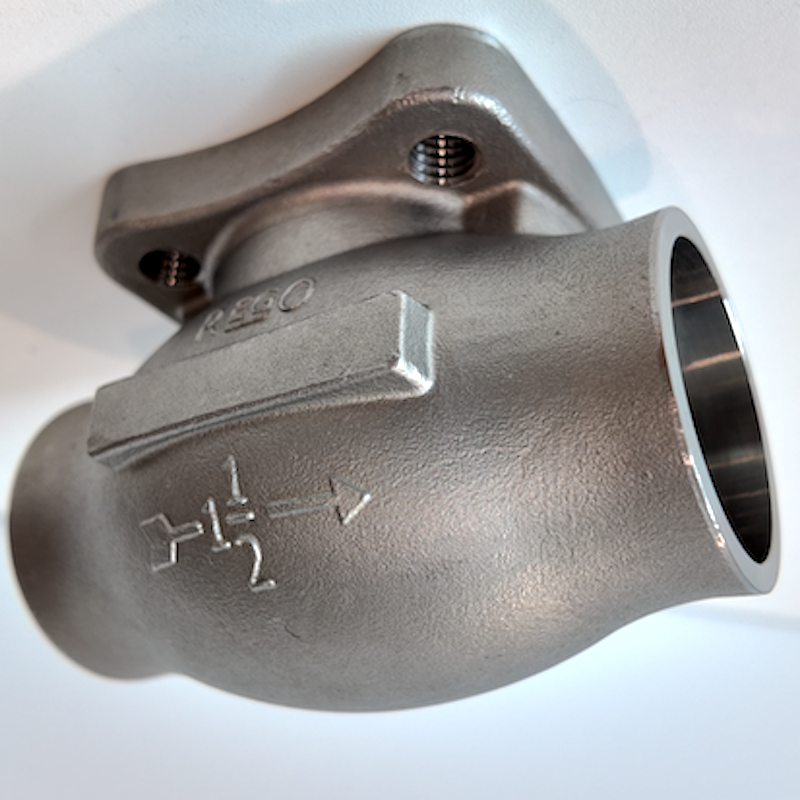
Stainless steel investment castings represent a sophisticated manufacturing solution that combines precision engineering with exceptional material properties to create complex metal components. When you buy stainless steel investment castings, you acquire parts produced through the lost-wax casting process, which enables manufacturers to produce intricate geometries with outstanding dimensional accuracy and superior surface finishes. This advanced metalworking technique involves creating a wax pattern, coating it with ceramic material, melting away the wax, and pouring molten stainless steel into the resulting cavity. The main functions of stainless steel investment castings include delivering corrosion-resistant components for harsh environments, providing high-strength parts that withstand mechanical stress, and offering design flexibility that traditional machining cannot match. The technological features distinguish these castings from other manufacturing methods through their ability to produce net-shape or near-net-shape components, minimizing material waste and reducing secondary machining requirements. Investment casting technology accommodates wall thicknesses ranging from extremely thin sections to robust structural elements, all while maintaining consistent quality throughout production runs. Applications for stainless steel investment castings span numerous industries including aerospace, where precision turbine blades and structural fittings demand exact specifications; medical equipment manufacturing, which requires biocompatible, sterilizable components; food processing equipment that needs sanitary, non-reactive surfaces; marine hardware exposed to saltwater corrosion; automotive performance parts requiring strength-to-weight optimization; and industrial valve bodies that control fluids under pressure. The versatility of stainless steel grades available for investment casting, from austenitic 304 and 316 alloys to martensitic and precipitation-hardening varieties, ensures that engineers can select the optimal material composition for specific operational requirements. Whether you need components weighing ounces or parts exceeding hundreds of pounds, the investment casting process scales effectively while preserving the inherent advantages of stainless steel investment castings, making this manufacturing method an intelligent choice for quality-conscious procurement professionals seeking reliable, long-lasting metal components.

New Product Recommendations

When organizations buy stainless steel investment castings, they gain access to numerous practical benefits that directly impact project success and operational efficiency. The primary advantage centers on design freedom, as investment casting eliminates many geometric constraints imposed by machining or forging, allowing engineers to consolidate multiple parts into single integrated components, reducing assembly time and potential failure points while lowering inventory complexity. Cost efficiency emerges as another significant benefit, particularly for complex shapes where machining would require extensive tool paths and material removal; investment castings arrive near-final dimensions, drastically cutting production time and reducing expensive raw material waste that would otherwise become costly scrap. The superior surface finish quality of stainless steel investment castings minimizes or eliminates secondary finishing operations, delivering components with smooth surfaces measuring 125 microinches or better directly from the casting process, which translates to labor savings and faster time-to-market. Material versatility provides procurement flexibility, as investment foundries work with virtually all stainless steel alloys, enabling buyers to specify exactly the corrosion resistance, strength characteristics, temperature tolerance, and magnetic properties their applications demand without compromising on design complexity. Dimensional accuracy represents a crucial practical advantage, with typical tolerances reaching plus or minus 0.005 inches per inch, ensuring components fit properly during assembly without expensive rework or rejection, reducing quality control headaches and warranty claims. Production scalability benefits companies at various stages, as investment casting proves economical for prototype quantities through high-volume production runs, providing consistency across batch sizes that prototyping methods cannot match. The mechanical properties inherent to cast stainless steel components deliver excellent strength, ductility, and impact resistance, ensuring parts perform reliably under operational stresses while the corrosion resistance of stainless alloys extends service life in challenging environments, reducing replacement frequency and maintenance costs. Lead time advantages become apparent when comparing investment castings to fabricated alternatives, as complex geometries emerge complete from molds rather than requiring sequential machining operations, welding, and assembly steps. When companies buy stainless steel investment castings, they also benefit from reduced tooling costs compared to forging dies or extensive machining fixtures, making low to medium production volumes economically viable. The combination of these practical advantages means procurement teams can specify exactly what their applications require, receiving components that install easily, perform reliably, and deliver long-term value while simplifying supply chains and reducing total cost of ownership across product lifecycles.

Latest News

Basic Principles Of Design Of Precision Casting Gating System

11

May

Basic Principles Of Design Of Precision Casting Gating System

View More
Selection And Application Scope Of Hardness Tester

11

May

Selection And Application Scope Of Hardness Tester

View More
Stainless Steel Castings for Architectural Posts

11

May

Stainless Steel Castings for Architectural Posts

View More
Stainless Steel Castings for Building Facade Systems

11

May

Stainless Steel Castings for Building Facade Systems

View More

Get a Free Quote

Our representative will contact you soon.
Email
Name
Company Name
Message
0/1000

buy stainless steel investment castings

Exceptional Corrosion Resistance for Extended Service Life

Exceptional Corrosion Resistance for Extended Service Life

One of the most compelling reasons to buy stainless steel investment castings lies in their outstanding resistance to corrosion, oxidation, and chemical attack, which fundamentally extends component service life and reduces lifecycle costs in demanding environments. Stainless steel achieves its corrosion resistance through the formation of a passive chromium oxide layer on the surface, which continuously regenerates when damaged, providing self-healing protection that prevents rust and degradation. Investment casting preserves and optimizes these protective qualities because the process produces uniform microstructures without the work-hardening, residual stresses, or grain flow disruptions that can compromise corrosion resistance in machined or cold-worked parts. When components face exposure to moisture, chemicals, saltwater, acids, or high-temperature oxidation, stainless steel investment castings outperform carbon steel, aluminum, and many other materials by maintaining structural integrity and appearance over extended periods. This corrosion resistance translates directly into practical benefits for end users, including reduced maintenance schedules, elimination of protective coatings that chip or wear away, decreased downtime for component replacement, and enhanced safety by preventing unexpected failures due to material degradation. Industries such as chemical processing rely on stainless steel investment castings for pump housings, valve bodies, and piping components that contact corrosive fluids daily, where material failure would cause dangerous leaks, environmental contamination, and costly production interruptions. Marine applications benefit enormously from stainless steel investment castings in propeller components, deck hardware, and rigging fittings that withstand constant saltwater exposure without the rapid deterioration that plagues lesser materials. Food and pharmaceutical processing operations choose stainless steel investment castings because the material resists chemical cleaning agents and sanitizing solutions while preventing contamination from rust particles or material degradation, ensuring product purity and regulatory compliance. The investment casting process itself contributes to corrosion performance by producing smooth surfaces with minimal porosity, eliminating the crevices and surface defects where corrosion typically initiates, while allowing specification of premium stainless grades like 316 with molybdenum additions that further enhance resistance to chloride attack and pitting. When buyers evaluate total cost of ownership rather than initial purchase price alone, the corrosion resistance of stainless steel investment castings delivers compelling economic advantages through extended replacement intervals, reduced inventory of spare parts, decreased emergency maintenance calls, and elimination of corrosion-related failures that damage surrounding equipment or halt production lines unexpectedly.
Complex Geometries with Precision Tolerances Reduce Assembly Requirements

Complex Geometries with Precision Tolerances Reduce Assembly Requirements

The ability to buy stainless steel investment castings that incorporate intricate geometries, internal passages, and complex features in a single component represents a transformative manufacturing capability that simplifies product design and reduces assembly complexity. Investment casting technology excels at producing shapes that would be impossible or prohibitively expensive through conventional machining, including undercuts, complex curves, internal cavities, thin walls adjacent to thick sections, and integrated features that eliminate secondary operations. This geometric freedom allows design engineers to optimize component functionality rather than compromising designs to accommodate manufacturing limitations, resulting in parts that perform better while often weighing less and costing less to produce than multi-piece assemblies. The precision inherent to investment casting delivers dimensional accuracy that typically ranges from plus or minus 0.005 to 0.010 inches depending on size and geometry, with even tighter tolerances achievable through careful process control, ensuring components fit properly during assembly without hand-fitting or adjustment. When companies buy stainless steel investment castings instead of fabricating components from multiple machined pieces, they eliminate welding operations that introduce heat distortion, create potential failure points, require skilled labor, and add inspection requirements to verify joint integrity. Part consolidation through investment casting reduces the total number of components in assemblies, which decreases procurement complexity, simplifies inventory management, reduces handling and assembly labor, and minimizes the cumulative tolerance stack-up that occurs when multiple parts must align correctly. Complex internal passages for fluid flow, cooling channels, or weight reduction can be incorporated directly into investment castings through ceramic cores that dissolve or break away after solidification, creating features that machining cannot access and that would require expensive assembly of multiple sections with sealed joints. The near-net-shape accuracy of stainless steel investment castings means components emerge from molds requiring minimal finishing, perhaps just critical surfaces that need grinding to final tolerance, rather than extensive machining that removes expensive stainless steel material as waste chips while consuming machine time and tooling. Surface finish quality from investment casting typically measures 125 microinches Ra or smoother, providing an attractive appearance and functional surfaces that resist wear and reduce fluid friction without additional polishing operations. Industries ranging from aerospace to medical devices capitalize on these geometric capabilities when they buy stainless steel investment castings, producing turbine blades with precise airfoil contours, surgical instruments with ergonomic handles and integrated features, and architectural hardware with aesthetic curves that would require extensive hand-finishing if machined. The combination of geometric freedom and dimensional precision enables innovation, as product designers can optimize performance without manufacturing constraints limiting their creativity, resulting in superior products that reach market faster and perform better throughout their service lives.
Material Integrity and Mechanical Properties Ensure Reliable Performance

Material Integrity and Mechanical Properties Ensure Reliable Performance

When procurement professionals buy stainless steel investment castings, they secure components with excellent material integrity and mechanical properties that ensure reliable performance under demanding operational conditions. The investment casting process produces parts with uniform, fine-grained microstructures that deliver consistent mechanical properties throughout the component, avoiding the directional grain structures, inclusions, and potential defects associated with some other manufacturing methods. Stainless steel investment castings exhibit tensile strengths ranging from 70,000 to over 200,000 psi depending on alloy selection and heat treatment, providing the structural capacity to withstand mechanical loads, pressure, vibration, and impact forces encountered in real-world applications. The solidification characteristics of investment casting promote soundness by allowing controlled cooling that minimizes internal porosity, shrinkage defects, and stress concentrations that could compromise strength or initiate fatigue failures during cyclic loading. Material versatility stands as a significant advantage, as investment foundries work with the full spectrum of stainless steel alloys including austenitic grades like 304 and 316 that offer excellent corrosion resistance and toughness, martensitic grades such as 410 and 17-4PH that provide higher strength and hardness, and specialty alloys engineered for specific properties like non-magnetic behavior or extreme temperature resistance. This alloy flexibility means engineers can precisely match material properties to application requirements when they buy stainless steel investment castings, optimizing performance rather than accepting compromises inherent to limited material availability. The casting process itself contributes to material performance by producing components free from the residual stresses that machining introduces into wrought materials, reducing the risk of stress-corrosion cracking and dimensional instability that can occur when stressed components encounter corrosive environments. Heat treatment capabilities further enhance mechanical properties, as investment castings can undergo solution annealing, precipitation hardening, or other thermal processes to achieve specific hardness, strength, and toughness combinations that optimize component performance for intended service conditions. Quality assurance measures including chemical analysis, mechanical testing, radiographic inspection, and dimensional verification ensure that stainless steel investment castings meet specifications before shipment, providing buyers with confidence that components will perform as engineering analyses predict. Applications requiring structural strength combined with corrosion resistance benefit immensely from investment cast stainless steel, including aerospace fittings that secure flight-critical components, pressure vessel connections that contain high-pressure fluids safely, lifting and rigging hardware that supports heavy loads without failure risk, and pump components that withstand both mechanical stress and chemical exposure simultaneously. The ductility of stainless steel investment castings provides an important safety characteristic, as components deform visibly before ultimate failure rather than fracturing suddenly without warning, allowing detection of overload conditions before catastrophic failures occur. When companies buy stainless steel investment castings for critical applications, they invest in components whose material integrity and mechanical properties have been proven across decades of service in demanding industries, providing the reliability that builds customer confidence and protects brand reputation through consistent product performance.

Get a Free Quote

Our representative will contact you soon.
Email
Name
Company Name
Message
0/1000