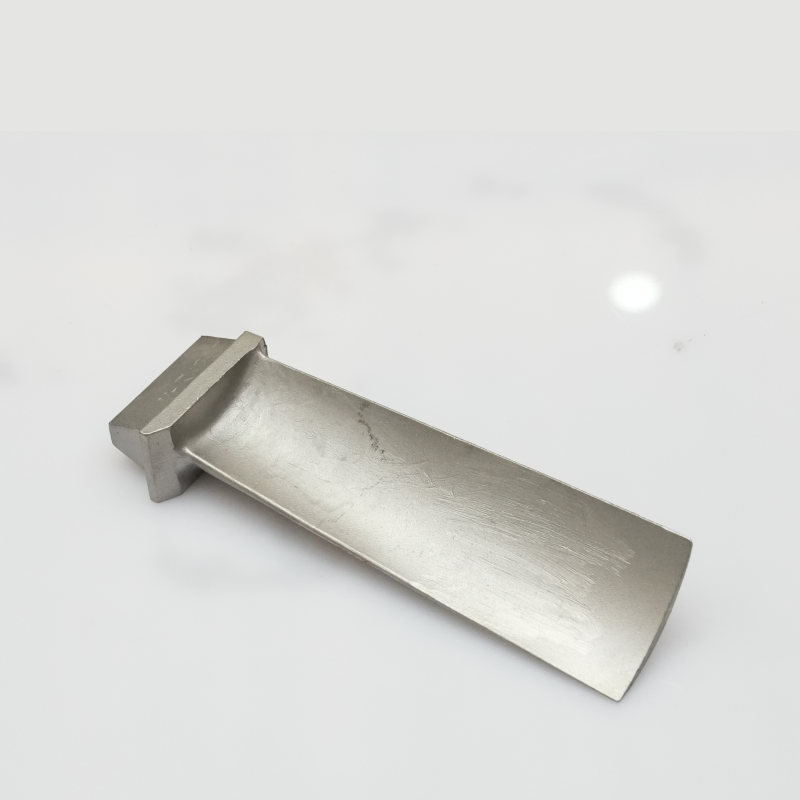
Machined Precision Casting Components - High-Quality Custom Parts Manufacturing Solutions

Get a Free Quote

Our representative will contact you soon.
Email
Name
Company Name
Message
0/1000

machined precision casting components

Machined precision casting components represent a sophisticated manufacturing solution that combines the efficiency of casting processes with the accuracy of precision machining operations. These components are created through an integrated approach where metal parts are first cast into near-net shapes using advanced casting techniques, then undergo controlled machining operations to achieve exact specifications and superior surface finishes. This hybrid manufacturing method delivers components with complex geometries, tight tolerances, and exceptional mechanical properties that meet demanding industrial requirements. The main functions of machined precision casting components include providing structural integrity in mechanical assemblies, enabling smooth operational performance in rotating equipment, facilitating precise alignment in mounting systems, and delivering reliable functionality across diverse operating conditions. These components serve as critical elements in power transmission systems, fluid control mechanisms, structural frameworks, and motion control applications. The technological features that distinguish machined precision casting components include advanced metallurgical control during the casting phase, which ensures consistent material properties throughout the component structure. Computer-aided design integration allows engineers to optimize part geometry for both casting feasibility and machining efficiency. Modern foundries employ sophisticated molding technologies such as investment casting, lost foam casting, and precision sand casting to produce initial castings with minimal material excess. Subsequently, computer numerical control machining centers perform precise material removal operations to establish final dimensions, create threaded features, produce bearing surfaces, and achieve specified surface roughness values. Applications for machined precision casting components span numerous industries including automotive manufacturing, aerospace systems, industrial machinery, energy generation equipment, agricultural implements, construction equipment, marine propulsion systems, and medical device production. These components are particularly valuable in situations requiring complex internal passages, integrated mounting features, weight optimization, and cost-effective production of medium to high volume quantities.

New Products

Choosing machined precision casting components for your manufacturing needs delivers substantial practical benefits that directly impact your operational efficiency and bottom line. The first major advantage involves significant cost savings compared to producing parts entirely through machining from solid bar stock. By casting the basic shape first, you eliminate the need to remove large amounts of material through expensive machining operations, reducing both material waste and machine time. This approach can lower production costs by thirty to sixty percent depending on component complexity. The second key benefit relates to design flexibility that allows you to incorporate features that would be extremely difficult or impossible to create through machining alone. Internal cavities, complex curves, undercuts, and integrated structures can be formed directly in the casting, giving your engineers greater freedom to optimize designs for functionality rather than manufacturing constraints. This design latitude often results in lighter components that use less material while maintaining or improving strength characteristics. Another important advantage concerns material utilization efficiency. Machined precision casting components maximize the use of raw materials by forming parts close to final shape, generating minimal scrap compared to subtractive manufacturing methods. This efficiency not only reduces material costs but also supports sustainability initiatives by minimizing waste. The mechanical properties of these components offer additional benefits through the casting process itself. Controlled solidification creates fine-grain structures that enhance strength, while the absence of seams or joints that occur in welded fabrications eliminates potential weak points. You receive components with uniform material properties and predictable performance characteristics. Production speed represents another practical advantage, particularly for medium and high volume requirements. Once tooling is created, casting operations can produce multiple components simultaneously, and subsequent machining operations can be optimized for rapid throughput. This efficiency shortens lead times and helps you maintain adequate inventory levels without excessive capital investment. Quality consistency is enhanced because machined precision casting components benefit from process controls at both the casting and machining stages. Statistical process control, dimensional inspection, and metallurgical testing ensure that every component meets specifications. This reliability reduces defect rates, minimizes costly rework, and protects your reputation with customers. The versatility of available materials further extends the advantages, as casting processes accommodate a wide range of alloys including aluminum, steel, stainless steel, bronze, and specialized materials. You can select the optimal material for your specific application requirements regarding strength, corrosion resistance, temperature tolerance, and weight considerations.

Tips And Tricks

Basic Principles Of Design Of Precision Casting Gating System

11

May

Basic Principles Of Design Of Precision Casting Gating System

View More
Selection And Application Scope Of Hardness Tester

11

May

Selection And Application Scope Of Hardness Tester

View More
Stainless Steel Castings for Architectural Posts

11

May

Stainless Steel Castings for Architectural Posts

View More
Precision Stainless Steel Exhaust Manifold Casting Solution For Luxury Sedan - With Japanese First-Tier Car Brand

11

May

Precision Stainless Steel Exhaust Manifold Casting Solution For Luxury Sedan - With Japanese First-Tier Car Brand

View More

Get a Free Quote

Our representative will contact you soon.
Email
Name
Company Name
Message
0/1000

machined precision casting components

Superior Dimensional Accuracy Through Combined Manufacturing Processes

Superior Dimensional Accuracy Through Combined Manufacturing Processes

Machined precision casting components achieve exceptional dimensional accuracy by strategically combining the strengths of two distinct manufacturing technologies in a complementary workflow. The process begins with precision casting methods that form the component's basic geometry, creating a near-net-shape foundation that captures complex three-dimensional features, internal structures, and overall configuration. This initial casting phase employs sophisticated pattern-making, mold design, and metallurgical control to produce consistent, high-quality castings with predictable shrinkage characteristics and minimal defects. The casting operation establishes the fundamental architecture of the component while leaving controlled material allowances on critical surfaces that require exact final dimensions. Following the casting stage, precision machining operations transform these semi-finished components into parts with exacting specifications. Computer numerical control equipment removes material from designated surfaces with micron-level precision, establishing tight tolerances that typically range from plus or minus 0.001 to 0.005 inches depending on feature size and application requirements. This machining phase creates bearing surfaces with precise roundness and concentricity, produces threaded holes with accurate pitch and depth, establishes mounting faces with controlled flatness and perpendicularity, and achieves surface finishes measured in microinches for smooth operation and extended service life. The value this dimensional accuracy brings to customers is substantial and multifaceted. Components that fit correctly the first time eliminate costly assembly delays, reduce the need for hand-fitting or adjustment, and prevent premature wear caused by misalignment. Precise dimensions ensure proper load distribution in mechanical assemblies, which extends component lifespan and reduces maintenance frequency. In applications involving rotating parts, dimensional accuracy minimizes vibration, decreases noise levels, and improves energy efficiency. For components used in fluid systems, precise dimensions ensure proper sealing, prevent leakage, and maintain system performance. This dimensional reliability also simplifies inventory management, as parts are truly interchangeable without selection or matching requirements. Manufacturing operations benefit from reduced quality control inspection time and lower rejection rates. The combination of casting and machining delivers accuracy that exceeds what either process could achieve independently, providing customers with components that meet demanding specifications while maintaining cost-effectiveness for production quantities.
Enhanced Mechanical Strength and Material Integrity Throughout Component Structure

Enhanced Mechanical Strength and Material Integrity Throughout Component Structure

The mechanical strength and material integrity of machined precision casting components surpass many alternative manufacturing approaches due to the fundamental nature of how casting processes create solid metal structures. When molten metal fills a mold cavity and solidifies, it forms a continuous, homogeneous structure without seams, joints, or mechanical fastening points that can become stress concentration sites or failure initiation points. This monolithic construction provides inherent structural advantages that translate directly into superior performance under demanding operating conditions. The solidification process can be carefully controlled through mold design, pouring techniques, and cooling rate management to influence the grain structure of the resulting casting. Directional solidification, controlled cooling rates, and proper gating systems promote fine, uniform grain structures that enhance mechanical properties including tensile strength, yield strength, fatigue resistance, and impact toughness. Modern foundries employ computer simulation software to model metal flow and solidification patterns, optimizing mold designs to eliminate porosity, minimize shrinkage defects, and ensure sound material throughout the component. The subsequent machining operations do not compromise this structural integrity but rather enhance it by removing any surface irregularities and creating stress-relieved finished surfaces. For customers, this enhanced mechanical strength delivers critical practical benefits across diverse applications. Components can withstand higher loads, operate at elevated temperatures, resist shock and vibration, and provide extended service life compared to parts manufactured through alternative methods such as welding fabrications or powder metallurgy. In structural applications, the superior strength-to-weight ratio allows designers to reduce component mass while maintaining safety factors, resulting in lighter assemblies that improve fuel efficiency in mobile equipment and reduce installation costs in stationary machinery. The material integrity of machined precision casting components also ensures predictable, consistent performance across production lots. Unlike welded assemblies where joint quality can vary with operator skill and environmental conditions, cast components exhibit uniform properties that simplify engineering calculations and reduce the need for safety margin inflation. This consistency supports lean manufacturing principles by reducing inspection requirements and virtually eliminating field failures due to material defects. The fatigue resistance of properly cast components is particularly valuable in applications involving cyclic loading, such as automotive suspension parts, reciprocating machinery components, and rotating equipment. The absence of stress concentrations associated with welds or mechanical joints allows these components to endure millions of load cycles without crack initiation, providing reliability that protects equipment uptime and prevents costly unplanned maintenance.
Cost-Effective Production for Complex Geometries and Medium to High Volumes

Cost-Effective Production for Complex Geometries and Medium to High Volumes

Machined precision casting components deliver exceptional economic value when manufacturing requirements involve complex geometries, multiple integrated features, or production quantities ranging from several hundred to millions of units annually. The cost-effectiveness stems from the fundamental efficiency of forming complex shapes through casting rather than attempting to create them entirely through material removal processes. Consider a component with internal passages, varying wall thickness, integrated mounting bosses, and curved surfaces—producing such a part from solid bar stock would require extensive machining time, multiple setups, specialized tooling, and would generate substantial material waste. By contrast, casting creates this complexity in a single operation, with molten metal flowing into every cavity and around every core to form the complete geometry as it solidifies. The initial investment in pattern equipment and tooling for casting is amortized across the production quantity, making the per-piece cost increasingly attractive as volume increases. For medium production runs of several hundred to several thousand pieces, modern molding technologies such as permanent mold casting or semi-permanent mold methods provide economical tooling costs with excellent component quality. For higher volumes, automated molding lines and optimized casting processes drive per-piece costs even lower while maintaining consistent quality. The machining operations that follow casting are strategically limited to only those surfaces requiring precise dimensions or superior finishes, minimizing expensive machine time. This selective machining approach allows shops to use efficient multi-spindle machining centers or dedicated transfer lines that process multiple features simultaneously, dramatically reducing cycle time compared to machining the entire component from raw stock. Customers realize financial benefits that extend throughout their entire operation. Lower component costs directly improve product competitiveness and profit margins. Reduced material consumption aligns with corporate sustainability goals while lowering raw material procurement costs. Shorter manufacturing lead times enable leaner inventory practices, reducing carrying costs and warehouse space requirements. The reliability of machined precision casting components reduces warranty claims, field service costs, and reputational damage associated with product failures. For companies transitioning from machined-from-solid components or fabricated assemblies, switching to machined precision casting components often reveals immediate cost savings of twenty to fifty percent depending on part complexity and volume. These savings flow directly to improved financial performance while simultaneously delivering components with equal or superior functional characteristics. The scalability of casting processes also provides flexibility as demand fluctuates, with production capacity adjustable through multiple sourcing options, varying cycle times, or adding production shifts. This economic advantage makes machined precision casting components the preferred choice for discerning manufacturers who demand both quality and value in their component sourcing decisions.

Get a Free Quote

Our representative will contact you soon.
Email
Name
Company Name
Message
0/1000