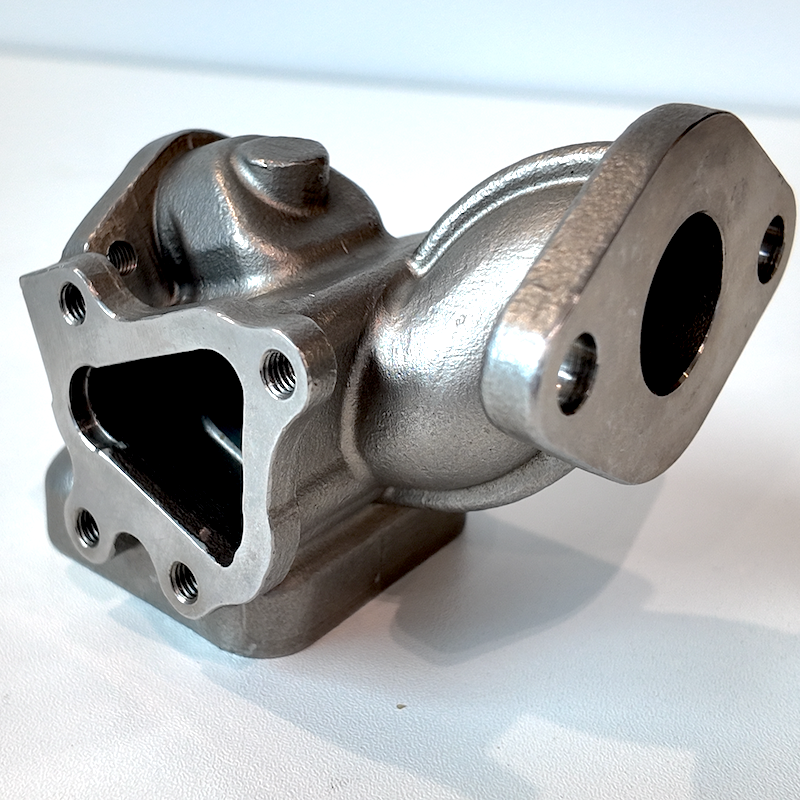
Automotive Investment Casting Solutions: Precision Components for Modern Vehicles

Get a Free Quote

Our representative will contact you soon.
Email
Name
Company Name
Message
0/1000

automotive investment casting

Automotive investment casting represents a sophisticated manufacturing process that produces complex metal components with exceptional precision and surface quality for the automotive industry. This advanced technique, also known as lost-wax casting, creates intricate parts by forming a ceramic mold around a wax pattern, which is then melted away to leave a cavity for molten metal. The automotive investment casting process delivers components that meet the demanding requirements of modern vehicles, including engine parts, transmission components, turbocharger housings, and structural elements. The main functions of automotive investment casting include producing geometrically complex shapes that would be difficult or impossible to achieve through other manufacturing methods, ensuring dimensional accuracy within tight tolerances, and creating parts with excellent surface finishes that often require minimal post-processing. Technological features of this process include the ability to cast various alloys such as stainless steel, aluminum, titanium, and specialized high-performance materials. The process accommodates wall thickness variations, intricate internal passages, and complex geometries without the need for extensive machining. Computer-aided design integration allows engineers to optimize part designs specifically for the casting process, reducing material waste and production costs. Applications of automotive investment casting span across multiple vehicle systems. In powertrain applications, it produces valve bodies, rocker arms, connecting rods, and fuel system components. For chassis and suspension systems, the process creates steering knuckles, control arms, and bracket assemblies. Exhaust systems benefit from investment-cast manifolds and catalytic converter housings that withstand extreme temperatures. The technology also serves emerging electric vehicle markets by producing motor housings, battery enclosures, and cooling system components. The versatility of automotive investment casting makes it indispensable for both mass production vehicles and specialized performance applications where reliability and precision are paramount.

New Product Recommendations

Automotive investment casting offers manufacturers and end-users substantial practical benefits that directly impact product quality, cost efficiency, and performance. The process eliminates the need for expensive tooling changes when producing complex shapes, saving both time and money during the development phase. Companies can bring new vehicle models to market faster because investment casting reduces the prototype-to-production timeline significantly. The near-net-shape capability means parts come out of the mold very close to their final dimensions, requiring minimal additional machining. This characteristic cuts down on material waste, as manufacturers use only the metal needed for the actual component rather than starting with larger blocks that must be carved away. The superior surface finish achieved through automotive investment casting reduces friction in moving parts, which translates to better fuel efficiency and longer component life. Vehicle owners benefit from this durability because parts last longer and require less frequent replacement, lowering total ownership costs. The design freedom offered by this casting method allows engineers to consolidate multiple parts into single components, reducing assembly time and the number of potential failure points. Fewer joints and fasteners mean lighter overall vehicle weight, which directly improves acceleration, handling, and fuel economy. Automotive investment casting accommodates a wide range of metal alloys, giving designers the flexibility to select materials that perfectly match each application's specific requirements for strength, weight, corrosion resistance, or heat tolerance. This material versatility ensures optimal performance across diverse operating conditions, from scorching engine compartments to frigid winter climates. The consistent quality delivered by modern investment casting processes means fewer defects and rejections during production, which keeps manufacturing costs predictable and competitive. Quality control measures integrated throughout the casting process catch potential issues early, preventing expensive recalls or warranty claims down the road. The smooth surfaces produced by automotive investment casting reduce the need for secondary finishing operations like grinding or polishing, cutting production time and costs. Manufacturers appreciate the scalability of this process, which works equally well for limited production runs of specialty vehicles and high-volume manufacturing of mass-market models. The technology supports both traditional internal combustion vehicles and next-generation electric powertrains, making it a future-proof investment for automotive suppliers. Environmental benefits include reduced energy consumption compared to extensive machining operations and lower scrap rates that minimize raw material usage. These efficiency gains help manufacturers meet increasingly strict environmental regulations while maintaining profitability.

Tips And Tricks

Basic Principles Of Design Of Precision Casting Gating System

11

May

Basic Principles Of Design Of Precision Casting Gating System

View More
Selection And Application Scope Of Hardness Tester

11

May

Selection And Application Scope Of Hardness Tester

View More
Stainless Steel Castings for Building Facade Systems

11

May

Stainless Steel Castings for Building Facade Systems

View More
Precision Stainless Steel Exhaust Manifold Casting Solution For Luxury Sedan - With Japanese First-Tier Car Brand

11

May

Precision Stainless Steel Exhaust Manifold Casting Solution For Luxury Sedan - With Japanese First-Tier Car Brand

View More

Get a Free Quote

Our representative will contact you soon.
Email
Name
Company Name
Message
0/1000

automotive investment casting

Exceptional Precision and Complex Geometry Capabilities

Exceptional Precision and Complex Geometry Capabilities

Automotive investment casting stands apart from conventional manufacturing methods through its unparalleled ability to produce components with intricate geometries and exceptional dimensional precision. This advantage stems from the fundamental nature of the process, where molten metal fills a ceramic mold cavity that perfectly replicates even the most complex design features. Engineers can specify internal passages, undercuts, thin walls adjacent to thick sections, and intricate surface details that would require multiple operations or prove impossible with traditional machining or forging techniques. The precision achieved through automotive investment casting typically ranges from plus or minus 0.005 inches for small components, with even tighter tolerances possible through secondary operations when required. This level of accuracy ensures proper fit and function in critical automotive assemblies where clearances directly affect performance and safety. The process accommodates wall thickness variations within a single component, allowing designers to add material only where structural strength is needed while minimizing weight elsewhere. This optimization capability proves particularly valuable in modern vehicle design, where reducing mass improves fuel efficiency and handling characteristics without compromising safety or durability. Automotive investment casting enables the creation of components with smooth internal passages for fluid flow, which reduces turbulence and pressure drops in hydraulic systems, oil galleries, and cooling circuits. The ability to cast complex shapes as single pieces eliminates the need for welding or mechanical assembly of multiple parts, reducing production steps and potential leak paths in pressurized systems. Manufacturers benefit from reduced inventory complexity because one investment-cast component can replace assemblies that previously required several parts, fasteners, and joining operations. The geometric freedom offered by this process encourages innovative design solutions that improve vehicle performance while simplifying manufacturing logistics. Quality control becomes more straightforward when dealing with single-piece components rather than multi-part assemblies, as there are fewer variables to monitor and fewer opportunities for assembly errors. The surface detail reproduction capability of automotive investment casting allows designers to incorporate mounting features, alignment keys, and identification marks directly into the cast component, eliminating secondary machining operations. This integration of features reduces handling and processing time while ensuring consistent positioning of critical elements.
Superior Material Properties and Alloy Versatility

Superior Material Properties and Alloy Versatility

The automotive investment casting process delivers components with superior material properties that directly enhance vehicle performance, longevity, and reliability across diverse operating conditions. This manufacturing method works effectively with an extensive range of alloys, including stainless steels, aluminum alloys, titanium, nickel-based superalloys, and specialized materials engineered for specific automotive applications. The versatility in material selection allows engineers to match each component's metallurgical characteristics precisely to its intended function, whether that involves withstanding extreme combustion temperatures, resisting corrosive road salts, minimizing weight for improved efficiency, or providing magnetic properties for sensor applications. Stainless steel investment castings offer excellent corrosion resistance for exhaust components, suspension parts exposed to road spray, and fuel system elements that contact various fuel formulations including ethanol blends. Aluminum investment castings provide an optimal strength-to-weight ratio for engine components, transmission housings, and structural elements where mass reduction directly translates to better acceleration and fuel economy. The controlled solidification environment within the ceramic mold promotes fine grain structure throughout the cast component, resulting in mechanical properties that often exceed those of similar parts produced through other casting methods. This metallurgical quality ensures consistent performance under the cyclic stresses, vibration, and temperature variations that automotive components routinely experience. Automotive investment casting accommodates heat treatment processes that further enhance material properties, allowing manufacturers to achieve specific hardness levels, tensile strengths, and impact resistance values required by engineering specifications. The process minimizes internal porosity and inclusions that could serve as crack initiation sites, improving fatigue life in components subjected to repeated loading cycles. Material consistency throughout each cast component ensures predictable behavior under stress, which simplifies engineering analysis and reduces the safety factors needed in design calculations. The ability to cast high-performance alloys that are difficult to machine provides access to material combinations that optimize multiple properties simultaneously, such as high-temperature strength coupled with oxidation resistance for turbocharger components. Automotive investment casting supports the trend toward lightweight vehicle construction by enabling the use of advanced aluminum and magnesium alloys that reduce mass without sacrificing structural integrity. The process maintains tight chemistry control throughout the casting operation, ensuring that each component meets specified alloy composition requirements for consistent performance across production runs.
Cost Efficiency Through Reduced Manufacturing Steps

Cost Efficiency Through Reduced Manufacturing Steps

Automotive investment casting delivers substantial cost advantages throughout the product lifecycle by minimizing manufacturing steps, reducing material waste, and eliminating expensive secondary operations required by alternative production methods. The near-net-shape characteristic of this process means components emerge from the mold very close to their final dimensions, requiring only minimal finishing work to achieve specified tolerances and surface conditions. This efficiency contrasts sharply with subtractive manufacturing approaches that begin with oversized material blocks and remove substantial volumes through time-consuming machining operations that generate scrap and consume energy. The material utilization rate in automotive investment casting typically exceeds eighty-five percent, meaning the vast majority of metal poured into the mold becomes part of the finished component rather than ending up as chips or turnings. This efficiency reduces raw material costs and minimizes waste disposal expenses while supporting environmental sustainability initiatives. Tooling costs for automotive investment casting remain reasonable even for complex geometries because the process uses relatively simple mold-making equipment compared to the expensive progressive dies required for stamping or the precision machining centers needed for extensive material removal. The ability to produce complex shapes in a single casting operation eliminates the fabrication costs associated with welding, brazing, or mechanically assembling multiple simpler parts into the required configuration. Labor costs decrease proportionally as the number of manufacturing steps declines, and quality improves because fewer operations mean fewer opportunities for errors or dimensional variations to accumulate. Automotive investment casting proves particularly cost-effective for medium to high production volumes where the initial pattern and tooling investment can be amortized across thousands of components. The process scales efficiently from prototype quantities through full production runs, providing manufacturers with flexibility to respond to market demand without major capital expenditures for new equipment. Energy consumption per component remains relatively low because the process requires heating only the metal being cast rather than maintaining large furnaces or operating power-hungry machine tools for extended periods. The excellent surface finish achieved directly from the mold often eliminates grinding, polishing, or coating operations that add cost and processing time in other manufacturing methods. Reduced lead times represent another significant cost benefit, as automotive investment casting can move from approved design to finished components faster than processes requiring extensive tooling fabrication or multiple sequential operations. Quality costs decrease because the inherent precision of the process produces fewer defective parts that must be scrapped or reworked, improving yield rates and reducing inspection requirements. The consolidation of multiple parts into single investment castings reduces inventory carrying costs, simplifies supply chain management, and decreases the administrative burden of tracking numerous components through production and assembly.

Get a Free Quote

Our representative will contact you soon.
Email
Name
Company Name
Message
0/1000