
 EN
EN
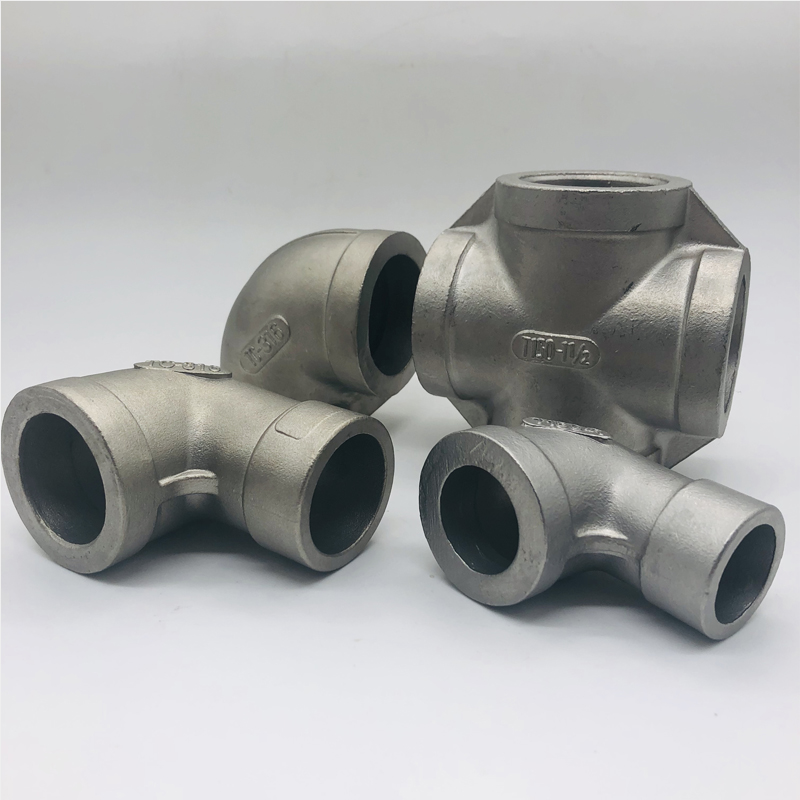
In today’s competitive manufacturing landscape, time and cost efficiency are non-negotiable. For complex metal components, relying solely on CNC machining from raw billet is often too slow and wasteful, while pure casting lacks the micrometer tolerances needed for functional interfaces.
Investment casting combined with CNC machining is the ultimate hybrid solution. By leveraging casting for near-net-shape geometry and CNC for precision finishing, manufacturers can drastically cut cycle times, reduce tool wear, and minimize manual labor costs.
1. Eliminating Rough Machining: The Core Efficiency Driver
Rough machining—removing bulk material from solid billet—consumes up to 60% of total spindle time and causes rapid tool degradation.
Near-Net Shape Efficiency: Investment casting delivers workpieces that match the final profile within a few millimeters. CNC machines skip the heavy material removal phase and start directly with light finishing passes.Internal Geometries Formed Naturally: Complex internal channels, undercuts, and thin-walled cavities (such as impeller vanes or pump passages) are formed effortlessly during casting using wax patterns and ceramic cores—eliminating hours of multi-axis programming and complex machining setups.
2. Time & Labor Cost Savings Across the Workflow
Cost & Time Driver |
Pure CNC Machining (From Billet) |
Hybrid Investment Casting + CNC |
Savings / Impact |
Material Utilization (Buy-to-Fly) |
Poor (Up to 10:1 material waste) |
Optimal (Near 1.2:1) |
Up to 70% material cost savings on high-cost alloys |
Machining Cycle Time |
High (Heavy roughing + finishing) |
Low (Selective finishing only) |
40%–60% reduction in cycle time per part |
Setup & Fixturing Labor |
Complex (Multiple re-orientations) |
Streamlined (Standardized datums) |
Lower labor burden per production run |
Scrap Rate & Rework |
High risk during long cutting cycles |
Low (Pre-inspected cast blanks) |
Reduces wasted machine and labor hours |
3. Material Efficiency & Lower Scrap Risk
When working with costly materials like Stainless Steel (316L, 17-4PH), Nickel Superalloys, Titanium, or Alloy Steel, wasting metal translates directly into lost margin.
Reduced Material Input: Because castings closely mirror final dimensions, you buy and melt only what you need.
Defect Isolation Early in the Process: Raw castings are inspected via Radiographic (X-ray) or Dye Penetrant testing before entering the CNC cell. Flawed parts are caught early, ensuring zero wasted machining time or operator intervention on defective stock.
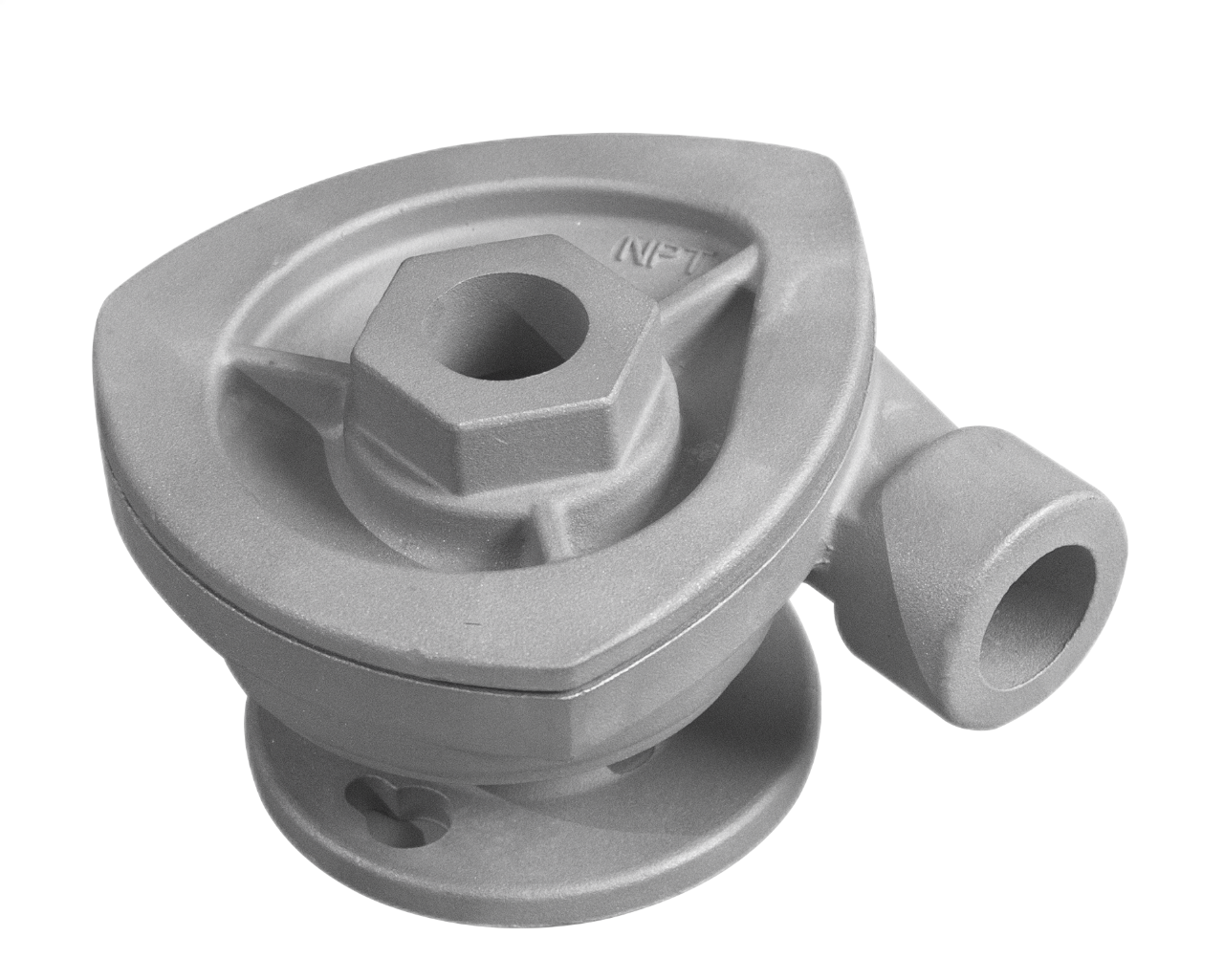
Complex internal flow channels and thin-walled vanes are cast directly, eliminating complex multi-axis machining setups.
4. Parallel Processing & Scalability
Unlike linear manufacturing, the hybrid approach enables parallel scheduling:
Simultaneous Operations: While a batch of castings is undergoing solidification, ceramic removal, or heat treatment, CNC fixtures and toolpaths can be qualified concurrently.
Long-Term Amortization: Once casting dies and CNC programs are validated, marginal labor costs drop significantly, making this route highly economical for medium-to-high volume production runs (typically 100+ units).
Frequently Asked Questions (FAQ)
Q: At what production volume does investment casting + CNC become cost-effective?
A: Typically starting at 100 to 500 units per run. For expensive alloys (Titanium, Nickel alloys) or highly complex shapes (impellers, valve bodies), the break-even point can be as low as 20–50 pieces due to high raw material savings.
Q: What tolerances can this hybrid process achieve?
A: Investment casting establishes near-net shapes within ±0.1 mm to ±0.3mm, while CNC machining refines critical bores, threads, and mating surfaces down to ±0.01mm with surface finishes up to Ra 0.4um.
Looking to Compress Lead Times and Reduce Per-Unit Costs?
Send your 3D CAD drawings (STEP/IGES) to our engineering team today for a free Manufacturability Assessment (DFM) and quotation within 24 hours.
[ Contact Our Engineering Team / Request a Quote ] (CTA Button)