
 EN
EN
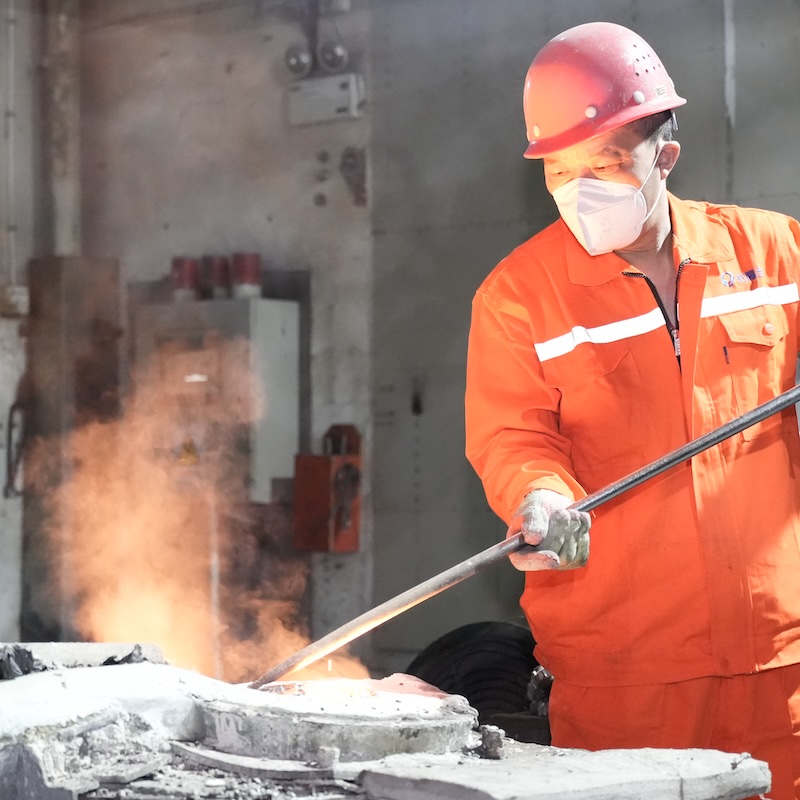
Selecting the right manufacturing partner for investment casting with cnc machining is one of the most consequential decisions a procurement team can make. These two processes, when combined, deliver exceptional dimensional accuracy, superior surface quality, and the ability to produce highly complex geometries that neither process could achieve independently. Yet the supplier landscape is fragmented, capabilities vary dramatically, and a poor selection can result in costly rework, delayed timelines, and components that fail to meet engineering specifications. Buyers who approach this decision without a structured framework often discover critical gaps only after a contract is signed.
This guide is designed to equip buyers with the specific knowledge they need before committing to a supplier of investment casting with cnc machining. It covers technical capability evaluation, process integration quality, quality assurance infrastructure, communication expectations, and the commercial factors that distinguish a reliable long-term partner from a short-term risk. Whether you are sourcing precision components for aerospace, medical devices, industrial pumps, or automotive systems, the criteria outlined here will help you make a well-informed, defensible sourcing decision.
Understanding the Combined Process and Why Integration Matters
The Technical Logic Behind Combining Casting and Machining
Investment casting with cnc machining is not simply a matter of casting a part and then milling it afterward. The two processes must be engineered together from the design stage. Investment casting produces near-net-shape components with fine surface detail and tight dimensional tolerances, typically within ±0.1 to ±0.3 mm depending on the alloy and geometry. CNC machining then refines critical features — bearing bores, sealing surfaces, threaded interfaces, and precision datums — to tolerances that casting alone cannot reliably achieve.
When a supplier understands both disciplines, they design the casting with machining in mind. This means engineering appropriate stock allowances on machinable surfaces, positioning parting lines to minimize interference, and selecting alloy compositions that machine cleanly without tool-chipping or work-hardening. Suppliers who treat the two processes as disconnected operations introduce avoidable variability, leading to scrapped castings and expensive corrective iterations.
Buyers should ask suppliers directly how their casting and machining engineering teams collaborate during design review. A supplier capable of true process integration will demonstrate that their casting engineers and CNC programmers share design files and communicate at the DFM (Design for Manufacturability) stage, not after the first castings are produced.
Near-Net-Shape Advantages and Their Limits
One of the primary reasons manufacturers choose investment casting with cnc machining is the near-net-shape capability of the casting process. By capturing complex external geometries in the mold, material removal in the CNC phase is minimized, reducing cycle times, tooling wear, and material waste. This is particularly valuable for high-cost superalloys, titanium, and stainless steel grades where raw material represents a significant cost driver.
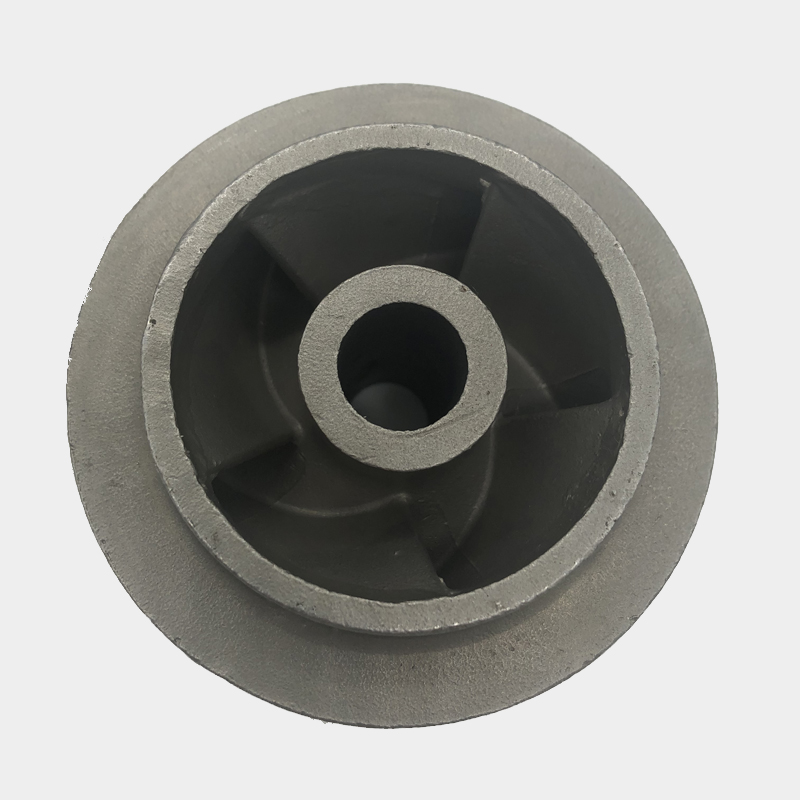
However, near-net-shape does not mean finished-shape. Internal passages, threaded features, sealing faces, and close-tolerance bores will still require CNC attention. A competent supplier will clearly communicate which features are delivered by the casting and which require machining, along with the achievable tolerances for each. Vague answers at this stage are a warning signal that the supplier may lack the process depth needed for demanding applications.
Evaluating Supplier Technical Capabilities
Casting Facility and Alloy Range
Before engaging a supplier of investment casting with cnc machining, buyers must audit the breadth and depth of the casting operation. This includes the range of alloys processed, the maximum and minimum part weights handled, and the complexity of geometries the facility has successfully produced. A supplier specializing in carbon steel investment castings may lack the shell chemistry control and burnout protocols needed for nickel-based superalloys or duplex stainless steel.
Shell building, wax injection, de-waxing, and pour temperature management are all process variables that influence the dimensional stability and internal soundness of the finished casting. Buyers evaluating a supplier for complex hydraulic or pump components — such as impellers — should review past production records, customer references, and material certifications for comparable alloy families. investment casting with cnc machining for rotating components like impellers demands particularly consistent grain structure and surface integrity to withstand cyclic loading and fluid dynamics.
Ask the supplier for their standard alloy portfolio and any special process qualifications they hold. Aerospace and medical customers, in particular, require documented alloy traceability from melt to finished part, and this capability should not be assumed.
CNC Machining Equipment and Precision Scope
The machining side of investment casting with cnc machining must be evaluated with equal rigor. The key variables include the number of axes available, spindle speed ranges, fixturing flexibility for complex cast geometries, and the metrology infrastructure used to verify tolerances in-process. A supplier running only 3-axis machining centers may struggle with the compound angles and deep pocket features common in precision cast components.
Five-axis CNC machining is particularly relevant for castings with curved surfaces, multi-plane features, or reference datums that are not parallel to a flat mounting face. When reviewing a supplier's machining capability, request examples of the tightest tolerances they regularly hold in production — not just capabilities claimed in marketing materials. Tolerance repeatability across a production batch is a more reliable indicator of capability than a single showcase part.
Buyers should also confirm that the supplier has dedicated fixtures or tombstones for the specific part families you intend to source. Generic fixturing applied to cast geometries often introduces datum shift errors that accumulate across features, resulting in assemblies that pass individual inspection but fail at final fit-check.
Quality Assurance Systems and Inspection Protocols
Certifications and Their Practical Meaning
ISO 9001 certification is a baseline expectation for any credible supplier of investment casting with cnc machining, but it is not sufficient on its own. ISO 9001 confirms that a quality management system exists; it does not validate the technical depth of that system or the rigor with which it is applied. For buyers in regulated industries, additional certifications carry more specific weight. AS9100 certification indicates aerospace-grade process discipline. ISO 13485 signals medical device manufacturing maturity. IATF 16949 demonstrates automotive-aligned production controls.
Beyond certifications, buyers should request copies of internal process control plans, first article inspection (FAI) reports from comparable past projects, and non-conformance rate data. A supplier who is hesitant to share this information during supplier qualification is unlikely to become more transparent during production. Quality transparency should be a non-negotiable supplier selection criterion.
Dimensional Verification and Non-Destructive Testing
For components produced through investment casting with cnc machining, dimensional verification must address both the cast geometry and the machined features. Coordinate Measuring Machine (CMM) capability is standard for serious precision suppliers, but buyers should confirm the resolution and calibration frequency of these systems. Optical scanning and 3D comparison against CAD nominal are increasingly used for complex cast profiles where traditional CMM probing is impractical.
Internal casting soundness is equally critical. Porosity, shrinkage voids, and inclusions that are invisible on the surface can propagate into failures during service. X-ray radiography, CT scanning, and fluorescent penetrant inspection (FPI) are the primary non-destructive testing methods used for investment castings. Buyers should specify which NDT methods are required in their purchase order and verify that the supplier holds the appropriate equipment and personnel qualifications to perform them.
Suppliers offering investment casting with cnc machining for critical applications should be able to deliver full inspection packages with each shipment, including material certs, dimensional reports, and NDT records. This documentation forms the traceability chain that regulated industry customers require.
Communication, Lead Time, and Commercial Alignment
Engineering Communication and DFM Feedback
A technically capable supplier who communicates poorly will still cause project delays and engineering frustration. Before finalizing a supplier for investment casting with cnc machining, buyers should evaluate the quality of communication during the quotation and DFM review phase. Does the supplier provide detailed feedback on design features that create casting challenges? Do they proactively flag tolerance requirements that exceed reliable process capability? Do they suggest design modifications that reduce cost without compromising function?
Suppliers who simply return a price without meaningful engineering input are typically applying a commodity mindset to precision manufacturing. For complex parts, this approach leads to problems that surface during first article inspection or, worse, during customer qualification testing. Strong DFM communication before order placement is one of the most reliable predictors of a smooth production experience.
Lead Time Realism and Production Capacity
Lead time commitments for investment casting with cnc machining projects must be evaluated realistically. A typical investment casting cycle — from tooling fabrication through casting, heat treatment, and CNC finishing — involves multiple sequential operations. Rushing any stage introduces dimensional instability, heat treatment non-conformances, or machining errors. Buyers should be skeptical of suppliers who quote unrealistically short lead times as a competitive tactic without explaining which steps they intend to compress.
Equally important is the supplier's production capacity relative to your anticipated order volume. A supplier who can deliver a prototype quickly but whose casting furnaces are consistently backlogged at production quantities is not a viable long-term partner. During supplier qualification, ask for an honest assessment of current capacity utilization and the lead time behavior during peak demand periods.
Commercial alignment also extends to pricing transparency. For investment casting with cnc machining, tooling cost, per-piece casting cost, and CNC machining cost are distinct cost elements, each driven by different variables. A supplier who presents a single opaque price without cost structure clarity makes it difficult for buyers to compare proposals objectively or to understand where value engineering opportunities exist.
Risk Management and Long-Term Partnership Factors
Supply Chain Resilience and Material Sourcing
Buyers selecting a supplier for investment casting with cnc machining must consider supply chain resilience, particularly for specialty alloys. Investment casting relies on controlled melting of alloy charge materials, and disruptions in raw material supply can delay production schedules or force alloy substitutions that require re-qualification. Ask potential suppliers how they manage alloy inventory, whether they hold safety stock for high-demand materials, and how they communicate supply disruptions to customers.
A supplier with diversified raw material sourcing and documented supplier qualification processes for their own supply chain is less likely to pass upstream disruptions down to you as a buyer. This is particularly relevant in periods of market volatility affecting nickel, cobalt, and specialty stainless steel pricing.
Continuous Improvement Culture and Technical Development
The best suppliers of investment casting with cnc machining are those who invest in continuous process improvement, not just those who can execute a current design competently. Buyers building long-term relationships should assess whether a supplier has an active technical development program, whether they invest in new casting simulation tools, and whether their CNC machining team stays current with cutting tool technology and programming advances.
Suppliers who demonstrate a culture of improvement are better positioned to help you reduce part costs over time, improve yields, and adapt to design changes without starting from zero. When evaluating a supplier for investment casting with cnc machining, ask about cost reduction initiatives they have delivered to existing customers and examples of process capability improvements achieved during a production run lifecycle.
Ultimately, the right supplier is not just a vendor but a manufacturing partner whose technical depth, quality discipline, and communication culture align with your production requirements and business risk tolerance. Taking the time to evaluate these factors thoroughly before placement of the first order pays dividends throughout the component's production lifecycle.
FAQ
What tolerances are typically achievable with investment casting with cnc machining combined?
Investment casting alone typically achieves dimensional tolerances in the range of ±0.1 to ±0.3 mm depending on part geometry, alloy, and feature location. When CNC machining is applied to critical surfaces after casting, tolerances of ±0.01 to ±0.05 mm are routinely achievable on well-fixtured, stable cast geometries. The actual tolerance capability for a specific part depends on the alloy, the feature type, and the supplier's fixturing and inspection infrastructure.
How should buyers evaluate a supplier's ability to handle both casting and machining in-house?
Buyers should request a facility tour or detailed capability documentation covering both operations. Key indicators of true in-house integration include shared DFM review processes involving both casting and machining engineers, documented stock allowance standards for machined surfaces, and inspection equipment capable of verifying both cast and machined features. Single-source integration eliminates inter-supplier dimensional variability and improves accountability.
What materials are most commonly processed through investment casting with cnc machining?
The most common materials include carbon steel, alloy steel, stainless steel grades such as 316L and 17-4 PH, duplex stainless steel, nickel-based superalloys such as Inconel and Hastelloy, cobalt-chrome alloys, and aluminum alloys. The choice of alloy is driven by service conditions including temperature, corrosion environment, mechanical loading, and weight requirements. Suppliers should be evaluated for their specific experience with the alloy family relevant to your application.
How can buyers protect themselves from quality failures during the first production run?
Buyers should require a formal first article inspection (FAI) process in which the supplier submits a full dimensional report, material certifications, and any required NDT documentation for review and approval before bulk production begins. Including FAI requirements in the purchase order or quality plan establishes a contractual quality gate. Additionally, requesting sample castings before CNC machining allows buyers to evaluate casting soundness independently before value-added machining cost is invested.
Table of Contents
- Understanding the Combined Process and Why Integration Matters
- Evaluating Supplier Technical Capabilities
- Quality Assurance Systems and Inspection Protocols
- Communication, Lead Time, and Commercial Alignment
- Risk Management and Long-Term Partnership Factors
-
FAQ
- What tolerances are typically achievable with investment casting with cnc machining combined?
- How should buyers evaluate a supplier's ability to handle both casting and machining in-house?
- What materials are most commonly processed through investment casting with cnc machining?
- How can buyers protect themselves from quality failures during the first production run?