Accurate Metal Casting Parts - Precision Components for Demanding Applications | High-Quality Metal Castings

Get a Free Quote

Our representative will contact you soon.
Email
Name
Company Name
Message
0/1000

accurate metal casting parts

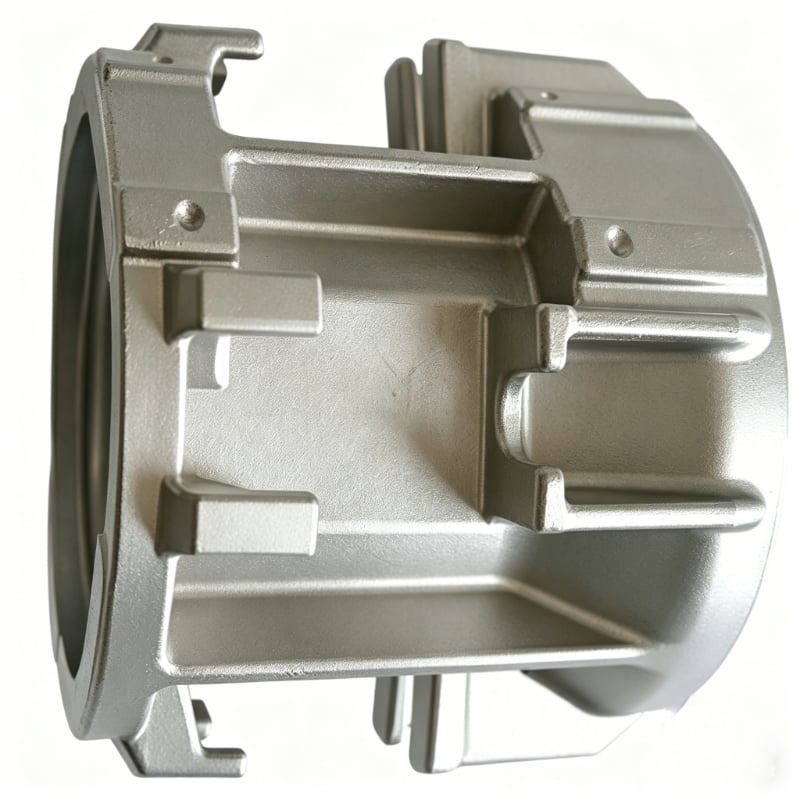
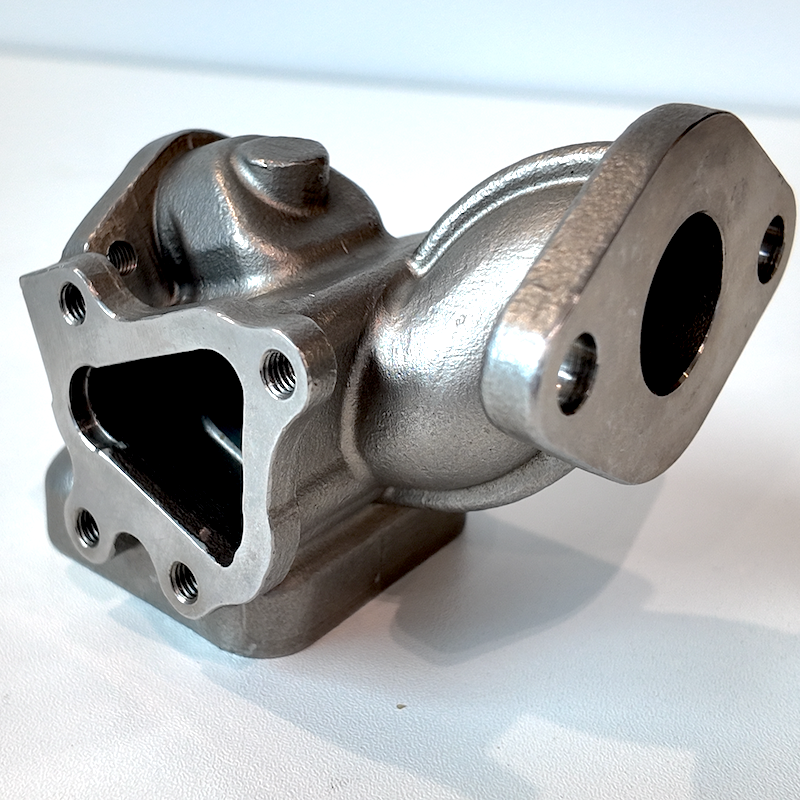
Accurate metal casting parts represent a sophisticated manufacturing solution that combines precision engineering with versatile metal forming techniques to produce components with exceptional dimensional accuracy and surface quality. This advanced manufacturing process utilizes refined casting methods including investment casting, die casting, and precision sand casting to create intricate metal components that meet stringent tolerance requirements. The primary function of accurate metal casting parts is to deliver complex geometries and detailed features that would be difficult or impossible to achieve through traditional machining alone. These components serve critical roles across diverse industries, from aerospace and automotive to medical devices and industrial equipment. The technological features of accurate metal casting parts include superior dimensional consistency, excellent surface finish, reduced material waste, and the ability to produce both prototype quantities and high-volume production runs. The casting process allows manufacturers to work with various metal alloys including aluminum, steel, stainless steel, bronze, brass, and specialized alloys tailored to specific performance requirements. One of the defining characteristics of accurate metal casting parts is their ability to maintain tight tolerances, often within 0.005 inches or better, depending on the casting method employed. The applications for these precision components span numerous sectors: in aerospace, they form critical engine components and structural elements; in automotive manufacturing, they create transmission housings, engine blocks, and suspension components; in medical equipment, they produce surgical instruments and implant components; and in industrial machinery, they serve as pump housings, valve bodies, and gear components. The manufacturing process begins with detailed design specifications and often incorporates advanced simulation software to predict metal flow, solidification patterns, and potential defects before production begins. This proactive approach ensures that accurate metal casting parts meet or exceed quality standards while minimizing production delays and material costs. The versatility of the casting process also enables manufacturers to integrate multiple features into a single component, reducing assembly requirements and improving overall product reliability.

New Product Releases

Choosing accurate metal casting parts for your manufacturing needs delivers numerous practical benefits that directly impact your bottom line and product performance. First and foremost, these precision components significantly reduce your overall production costs by minimizing the need for extensive secondary machining operations. When you receive castings that already incorporate complex features and meet tight tolerances, you spend less time and money on additional processing steps. This cost efficiency becomes even more pronounced in high-volume production scenarios where every minute of machine time translates to substantial savings. Another compelling advantage is the exceptional design flexibility that accurate metal casting parts provide. You can create components with intricate internal passages, complex external geometries, and integrated features that would require multiple machined parts and assembly operations using conventional methods. This design freedom allows your engineering team to optimize component performance without being constrained by manufacturing limitations. The ability to consolidate multiple parts into a single casting reduces your assembly time, eliminates potential failure points at joints, and decreases your overall component count, leading to lighter and more reliable products. Material efficiency stands as another significant benefit, as the casting process generates minimal waste compared to subtractive manufacturing methods. You use only the material needed for the component plus a small amount for the gating system, which can often be recycled. This efficient material usage not only reduces costs but also supports your sustainability initiatives. The strength and durability of accurate metal casting parts also deserve emphasis. The casting process creates components with uniform material properties and grain structures that provide excellent mechanical characteristics. You receive parts that can withstand demanding operating conditions, resist wear and corrosion, and maintain their dimensional stability over extended service lives. Production speed represents another practical advantage, particularly once tooling is established. You can produce complex components much faster than machining them from solid stock, and modern casting facilities can deliver parts in weeks rather than months. This rapid turnaround helps you meet tight project deadlines and respond quickly to market demands. Quality consistency across production runs ensures that every accurate metal casting part you receive meets the same high standards. Advanced process controls and inspection techniques guarantee dimensional accuracy and material properties remain consistent whether you order ten parts or ten thousand. This reliability simplifies your quality assurance procedures and reduces inspection costs. Finally, working with accurate metal casting parts gives you access to a wide range of material options, allowing you to select the optimal alloy for your specific application requirements, whether you need high strength, corrosion resistance, heat resistance, or specialized properties.

Tips And Tricks

Basic Principles Of Design Of Precision Casting Gating System

11

May

Basic Principles Of Design Of Precision Casting Gating System

View More
The Role Of Elements In Castings And The Order Of Addition

11

May

The Role Of Elements In Castings And The Order Of Addition

View More
Stainless Steel Castings for Architectural Posts

11

May

Stainless Steel Castings for Architectural Posts

View More
Precision Stainless Steel Exhaust Manifold Casting Solution For Luxury Sedan - With Japanese First-Tier Car Brand

11

May

Precision Stainless Steel Exhaust Manifold Casting Solution For Luxury Sedan - With Japanese First-Tier Car Brand

View More

Get a Free Quote

Our representative will contact you soon.
Email
Name
Company Name
Message
0/1000

accurate metal casting parts

Exceptional Precision and Dimensional Accuracy

Exceptional Precision and Dimensional Accuracy

The hallmark characteristic that sets accurate metal casting parts apart in modern manufacturing is their remarkable precision and dimensional accuracy, which directly translates to superior product performance and reduced production costs for your business. This precision stems from advanced casting technologies that employ refined processes, sophisticated tooling, and rigorous quality control measures throughout every stage of production. When you specify accurate metal casting parts for your projects, you gain access to components that consistently maintain tolerances as tight as plus or minus 0.005 inches, with some specialized processes achieving even finer precision levels. This dimensional accuracy eliminates the need for extensive secondary machining operations, saving you valuable production time and reducing manufacturing expenses. The precision of these castings begins at the design phase, where modern computer-aided engineering software simulates the entire casting process, predicting how molten metal will flow through the mold, where it will solidify first, and how the component will shrink during cooling. These simulations allow engineers to optimize gating systems, riser placement, and mold geometry before any physical tooling is created, preventing costly errors and ensuring that the first castings meet your specifications. The tooling itself represents another critical factor in achieving exceptional precision. High-quality molds and dies manufactured to exacting standards using CNC machining and EDM processes provide the foundation for accurate reproduction of your component geometry. Investment casting processes utilize wax patterns and ceramic molds that capture extraordinarily fine details, enabling the production of components with intricate features, thin walls, and complex contours that replicate your design intent with outstanding fidelity. Die casting employs precision steel dies that can be used for thousands of production cycles while maintaining dimensional consistency. The value this precision brings to your operations extends beyond simple dimensional conformity. Accurate metal casting parts arrive at your facility ready for assembly or requiring only minimal finishing operations, accelerating your production schedule and reducing work-in-process inventory. The consistent quality means your assembly processes become more predictable and efficient, with parts fitting together properly every time without adjustment or rework. This reliability reduces scrap rates, minimizes quality-related production stoppages, and enhances your reputation for delivering superior products to your customers.
Superior Material Properties and Performance Characteristics

Superior Material Properties and Performance Characteristics

Accurate metal casting parts deliver exceptional material properties and performance characteristics that ensure your components withstand demanding operating conditions while maintaining their functional integrity throughout extended service lives. The casting process creates parts with unique metallurgical structures that often surpass the properties of components manufactured through other methods, providing you with products that offer superior strength, durability, and reliability. Understanding how casting produces these advantageous material properties helps you appreciate the value these components bring to your applications. During the solidification process, molten metal transforms into a solid crystalline structure with grain formations that distribute uniformly throughout the component. This uniform grain structure eliminates the directional weaknesses often found in heavily worked materials and provides consistent mechanical properties in all directions. The controlled cooling rates employed in precision casting processes allow metallurgists to optimize grain size and distribution, tailoring material properties to meet your specific performance requirements. For components that must endure cyclic loading, impact forces, or thermal stresses, this metallurgical control proves invaluable. Accurate metal casting parts also benefit from the ability to work with an extensive range of alloys, each engineered to deliver specific performance characteristics. Whether you need aluminum alloys that offer an excellent strength-to-weight ratio for aerospace applications, stainless steels that provide outstanding corrosion resistance for marine environments, or specialized alloys that maintain their properties at elevated temperatures for engine components, casting processes can accommodate virtually any metal suitable for your needs. This material versatility allows you to select the optimal alloy composition for each application, balancing factors such as strength, weight, corrosion resistance, thermal conductivity, and cost. The inherent design flexibility of casting also contributes to superior performance by allowing engineers to optimize wall thickness, add strengthening ribs in critical areas, and create shapes that naturally resist applied forces. You can design components that place material exactly where it provides the most benefit, eliminating unnecessary weight while maintaining or even enhancing structural integrity. This optimization capability becomes particularly valuable in industries where weight reduction directly impacts performance and operating costs, such as automotive and aerospace sectors. Additionally, the surface integrity of accurate metal casting parts contributes to their performance characteristics. Modern casting processes produce surfaces with minimal defects, proper grain structure extending to the surface, and consistent properties throughout the cross-section. This surface integrity enhances fatigue resistance, improves the effectiveness of protective coatings, and ensures that your components perform reliably under stress.
Cost-Effective Production for Complex Geometries

Cost-Effective Production for Complex Geometries

One of the most compelling advantages of accurate metal casting parts lies in their ability to deliver complex geometries in a remarkably cost-effective manner, providing you with intricate components that would be prohibitively expensive or even impossible to produce using alternative manufacturing methods. This economic efficiency stems from the fundamental nature of the casting process, which forms near-net-shape components directly from molten metal, eliminating the extensive material removal and multiple setup operations required by machining approaches. When you evaluate the total cost of producing a complex metal component, accurate metal casting parts consistently demonstrate superior value proposition. The initial investment in tooling, while requiring upfront capital, amortizes quickly across production runs, and the per-part cost decreases substantially as volume increases. For components with intricate internal passages, undercuts, complex contours, or integrated features, the cost advantage of casting becomes even more pronounced. Consider a component that would require dozens of machining operations, multiple setups, specialized tooling, and extensive programming if manufactured from solid stock. That same part might be produced as an accurate metal casting with minimal secondary operations, dramatically reducing production time and labor costs. The material efficiency of casting also contributes significantly to cost-effectiveness. Traditional machining operations often remove eighty percent or more of the starting material to create complex parts, with all that removed metal representing wasted expense. Accurate metal casting parts use only the material needed for the component plus the gating system, typically achieving material utilization rates of ninety percent or higher. This efficiency not only reduces raw material costs but also eliminates the time and energy required to remove excess material. In today's manufacturing environment where material prices fluctuate and sustainability considerations increasingly influence purchasing decisions, this efficient material usage provides both economic and environmental benefits. The ability to consolidate multiple components into a single accurate metal casting part generates additional cost savings throughout your production process. When you eliminate separate parts, you also eliminate the fasteners, welding operations, or other joining methods required to assemble them. This consolidation reduces your parts inventory, simplifies your supply chain management, decreases assembly labor, and eliminates potential failure points that occur at joints between separate components. The reduced part count also means fewer incoming inspections, less handling, and simpler quality documentation. Furthermore, the production speed advantage of accurate metal casting parts helps you meet market demands efficiently. Once tooling is established and production parameters optimized, casting facilities can produce components rapidly, maintaining consistent quality across large production volumes. This manufacturing velocity reduces your time-to-market for new products and enables you to respond quickly to customer orders.

Get a Free Quote

Our representative will contact you soon.
Email
Name
Company Name
Message
0/1000