Custom High Precision Castings - Advanced Manufacturing Solutions for Complex Metal Components

Get a Free Quote

Our representative will contact you soon.
Email
Name
Company Name
Message
0/1000

custom high precision castings

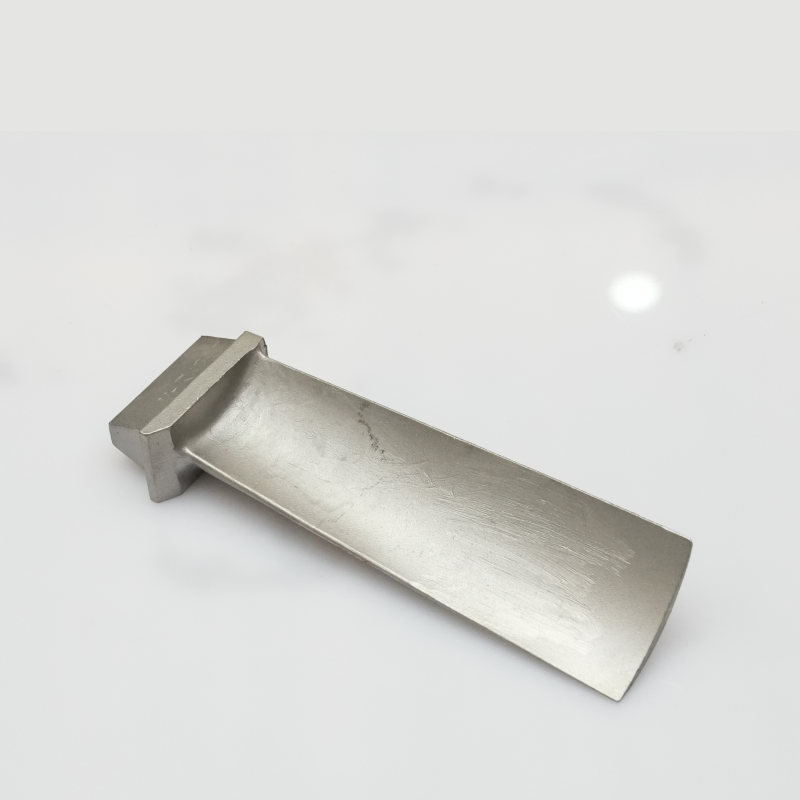
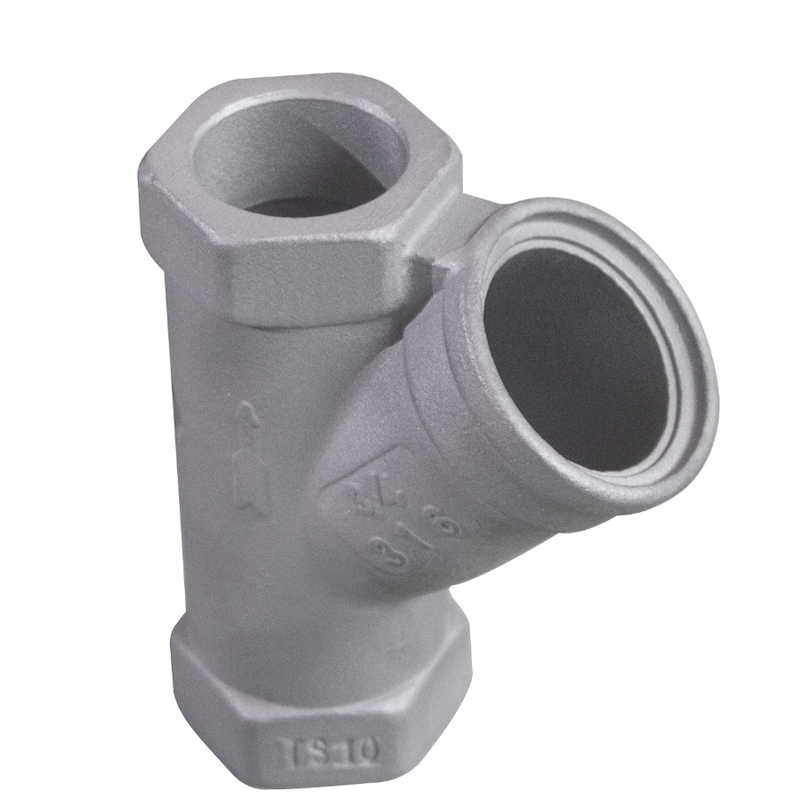
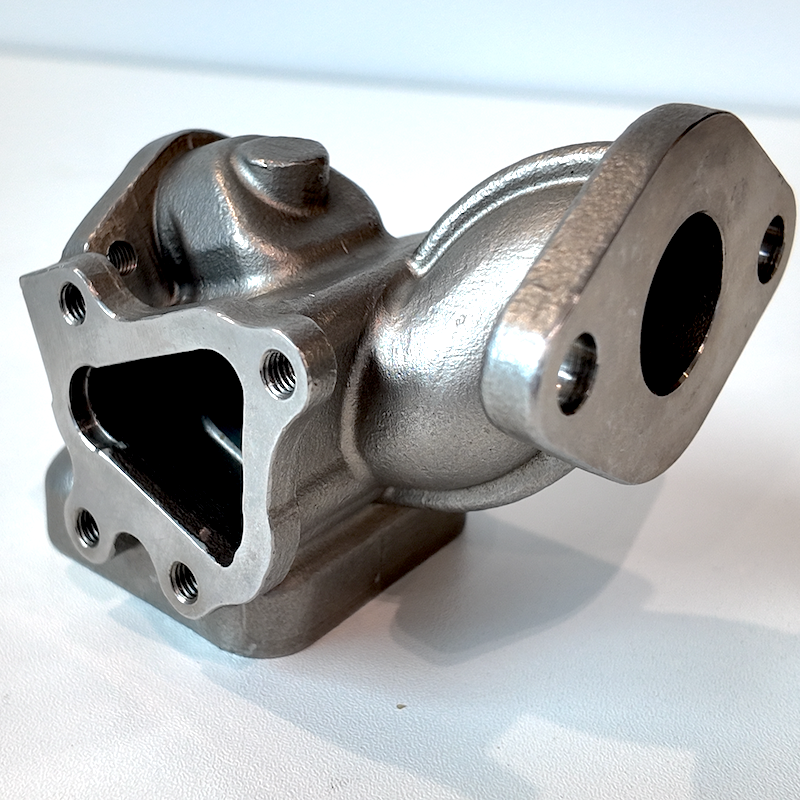
Custom high precision castings represent a sophisticated manufacturing solution that delivers intricate metal components with exceptional accuracy and consistency. This advanced production method combines traditional casting techniques with modern precision engineering to create parts that meet the most demanding specifications across diverse industries. The process begins with detailed design analysis, where engineers work closely with clients to understand exact requirements, tolerances, and performance criteria. Custom high precision castings utilize various metals and alloys, including stainless steel, aluminum, bronze, titanium, and specialized alloys, each selected based on the specific application demands. The technological foundation relies on investment casting, die casting, or sand casting methods, enhanced by computer-aided design and simulation software that predicts material flow, solidification patterns, and potential defects before production begins. This proactive approach minimizes waste and ensures optimal results. The precision aspect comes from tight dimensional controls, often achieving tolerances within 0.001 inches, surface finishes comparable to machined parts, and consistent mechanical properties throughout each production run. These castings find applications in aerospace components where weight reduction and structural integrity are critical, medical devices requiring biocompatibility and sterile surfaces, automotive parts demanding high strength-to-weight ratios, industrial machinery needing wear resistance, and energy sector equipment operating under extreme conditions. The customization element allows manufacturers to produce complex geometries that would be difficult or impossible to achieve through other manufacturing methods, including internal passages, undercuts, thin walls, and integrated features that eliminate assembly steps. Custom high precision castings also accommodate various production volumes, from prototype quantities for testing and validation to high-volume runs for established products, making this solution flexible for businesses at different growth stages.

New Product Releases

Choosing custom high precision castings offers numerous practical benefits that directly impact your bottom line and product quality. First, this manufacturing approach significantly reduces material waste compared to subtractive methods like machining, where up to seventy percent of raw material can become scrap. With precision casting, material usage efficiency reaches ninety percent or higher, translating to lower material costs and environmental benefits. The ability to create complex shapes in a single piece eliminates multiple assembly operations, reducing labor costs and potential failure points from joints or fasteners. You save time throughout the production cycle because tooling development has become faster with modern prototyping techniques, and once established, the process delivers consistent results batch after batch without extensive setup changes. Quality consistency represents another major advantage, as each casting replicates the master pattern with remarkable fidelity, ensuring every component meets specifications without the variation common in other processes. This reliability reduces inspection time and rejection rates, improving your overall production efficiency. The design freedom inherent in custom high precision castings allows engineers to optimize parts for performance rather than manufacturing limitations. You can incorporate weight-reducing features, cooling channels, mounting points, and aesthetic details directly into the casting, avoiding secondary operations. This integration capability often results in lighter, stronger, and more functional components than those produced through alternative methods. Cost effectiveness becomes apparent especially for medium to large production runs, where the per-unit cost decreases substantially compared to machining identical parts from solid stock. Even for smaller quantities, the elimination of assembly steps and secondary operations often makes casting competitive. The mechanical properties achieved through controlled solidification and heat treatment provide excellent strength, durability, and performance characteristics suitable for demanding applications. Surface finish quality straight from the mold often eliminates grinding or polishing, saving additional processing time. Lead time advantages emerge once tooling is complete, with production cycles measured in days rather than weeks for complex components. Flexibility in material selection lets you match alloy properties precisely to application requirements, whether you need corrosion resistance, high temperature performance, magnetic properties, or specific conductivity characteristics. Working with experienced casting partners gives you access to metallurgical expertise and process optimization knowledge that enhances product development, helping identify potential improvements in design, material selection, or production methods that deliver better performance or lower costs.

Tips And Tricks

Basic Principles Of Design Of Precision Casting Gating System

11

May

Basic Principles Of Design Of Precision Casting Gating System

View More
The Role Of Elements In Castings And The Order Of Addition

11

May

The Role Of Elements In Castings And The Order Of Addition

View More
Stainless Steel Castings for Building Facade Systems

11

May

Stainless Steel Castings for Building Facade Systems

View More
Precision Stainless Steel Exhaust Manifold Casting Solution For Luxury Sedan - With Japanese First-Tier Car Brand

11

May

Precision Stainless Steel Exhaust Manifold Casting Solution For Luxury Sedan - With Japanese First-Tier Car Brand

View More

Get a Free Quote

Our representative will contact you soon.
Email
Name
Company Name
Message
0/1000

custom high precision castings

Unmatched Dimensional Accuracy and Surface Quality

Unmatched Dimensional Accuracy and Surface Quality

The dimensional accuracy achieved through custom high precision castings sets this manufacturing method apart from conventional casting processes and even rivals machined components in many applications. Modern precision casting techniques routinely achieve linear tolerances of plus or minus 0.005 inches on small to medium features, with even tighter controls possible through secondary operations or specialized processes. This level of accuracy means components fit together properly without extensive adjustment, gaskets seal correctly, and mechanical interfaces function as designed. The consistency across production runs ensures interchangeability, a critical requirement for replacement parts and assembly line operations. Surface finish quality represents another dimension of precision that delivers practical benefits. Investment casting processes produce surfaces with roughness values between 125 and 250 micro-inches, smooth enough for many applications without additional finishing. This as-cast surface quality reduces or eliminates grinding, polishing, and other secondary operations that add cost and time to production. For visible components, the smooth surface accepts coatings and finishes uniformly, enhancing aesthetic appeal. For functional surfaces, reduced roughness means better seal performance, lower friction, and improved fatigue resistance. The precision extends beyond external dimensions to internal features like holes, passages, and cavities. Custom high precision castings can incorporate cored sections with complex internal geometries that would require extensive drilling and machining if produced by other methods. These internal features maintain dimensional accuracy and surface quality, enabling applications like fluid passages in hydraulic components or cooling channels in thermal management systems. Wall thickness control represents another critical precision parameter. Modern casting processes maintain consistent wall thickness throughout complex shapes, avoiding the thick and thin sections that cause stress concentrations and potential failure points. This uniformity contributes to predictable mechanical behavior and longer service life. The geometric precision also enables net-shape or near-net-shape production, where the casting closely approximates final dimensions, minimizing material removal and associated costs. For manufacturers, this precision translates to reduced quality control requirements, lower rejection rates, and confidence that components will perform as intended in their final application.
Exceptional Design Flexibility and Integration Capabilities

Exceptional Design Flexibility and Integration Capabilities

Custom high precision castings provide design flexibility that fundamentally changes how engineers approach product development, enabling innovation that manufacturing constraints would otherwise prevent. Unlike machining, which works by removing material and thus limits undercuts and internal features, or forging, which requires draft angles and simpler shapes, precision casting accommodates virtually any geometry that can be modeled and molded. This freedom allows designers to optimize parts for function rather than manufacturing convenience. Complex organic shapes that distribute stress efficiently, biomimetic structures that reduce weight while maintaining strength, and integrated features that combine multiple functions into single components all become feasible. The ability to create thin-walled sections, sometimes as thin as 0.040 inches depending on alloy and size, enables significant weight reduction without sacrificing strength. Aerospace and automotive industries particularly value this capability, as every gram saved in moving components improves fuel efficiency and performance. Conversely, the process handles thick sections where strength or thermal mass is required, with proper design techniques preventing the porosity that can occur in heavy areas. Custom high precision castings excel at producing components with integrated features that eliminate assembly operations. Mounting bosses, threaded inserts, alignment features, and connecting points can be cast directly into parts, reducing piece count and potential failure modes. This integration simplifies supply chains, reduces inventory complexity, and accelerates assembly processes. Designers can incorporate branding elements, identification marks, and aesthetic details directly into castings, eliminating secondary marking operations while ensuring permanent, clear identification. The process accommodates both symmetric and asymmetric designs, handling everything from simple geometric shapes to complex sculptures. For products requiring specific directionality in material properties, casting orientation and solidification control can be optimized. The flexibility extends to prototype development, where design iterations can be evaluated quickly through rapid tooling methods, allowing refinement before committing to production tooling. This iterative capability reduces development risk and leads to better final products. Multiple components can sometimes be combined into single castings, dramatically reducing assembly complexity and improving reliability by eliminating joints and fasteners that can loosen or fail.
Superior Material Properties and Performance Characteristics

Superior Material Properties and Performance Characteristics

The metallurgical properties achieved through custom high precision castings deliver performance characteristics that meet or exceed wrought materials in many applications, while offering material options unavailable through other manufacturing methods. The controlled solidification environment allows precise microstructure development, producing fine grain structures that enhance mechanical properties. Modern casting processes incorporate directional solidification and controlled cooling rates that optimize crystal formation, resulting in components with excellent strength, ductility, and toughness. The homogeneous material distribution throughout cast components ensures consistent properties in all directions, unlike forged parts which may exhibit directional properties due to grain flow. This isotropy simplifies design calculations and provides predictable behavior under complex loading conditions. Custom high precision castings accommodate an extensive range of alloys, including difficult-to-machine materials that would be prohibitively expensive to produce through subtractive methods. Superalloys for high-temperature applications, titanium alloys combining light weight with high strength, and specialized bronzes for wear resistance all become practical material choices. Heat treatment processes further enhance cast material properties, with solution annealing, precipitation hardening, and tempering operations tailored to specific alloys and applications. These treatments develop optimal combinations of hardness, strength, and ductility for intended service conditions. The casting process itself can incorporate reinforcements, composite structures, and functionally graded materials that vary properties within a single component. For applications requiring wear resistance in specific areas while maintaining ductility elsewhere, selective alloying or surface treatments can be integrated during casting. Corrosion resistance represents another critical performance characteristic. Stainless steel castings provide excellent resistance to chemical attack, while aluminum alloys offer natural oxide protection, and specialized coatings can be applied to enhance protection further. The dense, uniform structure of precision castings eliminates the porosity and inclusions that create corrosion initiation sites. Thermal properties can be optimized through material selection, with castings providing excellent heat dissipation for applications like motor housings and heat exchangers, or thermal insulation for high-temperature components. The mechanical performance under dynamic loading conditions, including fatigue resistance and impact toughness, meets demanding requirements when proper alloy selection and heat treatment protocols are followed, making custom high precision castings suitable for critical structural and safety applications across industries.

Get a Free Quote

Our representative will contact you soon.
Email
Name
Company Name
Message
0/1000