Precision Casting Machining Services - High-Accuracy Metal Component Manufacturing Solutions

Get a Free Quote

Our representative will contact you soon.
Email
Name
Company Name
Message
0/1000

precision casting machining

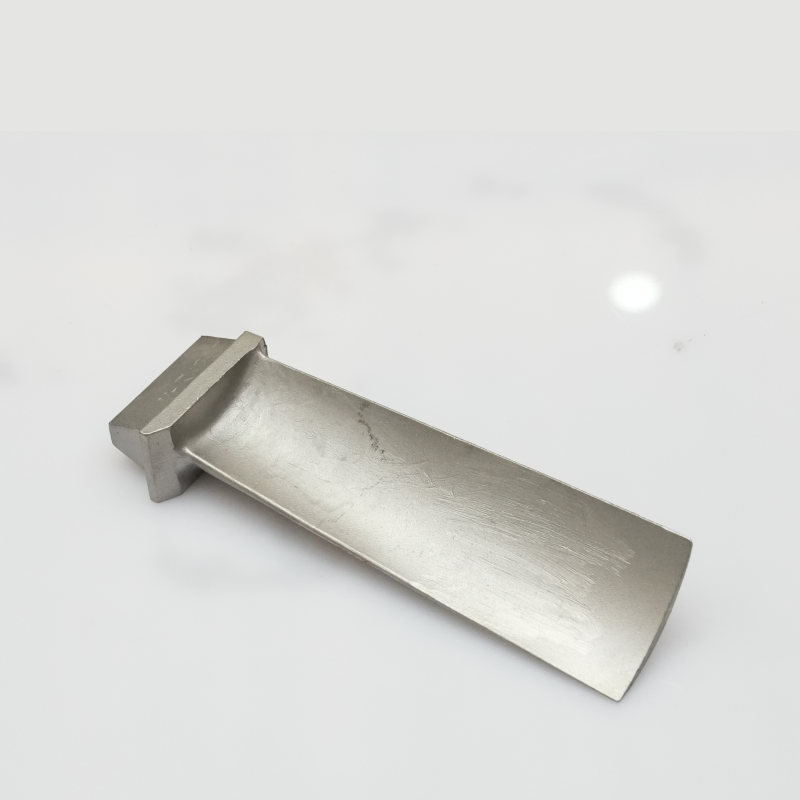
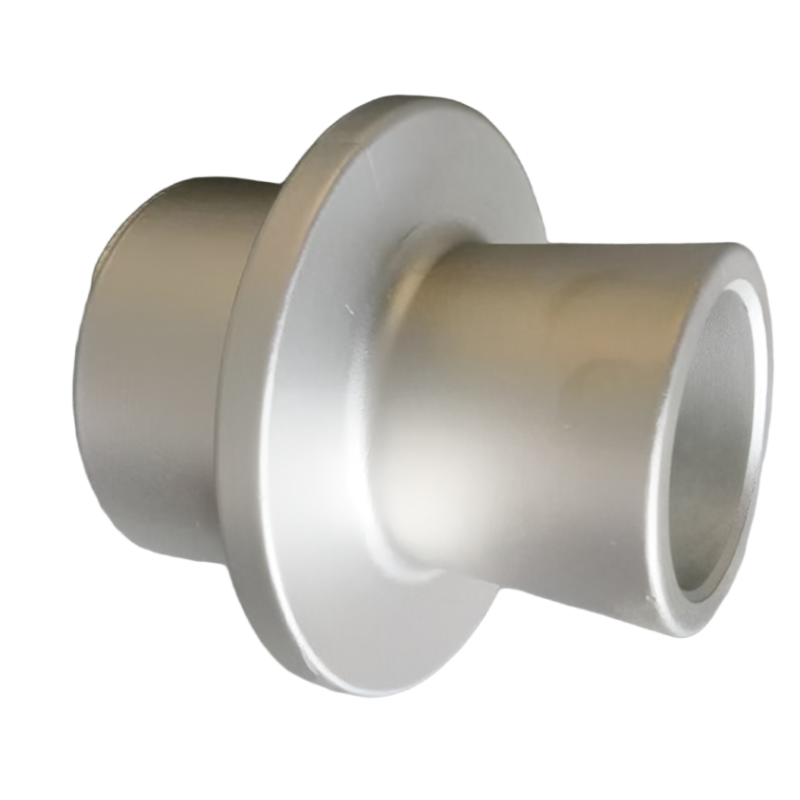
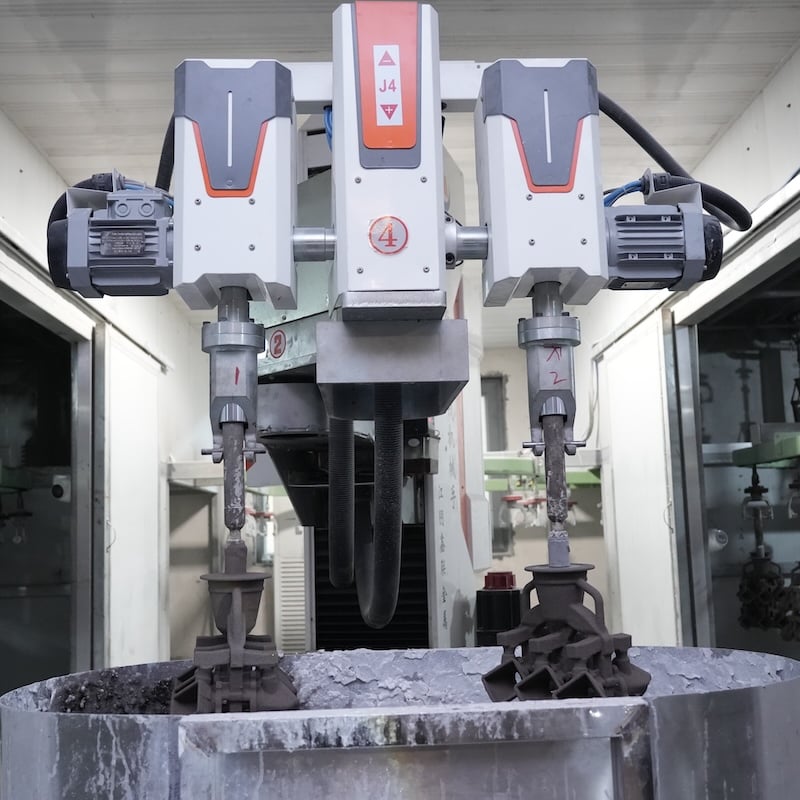
Precision casting machining represents a sophisticated manufacturing process that combines traditional casting techniques with advanced machining operations to produce complex metal components with exceptional accuracy and surface finish. This integrated approach begins with precision casting, also known as investment casting or lost-wax casting, where molten metal is poured into ceramic molds created from wax patterns. Following the casting phase, precision machining operations refine the components to achieve tight tolerances and superior dimensional accuracy. The main functions of precision casting machining include producing intricate geometries that would be difficult or impossible to achieve through conventional manufacturing methods, reducing material waste by creating near-net-shape components, and delivering parts with excellent mechanical properties. Technological features of this process encompass computer-aided design integration, automated pouring systems, controlled solidification environments, and multi-axis CNC machining centers that work together to ensure consistent quality. The casting phase allows manufacturers to create complex internal passages, undercuts, and thin-walled sections, while subsequent machining operations add critical dimensions, threads, and fine surface finishes where required. Applications for precision casting machining span numerous industries including aerospace, where turbine blades and structural components demand exceptional strength-to-weight ratios, medical device manufacturing requiring biocompatible materials and sterile surfaces, automotive production for engine components and transmission parts, industrial equipment manufacturing, defense systems, energy generation equipment, and specialized tooling. The process accommodates various alloy systems including stainless steels, aluminum alloys, titanium alloys, nickel-based superalloys, and cobalt-chromium alloys, making it versatile for diverse application requirements. Modern precision casting machining facilities utilize advanced quality control measures such as coordinate measuring machines, non-destructive testing, and statistical process control to maintain consistency across production runs and meet stringent industry standards.

New Product Recommendations

Choosing precision casting machining for your manufacturing needs delivers multiple practical benefits that directly impact your bottom line and product quality. First, this method significantly reduces material waste compared to traditional machining from solid stock, as the casting process creates parts very close to their final shape, requiring minimal material removal. This efficiency translates into lower raw material costs and reduced machining time, making your production more economical. The ability to produce complex shapes in a single casting eliminates the need for multiple components and assembly operations, streamlining your manufacturing process and reducing labor costs. You gain design freedom that other methods cannot match, enabling engineers to optimize part geometry for performance rather than manufacturing limitations, resulting in lighter components with better strength characteristics. The process delivers excellent surface finishes directly from casting, often requiring minimal post-processing, which saves time and reduces handling damage risks. You benefit from consistent mechanical properties throughout each part because the casting process produces uniform grain structures, ensuring reliable performance in demanding applications. Precision casting machining accommodates both prototype quantities and high-volume production runs, providing flexibility as your needs evolve without requiring entirely different manufacturing setups. The combination of casting and machining allows you to specify tight tolerances only where necessary, keeping costs reasonable while meeting critical dimensional requirements. Lead times often prove shorter than alternative methods because tooling for casting can be produced quickly, and the process itself runs efficiently once established. You can incorporate features like logos, part numbers, and identification marks directly into the casting, eliminating secondary marking operations. The method works with materials that are difficult to machine conventionally, expanding your material options for specialized applications requiring specific thermal, chemical, or mechanical properties. Environmental benefits include reduced energy consumption compared to extensive machining operations and the ability to recycle casting materials efficiently. Quality remains consistent across production batches because the process parameters can be precisely controlled and monitored, reducing rejection rates and ensuring your customers receive reliable products. The integration of modern automation and digital controls means you get repeatable results with minimal variation, building confidence in your supply chain and reducing inspection requirements. These combined advantages make precision casting machining an intelligent choice for manufacturers seeking to balance quality, cost, and production efficiency while maintaining the flexibility to meet diverse customer requirements.

Latest News

Basic Principles Of Design Of Precision Casting Gating System

11

May

Basic Principles Of Design Of Precision Casting Gating System

View More
Selection And Application Scope Of Hardness Tester

11

May

Selection And Application Scope Of Hardness Tester

View More
The Role Of Elements In Castings And The Order Of Addition

11

May

The Role Of Elements In Castings And The Order Of Addition

View More
Stainless Steel Castings for Building Facade Systems

11

May

Stainless Steel Castings for Building Facade Systems

View More

Get a Free Quote

Our representative will contact you soon.
Email
Name
Company Name
Message
0/1000

precision casting machining

Exceptional Dimensional Accuracy and Complex Geometry Capabilities

Exceptional Dimensional Accuracy and Complex Geometry Capabilities

Precision casting machining stands out in the manufacturing landscape for its remarkable ability to achieve exceptional dimensional accuracy while producing components with complex geometries that challenge conventional fabrication methods. This unique capability stems from the synergistic combination of investment casting's shape-making prowess and CNC machining's precision finishing operations. During the casting phase, manufacturers create detailed wax patterns that capture intricate features including internal cavities, curved surfaces, variable wall thicknesses, and complex contours that would require extensive setup time and multiple operations using other approaches. The ceramic shell mold faithfully reproduces these details, allowing molten metal to flow into the finest recesses and create features as thin as 0.5 millimeters in some applications. After casting, precision machining operations selectively refine critical surfaces, holes, and mating features to tolerances as tight as plus or minus 0.005 millimeters, ensuring perfect fit and function in assemblies. This dual-process approach means you specify close tolerances only where functionally necessary, keeping production costs reasonable while guaranteeing performance where it matters most. The technology enables undercuts, reverse draft angles, and re-entrant features that would require complex tooling or prove impossible with die casting or forging methods. Engineers can design parts with optimized wall thickness transitions, reducing stress concentrations and improving fatigue resistance without adding manufacturing complexity. Internal passages for fluid flow, cooling channels, or weight reduction can be incorporated directly into the design, eliminating drilling operations and allowing configurations that improve performance. The process accommodates parts ranging from a few grams to over fifty kilograms, with dimensions from miniature components measuring millimeters to large assemblies spanning a meter or more. Surface finishes from casting typically achieve Ra values of 3.2 to 6.3 micrometers, often acceptable for many applications without further treatment, while machined surfaces can reach Ra values below 0.8 micrometers where required for sealing surfaces or bearing journals. This dimensional accuracy and geometric flexibility translates into functional benefits including reduced assembly time because parts fit correctly the first time, improved performance through optimized designs, and enhanced durability from properly executed stress-relief features.
Superior Material Properties and Versatility Across Alloy Systems

Superior Material Properties and Versatility Across Alloy Systems

The precision casting machining process delivers superior material properties and exceptional versatility across diverse alloy systems, providing manufacturers with options to meet specific performance requirements for demanding applications. Unlike some manufacturing methods that impose limitations on material selection or compromise material characteristics through excessive working, precision casting machining preserves and enhances the inherent properties of chosen alloys. The controlled solidification environment during casting promotes fine, uniform grain structures that contribute to excellent mechanical properties including high tensile strength, good ductility, and superior fatigue resistance. Heat treatment operations can be integrated into the process to further optimize properties such as hardness, toughness, or corrosion resistance based on application needs. The method accommodates an impressive range of ferrous and non-ferrous alloys including austenitic, martensitic, and precipitation-hardening stainless steels for corrosion resistance and strength, aluminum alloys offering excellent strength-to-weight ratios for aerospace and automotive applications, titanium alloys providing exceptional performance in high-temperature and corrosive environments, nickel-based superalloys withstanding extreme temperatures in turbine applications, cobalt-chromium alloys meeting biocompatibility requirements for medical implants, and specialized alloys like Inconel, Hastelloy, or tool steels for unique operational demands. This material versatility means you can select the optimal alloy for your specific operating conditions whether facing high temperatures, corrosive chemicals, wear resistance requirements, or magnetic property specifications. The casting process allows for compositional control and the addition of specific alloying elements to achieve desired characteristics, while subsequent machining does not introduce significant heat or deformation that might alter these carefully developed properties. Parts produced through precision casting machining exhibit isotropic properties, meaning strength and other characteristics remain consistent in all directions, unlike forged components that may show directional variations. This uniformity proves particularly valuable in applications experiencing multi-axial loading or unpredictable stress directions. The minimal work hardening during the manufacturing process means materials retain their specified properties throughout the component rather than developing hard surface layers that might crack under stress. For critical applications requiring certification and traceability, the process supports complete documentation of material chemistry, mechanical testing results, and processing parameters, meeting aerospace, medical, and defense industry standards.
Cost-Effective Production with Rapid Prototyping to Volume Manufacturing Scalability

Cost-Effective Production with Rapid Prototyping to Volume Manufacturing Scalability

Precision casting machining offers remarkable cost-effectiveness combined with seamless scalability from rapid prototyping through high-volume manufacturing, providing businesses with a single process solution that adapts to changing production requirements without significant retooling investments. This economic advantage begins with the tooling phase, where wax pattern dies can be produced relatively quickly and inexpensively compared to forging dies or complex machining fixtures, allowing you to move from concept to first parts in weeks rather than months. For prototype and low-volume production, additive manufacturing technologies can create patterns directly, eliminating die costs entirely and enabling design iterations without financial penalties. As production volumes increase, the investment in permanent tooling becomes justified, with dies lasting for thousands of cycles and maintaining consistent part quality throughout their service life. The near-net-shape nature of casting means you purchase only slightly more raw material than the finished part weight requires, contrasting sharply with subtractive machining approaches that may remove seventy percent or more of the starting material, with that excess becoming low-value scrap. This material efficiency becomes increasingly significant with expensive alloys like titanium or high-nickel superalloys, where material costs dominate the production budget. Labor efficiency contributes substantially to cost-effectiveness because the process requires fewer operations and less handling than building complex parts entirely through machining, reducing both direct labor costs and the opportunity for handling damage. Setup times remain manageable even for complex parts because the casting captures most features, leaving machining operations focused on a limited number of critical dimensions rather than creating the entire geometry. Production rates scale efficiently with demand, as multiple parts can be cast simultaneously in a single production run, then processed through machining operations in batches, optimizing equipment utilization. The flexibility to adjust production volumes without major process changes protects you from obsolescence risks and allows responsive adaptation to market demand fluctuations. Quality costs remain controlled because the inherent process capability produces consistent results, reducing inspection requirements and virtually eliminating the scrap rates that plague less capable manufacturing methods. Energy consumption per part decreases as volumes increase, with casting furnaces and machining centers operating more efficiently when producing larger batches. The combination of reasonable tooling costs, high material utilization, labor efficiency, and scalable production economics makes precision casting machining financially attractive across the product lifecycle from initial development through mature production phases, providing predictable costs that support competitive pricing while maintaining healthy profit margins.

Get a Free Quote

Our representative will contact you soon.
Email
Name
Company Name
Message
0/1000