Lost Wax Casting for Automotive Parts - Precision Manufacturing Solutions

Get a Free Quote

Our representative will contact you soon.
Email
Name
Company Name
Message
0/1000

lost wax casting for automotive parts

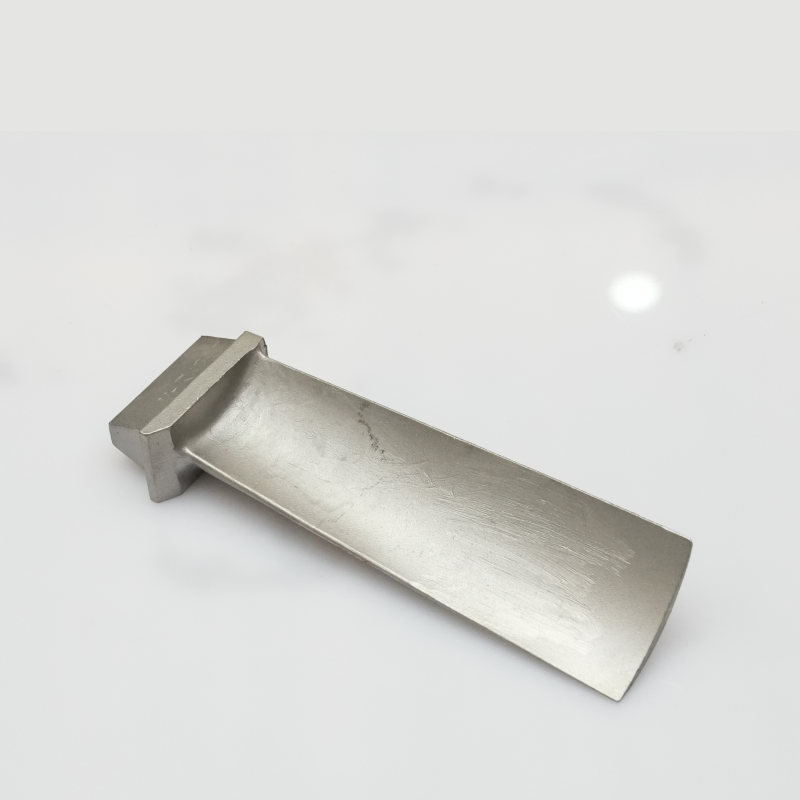
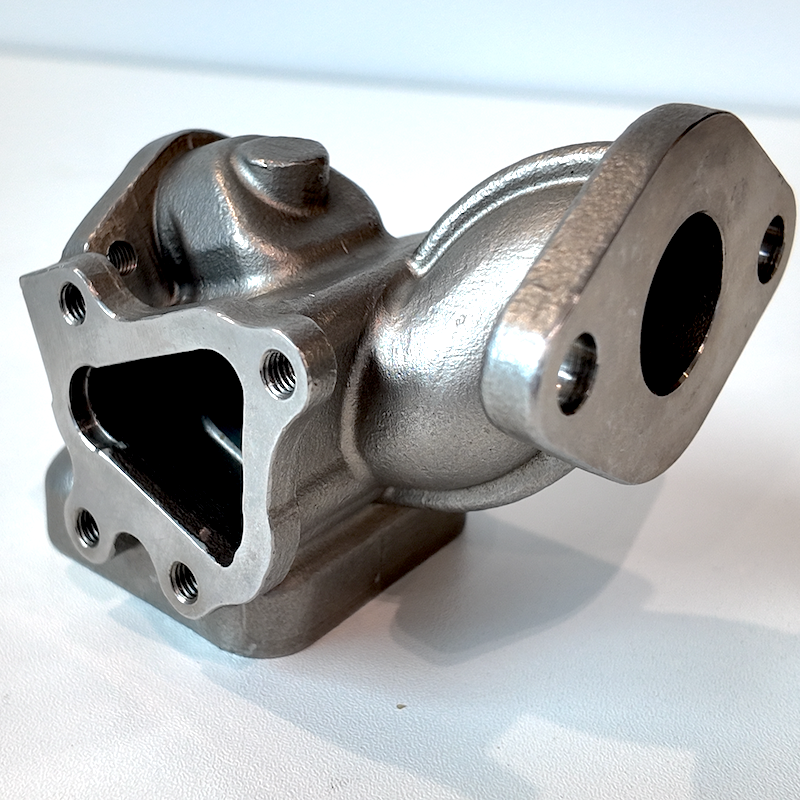
Lost wax casting for automotive parts represents a precision manufacturing process that has revolutionized the production of complex metal components in the automotive industry. This ancient technique, also known as investment casting, involves creating a detailed wax pattern of the desired automotive part, coating it with ceramic material to form a mold, melting away the wax, and finally pouring molten metal into the cavity. The result is an exceptionally accurate metal component that meets the stringent requirements of modern vehicle manufacturing. The main functions of lost wax casting for automotive parts include producing intricate geometries that would be impossible or economically unfeasible through other manufacturing methods, achieving tight dimensional tolerances, and creating components with superior surface finishes. This process excels at manufacturing critical automotive parts such as turbocharger housings, transmission components, engine brackets, steering system parts, brake components, and decorative trim pieces. Technological features of lost wax casting for automotive parts include the ability to cast complex internal passages and thin walls, produce near-net-shape components that require minimal machining, accommodate a wide range of metal alloys including aluminum, stainless steel, and specialized automotive alloys, and maintain consistent quality across large production runs. The applications of lost wax casting for automotive parts span across multiple vehicle systems, from powertrain components that demand exceptional strength and heat resistance to safety-critical parts requiring precise dimensional accuracy. Modern automotive manufacturers increasingly rely on this process to reduce vehicle weight while maintaining structural integrity, improve fuel efficiency through optimized component design, and accelerate time-to-market for new vehicle models. The versatility of lost wax casting for automotive parts makes it indispensable for both mass production vehicles and specialty automotive applications where performance and reliability cannot be compromised.

Popular Products

Choosing lost wax casting for automotive parts delivers substantial practical benefits that directly impact your bottom line and product quality. First and foremost, this manufacturing method significantly reduces material waste compared to traditional machining processes. Instead of cutting away excess metal from solid blocks, you start with a near-final shape, which means you purchase less raw material and spend less on disposal costs. This efficiency translates into lower production costs per part, especially important when manufacturing thousands or millions of components annually. The exceptional dimensional accuracy achieved through lost wax casting for automotive parts eliminates extensive secondary operations. Your components emerge from the process requiring minimal finishing work, which reduces labor costs and shortens production timelines. You can achieve tolerances as tight as plus or minus 0.005 inches on many features, meaning parts fit together perfectly during assembly without costly adjustments or rework. The surface quality produced by lost wax casting for automotive parts surpasses most other casting methods, often achieving finishes between 125 and 250 microinches. This smooth surface reduces friction in moving parts, improves aesthetic appeal for visible components, and can eliminate painting or coating requirements in certain applications. Design flexibility stands as another major advantage, allowing your engineering team to create complex shapes with undercuts, internal channels, and varying wall thicknesses within a single component. This design freedom enables function integration where one cast part replaces multiple machined and assembled pieces, reducing part count, inventory complexity, and assembly time. Lost wax casting for automotive parts accommodates virtually any castable alloy, giving you freedom to select materials based on performance requirements rather than manufacturing limitations. Whether you need lightweight aluminum for fuel efficiency, corrosion-resistant stainless steel for exhaust systems, or high-strength alloys for structural components, this process handles them all. Production scalability represents a crucial advantage for automotive applications. Once you develop the tooling, lost wax casting for automotive parts maintains consistent quality whether producing hundreds or millions of units, with each component matching specifications identically. This reliability reduces quality control costs and virtually eliminates field failures due to manufacturing variations. Finally, the process supports rapid prototyping and design iteration, allowing you to test functional metal prototypes quickly before committing to full production, reducing development risk and accelerating your product launch schedule.

Practical Tips

Basic Principles Of Design Of Precision Casting Gating System

11

May

Basic Principles Of Design Of Precision Casting Gating System

View More
Selection And Application Scope Of Hardness Tester

11

May

Selection And Application Scope Of Hardness Tester

View More
The Role Of Elements In Castings And The Order Of Addition

11

May

The Role Of Elements In Castings And The Order Of Addition

View More
Stainless Steel Castings for Building Facade Systems

11

May

Stainless Steel Castings for Building Facade Systems

View More

Get a Free Quote

Our representative will contact you soon.
Email
Name
Company Name
Message
0/1000

lost wax casting for automotive parts

Superior Precision and Complex Geometry Capabilities

Superior Precision and Complex Geometry Capabilities

The precision engineering capabilities of lost wax casting for automotive parts set this manufacturing process apart from conventional methods, delivering unmatched accuracy for components where tolerances matter most. This advantage becomes critical in automotive applications where parts must interface seamlessly with other systems, withstand extreme operating conditions, and perform reliably over the vehicle's lifetime. The process begins with creating exceptionally detailed wax patterns that capture every design nuance, including intricate features like cooling channels, mounting bosses, and aerodynamic contours. These patterns allow engineers to incorporate design elements that optimize component performance without worrying about manufacturing constraints that limit other processes. For instance, turbocharger housings produced through lost wax casting for automotive parts can include complex internal geometry that directs exhaust flow precisely, maximizing efficiency and power output. The ceramic shell molding process captures these fine details with remarkable fidelity, reproducing features as small as 0.020 inches and maintaining dimensional accuracy across the entire component. This precision eliminates the need for extensive machining operations that add cost and production time. Automotive manufacturers particularly value the ability to cast thin walls, often as thin as 0.060 inches, which reduces component weight without sacrificing strength. Weight reduction directly contributes to improved fuel economy and reduced emissions, priorities that drive modern vehicle design. Lost wax casting for automotive parts also excels at producing components with varying cross-sections within a single part, transitioning smoothly from thick structural areas to thin, weight-optimized sections. This capability allows designers to place material exactly where strength is needed while minimizing mass elsewhere. The process accommodates undercuts and internal features that would require multiple setups or prove impossible with machining or other casting methods. Transmission valve bodies, for example, benefit from the complex internal passages that lost wax casting for automotive parts can produce in a single operation, ensuring precise hydraulic flow without assembly of multiple pieces. This geometric freedom extends to creating components with cores that form internal cavities, essential for oil galleries, coolant passages, and air distribution systems throughout modern vehicles. The dimensional stability achieved through controlled solidification and minimal post-casting distortion means components maintain their precise geometry even after heat treatment and finishing operations.
Material Versatility and Metallurgical Excellence

Material Versatility and Metallurgical Excellence

Lost wax casting for automotive parts demonstrates remarkable versatility in material selection, enabling manufacturers to choose alloys based purely on performance requirements rather than manufacturing limitations. This flexibility proves invaluable in the automotive sector, where different applications demand vastly different material properties, from lightweight aluminum for fuel economy to high-temperature alloys for exhaust systems. The process successfully casts aluminum alloys that offer excellent strength-to-weight ratios, critical for reducing vehicle mass while maintaining structural integrity. These aluminum components produced through lost wax casting for automotive parts find applications in engine blocks, transmission housings, suspension components, and chassis parts where every pound saved contributes to better fuel efficiency and handling dynamics. Stainless steel grades cast through this process deliver outstanding corrosion resistance for exhaust manifolds, catalytic converter housings, and components exposed to road salt, moisture, and temperature extremes. The metallurgical quality achieved in lost wax casting for automotive parts surpasses many alternative processes because the controlled solidification environment produces fine-grain structures with minimal porosity. This superior metallurgy translates directly into better mechanical properties, including higher tensile strength, improved fatigue resistance, and enhanced impact toughness. Automotive safety components particularly benefit from these characteristics, as brake calipers, steering knuckles, and suspension arms must withstand repeated stress cycles and sudden loads without failure. The process also accommodates specialized alloys developed specifically for automotive applications, including heat-resistant materials for turbocharger components, wear-resistant alloys for transmission parts, and ductile materials for crash-critical structures. Lost wax casting for automotive parts allows metallurgists to optimize alloy chemistry without concerns about castability issues that plague other methods. The absence of directional grain structures typical in forging or machining from bar stock means cast components exhibit uniform properties in all directions, eliminating weak orientations that could lead to premature failure. Heat treatment responsiveness represents another metallurgical advantage, as the fine-grain structure produced by lost wax casting for automotive parts responds predictably to aging, solution treatment, and precipitation hardening processes. This enables manufacturers to dial in precisely the mechanical properties each application requires. The process also minimizes segregation and inclusions that compromise material properties, resulting in components with consistent quality throughout their volume rather than just at the surface.
Cost Efficiency and Production Scalability

Cost Efficiency and Production Scalability

The economic advantages of lost wax casting for automotive parts extend far beyond initial piece-price considerations, encompassing total cost of ownership, production flexibility, and long-term manufacturing efficiency. Understanding these comprehensive cost benefits helps automotive manufacturers make informed decisions about component sourcing and production strategies. Tooling investment for lost wax casting for automotive parts typically costs less than dies for high-pressure die casting or forging, making it economically viable for medium-volume production runs that would be prohibitively expensive with other processes. This lower tooling cost reduces financial risk during new product introduction and allows manufacturers to update designs more frequently in response to engineering improvements or changing regulations. Once production begins, the material efficiency of lost wax casting for automotive parts dramatically reduces raw material costs compared to subtractive manufacturing methods. While machining might remove 60 to 80 percent of starting material as chips, investment casting produces near-net-shape components that require minimal material removal, translating directly to lower material purchases and reduced waste disposal expenses. The labor efficiency achieved through lost wax casting for automotive parts comes from minimizing secondary operations. Components emerge from the process with most features complete, often requiring only minor machining for critical mating surfaces or threaded holes. This reduction in touch time accelerates throughput and lowers labor costs per component. Quality consistency represents a hidden cost advantage because lost wax casting for automotive parts produces components with minimal variation between units. This consistency reduces inspection requirements, virtually eliminates rework, and prevents costly field failures that damage brand reputation and trigger warranty claims. Production scalability allows manufacturers to start with modest volumes and increase production without major process changes or capital investment. The same tooling and procedures that produce hundreds of components monthly can scale to thousands or tens of thousands with primarily capacity additions rather than process redesign. Lost wax casting for automotive parts also supports lean manufacturing principles by enabling just-in-time production that reduces inventory carrying costs. Short lead times from order to delivery mean manufacturers can respond quickly to demand fluctuations without maintaining large safety stocks. The global availability of lost wax casting for automotive parts foundries provides supply chain flexibility and risk mitigation. Manufacturers can source components domestically for rapid delivery and engineering support while maintaining offshore production for cost-sensitive applications. Finally, the environmental efficiency of lost wax casting for automotive parts reduces compliance costs and supports corporate sustainability goals. Lower energy consumption per part, reduced material waste, and minimal secondary processing translate into a smaller carbon footprint that increasingly matters to automotive OEMs and their customers.

Get a Free Quote

Our representative will contact you soon.
Email
Name
Company Name
Message
0/1000