Aerospace Investment Casting Solutions: Precision Components for Aviation and Space Applications

Get a Free Quote

Our representative will contact you soon.
Email
Name
Company Name
Message
0/1000

aerospace investment casting

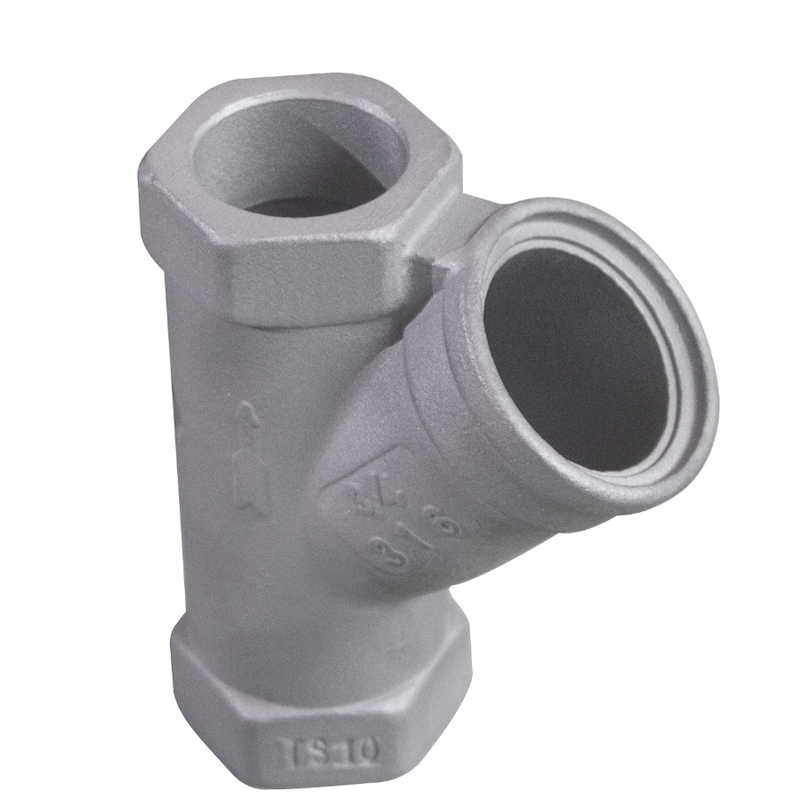
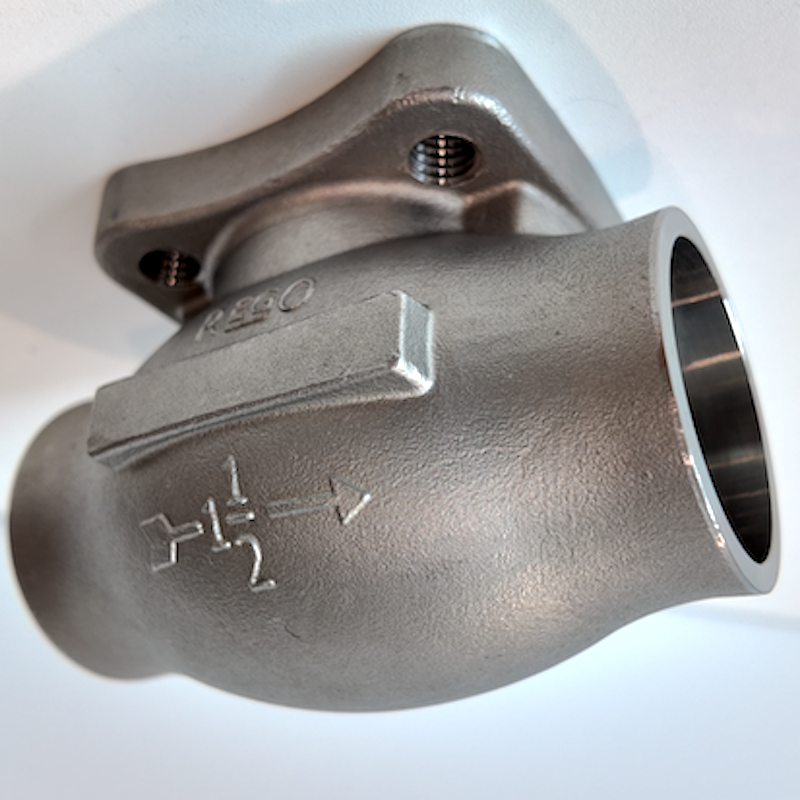
Aerospace investment casting represents a sophisticated manufacturing process that delivers precision metal components essential for modern aircraft and spacecraft systems. This advanced technique involves creating intricate metal parts by pouring molten metal into ceramic molds formed around wax patterns. The process begins with designing a detailed wax model that replicates the exact specifications of the final component. Engineers then coat this wax pattern with multiple layers of ceramic material to build a strong shell. Once the ceramic hardens, manufacturers heat the assembly to melt away the wax, leaving behind a hollow ceramic mold ready to receive molten metal. This manufacturing method excels at producing complex geometries that would be impossible or economically unfeasible through traditional machining operations. The main functions of aerospace investment casting include creating turbine blades, structural brackets, engine housings, fuel system components, and landing gear parts that meet stringent aviation standards. Technological features distinguish this process from conventional casting methods. The ceramic shell construction allows for exceptional surface finish quality, typically achieving roughness values between 125 and 250 microinches without additional machining. Dimensional accuracy reaches tolerances as tight as plus or minus 0.005 inches per inch, reducing the need for extensive post-casting operations. The process accommodates a wide range of aerospace-grade alloys, including titanium, nickel-based superalloys, stainless steels, and aluminum alloys that withstand extreme temperatures and mechanical stresses. Applications span both commercial aviation and defense sectors. Commercial aircraft manufacturers utilize aerospace investment casting for producing engine components that operate at temperatures exceeding 2000 degrees Fahrenheit. Military applications include manufacturing parts for fighter jets, helicopters, missiles, and unmanned aerial vehicles. Space exploration programs depend on investment cast components for rocket engines, satellite structures, and propulsion systems. The versatility of aerospace investment casting enables production runs ranging from prototype quantities to medium-volume manufacturing, making it suitable for both developmental projects and established production programs. Quality control measures integrated throughout the process ensure that every component meets rigorous aerospace certification requirements and performs reliably under demanding operational conditions.

New Product Releases

Choosing aerospace investment casting delivers concrete benefits that directly impact your project timeline, budget, and product performance. First, this manufacturing approach significantly reduces material waste compared to subtractive machining methods. When you machine a complex part from solid billet material, up to 90 percent of the original metal becomes scrap chips. Investment casting produces near-net-shape components, meaning parts emerge from the mold already close to final dimensions. You purchase and process only the material that becomes part of your finished component, translating to substantial cost savings on expensive aerospace alloys. Second, the process enables design freedom that opens new possibilities for engineers. You can incorporate internal passages, undercuts, thin walls, and complex surface contours into a single cast piece. This consolidation eliminates multiple parts that would otherwise require assembly through welding or fastening. Fewer joints mean fewer potential failure points, reduced assembly labor, and lighter overall weight. Weight reduction matters tremendously in aerospace applications where every pound saved improves fuel efficiency or increases payload capacity. Third, aerospace investment casting delivers consistent mechanical properties throughout the component structure. The controlled solidification environment produces uniform grain structures without the work-hardening variations that occur during extensive machining. This consistency ensures predictable performance under cyclic loading and thermal stress. Fourth, the excellent surface finish achieved through investment casting reduces drag in aerodynamic applications and eliminates crevices where fatigue cracks might initiate. Smooth surfaces also resist corrosion better than rougher finishes. Fifth, you gain access to specialized alloys developed specifically for extreme environments. Investment casting successfully handles metals that prove difficult to machine due to their hardness or tendency to work-harden. Nickel superalloys used in hot sections of jet engines exemplify materials that cast more effectively than they machine. Sixth, the process scales efficiently across production volumes. Whether you need five prototype parts for testing or 500 production units annually, investment casting remains economically viable. Tooling costs stay reasonable because wax injection dies cost less than forging dies or extensive machining fixtures. Seventh, lead times compress because the process requires fewer operations than building parts through multiple machining setups. You receive flight-ready components faster, accelerating your development cycle and time to market. Eighth, investment casting supports lightweighting initiatives that drive modern aerospace design. By optimizing material placement and creating structures with variable wall thickness, you achieve strength where needed while removing mass from non-critical areas. Finally, choosing established aerospace investment casting suppliers gives you access to certified processes that already meet AS9100 quality standards and NADCAP approvals, streamlining your supply chain qualification efforts.

Tips And Tricks

Basic Principles Of Design Of Precision Casting Gating System

11

May

Basic Principles Of Design Of Precision Casting Gating System

View More
The Role Of Elements In Castings And The Order Of Addition

11

May

The Role Of Elements In Castings And The Order Of Addition

View More
Stainless Steel Castings for Architectural Posts

11

May

Stainless Steel Castings for Architectural Posts

View More
Precision Stainless Steel Exhaust Manifold Casting Solution For Luxury Sedan - With Japanese First-Tier Car Brand

11

May

Precision Stainless Steel Exhaust Manifold Casting Solution For Luxury Sedan - With Japanese First-Tier Car Brand

View More

Get a Free Quote

Our representative will contact you soon.
Email
Name
Company Name
Message
0/1000

aerospace investment casting

Exceptional Precision for Critical Flight Components

Exceptional Precision for Critical Flight Components

Aerospace investment casting achieves dimensional accuracy and surface quality that sets it apart as the preferred manufacturing method for safety-critical flight hardware. The process routinely holds tolerances of plus or minus 0.005 inches per inch across complex three-dimensional geometries, a level of precision that rivals machining while preserving the geometric freedom of casting. This accuracy stems from several process characteristics working in concert. The ceramic shell materials expand minimally during heating and maintain dimensional stability at the elevated temperatures required for pouring reactive metals like titanium. Wax pattern materials formulated specifically for aerospace applications exhibit predictable shrinkage behavior that skilled pattern makers compensate for during die design. Modern investment casting facilities employ coordinate measuring machines and optical scanning systems to verify that every dimension meets print specifications before components enter service. Surface finish quality represents another critical precision parameter. Investment cast surfaces typically measure between 125 and 250 microinches roughness average, smooth enough for many applications to enter service without additional finishing operations. This exceptional finish results from the fine-grained ceramic slurry that contacts the wax pattern, capturing minute details and producing surfaces free from the tool marks characteristic of machining or the parting lines inevitable in other casting processes. For aerospace customers, this precision translates directly into performance advantages and cost savings. Turbine blades cast to near-final airfoil contours require minimal grinding, preserving material strength by avoiding excessive removal of surface layers. Structural fittings emerge from the mold with mounting holes and interface surfaces already closely positioned, reducing assembly alignment challenges. Fluid system components achieve internal passage dimensions that deliver precise flow characteristics without extensive secondary drilling or electrical discharge machining. The repeatability of aerospace investment casting ensures that part number 500 matches the dimensions of part number one within statistical process control limits, a consistency essential for interchangeability in maintenance operations. When aircraft operators worldwide stock spare parts, they need confidence that replacement components will fit and function identically to original equipment. Investment casting delivers this repeatability through controlled process parameters monitored at every production stage. Quality documentation accompanies every batch, providing traceability from raw material heat numbers through final inspection results. This precision capability particularly benefits components operating in demanding environments where dimensional accuracy affects performance and safety. Compressor blades with precisely cast airfoil profiles extract maximum energy from airflow while maintaining surge margins. Valve bodies with accurately cast port geometries regulate fuel flow without unintended pressure drops. Structural lugs transfer loads through bearing surfaces that mate precisely with their counterparts, preventing stress concentrations that could initiate fatigue failures.
Superior Material Properties Through Controlled Solidification

Superior Material Properties Through Controlled Solidification

The solidification dynamics inherent to aerospace investment casting produce material properties that meet or exceed the stringent requirements of flight-critical applications. Unlike processes where metal experiences severe plastic deformation or rapid cooling rates that create residual stresses, investment casting allows molten alloy to fill the mold cavity completely and solidify under controlled thermal conditions. This controlled solidification yields several metallurgical advantages that directly enhance component reliability and service life. Grain structure uniformity represents a primary benefit. As the cast metal cools within the ceramic shell, crystals grow from the mold walls inward, forming an equiaxed or directionally solidified structure depending on the thermal management approach employed. For many aerospace components, an equiaxed fine-grain structure provides optimal properties, offering good strength in all directions along with excellent fatigue resistance. Investment casting processes incorporate grain refiners and control cooling rates to achieve the desired grain size, typically finer than structures produced through other casting methods. This fine, uniform grain structure eliminates the property variations that occur when parts experience non-uniform work hardening during extensive machining operations. For the most demanding applications, investment casting enables directional solidification and single-crystal growth techniques. Turbine blades operating in the hottest sections of jet engines benefit enormously from columnar grain structures aligned with the principal stress direction or from single-crystal construction that eliminates grain boundaries entirely. These advanced solidification techniques, feasible only through investment casting methods, produce components that survive temperatures and stresses impossible for conventionally cast or wrought materials. Porosity control represents another critical material property advantage. Aerospace investment casting employs vacuum or inert atmosphere melting practices that minimize gas entrapment during pouring. The ceramic shell permeability allows trapped gases to escape rather than forming internal voids. Directional solidification with controlled thermal gradients drives shrinkage porosity toward feeders that get removed during finishing operations. The result is cast structure integrity that passes radiographic and ultrasonic inspections according to aerospace standards, with porosity levels meeting or exceeding the requirements specified for flight hardware. Chemical composition uniformity throughout the casting ensures consistent properties from section to section within complex components. The complete melting and thorough mixing that occurs before pouring eliminates the segregation bands sometimes present in wrought products. Each region of the casting exhibits the same alloy composition, producing uniform corrosion resistance, thermal expansion characteristics, and mechanical properties. For aerospace customers, these superior material properties translate into components that perform reliably throughout their design life. Engine parts withstand thousands of thermal cycles without developing fatigue cracks. Structural components carry ultimate loads with safety margins verified through testing of cast specimens that accurately represent production hardware. Corrosion-resistant alloys maintain their protective oxide layers in harsh environments ranging from marine atmospheres to rocket exhaust streams. The material property advantages of aerospace investment casting reduce warranty claims, extend overhaul intervals, and enhance safety margins throughout the operational envelope.
Cost-Effective Production of Complex Geometries

Cost-Effective Production of Complex Geometries

Aerospace investment casting delivers exceptional economic value when manufacturing components with intricate shapes, multiple features, or challenging material requirements. The cost-effectiveness stems from the fundamental nature of the process, which builds complex forms directly rather than removing material to create features. For design engineers and procurement specialists, understanding these economic advantages helps optimize component designs and manufacturing strategies. Part consolidation represents the most significant cost reduction opportunity. Traditional manufacturing approaches often require assembling multiple machined pieces through welding, brazing, or mechanical fastening to create a complex component. Each additional part adds material cost, machining time, inspection steps, and assembly labor. Investment casting enables designers to combine what might otherwise be five or ten separate pieces into a single integral casting. A structural bracket that would traditionally require machining a base plate, then welding on mounting lugs, reinforcing ribs, and attachment points becomes a one-piece investment casting. This consolidation eliminates joining operations that require skilled welders, fixturing, and post-weld heat treatment. Fewer parts mean fewer drawings to maintain, fewer part numbers to track, simplified inventory management, and reduced assembly errors. For the customer, consolidated designs arrive ready to install with less handling and faster installation times. Material utilization efficiency provides another economic advantage particularly important when working with expensive aerospace alloys. Titanium, nickel superalloys, and cobalt-chrome alloys cost hundreds of dollars per pound. Machining these materials from solid billet stock generates substantial scrap that, while recyclable, returns only a fraction of the virgin material cost. Investment casting achieves material utilization rates exceeding 85 percent, with only gates, runners, and minimal finishing stock becoming scrap. For a component where material represents 40 percent of total manufacturing cost, this efficiency alone cuts overall part cost by 20 to 30 percent compared to extensive machining from billet. Tooling costs remain reasonable compared to alternative processes for complex parts. While investment casting requires wax injection dies, these tools cost significantly less than forging dies or the multiple machining fixtures needed for multi-setup manufacturing sequences. Wax dies also accommodate design changes more easily than forging tools, allowing iterative improvements during development programs without prohibitive retooling expenses. For production volumes typical in aerospace applications, ranging from dozens to thousands of units annually, investment casting occupies the economic sweet spot where tooling amortization remains manageable while per-part costs stay competitive. Reduced secondary operations contribute further savings. The near-net-shape capability and excellent surface finish of investment cast components minimize subsequent machining requirements. Many features emerge from the mold ready for service without additional operations. Even when machining is necessary, the reduced stock removal translates to shorter cycle times, less tool wear, and lower machine hour costs. Inspection processes also benefit from the dimensional consistency of aerospace investment casting, with sampling plans requiring fewer measurements once statistical process control demonstrates capability. Lead time compression represents a less obvious but equally valuable economic benefit. Shorter manufacturing cycles mean reduced work-in-process inventory carrying costs and faster response to changing production demands. When development programs need prototype hardware quickly to support testing schedules, investment casting delivers functional components in weeks rather than the months sometimes required to program and execute complex multi-axis machining sequences.

Get a Free Quote

Our representative will contact you soon.
Email
Name
Company Name
Message
0/1000