Aerospace Investment Casting Solutions - Precision Components for Aviation and Space Applications

Get a Free Quote

Our representative will contact you soon.
Email
Name
Mobile
Company Name
Message
0/1000

aerospace investment casting

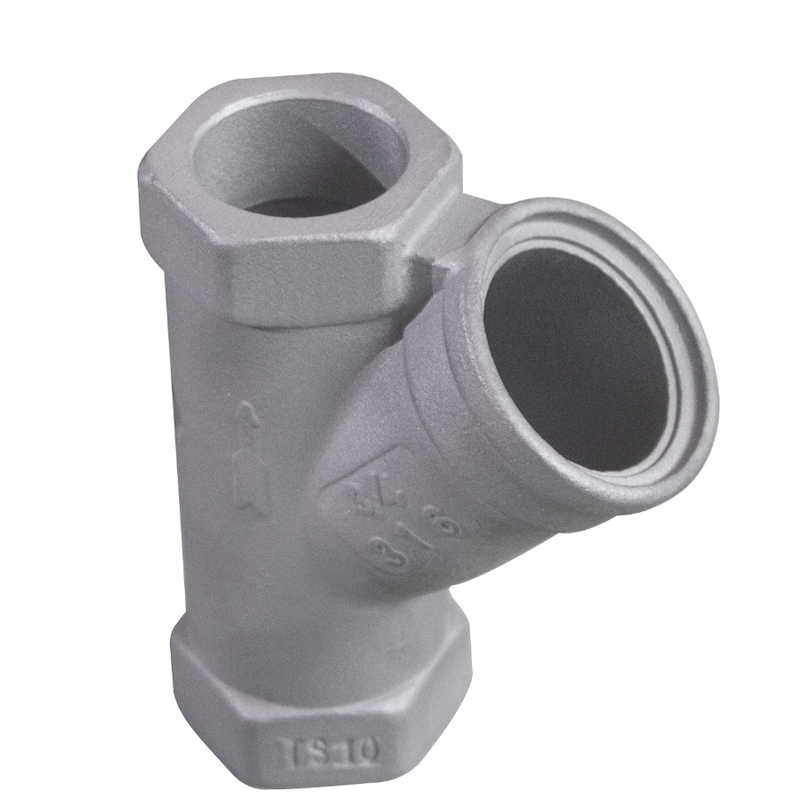
Aerospace investment casting represents a precision manufacturing process that delivers complex metal components for aircraft, satellites, spacecraft, and defense systems. This sophisticated technique involves creating a wax pattern of the desired part, coating it with ceramic material to form a mold, melting away the wax, and pouring molten metal into the resulting cavity. The aerospace investment casting method produces components with exceptional dimensional accuracy, intricate geometries, and superior surface finishes that meet the stringent requirements of aviation and space exploration industries. The primary functions of aerospace investment casting include manufacturing turbine blades, structural brackets, engine components, fuel system parts, and flight control mechanisms. This process excels at creating parts with thin walls, complex internal passages, and shapes that would be impossible or economically impractical to machine from solid stock. The technological features distinguish aerospace investment casting from other manufacturing methods through its ability to work with high-performance alloys including titanium, nickel-based superalloys, stainless steels, and aluminum alloys. These materials withstand extreme temperatures, corrosive environments, and mechanical stresses encountered during flight operations. The process achieves tolerances as tight as plus or minus 0.005 inches and surface finishes of 125 microinches or better, eliminating the need for extensive secondary machining. Applications span across commercial aviation, military aircraft, space vehicles, and satellite systems. Aerospace investment casting produces critical components such as turbine engine housings, compressor blades, actuator bodies, valve components, and structural fittings. The process supports both prototype development and high-volume production runs, making it versatile for various program stages. Weight reduction capabilities inherent in aerospace investment casting contribute directly to improved fuel efficiency and payload capacity, crucial factors in modern aerospace design. The technology continues evolving with advances in simulation software, ceramic shell materials, and alloy development, ensuring aerospace investment casting remains essential for next-generation aircraft and spacecraft manufacturing.

Popular Products

The aerospace investment casting process delivers substantial cost savings by producing near-net-shape components that require minimal machining after casting. Manufacturers save money on raw materials because this method uses only the metal needed for the actual part rather than starting with oversized blocks that generate excessive waste during machining. Production teams appreciate how aerospace investment casting reduces labor hours since parts emerge from molds already featuring complex details, smooth surfaces, and accurate dimensions. This efficiency translates directly to lower manufacturing costs per component, especially for medium to high production volumes. The design freedom offered by aerospace investment casting allows engineers to optimize part geometry for performance rather than manufacturing limitations. Designers can incorporate features like internal cooling channels, undercuts, and variable wall thicknesses that enhance functionality while reducing overall weight. This flexibility enables consolidation of multiple machined parts into single cast components, eliminating assembly operations and potential failure points at joints. Companies benefit from shorter development cycles because aerospace investment casting facilitates rapid prototyping and design iterations without expensive tooling changes. The superior metallurgical properties achieved through aerospace investment casting ensure components perform reliably under demanding conditions. The process produces parts with uniform grain structure, minimal porosity, and excellent mechanical properties throughout the entire casting. These characteristics result in components that resist fatigue, maintain strength at elevated temperatures, and withstand corrosive environments better than parts made through alternative methods. Quality consistency across production runs gives aerospace manufacturers confidence in component reliability and reduces rejection rates during inspection. The dimensional accuracy inherent in aerospace investment casting minimizes the need for costly secondary operations while maintaining tight tolerances essential for aerospace applications. Parts fit together precisely during assembly, reducing adjustment time and improving overall product quality. Surface finish quality eliminates many finishing operations, saving both time and money while maintaining the aesthetic and functional requirements of aerospace components. Aerospace investment casting supports sustainable manufacturing practices by minimizing material waste and energy consumption compared to subtractive manufacturing methods. The process allows recycling of both wax patterns and excess metal, reducing environmental impact. Manufacturers can produce lighter components that contribute to fuel efficiency throughout the aircraft lifecycle, delivering environmental benefits that extend far beyond the production facility. The versatility of aerospace investment casting accommodates both small prototype quantities and large production runs without significant retooling, providing flexibility to match changing market demands and program requirements.

Practical Tips

How Does a Precision Investment Casting Manufacturer Ensure Consistent Quality Across Global Supply Chains?

05

Jun

How Does a Precision Investment Casting Manufacturer Ensure Consistent Quality Across Global Supply Chains?

In today's interconnected industrial landscape, sourcing complex metal components across international borders presents a formidable quality challenge. the manufacturer must navigate an intricate web of raw material sourcing, multi-stage production c...
View More
How Should Buyers Choose a Reliable Medium Temperature Wax Casting Service Provider?

26

Jun

How Should Buyers Choose a Reliable Medium Temperature Wax Casting Service Provider?

Selecting the right manufacturing partner for medium temperature wax casting is one of the most consequential decisions a procurement professional or product engineer can make. The process, which involves injecting wax into precision dies at carefull...
View More
How Do OEM ODM Precision Casting Services Support Flexible Design and Rapid Prototyping?

26

Jun

How Do OEM ODM Precision Casting Services Support Flexible Design and Rapid Prototyping?

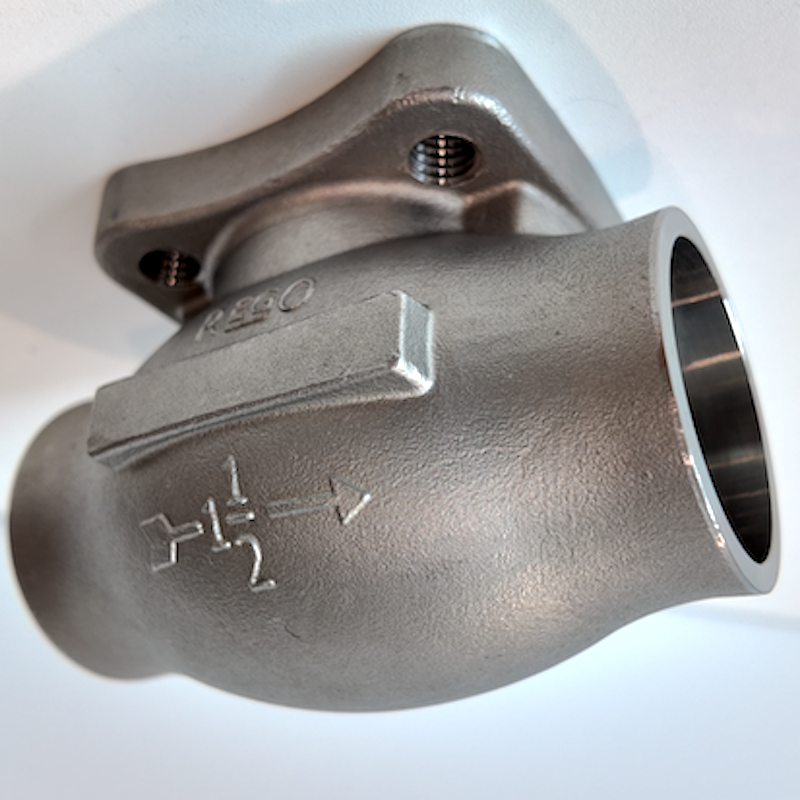
Figure 1: Custom Valve Body Fabricated via Precision Investment Casting, Featuring Crisp Surface Details and Net-Shape Integrity. In today's fast-evolving manufacturing landscape, the ability to move from concept to production-ready component quickly...
View More
What Should Global Buyers Expect from OEM ODM Precision Casting Services Suppliers?

05

Jun

What Should Global Buyers Expect from OEM ODM Precision Casting Services Suppliers?

For global buyers sourcing complex metal components, selecting a reliable partner for oem odm precision casting services is one of the most consequential procurement decisions in a production cycle. The stakes are high: dimensional inaccuracies, inco...
View More

Get a Free Quote

Our representative will contact you soon.
Email
Name
Mobile
Company Name
Message
0/1000

aerospace investment casting

Exceptional Precision for Complex Aerospace Geometries

Exceptional Precision for Complex Aerospace Geometries

Aerospace investment casting achieves dimensional precision that meets the exacting standards required for flight-critical components in modern aircraft and spacecraft. This manufacturing method consistently produces parts with tolerances of plus or minus 0.005 inches, ensuring proper fit and function in assemblies where even minor deviations could compromise safety or performance. The process begins with highly accurate wax patterns created using precision tooling or additive manufacturing techniques, establishing the foundation for dimensional accuracy throughout subsequent steps. As ceramic shells build up around these patterns through repeated dipping and coating operations, the mold captures every detail with remarkable fidelity. When molten metal fills the cavity left after wax removal, it replicates the original design with exceptional accuracy, including intricate features like cooling passages, mounting bosses, and aerodynamic contours. The controlled solidification environment prevents distortion and ensures uniform shrinkage that remains predictable and compensable during pattern design. Aerospace investment casting excels at producing components with complex three-dimensional geometries that would require multiple setups and extensive programming if machined conventionally. Engineers can design parts with converging and diverging passages, variable cross-sections, and organic shapes that optimize airflow, reduce weight, or enhance structural efficiency. The process handles undercuts and internal features inaccessible to cutting tools, eliminating the need for multi-piece assemblies with potential leak paths or stress concentrations at joints. Turbine blades represent prime examples where aerospace investment casting creates sophisticated airfoil shapes with internal cooling channels and precise tip geometries essential for engine efficiency. The surface finish quality achieved through aerospace investment casting reduces drag in aerodynamic applications and eliminates stress risers that could initiate fatigue cracks. Cast surfaces typically measure 125 microinches Ra or better, often eliminating the need for grinding or polishing operations. This smooth finish proves particularly valuable for components exposed to high-velocity gas streams or corrosive environments where surface irregularities accelerate degradation. The combination of dimensional accuracy and surface quality enables aerospace investment casting to produce components that perform as designed throughout their service life, meeting the reliability standards that aviation safety demands.
Advanced Material Capabilities for Extreme Operating Conditions

Advanced Material Capabilities for Extreme Operating Conditions

Aerospace investment casting works seamlessly with the high-performance alloys essential for components operating in the extreme environments encountered during flight operations. The process accommodates superalloys based on nickel, cobalt, or iron that maintain strength and resist oxidation at temperatures exceeding 2000 degrees Fahrenheit, making them ideal for turbine engines and exhaust systems. These materials would prove extremely difficult and expensive to machine due to their hardness and work-hardening characteristics, but aerospace investment casting shapes them while molten, bypassing these machining challenges entirely. Titanium alloys find extensive use in aerospace investment casting for applications requiring exceptional strength-to-weight ratios and corrosion resistance. Components cast from titanium weigh significantly less than steel equivalents while providing comparable strength, directly improving aircraft fuel efficiency and payload capacity. The casting process prevents the material waste associated with machining titanium, an expensive metal where conventional manufacturing might remove 90 percent or more of the starting stock. Aerospace investment casting also works with aluminum alloys that offer lightweight solutions for structural components, housings, and brackets throughout aircraft systems. The process produces aluminum parts with mechanical properties superior to many wrought forms due to optimized cooling rates and uniform microstructures. Casting eliminates concerns about grain direction and anisotropic properties that affect machined components, providing consistent performance regardless of loading direction. Stainless steel alloys processed through aerospace investment casting deliver corrosion resistance essential for components exposed to moisture, salt spray, and chemical environments. The metallurgical benefits of aerospace investment casting extend beyond material selection to the actual properties achieved in finished components. Controlled solidification produces fine grain structures that enhance mechanical properties including tensile strength, yield strength, and fatigue resistance. The casting process minimizes porosity and inclusions that could serve as crack initiation sites, improving reliability under cyclic loading conditions. Heat treatment following casting further optimizes material properties, with the uniform composition throughout cast components ensuring consistent response to thermal processing. Aerospace investment casting enables manufacturers to specify different alloys for different sections of a component through various techniques, creating parts with properties optimized for local requirements while maintaining the benefits of single-piece construction.
Production Efficiency and Cost-Effectiveness for Aerospace Manufacturing

Production Efficiency and Cost-Effectiveness for Aerospace Manufacturing

Aerospace investment casting streamlines production workflows by delivering components that require minimal secondary operations before assembly or installation. Parts emerge from the casting process with features already formed, surfaces already smooth, and dimensions already controlled, dramatically reducing the machining time compared to starting with raw stock. This efficiency proves especially valuable for complex components where conventional machining might require dozens of operations, multiple setups, specialized fixtures, and extensive programming. Manufacturing teams can produce parts faster, reducing lead times and improving responsiveness to customer delivery schedules. The near-net-shape characteristic of aerospace investment casting minimizes material consumption by using only the metal actually needed for the finished part plus minimal allowances. This efficiency matters greatly when working with expensive aerospace alloys where material costs represent significant portions of total component cost. Conventional machining might convert a 50-pound billet into a 5-pound finished part, wasting 45 pounds of costly material, while aerospace investment casting uses perhaps 6 pounds to produce the same component. Although machining chips can be recycled, the reprocessing involves additional costs and energy consumption that casting avoids. The tooling investment for aerospace investment casting remains moderate compared to forging or permanent mold casting, especially for complex geometries. Pattern tooling represents the primary expense, but modern manufacturing techniques including 3D printing enable economical pattern production even for prototype quantities. This accessibility allows aerospace investment casting to support development programs economically, facilitating design optimization before committing to high-volume production. The flexibility to modify patterns between production runs accommodates engineering changes without scrapping expensive dies or molds. Quality consistency inherent in aerospace investment casting reduces inspection costs and rejection rates throughout production. The process produces repeatable results with stable dimensional characteristics, allowing statistical process control and reducing the frequency of detailed inspections. When rejections do occur, root cause analysis typically identifies correctable process variables, enabling continuous improvement. The reduced scrap rate translates directly to lower effective costs per acceptable component. Aerospace investment casting supports lean manufacturing principles by producing only needed quantities without excessive inventory. The relatively quick setup and changeover enable responsive production scheduling that aligns with just-in-time delivery requirements. Manufacturers can economically produce small batches of diverse components rather than maintaining large inventories of finished parts, reducing capital tied up in stock while ensuring availability when customers need components for assembly or maintenance operations.

Get a Free Quote

Our representative will contact you soon.
Email
Name
Mobile
Company Name
Message
0/1000