
 EN
EN

Selecting the right manufacturing partner for medium temperature wax casting is one of the most consequential decisions a procurement professional or product engineer can make. The process, which involves injecting wax into precision dies at carefully controlled temperatures to create near-net-shape investment casting patterns, demands a supplier with deep metallurgical knowledge, disciplined quality systems, and proven production controls. A poorly chosen service provider can introduce dimensional inconsistencies, surface defects, and costly lead-time failures that cascade through your entire supply chain.
Unlike low-temperature wax systems, medium temperature wax casting operates in a thermal window that demands tighter process discipline and more sophisticated tooling. This makes the evaluation of a prospective supplier more nuanced than simply comparing price sheets. Buyers who understand what separates a reliable provider from an unreliable one are positioned to secure better parts, fewer rejections, and stronger long-term partnerships. This guide walks you through the critical selection criteria that matter most.
Understanding What Medium Temperature Wax Casting Actually Demands from a Supplier
The Thermal and Material Complexity Behind the Process
Medium temperature wax casting typically operates in a wax compound melting range between roughly 60°C and 90°C, which requires more rigorous injection parameter management than low-temperature alternatives. At these temperatures, wax viscosity, shrinkage behavior, and die fill dynamics are all more sensitive to deviations. A qualified supplier must have calibrated injection equipment, temperature-controlled holding systems, and documented procedures for managing wax compound consistency across batches.
The physical demands of this process extend to the wax blends themselves. Medium temperature formulations are engineered for dimensional stability, low ash content after burnout, and compatibility with ceramic shell systems used in investment casting. If a supplier does not understand the interaction between their wax system and their shell-building process, the results in the fired and poured casting will reflect that gap. Buyers should ask specifically how a provider validates their wax compound batches and what corrective actions are triggered when parameters drift.
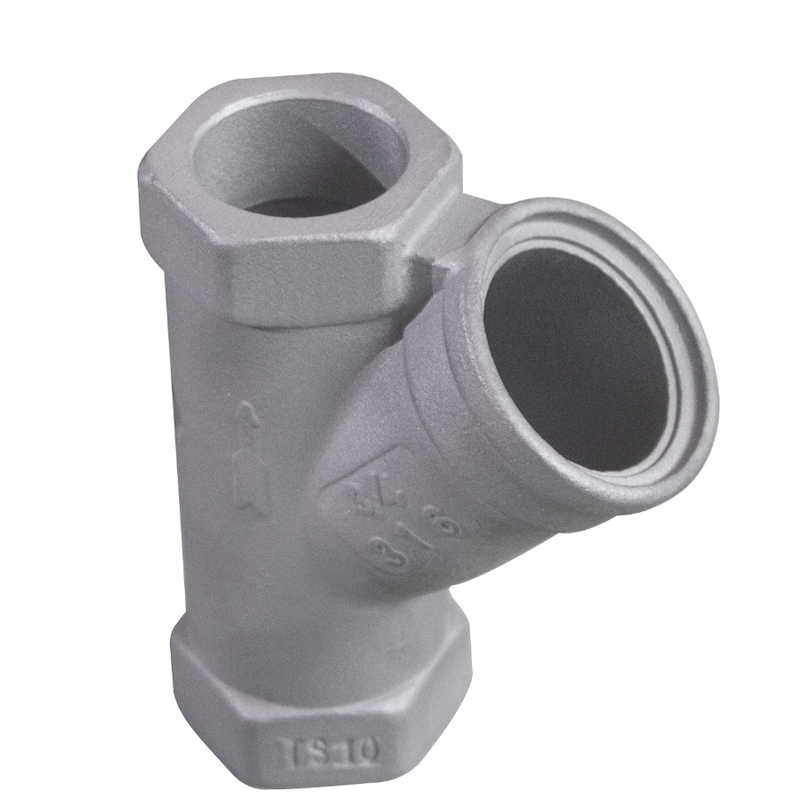
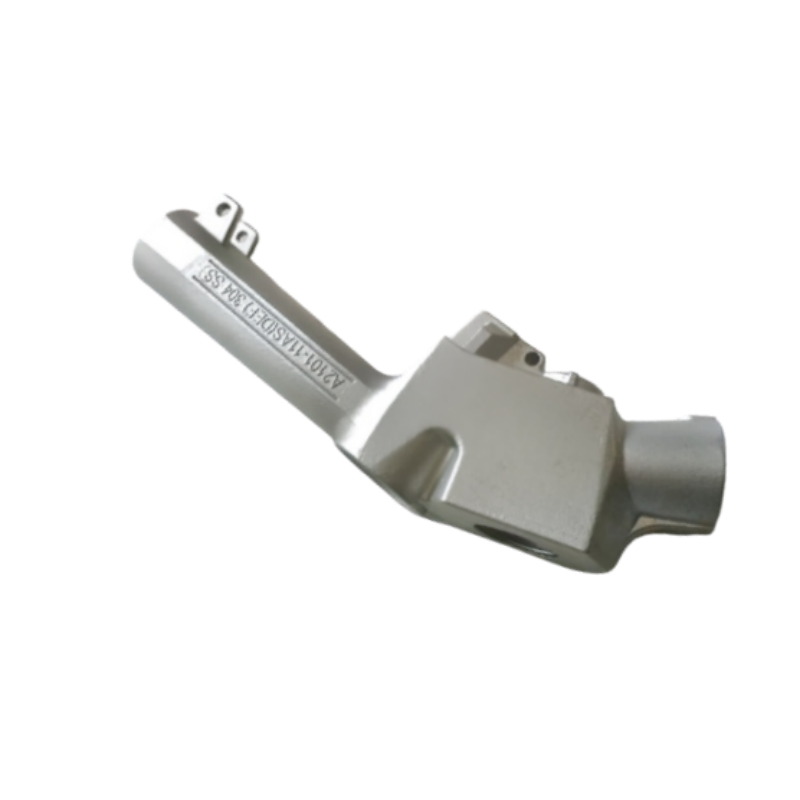
The choice of metal alloy also intersects with medium temperature wax casting in meaningful ways. Components such as fuel nozzle bodies, aerospace brackets, and precision valve housings require wax patterns with extremely tight tolerances, because any dimensional error at the wax stage is directly replicated in the final metal part. Suppliers experienced with engineering alloys like stainless steel, nickel-based superalloys, and heat-resistant alloys are generally better equipped to understand these downstream requirements.
Tooling Design Capability and Die Quality
The quality of the injection tooling used in medium temperature wax casting determines the repeatability of every pattern produced. Dies must be designed with appropriate draft angles, venting, and thermal management features to ensure consistent wax injection without short shots, cold shuts, or sink marks. A supplier who designs and maintains dies in-house offers substantially better control over pattern quality than one who outsources tooling to a third party.
When evaluating a provider, request documentation of their die design process and ask for examples of tool revision histories. Reliable suppliers maintain records of die modifications made in response to pattern defects, which demonstrates both quality discipline and a continuous improvement mindset. Ask whether they perform wax pattern sampling across the full cavity count before releasing tooling to production, as this practice directly affects first-article quality.
Tooling maintenance schedules are equally important. In medium temperature wax casting, die wear and surface degradation accumulate over time and can introduce subtle dimensional drift that is difficult to detect without regular measurement audits. A trustworthy supplier will have defined tooling maintenance intervals and documented inspection records for every active die in their program.
Evaluating the Quality Management System of a Wax Casting Provider
Certifications as a Baseline, Not a Guarantee
Industry certifications such as ISO 9001 and AS9100 provide a useful baseline when assessing a medium temperature wax casting service provider. These standards require documented procedures, calibrated measurement equipment, internal audit programs, and corrective action systems. Buyers in aerospace, defense, and energy sectors should treat AS9100 registration as a minimum expectation for suppliers working on flight-critical or performance-critical components.
However, certification alone should not be the deciding factor. A certified facility that executes its quality system poorly is less valuable than a non-certified one with rigorous in-practice controls, though ideally both should be present. During supplier evaluation, dig into how the quality system operates day-to-day rather than relying solely on certificate documentation. Ask to review recent internal audit findings, non-conformance trends, and customer feedback metrics.
For medium temperature wax casting applications in demanding industries, it is also worth verifying whether the supplier has NADCAP accreditation for investment casting processes. NADCAP audits go significantly deeper than ISO reviews, examining specific process controls, personnel qualifications, and equipment calibration in a way that is directly relevant to casting quality. NADCAP-accredited suppliers have demonstrated a higher standard of process discipline.
Inspection Capabilities and Dimensional Traceability
A reliable medium temperature wax casting supplier must be equipped to measure and verify the dimensional accuracy of wax patterns before they enter the shell-building process. This means having coordinate measuring machines (CMMs), optical comparators, or structured light scanning systems capable of validating critical pattern dimensions against engineering drawings. Pattern inspection at this stage is far more cost-effective than discovering a dimensional issue after the metal has been poured.
Ask prospective suppliers how they document wax pattern inspection results and whether those records are traceable to specific die cavities and production lots. Traceability is especially important in regulated industries where full material and process records must be maintained for years. Suppliers who treat dimensional records as a genuine quality tool rather than a compliance formality tend to deliver consistently better results in medium temperature wax casting.
Final casting inspection capabilities are equally important. X-ray radiography for internal soundness, fluorescent penetrant inspection for surface discontinuities, and spectrographic alloy verification should all be available either in-house or through qualified laboratory partners. A vertically integrated supplier who can perform these tests directly offers faster turnaround and tighter process ownership compared to one who subcontracts all testing externally.
Assessing Production Capacity, Lead Time Commitments, and Scalability
Matching Capacity to Your Volume Requirements
When qualifying a medium temperature wax casting service provider, production capacity must be evaluated in the context of your specific volume needs and demand variability. A supplier optimized for high-volume commodity runs may lack the process flexibility needed for low-to-medium volume orders of complex components, while a job shop oriented toward prototypes may struggle to maintain consistent quality at production scale. Understanding how a supplier's equipment mix and shift structure align with your order profile is fundamental.
Request capacity utilization data and ask how the supplier handles demand peaks. In medium temperature wax casting, process bottlenecks are most common in wax injection, shell investment, and furnace loading. Suppliers with redundant injection machines, multiple shell drying rooms, and adequate furnace capacity are better positioned to absorb schedule fluctuations without compromising quality or lead time. A single point of failure in any of these process stages can delay an entire production lot.
Scalability is equally relevant if you anticipate product growth or program ramping. Discuss explicitly whether the supplier can increase throughput on your specific components and what investments they would need to make to support higher volumes. A supplier who engages thoughtfully with this question is demonstrating the kind of partnership orientation that distinguishes reliable long-term providers from transactional ones.
Lead Time Transparency and Delivery Performance History
Delivery performance is one of the most objective metrics available when comparing medium temperature wax casting suppliers. Ask for on-time delivery data from the past twelve to twenty-four months, broken down by customer type or part complexity if possible. Suppliers who track and share this information proactively are generally more confident in their performance than those who deflect or provide only anecdotal responses.
Lead time commitments in medium temperature wax casting are influenced by tooling readiness, pattern yield rates, shell cycle times, and pour and finishing schedules. Understanding which of these stages is most variable in a given supplier's workflow will help you set realistic expectations and build appropriate buffer into your supply plan. Suppliers who can articulate their lead time drivers clearly are demonstrating genuine process understanding rather than making vague promises.
Expedite capability is also worth discussing during the selection process. When urgent requirements arise, can the supplier insert your order into a faster production slot without sacrificing quality controls? The answer reveals how much operational flexibility the supplier actually has and how willing they are to absorb schedule pressure on behalf of their customers. This is a meaningful differentiator among medium temperature wax casting providers of otherwise similar technical capability.
Evaluating Engineering Support, Communication, and Partnership Orientation
Design for Manufacturability Support at the Wax Casting Stage
One of the most undervalued criteria when selecting a medium temperature wax casting provider is the depth of engineering support they offer during the design and tooling phases. Suppliers with experienced process engineers who can review a part design and provide design-for-manufacturability feedback before tooling is cut can save buyers significant time and money. Common issues such as insufficient draft angles, undercuts that complicate pattern extraction, or wall sections prone to wax shrinkage defects are far less costly to address at the design stage than after production begins.
In medium temperature wax casting, the interface between part geometry and pattern tooling is nuanced. Experienced suppliers can identify areas where gating and runner placement in the ceramic shell system will affect casting soundness, and they can suggest geometry modifications that improve yield without compromising part function. This kind of proactive engineering collaboration is a strong indicator of a supplier who thinks beyond individual purchase orders toward long-term program success.
Ask prospective suppliers to walk you through a recent example where their engineering input changed the original part design or tooling approach. The quality and specificity of their answer will reveal both technical depth and communication style. Suppliers who engage confidently and concisely in this kind of technical dialogue are generally better partners throughout the product lifecycle.
Communication Responsiveness and Account Management Structure
Reliable communication is a non-negotiable attribute for any medium temperature wax casting partner. During the qualification process, pay close attention to how quickly and thoroughly a supplier responds to your technical questions, requests for quotes, and sample submissions. Response quality at the pre-award stage is predictive of how the relationship will function once purchase orders are flowing and schedule pressures mount.
Understand who your primary point of contact will be and whether that person has direct access to production scheduling, quality, and engineering resources. In medium temperature wax casting programs, questions often span multiple functional areas simultaneously, and a supplier with siloed internal communication will create delays and confusion for their customers. Account managers or customer service representatives with genuine cross-functional authority are a meaningful operational advantage.
Finally, assess how the supplier handles bad news. Ask how they communicate non-conformances, schedule delays, and yield issues when they occur. A supplier who has a clear, documented process for customer notification and corrective action communication is demonstrating the kind of organizational maturity that sustains partnerships through inevitable production challenges. Transparency in difficult moments is as important as performance in routine ones.
FAQ
What distinguishes medium temperature wax casting from low-temperature processes in terms of quality outcomes?
Medium temperature wax casting generally produces patterns with better dimensional stability and lower shrinkage variability compared to lower-temperature wax systems. The wax compounds used in the medium temperature range are formulated for more predictable thermal behavior during shell investment and burnout, which translates to more consistent casting dimensions. This makes the process particularly well suited to precision components where tight tolerances are non-negotiable.
How should buyers verify a supplier's process controls for medium temperature wax casting without conducting a physical audit?
Remote verification methods for medium temperature wax casting suppliers include requesting documented process control plans, statistical process control data for key parameters such as wax injection temperature and pressure, and first article inspection reports from similar components. Reviewing non-conformance and corrective action records also reveals how the supplier identifies and resolves process deviations. Video walkthroughs of the facility and virtual meetings with quality and engineering personnel can supplement documentation-based review effectively.
What types of components are most commonly produced using medium temperature wax casting?
Medium temperature wax casting is widely used for precision-engineered components in aerospace, energy, and industrial applications where complex geometries and high-performance alloys are required. Fuel nozzle bodies, turbine blades, valve internals, impellers, and structural brackets are among the most common part families produced through this route. The process is particularly effective when part geometry complexity, surface finish requirements, and dimensional precision cannot be achieved economically through machining or other conventional fabrication methods.
How many suppliers should a buyer qualify for medium temperature wax casting before making a sourcing decision?
For critical or high-volume applications, qualifying two to three medium temperature wax casting suppliers is generally advisable to manage supply risk and maintain competitive pricing leverage. For lower-volume or development-stage programs, a focused qualification of one or two suppliers is often more practical. The key is to ensure that each qualified supplier is genuinely capable of meeting your technical, quality, and delivery requirements rather than maintaining a broad supplier base of marginal capability. Depth of qualification matters more than breadth of options.
Table of Contents
- Understanding What Medium Temperature Wax Casting Actually Demands from a Supplier
- Evaluating the Quality Management System of a Wax Casting Provider
- Assessing Production Capacity, Lead Time Commitments, and Scalability
- Evaluating Engineering Support, Communication, and Partnership Orientation
-
FAQ
- What distinguishes medium temperature wax casting from low-temperature processes in terms of quality outcomes?
- How should buyers verify a supplier's process controls for medium temperature wax casting without conducting a physical audit?
- What types of components are most commonly produced using medium temperature wax casting?
- How many suppliers should a buyer qualify for medium temperature wax casting before making a sourcing decision?