Power Transmission Chain Drive Systems - Reliable Industrial Power Transfer Solutions

Get a Free Quote

Our representative will contact you soon.
Email
Name
Company Name
Message
0/1000

power transmission chain drive

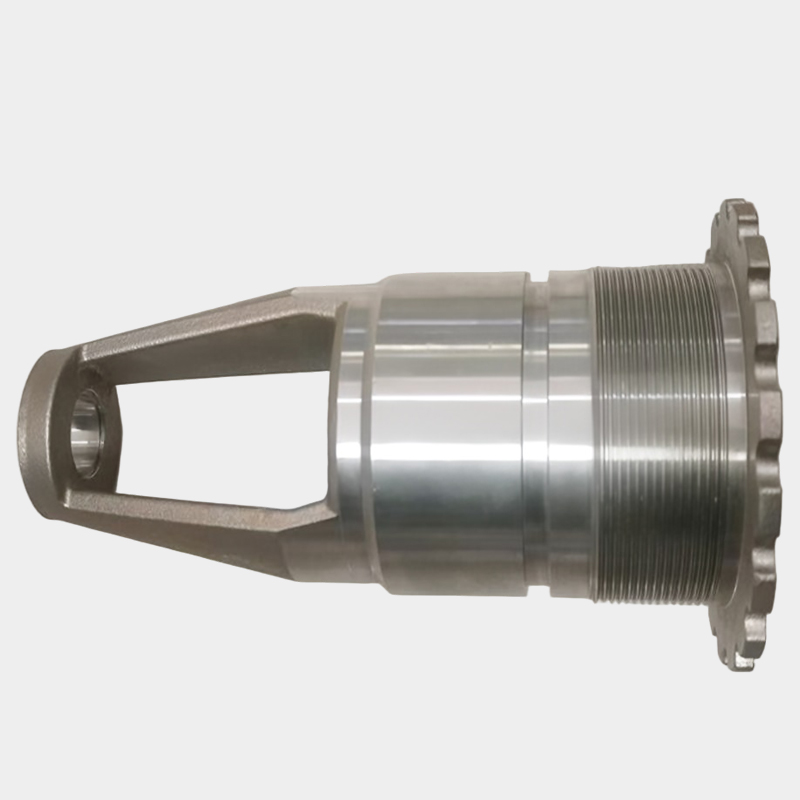
A power transmission chain drive represents a mechanical system that efficiently transfers rotational motion and torque between two or more shafts through a series of interconnected metal links. This robust mechanism consists of three primary components: the driving sprocket attached to the power source, the driven sprocket connected to the load, and the chain that loops around both sprockets to transmit force. The fundamental operation relies on the engagement between the chain rollers and the sprocket teeth, creating a positive drive that maintains consistent speed ratios without slippage. Power transmission chain drives excel in applications requiring reliable force transfer across moderate to long distances, typically ranging from a few inches to several feet. The technology has evolved significantly since its inception, now incorporating precision engineering standards that ensure optimal performance across diverse industrial environments. Modern chain drives feature various configurations including simplex, duplex, and triplex designs, each offering different load capacities and operational characteristics. The versatility of this transmission method makes it suitable for countless mechanical systems, from conveyor belts in manufacturing facilities to agricultural equipment and automotive timing systems. Unlike belt drives that rely on friction, chain drives provide positive engagement, eliminating concerns about slippage under heavy loads or in contaminated environments. The design allows for operation in temperatures ranging from extreme cold to moderate heat, making them adaptable to various industrial conditions. Maintenance requirements remain relatively straightforward, involving periodic lubrication and tension adjustment to ensure longevity. The efficiency of power transmission chain drives typically ranges between 95 to 98 percent, making them one of the most energy-efficient mechanical transmission methods available today.

New Products

Investing in a power transmission chain drive delivers numerous practical benefits that directly impact your operational efficiency and bottom line. First and foremost, these systems provide exceptional reliability under demanding conditions. Unlike friction-based alternatives, chains maintain their grip and performance even when exposed to oil, grease, dust, or moisture, environments where other transmission methods would fail or require frequent replacement. This durability translates into fewer unexpected breakdowns and reduced maintenance costs over the equipment lifespan. The positive engagement characteristic means you get precise speed ratios without any slippage, ensuring your machinery operates exactly as designed every single time. This consistency proves invaluable in applications where timing and synchronization matter, such as production lines where multiple machines must work in perfect harmony. Another significant advantage lies in the flexibility of installation. Power transmission chain drives accommodate longer center distances between shafts compared to gear systems, giving you more freedom in equipment layout and design. You can position your motor or power source wherever it makes the most sense for your operation, without being constrained by proximity requirements. The cost-effectiveness of chain drives becomes apparent when comparing initial investment against long-term performance. While precision gear systems might cost substantially more, chain drives deliver comparable reliability at a fraction of the price, making them accessible for businesses of all sizes. Energy efficiency stands as another compelling reason to choose chain drive systems. With efficiency ratings consistently above 95 percent, these mechanisms waste minimal energy during transmission, helping reduce your electricity consumption and operating costs month after month. The modular nature of chain systems simplifies repairs and maintenance. When service becomes necessary, you can often replace individual links rather than the entire chain, minimizing downtime and expense. The straightforward design means your maintenance team can quickly learn proper care procedures, reducing reliance on specialized technicians. Temperature tolerance gives power transmission chain drives an edge in challenging environments. They function reliably in conditions ranging from cold storage facilities to moderately heated production areas, maintaining performance where temperature-sensitive alternatives would degrade. Load capacity represents another area where these systems shine. Chain drives handle heavy loads with ease, making them ideal for industrial applications involving significant torque requirements. Whether you are moving heavy materials or driving demanding machinery, properly sized chain drives deliver the strength you need without compromising reliability or requiring oversized components.

Latest News

Basic Principles Of Design Of Precision Casting Gating System

11

May

Basic Principles Of Design Of Precision Casting Gating System

View More
The Role Of Elements In Castings And The Order Of Addition

11

May

The Role Of Elements In Castings And The Order Of Addition

View More
Stainless Steel Castings for Building Facade Systems

11

May

Stainless Steel Castings for Building Facade Systems

View More
Precision Stainless Steel Exhaust Manifold Casting Solution For Luxury Sedan - With Japanese First-Tier Car Brand

11

May

Precision Stainless Steel Exhaust Manifold Casting Solution For Luxury Sedan - With Japanese First-Tier Car Brand

View More

Get a Free Quote

Our representative will contact you soon.
Email
Name
Company Name
Message
0/1000

power transmission chain drive

Superior Durability and Extended Service Life

Superior Durability and Extended Service Life

The exceptional durability of power transmission chain drives stems from their fundamental design and material composition, delivering value that extends far beyond initial installation. Each chain comprises hardened steel components engineered to withstand millions of stress cycles without degradation. The manufacturing process involves precise heat treatment that creates a tough exterior surface while maintaining a resilient core, allowing the chain to resist both wear and impact damage simultaneously. This metallurgical sophistication means your chain drive continues performing reliably year after year, even in applications involving constant starting, stopping, and load variations. The roller design within quality chain systems distributes stress evenly across bearing surfaces, preventing the concentration of forces that leads to premature failure in lesser systems. Unlike belts that stretch and deteriorate over time, or friction drives that wear down their contact surfaces, chains maintain their dimensional integrity throughout their service life. This stability ensures that initial tension settings remain effective longer, reducing the frequency of adjustments and the labor costs associated with maintenance interventions. The corrosion resistance available in specialized chain treatments or stainless steel variants extends operational life even further in challenging chemical or moisture-rich environments. Many industrial facilities report chain drive systems operating continuously for five to ten years before requiring replacement, a longevity that significantly reduces total cost of ownership. The ability to inspect chains visually during operation allows maintenance teams to identify potential issues before they cause failures, enabling proactive replacement strategies that eliminate unexpected downtime. When you factor in reduced replacement frequency, fewer production interruptions, and minimal degradation in performance over time, the durability of power transmission chain drives translates directly into improved profitability. The robust construction also means these systems tolerate occasional overloads without immediate failure, providing a safety margin that protects your operation during unexpected demand spikes. This resilience proves particularly valuable in applications where loads vary unpredictably or where equipment must handle emergency situations without failure. The extended service life reduces not only component costs but also the environmental impact of your operation by minimizing waste and the resources required for manufacturing and disposing of replacement parts.
Versatile Performance Across Multiple Applications

Versatile Performance Across Multiple Applications

The remarkable versatility of power transmission chain drives makes them the preferred solution across an extraordinarily diverse range of industries and applications, each benefiting from the unique characteristics these systems provide. Manufacturing facilities rely on chain drives for conveyor systems that move products through assembly lines, where the positive engagement ensures materials arrive at each station with precise timing. Agricultural equipment utilizes these drives in harvesters, tillers, and irrigation systems, where exposure to dirt, crop residue, and weather demands transmission methods that function reliably despite contamination. The automotive industry incorporates chain drives in engine timing systems where absolute synchronization between crankshaft and camshaft prevents catastrophic mechanical interference. Food processing plants employ stainless steel chain variants that meet stringent hygiene standards while handling the wet, washdown environments typical of these facilities. Mining operations depend on heavy-duty chain drives to power extraction equipment and material handling systems in conditions that would destroy less robust alternatives. The packaging industry uses chain drives in filling machines, labeling equipment, and cartoning systems where consistent speed ratios ensure proper product handling. Power generation facilities incorporate these drives in coal handling systems, ash removal conveyors, and auxiliary equipment that supports primary generation processes. The construction equipment sector relies on chain drives in concrete mixers, cranes, and material lifts where reliability under variable loads proves essential. Textile manufacturing uses chain drives throughout spinning, weaving, and finishing equipment where smooth power transmission affects product quality. The adaptability extends to power levels as well, with chain drives effectively transmitting anywhere from fractional horsepower in small machinery to hundreds of horsepower in industrial equipment. Temperature versatility allows these systems to function in refrigerated warehouses, outdoor installations exposed to weather extremes, and moderately heated processing environments. The ability to operate at various speeds, from slow-moving conveyors to high-speed production equipment, demonstrates the flexibility of properly designed chain drive systems. Multiple shaft arrangements present no obstacle, as chain drives easily accommodate configurations involving several driven sprockets powered by a single source. This versatility reduces inventory complexity for maintenance departments, as standardized chain types serve multiple applications throughout a facility. The widespread adoption across industries creates a robust supply chain for components and expertise, ensuring you can always find the parts and knowledge needed to maintain your systems effectively.
Cost-Effective Performance with Minimal Maintenance

Cost-Effective Performance with Minimal Maintenance

The outstanding cost-effectiveness of power transmission chain drives emerges from their combination of affordable initial investment, minimal maintenance requirements, and exceptional operational efficiency that reduces ongoing energy expenses. When comparing transmission options for new equipment or retrofitting existing machinery, chain drives consistently offer the best balance between capability and cost. The manufacturing processes for chains and sprockets have been refined over decades, creating economies of scale that keep component prices reasonable even for precision-engineered products. Installation costs remain modest because chain drives do not require the extremely precise alignment demanded by direct gear coupling or the specialized tensioning equipment needed for some belt systems. A competent mechanic can install and adjust a chain drive system using standard tools, eliminating the need for expensive specialized equipment or factory-trained technicians. The maintenance demands of these systems prove remarkably light compared to alternatives. Periodic lubrication represents the primary ongoing requirement, and modern lubricants extend intervals between applications while providing superior protection. Many operations successfully implement simple drip lubrication systems or periodic manual application without sophisticated automated equipment. Tension adjustment occurs infrequently when using quality components properly sized for the application, and the process requires only basic mechanical skills. The wear characteristics of chain drives make condition monitoring straightforward, as elongation measurement provides clear indication of remaining service life. This predictability allows you to schedule replacements during planned maintenance windows rather than responding to unexpected failures that disrupt production. Energy efficiency contributes significantly to the economic advantage, as the high efficiency ratings mean more of your input power reaches the driven equipment rather than being lost as heat. Over months and years of continuous operation, this efficiency translates into substantial electricity savings. The modular nature of chain construction means partial repairs often suffice, replacing worn sections rather than entire assemblies. Sprockets typically outlast multiple chains, further reducing lifecycle costs. The availability of aftermarket components creates competitive pricing and ensures you are never dependent on a single supplier. Standardized sizing across manufacturers means you can often interchange components, providing flexibility in sourcing and potentially reducing inventory costs. When downtime carries significant financial consequences, the reliability of chain drives prevents the expensive production interruptions that erode profitability. The combination of low acquisition cost, minimal maintenance expense, high energy efficiency, and exceptional reliability creates a total cost of ownership that few transmission alternatives can match, making power transmission chain drives the economically rational choice for countless applications.

Get a Free Quote

Our representative will contact you soon.
Email
Name
Company Name
Message
0/1000