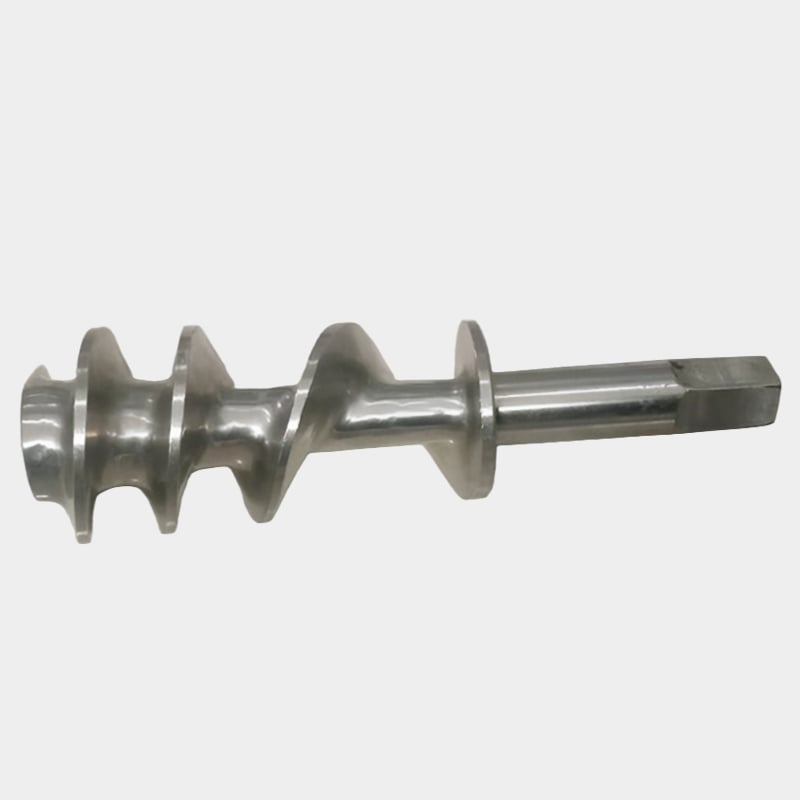
Power Transmission Chain Drive Systems: Efficient, Durable Solutions for Industrial Applications

Get a Free Quote

Our representative will contact you soon.
Email
Name
Mobile
Company Name
Message
0/1000

power transmission chain drive

A power transmission chain drive represents a sophisticated mechanical system that transfers rotational motion and torque between two or more shafts through interconnected chain links and sprockets. This fundamental mechanism has proven itself as an essential component across countless industrial applications, from manufacturing facilities to agricultural equipment. The primary function of a power transmission chain drive involves converting and transmitting mechanical energy efficiently from a driving source to various driven components, maintaining consistent speed ratios while handling substantial loads. Unlike belt-driven systems, chain drives utilize metal links that engage precisely with toothed sprockets, creating a positive engagement that eliminates slippage entirely. The technological features of modern power transmission chain drive systems include precision-engineered rollers, bushings, and pins that work together to minimize friction and maximize operational lifespan. These components undergo rigorous heat treatment processes to enhance durability and resistance to wear under demanding conditions. The chain drive mechanism operates on the principle of intermittent contact, where each link engages sequentially with sprocket teeth, distributing loads evenly across multiple contact points. This design philosophy ensures smooth power transfer even when subjected to shock loads or variable operating conditions. Contemporary power transmission chain drive applications span numerous industries including automotive manufacturing, food processing, material handling, mining operations, and agricultural machinery. In automotive assembly lines, these systems coordinate complex movements between multiple stations with remarkable precision. The versatility of power transmission chain drive technology allows engineers to configure systems for various speed ratios, power requirements, and spatial constraints. Whether transmitting power across short distances in compact machinery or spanning considerable lengths in conveyor systems, chain drives adapt to diverse operational demands while maintaining reliability and efficiency throughout their service life.

New Products

The power transmission chain drive delivers remarkable benefits that directly impact operational efficiency and cost-effectiveness for businesses across various sectors. First and foremost, these systems provide exceptional power handling capabilities, managing heavy loads that would overwhelm alternative transmission methods. This robust performance means your equipment operates reliably even under demanding conditions, reducing unexpected downtime and maintaining production schedules. The positive engagement between chain and sprocket eliminates slippage entirely, ensuring that every rotation of the driving shaft translates precisely to the driven shaft without energy loss. This feature proves invaluable in applications requiring exact timing and synchronization between multiple components. Your operations benefit from predictable performance that remains consistent throughout the entire service life. Another significant advantage lies in the compact installation footprint that power transmission chain drive systems offer. Unlike belt drives requiring large diameter pulleys and considerable space, chain drives achieve the same power transmission with smaller sprockets and tighter center distances. This space efficiency allows engineers to design more compact machinery, reducing overall equipment size and facility space requirements. The durability of metal chain construction means these systems withstand harsh environmental conditions including extreme temperatures, moisture exposure, and contaminated atmospheres where other transmission methods fail. Your maintenance teams appreciate the straightforward inspection and replacement procedures, as chain condition remains visible and components can be changed without complete system dismantling. The modular nature of chain drives enables quick repairs, often requiring only individual link replacement rather than entire chain renewal. Cost considerations favor power transmission chain drive implementation because initial investment remains moderate while operational longevity extends significantly beyond alternative systems. The absence of tension adjustments that belt drives demand reduces ongoing maintenance labor and associated costs. Energy efficiency reaches impressive levels as the positive engagement mechanism wastes minimal power through friction or slippage. Your energy bills reflect this efficiency, particularly in large-scale installations running continuously. The versatility of chain drive configurations accommodates multiple driven shafts from a single power source, simplifying complex machinery layouts and reducing component counts. Temperature tolerance exceeds that of elastomeric belts, allowing operation in environments from freezing cold storage facilities to high-temperature industrial processes without performance degradation. The power transmission chain drive adapts to variable load conditions smoothly, absorbing shock loads and temporary overloads that would damage less robust transmission systems, protecting your valuable equipment from cascading failures and extending overall machinery lifespan substantially.

Practical Tips

How Does a Precision Investment Casting Manufacturer Ensure Consistent Quality Across Global Supply Chains?

05

Jun

How Does a Precision Investment Casting Manufacturer Ensure Consistent Quality Across Global Supply Chains?

In today's interconnected industrial landscape, sourcing complex metal components across international borders presents a formidable quality challenge. the manufacturer must navigate an intricate web of raw material sourcing, multi-stage production c...
View More
Which Quality Standards Should a Custom Lost Wax Casting Foundry Meet for Export Markets?

05

Jun

Which Quality Standards Should a Custom Lost Wax Casting Foundry Meet for Export Markets?

Selecting a manufacturing partner for precision components intended for international buyers is never a straightforward decision. When the supply chain depends on a custom lost wax casting foundry, procurement engineers and quality managers must go b...
View More
How Can OEM ODM Precision Casting Services Accelerate New Product Development Cycles?

26

Jun

How Can OEM ODM Precision Casting Services Accelerate New Product Development Cycles?

Bringing a new industrial product from concept to market is rarely a straightforward journey. Engineering teams face relentless pressure to compress timelines, reduce prototype iterations, and deliver production-ready components without sacrificing d...
View More
How Do OEM ODM Precision Casting Services Support Flexible Design and Rapid Prototyping?

26

Jun

How Do OEM ODM Precision Casting Services Support Flexible Design and Rapid Prototyping?

Figure 1: Custom Valve Body Fabricated via Precision Investment Casting, Featuring Crisp Surface Details and Net-Shape Integrity. In today's fast-evolving manufacturing landscape, the ability to move from concept to production-ready component quickly...
View More

Get a Free Quote

Our representative will contact you soon.
Email
Name
Mobile
Company Name
Message
0/1000

power transmission chain drive

Superior Load Distribution and Mechanical Efficiency

Superior Load Distribution and Mechanical Efficiency

The power transmission chain drive achieves unparalleled load distribution through its unique multi-point engagement system, a characteristic that fundamentally differentiates it from competing transmission technologies. Each individual link within the chain contacts sprocket teeth sequentially, spreading operational forces across numerous simultaneous engagement points rather than concentrating stress in single locations. This distributed loading principle dramatically reduces wear rates on both chain and sprocket components, extending service intervals and decreasing lifecycle costs significantly. The mechanical efficiency of a properly maintained power transmission chain drive typically ranges between 96 and 98 percent, meaning virtually all input energy transfers to useful output work rather than dissipating as heat or friction losses. This efficiency level surpasses many alternative transmission methods, particularly in applications involving high torque at moderate speeds. The rigid metallic construction of chain links maintains dimensional stability under load, preventing the elastic deformation that causes energy losses in flexible transmission elements. Engineers designing power transmission chain drive systems can confidently specify precise gear ratios knowing that the positive engagement mechanism delivers exact speed relationships without creep or slippage degradation over time. This precision proves critical in synchronized manufacturing processes where timing discrepancies cascade into quality defects or production bottlenecks. The load distribution characteristics also enable power transmission chain drive systems to handle shock loads gracefully, absorbing sudden torque spikes without catastrophic failure. Mining equipment, agricultural machinery, and heavy construction vehicles particularly benefit from this resilience, operating reliably in unpredictable conditions where sudden load variations occur frequently. The chain's ability to flex slightly while maintaining positive drive engagement allows it to accommodate minor misalignments and shaft deflections that would cause premature failure in rigid coupling systems. Maintenance personnel monitor chain wear through simple visual inspection and precise measurement techniques, identifying replacement needs before performance degradation affects production output. The predictable wear patterns of power transmission chain drive components enable condition-based maintenance strategies that optimize replacement timing, avoiding both premature component disposal and unexpected failures during critical operations.
Exceptional Environmental Adaptability and Operational Resilience

Exceptional Environmental Adaptability and Operational Resilience

Modern power transmission chain drive systems demonstrate remarkable adaptability to challenging environmental conditions that render alternative transmission methods unreliable or completely inoperable. The all-metal construction of chain components inherently resists degradation from ultraviolet radiation, ozone exposure, and chemical contamination that rapidly deteriorate elastomeric materials used in belt drives. Food processing facilities utilize stainless steel power transmission chain drive assemblies that withstand repeated washdown procedures with aggressive cleaning chemicals and high-pressure water jets, maintaining sanitary conditions without compromising mechanical integrity. The temperature tolerance of properly lubricated power transmission chain drive systems spans from subzero cold storage environments to elevated temperatures encountered in industrial ovens and furnaces, adapting to thermal extremes that would cause belt materials to become brittle or melt entirely. This thermal stability eliminates the need for climate-controlled enclosures around transmission equipment, reducing facility construction costs and simplifying machinery layouts. Outdoor agricultural and construction equipment relies on power transmission chain drive durability to function reliably despite exposure to dust, mud, rain, and temperature fluctuations throughout seasonal cycles. The open architecture of roller chain designs actually facilitates self-cleaning action as accumulated debris dislodges during operation, preventing the buildup that clogs enclosed transmission systems. Corrosion-resistant coatings and specialized alloys extend power transmission chain drive service life in marine environments and chemical processing facilities where salt spray and corrosive atmospheres accelerate material degradation. The robust construction handles particle contamination that would score and damage precision-machined components in sealed gearboxes, making chain drives preferable for cement plants, aggregate processing, and similar abrasive environments. Maintenance flexibility represents another environmental advantage, as lubrication methods range from oil bath submersion to automatic drip systems and even dry-running specialty chains for applications prohibiting lubricant contamination. The power transmission chain drive accommodates operational modifications and equipment upgrades without wholesale system replacement, accepting sprocket changes for ratio adjustments or chain length modifications for altered center distances. This adaptability protects capital equipment investments while allowing production capabilities to evolve with changing market demands and technological advancements in connected machinery components.
Cost-Effective Lifecycle Economics and Maintenance Simplicity

Cost-Effective Lifecycle Economics and Maintenance Simplicity

The total cost of ownership for power transmission chain drive systems consistently proves favorable compared to alternative transmission technologies when organizations conduct comprehensive lifecycle economic analyses. Initial acquisition costs remain competitive, particularly considering the extended service life and minimal maintenance requirements that characterize properly specified chain drive installations. The straightforward design of power transmission chain drive assemblies eliminates many expensive precision components required by other transmission methods, reducing both purchase price and spare parts inventory costs. Maintenance procedures require only basic mechanical skills and common hand tools, allowing general maintenance personnel to service power transmission chain drive systems without specialized training or proprietary diagnostic equipment. This accessibility reduces dependency on external service contractors and minimizes maintenance labor costs throughout equipment operational life. The modular architecture enables partial component replacement, where individual damaged links can be removed and replaced without discarding the entire chain assembly, generating substantial material cost savings over years of service. Predictive maintenance programs easily incorporate power transmission chain drive monitoring through simple elongation measurements that precisely indicate wear progression and remaining service life. This measurement-based approach eliminates guesswork from maintenance scheduling, preventing both premature replacements that waste remaining component life and delayed interventions that risk catastrophic failures during production runs. The power transmission chain drive tolerance for temporary overloads protects connected equipment from damage when unexpected conditions create brief power spikes, avoiding costly repairs to motors, gearboxes, and driven machinery that rigid transmission methods would transmit destructively. Energy consumption analyses reveal that the high mechanical efficiency of power transmission chain drive systems generates measurable utility cost reductions in continuous operation applications, with annual energy savings offsetting maintenance expenditures in many installations. The operational longevity of industrial-grade power transmission chain drive components frequently exceeds five years of continuous service in properly maintained applications, amortizing capital costs over extended periods while maintaining consistent performance levels. Downtime costs, often the most significant operational expense in manufacturing environments, remain minimal because power transmission chain drive inspection procedures occur during scheduled maintenance windows without disassembly, and actual component replacement completes quickly using standard procedures that maintenance teams execute routinely without extensive equipment shutdown periods.

Get a Free Quote

Our representative will contact you soon.
Email
Name
Mobile
Company Name
Message
0/1000