Water Cooled Manifold Casting: Premium Thermal Management Solutions for Industrial Applications

Get a Free Quote

Our representative will contact you soon.
Email
Name
Mobile
Company Name
Message
0/1000

water cooled manifold casting

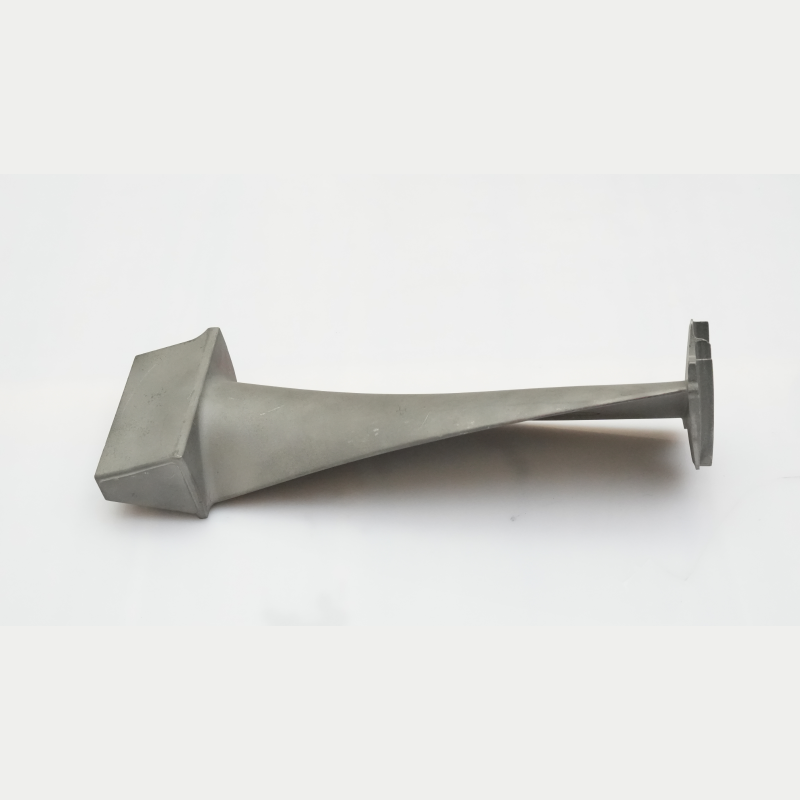
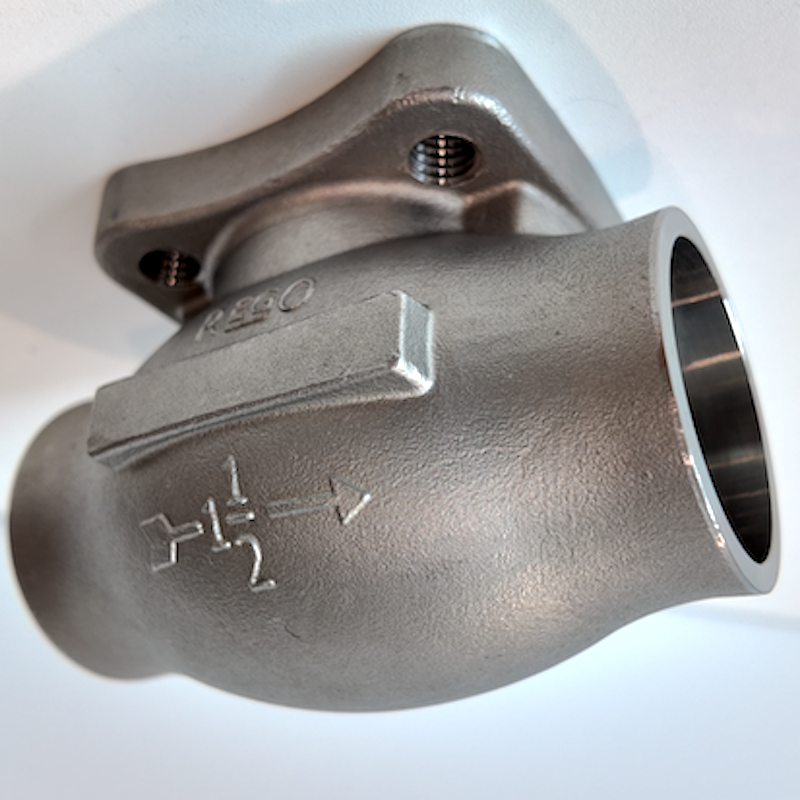
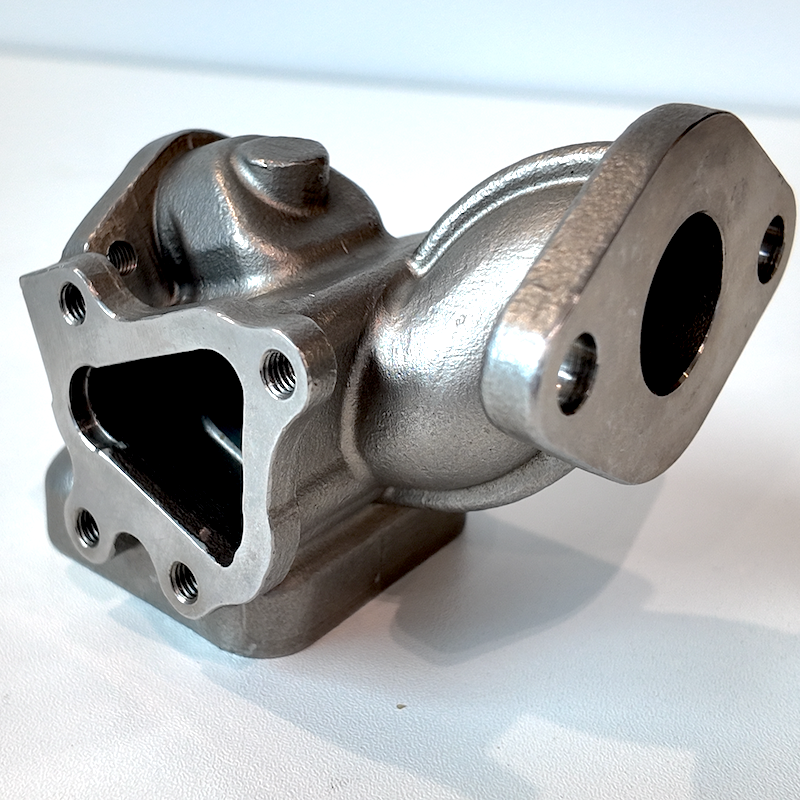
Water cooled manifold casting represents a sophisticated manufacturing solution designed to create durable metal components that efficiently manage thermal conditions in demanding industrial environments. This specialized casting process produces manifolds equipped with integrated cooling channels that allow water or coolant to circulate through the component, effectively dissipating heat generated during operation. The water cooled manifold casting technique combines precision engineering with advanced metallurgical practices to deliver components that maintain structural integrity even under extreme temperature fluctuations. These castings serve as critical elements in systems where temperature control directly impacts performance, safety, and longevity. The manufacturing process involves creating detailed molds that accommodate both the primary manifold structure and the intricate internal passages required for coolant flow. Foundries employ various casting methods including sand casting, investment casting, and permanent mold casting depending on the complexity, size, and performance requirements of the final product. Material selection plays a vital role in water cooled manifold casting, with common choices including aluminum alloys, bronze, brass, and specialized iron alloys that offer excellent thermal conductivity combined with mechanical strength. The design phase requires careful consideration of flow dynamics to ensure uniform cooling throughout the component, preventing hot spots that could lead to premature failure. Engineers must balance wall thickness, passage diameter, and coolant velocity to achieve optimal heat transfer without compromising structural stability. Modern water cooled manifold casting incorporates computer-aided design and simulation tools that predict thermal behavior before physical production begins, reducing development time and minimizing costly iterations. These components find widespread application across industries where heat management is essential, from automotive engine systems to industrial processing equipment, power generation facilities, and manufacturing machinery. The versatility of water cooled manifold casting allows customization for specific operational parameters, ensuring each component meets the unique demands of its intended application while providing reliable, long-term service in challenging environments.

New Product Recommendations

The water cooled manifold casting offers numerous practical benefits that directly impact operational efficiency and cost management for businesses across various industries. First and foremost, these components provide superior heat management capabilities that extend equipment lifespan significantly. By continuously removing excess heat from critical areas, the manifold prevents thermal stress that causes material degradation, warping, and premature component failure. This thermal regulation translates into fewer unexpected breakdowns and reduced maintenance schedules, allowing your operations to maintain consistent productivity without costly interruptions. The integrated cooling design eliminates the need for external cooling attachments or complicated retrofit solutions, simplifying system architecture and reducing installation complexity. Manufacturing these components through casting processes delivers exceptional cost efficiency compared to machined alternatives, especially for complex geometries with internal passages that would be nearly impossible or prohibitively expensive to create through traditional machining. The casting method allows production of both small batches for specialized applications and large production runs for standard components, offering flexibility that matches your specific volume requirements. Water cooled manifold casting produces components with consistent quality and repeatable performance characteristics, ensuring each unit performs identically to specifications. This reliability reduces quality control concerns and builds confidence in your equipment performance. The thermal efficiency achieved through proper coolant circulation reduces overall energy consumption by maintaining optimal operating temperatures without requiring excessive cooling capacity from external systems. Your facility benefits from lower energy bills while maintaining peak performance levels. These castings accommodate various metal alloys, allowing selection of materials that perfectly match your environmental conditions, whether facing corrosive substances, high pressures, or extreme temperature ranges. The durability inherent in properly designed water cooled manifold casting means longer intervals between replacements, reducing both direct component costs and the indirect expenses associated with system downtime during changeovers. The smooth internal passages created during the casting process minimize pressure drops in coolant flow, ensuring efficient circulation without requiring oversized pumps or excessive energy input. This hydraulic efficiency contributes to quieter operation and reduced stress on auxiliary cooling system components. Customization options allow engineers to design manifolds that integrate seamlessly with existing equipment configurations, eliminating compatibility issues and reducing installation time. The proven performance record of water cooled manifold casting across decades of industrial use provides peace of mind that you are investing in a mature, reliable technology rather than experimental solutions with uncertain outcomes.

Practical Tips

Which Quality Standards Should a Custom Lost Wax Casting Foundry Meet for Export Markets?

05

Jun

Which Quality Standards Should a Custom Lost Wax Casting Foundry Meet for Export Markets?

Selecting a manufacturing partner for precision components intended for international buyers is never a straightforward decision. When the supply chain depends on a custom lost wax casting foundry, procurement engineers and quality managers must go b...
View More
How Can OEM ODM Precision Casting Services Accelerate New Product Development Cycles?

26

Jun

How Can OEM ODM Precision Casting Services Accelerate New Product Development Cycles?

Bringing a new industrial product from concept to market is rarely a straightforward journey. Engineering teams face relentless pressure to compress timelines, reduce prototype iterations, and deliver production-ready components without sacrificing d...
View More
How Do OEM ODM Precision Casting Services Support Flexible Design and Rapid Prototyping?

26

Jun

How Do OEM ODM Precision Casting Services Support Flexible Design and Rapid Prototyping?

Figure 1: Custom Valve Body Fabricated via Precision Investment Casting, Featuring Crisp Surface Details and Net-Shape Integrity. In today's fast-evolving manufacturing landscape, the ability to move from concept to production-ready component quickly...
View More
Why Are Stainless Steel Investment Castings Preferred for Corrosion Resistant Applications?

26

Jun

Why Are Stainless Steel Investment Castings Preferred for Corrosion Resistant Applications?

In demanding industrial environments where moisture, chemicals, and extreme temperatures are constant threats, material selection is one of the most critical engineering decisions a manufacturer can make. Among the available manufacturing methods, st...
View More

Get a Free Quote

Our representative will contact you soon.
Email
Name
Mobile
Company Name
Message
0/1000

water cooled manifold casting

Exceptional Thermal Management Through Integrated Cooling Channels

Exceptional Thermal Management Through Integrated Cooling Channels

The defining characteristic of water cooled manifold casting lies in its sophisticated internal cooling channel network that delivers unmatched thermal control for demanding applications. Unlike solid components that rely solely on external heat dissipation, these manifolds incorporate precisely engineered passages that allow coolant to flow directly through the component body, extracting heat at its source before it can accumulate and cause damage. The casting process enables creation of complex three-dimensional channel geometries that would be impossible to achieve through drilling or machining operations, allowing designers to position cooling passages exactly where thermal loads are highest. This strategic placement ensures uniform temperature distribution across the entire component, eliminating hot spots that accelerate wear and reduce service life. The continuous circulation of coolant maintains stable operating temperatures even during peak demand periods, preventing thermal cycling that causes expansion and contraction stresses in the material structure. Engineers calculate the optimal balance between channel diameter, coolant flow rate, and heat transfer surface area to maximize cooling efficiency without creating excessive pressure drops that would require larger pumps or higher energy consumption. The smooth cast surfaces within these cooling passages promote turbulent flow patterns that enhance heat transfer coefficients, extracting more thermal energy per unit of coolant volume compared to laminar flow conditions. This efficiency means your cooling system can operate with smaller coolant reservoirs and less pumping capacity while still achieving superior temperature control. The water cooled manifold casting approach proves particularly valuable in applications where components must maintain dimensional stability under varying thermal loads, such as precision manufacturing equipment, injection molding machinery, and engine components. By preventing temperature-induced expansion and contraction, these manifolds help maintain tight tolerances and consistent product quality. The thermal management capabilities extend equipment longevity dramatically, with properly cooled components often lasting two to three times longer than uncooled equivalents operating under similar conditions. This longevity translates directly into lower total cost of ownership, reduced spare parts inventory requirements, and fewer production interruptions for component replacement. The integrated cooling design also enhances workplace safety by keeping external surfaces at lower temperatures, reducing burn risks for operators and maintenance personnel working near hot equipment.
Cost-Effective Manufacturing with Complex Geometry Capabilities

Cost-Effective Manufacturing with Complex Geometry Capabilities

Water cooled manifold casting delivers remarkable economic advantages through its ability to produce intricate component geometries in a single manufacturing operation, eliminating multiple machining steps and assembly processes required by alternative fabrication methods. The casting approach allows manufacturers to create components with internal features, undercuts, complex external shapes, and integrated cooling passages all in one production cycle. This consolidation of features dramatically reduces manufacturing time compared to building equivalent components from multiple machined pieces that must be welded, brazed, or mechanically fastened together. Each eliminated assembly step removes potential failure points while reducing labor costs and simplifying quality control procedures. The initial investment in pattern or mold creation pays dividends across production runs, as each subsequent casting replicates the original design with consistent accuracy and minimal per-unit cost. For medium to high volume production, the cost per component decreases substantially compared to machining operations that consume significant machine time and cutting tool expenses for each individual piece. Even for smaller production quantities, the ability to create complex internal passages through casting often proves more economical than attempting to drill intersecting channels or fabricate hollow sections through other means. Material efficiency represents another significant economic benefit, as casting processes typically generate less waste material compared to subtractive machining operations that remove substantial amounts of metal to create the final shape. The near-net-shape capability of modern casting techniques means components emerge from molds very close to final dimensions, requiring only minimal finish machining on critical surfaces rather than extensive material removal across the entire part. This material conservation becomes particularly important when working with expensive alloy compositions or when raw material costs represent a significant portion of total component expense. The water cooled manifold casting process accommodates design modifications relatively easily compared to machined components, as changes can be incorporated into pattern or mold updates without requiring reprogramming of complex machining sequences or investment in new fixturing. This flexibility supports continuous improvement efforts and allows manufacturers to optimize designs based on field performance data without incurring prohibitive retooling costs. The speed of production once molds are prepared enables rapid fulfillment of orders, reducing lead times and allowing just-in-time manufacturing strategies that minimize inventory carrying costs while ensuring component availability when needed.
Superior Material Properties and Long-Term Durability

Superior Material Properties and Long-Term Durability

The metallurgical advantages inherent in water cooled manifold casting processes produce components with material properties specifically suited for long-term performance under demanding operational conditions. The controlled solidification that occurs during casting allows metal grains to form optimal structures that enhance mechanical strength, thermal conductivity, and resistance to various forms of degradation. Unlike welded assemblies where heat-affected zones create areas of altered material properties and potential weakness, cast components maintain consistent metallurgical characteristics throughout their structure. This uniformity ensures predictable performance and eliminates concerns about localized weak points that might fail prematurely under stress. The selection of appropriate casting alloys allows engineers to optimize material properties for specific environmental challenges, whether prioritizing corrosion resistance for chemical processing applications, maximizing thermal conductivity for heat exchange duties, or emphasizing mechanical strength for high-pressure systems. Aluminum alloys commonly used in water cooled manifold casting offer excellent thermal conductivity combined with light weight, making them ideal for applications where heat dissipation must be maximized while minimizing overall system mass. Bronze and brass alloys provide superior corrosion resistance in marine environments or chemical processing facilities where exposure to aggressive substances would quickly degrade ferrous materials. Specialized iron alloys deliver exceptional strength and wear resistance for heavy-duty industrial applications where components face mechanical stress in addition to thermal challenges. The casting process itself contributes to durability by eliminating mechanical joints that represent potential leak paths for coolant or weak points subject to fatigue failure. A monolithic cast structure distributes stresses more evenly across the component compared to bolted or welded assemblies where stress concentrations develop at connection points. The absence of these vulnerable junctions means water cooled manifold casting components typically demonstrate superior reliability in cyclic loading conditions and vibration-prone environments. Surface finish characteristics achieved through modern casting techniques minimize corrosion initiation sites and reduce fouling tendencies in coolant passages, maintaining heat transfer efficiency throughout the component service life. Proper casting procedures eliminate internal porosity and inclusions that could serve as crack initiation points or create localized weak areas within the material structure. Quality control measures including non-destructive testing verify the integrity of critical castings before they enter service, providing confidence that components will perform reliably under specified operating conditions. The proven durability of properly manufactured water cooled manifold casting translates into predictable maintenance schedules and reliable budgeting for replacement costs, as components typically reach or exceed their designed service life when operated within specified parameters.

Get a Free Quote

Our representative will contact you soon.
Email
Name
Mobile
Company Name
Message
0/1000