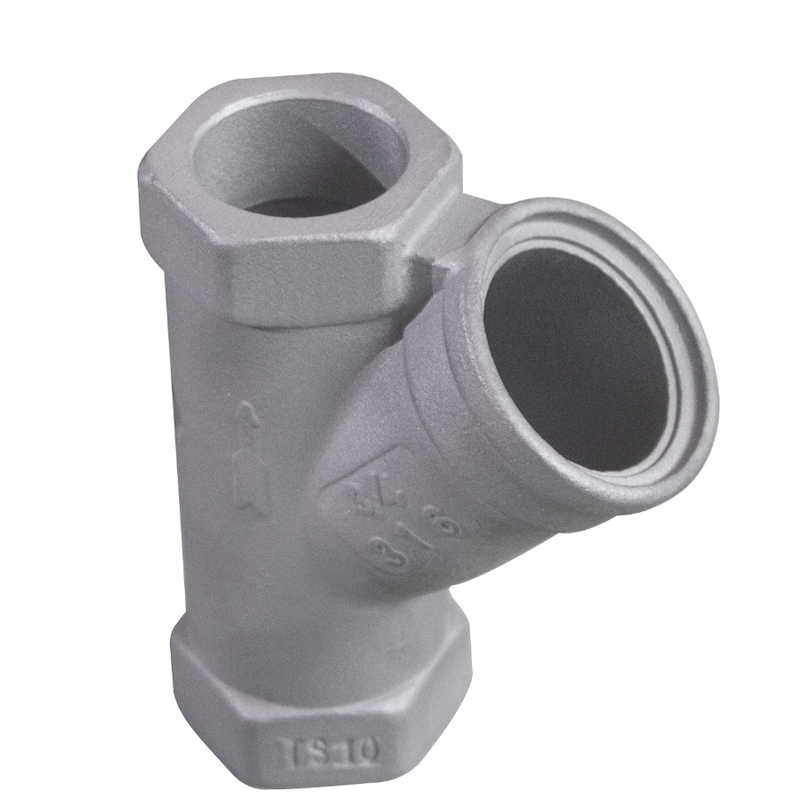
High Precision Silica Sol Castings - Superior Quality Metal Components for Demanding Applications

Get a Free Quote

Our representative will contact you soon.
Email
Name
Company Name
Message
0/1000

high precision silica sol castings

High precision silica sol castings represent an advanced manufacturing process that delivers exceptional quality metal components for demanding industrial applications. This sophisticated casting method utilizes a ceramic shell created through silica sol binder technology, enabling manufacturers to produce intricate parts with remarkable dimensional accuracy and superior surface finishes. The silica sol investment casting process begins with creating a wax pattern that replicates the desired final component. This pattern gets repeatedly dipped into a silica-based ceramic slurry, building up multiple layers to form a robust shell mold. Once the shell hardens, the wax melts away, leaving a precise cavity into which molten metal pours. The result is a finished casting that requires minimal post-processing and achieves tolerances as tight as plus or minus 0.005 inches. The main functions of high precision silica sol castings include producing complex geometrical shapes that would be difficult or impossible to machine from solid stock, creating components with internal passageways and hollow sections, and manufacturing parts with thin walls and intricate details. This process works exceptionally well for both prototype development and high-volume production runs. Technological features distinguish this casting method from conventional sand casting or other investment casting techniques. The silica sol binder creates a finer grain structure in the ceramic shell compared to traditional ethyl silicate binders, resulting in smoother surface finishes that often eliminate the need for secondary machining operations. The process accommodates a wide range of metal alloys including stainless steels, carbon steels, aluminum alloys, bronze, brass, and specialized superalloys. Applications for high precision silica sol castings span numerous industries. Aerospace manufacturers rely on this technology for turbine blades, structural brackets, and flight control components. Medical device companies use these castings for surgical instruments and implantable devices. The automotive sector benefits from precision engine components, transmission parts, and exhaust system elements. Industrial equipment manufacturers depend on this process for pump housings, valve bodies, and machinery components. Energy sector applications include parts for oil and gas extraction equipment, power generation systems, and renewable energy installations.

New Product Releases

Choosing high precision silica sol castings brings numerous practical benefits that directly impact your production efficiency and product quality. The first major advantage lies in the exceptional surface finish quality these castings deliver right out of the mold. You receive components with surface roughness measurements typically ranging from 63 to 125 micro-inches, which means your parts look professional and function smoothly without extensive finishing work. This smooth surface reduces friction in moving parts, improves corrosion resistance, and creates an aesthetically pleasing appearance that enhances your brand reputation. The dimensional accuracy achieved through this casting process saves you significant time and money. When your castings arrive within tolerances of plus or minus 0.005 inches or better, you spend less on secondary machining operations. Many components can go directly into assembly or require only minimal touch-up work. This precision consistency means your parts fit together perfectly every time, reducing assembly headaches and warranty claims. Your production costs decrease substantially because you eliminate multiple machining steps that traditional rough castings would require. Design flexibility represents another powerful advantage for your engineering team. The process allows you to create complex internal passages, undercuts, and intricate external features that would require multiple pieces if manufactured through traditional methods. You can consolidate several machined parts into a single casting, reducing assembly time, eliminating potential failure points at joints, and decreasing overall component weight. This design freedom lets your engineers optimize parts for performance rather than compromising based on manufacturing limitations. Material efficiency provides both economic and environmental benefits. The casting process uses metal very efficiently, with minimal waste compared to machining from solid bar stock. When you machine complex parts from solid material, you may waste 60 to 80 percent of your raw material as chips. With high precision silica sol castings, the material goes where you need it, reducing raw material costs and disposal expenses. The versatility in material selection gives you options to match your exact performance requirements. Whether you need the strength of stainless steel, the lightweight properties of aluminum, the corrosion resistance of bronze, or the high-temperature capabilities of superalloys, this casting process handles them all. You can specify the exact alloy composition to meet your mechanical properties, environmental resistance, and regulatory compliance needs. Production scalability accommodates your business growth. The same process works efficiently whether you need ten prototype parts or ten thousand production components. You avoid the massive tooling investments required for other manufacturing methods, making it economically viable to produce medium-volume runs. Lead times remain competitive, getting quality parts into your hands quickly so you can meet your customer commitments and maintain your competitive edge in the marketplace.

Practical Tips

Basic Principles Of Design Of Precision Casting Gating System

11

May

Basic Principles Of Design Of Precision Casting Gating System

View More
The Role Of Elements In Castings And The Order Of Addition

11

May

The Role Of Elements In Castings And The Order Of Addition

View More
Stainless Steel Castings for Architectural Posts

11

May

Stainless Steel Castings for Architectural Posts

View More
Precision Stainless Steel Exhaust Manifold Casting Solution For Luxury Sedan - With Japanese First-Tier Car Brand

11

May

Precision Stainless Steel Exhaust Manifold Casting Solution For Luxury Sedan - With Japanese First-Tier Car Brand

View More

Get a Free Quote

Our representative will contact you soon.
Email
Name
Company Name
Message
0/1000

high precision silica sol castings

Unmatched Surface Quality and Detail Reproduction

Unmatched Surface Quality and Detail Reproduction

The surface quality achieved through high precision silica sol castings sets a new standard in metal component manufacturing that delivers immediate and long-term value to your operations. When you examine a freshly cast component produced through this method, you immediately notice the smooth, refined surface that rivals machined finishes. This exceptional quality stems from the unique properties of the silica sol binder system used to create the ceramic shell mold. Unlike traditional investment casting processes that use coarser binder materials, the silica sol creates an ultra-fine ceramic structure that captures every minute detail of your original pattern. The practical implications of this superior surface quality extend far beyond aesthetics. In applications involving moving parts or fluid flow, surface roughness directly affects performance. Smoother surfaces reduce friction coefficients, which translates to less energy consumption, reduced wear rates, and extended service life for your components. For hydraulic and pneumatic systems, the smooth internal passages minimize turbulence and pressure drops, improving system efficiency. In medical applications, the refined surface finish reduces sites where bacteria could harbor, contributing to better infection control and patient safety. The detail reproduction capability allows you to incorporate features directly into the casting that would otherwise require secondary operations. You can cast in logos, part numbers, date codes, and identification marks with clarity and permanence. Threaded features, splines, and gear teeth can be cast to near-net shape, requiring only minor finishing to bring them to final specifications. Thin wall sections down to 0.040 inches remain feasible, enabling lightweight designs that conserve material without sacrificing structural integrity. This level of detail reproduction also proves invaluable during the prototyping phase. Your designers can evaluate form, fit, and function using parts that accurately represent the final production components, rather than relying on rough approximations. This fidelity accelerates your development cycle, helping you identify and resolve design issues earlier when changes cost less to implement. The consistency of surface quality across production runs ensures that every part meets your specifications, reducing quality control rejections and maintaining the reliability your customers expect from your products.
Superior Dimensional Accuracy for Direct Application

Superior Dimensional Accuracy for Direct Application

Dimensional accuracy represents perhaps the most compelling advantage that high precision silica sol castings offer to manufacturers seeking to optimize their production processes and reduce total component costs. When you receive castings that consistently hold tolerances within plus or minus 0.005 inches or tighter on critical dimensions, you unlock substantial operational efficiencies throughout your manufacturing workflow. This level of precision approaches that of machined components, yet you achieve it through a near-net-shape process that dramatically reduces material waste and machining time. The economic impact of this accuracy becomes clear when you analyze your total cost of ownership. Traditional casting methods often require significant machining allowances, sometimes 0.060 inches or more per surface, to clean up rough surfaces and bring dimensions within acceptable ranges. Every thousandth of an inch you remove through machining represents time on expensive machine tools, tool wear, labor costs, and material waste. With high precision silica sol castings arriving much closer to final dimensions, you eliminate the majority of these costs. Many features require no machining whatsoever, while others need only light finishing passes that take minutes instead of hours. Your quality assurance processes also benefit from tighter as-cast tolerances. When incoming castings fall within a narrow dimensional range, your inspection procedures become faster and more straightforward. You spend less time sorting parts, adjusting fixtures, and compensating for dimensional variations during assembly. The consistency reduces scrap rates and rework costs, improving your overall production yield. For assemblies requiring precise fits between mating components, this accuracy proves essential for proper function and longevity. The tight tolerances extend beyond simple linear dimensions to include complex geometrical characteristics. Flatness, parallelism, perpendicularity, and concentricity all benefit from the precision inherent in the silica sol casting process. The ceramic shell maintains its dimensional integrity throughout the heating and cooling cycles, minimizing distortion that plagues other casting methods. This stability allows you to cast components with multiple critical features that must maintain precise spatial relationships, eliminating the need for elaborate fixturing and multiple setups during subsequent machining operations. For industries where dimensional accuracy directly affects safety and performance, such as aerospace, medical devices, and automotive systems, this precision provides peace of mind and regulatory compliance. You can confidently certify that your components meet stringent specifications without extensive inspection of every dimension on every part. Statistical process control becomes more effective when the manufacturing process delivers such consistent results, allowing you to identify and correct issues before they result in non-conforming products reaching your customers.
Exceptional Material Versatility and Metallurgical Properties

Exceptional Material Versatility and Metallurgical Properties

The material versatility offered by high precision silica sol castings provides engineers and product designers with unprecedented freedom to select the optimal alloy for each specific application without compromising manufacturability. This casting process accommodates an extensive range of ferrous and non-ferrous metals, each bringing unique properties that address different performance requirements, environmental conditions, and regulatory standards. Understanding how this versatility translates into practical advantages helps you make informed decisions that enhance product performance while controlling costs. Stainless steel grades represent one of the most popular material categories for these castings, offering excellent corrosion resistance combined with good mechanical properties. You can specify austenitic stainless steels like 304 or 316 for general corrosion resistance, martensitic grades like 410 or 17-4 PH when you need higher strength and moderate corrosion protection, or duplex stainless steels when your application demands both strength and superior corrosion resistance. The casting process preserves the metallurgical characteristics that make these alloys valuable, including their microstructure, phase balance, and corrosion-resistant passive films. Carbon and low-alloy steels provide cost-effective solutions when extreme corrosion resistance is not required but strength, toughness, and wear resistance are priorities. The process handles everything from mild steels for general structural applications to high-carbon tool steels for wear-resistant components. Heat treatment options further expand the property range available, allowing you to specify hardening, tempering, or case hardening to achieve the exact combination of surface hardness and core toughness your application requires. Aluminum alloys bring lightweight advantages critical for aerospace, automotive, and portable equipment applications. The casting process works well with both cast-specific alloys and wrought-type compositions, giving you access to a broad spectrum of strength-to-weight ratios, corrosion resistance levels, and thermal properties. The fine-grained microstructure achieved through controlled solidification in the ceramic shell mold enhances mechanical properties compared to sand castings of the same alloy. Copper-based alloys including bronze, brass, and specialized copper alloys find extensive use in marine applications, electrical components, and decorative architectural elements. These materials offer excellent corrosion resistance in specific environments, superior thermal and electrical conductivity, and attractive appearance characteristics. The silica sol casting process captures fine details particularly well in these alloys, making them ideal for components requiring both functional performance and visual appeal. For the most demanding applications involving high temperatures, extreme corrosion, or exceptional strength requirements, superalloys based on nickel, cobalt, or iron provide solutions that few other manufacturing processes can accommodate. These exotic materials, used extensively in aerospace turbine engines, chemical processing equipment, and advanced energy systems, require the precise control and fine microstructures that high precision silica sol castings deliver consistently.

Get a Free Quote

Our representative will contact you soon.
Email
Name
Company Name
Message
0/1000