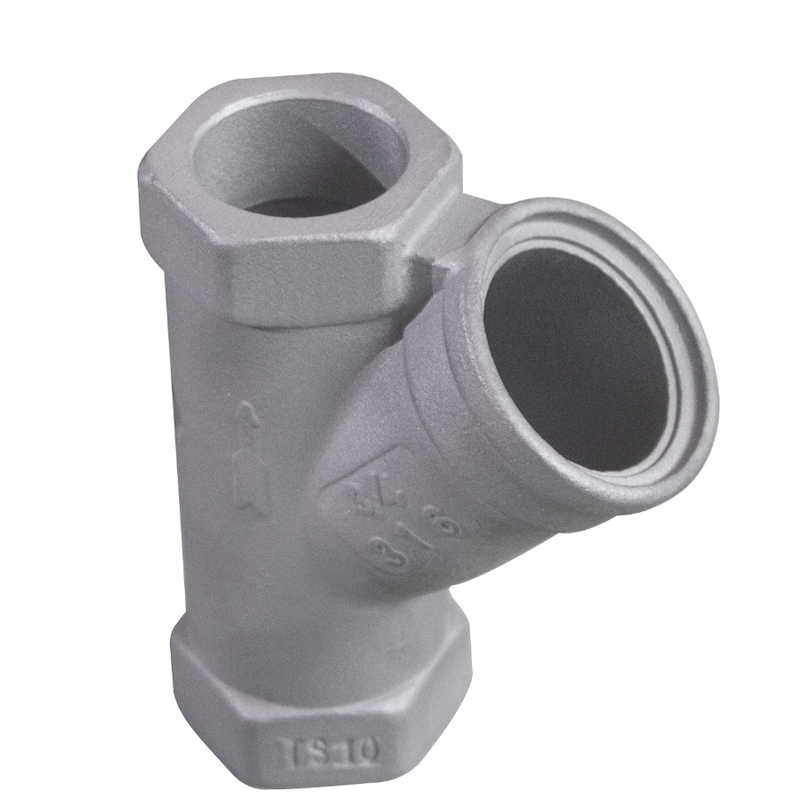
Superior Material Properties and Structural Integrity
The metallurgical advantages inherent in high precision silica sol castings deliver components with mechanical properties and structural reliability that meet the most demanding application requirements. The controlled solidification environment within ceramic shells produces fine-grain microstructures with minimal porosity, resulting in consistent material behavior under stress, temperature extremes, and corrosive conditions. Unlike welded assemblies or machined components that may contain residual stresses or disturbed grain structures, cast parts exhibit uniform properties throughout their cross-sections, enhancing predictable performance and long-term durability. The process accommodates an extensive range of engineering alloys including austenitic and martensitic stainless steels, precipitation-hardening grades, aluminum alloys, copper alloys, tool steels, and exotic superalloys used in extreme environments. Metallurgists can specify exact alloy compositions tailored to specific performance criteria such as corrosion resistance in marine environments, high-temperature strength in turbine applications, wear resistance in mining equipment, or biocompatibility in medical implants. The single-piece construction eliminates mechanical joints that represent potential failure initiation sites, improving fatigue resistance and shock load tolerance compared to assembled alternatives. Quality control benefits from the homogeneous structure that responds predictably to heat treatment processes, allowing precise property adjustment through solution annealing, aging, or hardening procedures. Non-destructive testing methods such as radiography, ultrasonic inspection, and fluorescent penetrant examination verify internal soundness and surface integrity, providing documented quality assurance that satisfies aerospace, medical, and defense industry standards. The absence of welding means no heat-affected zones with altered properties, no filler material compatibility concerns, and no distortion from thermal cycling during fabrication. Components maintain dimensional stability throughout their service lives because internal stresses remain minimal and grain structures remain stable under operating conditions. High precision silica sol castings support subsequent surface treatments including electroplating, anodizing, thermal spray coatings, and conversion coatings that enhance specific properties without compromising base material integrity. The reliable mechanical properties enable engineers to optimize designs with confidence, using actual material capabilities rather than conservative assumptions required when property variation remains uncertain. Industries depending on component reliability such as oil and gas extraction, power generation, chemical processing, and transportation infrastructure trust high precision silica sol castings to deliver consistent performance in critical applications where failure consequences prove costly or dangerous.

 EN
EN