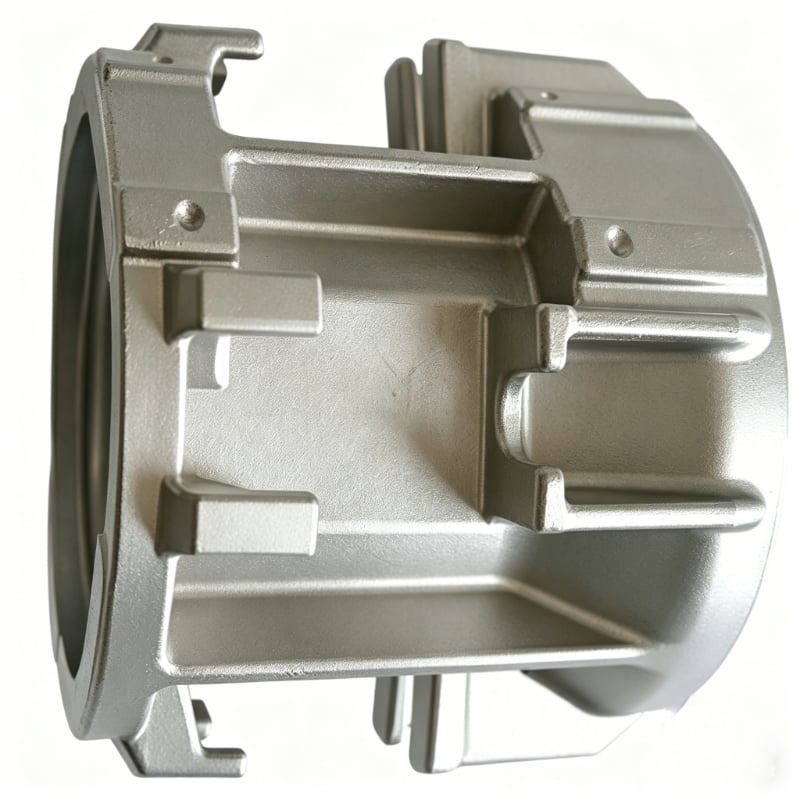
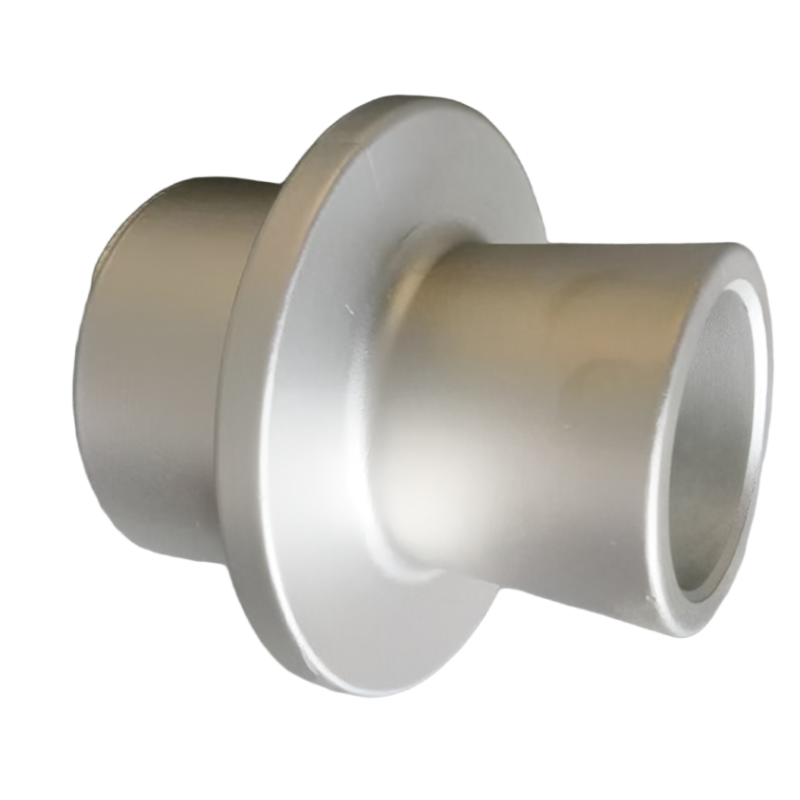
OEM Silica Sol Investment Casting Services - Precision Metal Components Manufacturing

Get a Free Quote

Our representative will contact you soon.
Email
Name
Company Name
Message
0/1000

oem silica sol investment casting

OEM silica sol investment casting represents a sophisticated manufacturing process that combines precision engineering with advanced materials technology to produce high-quality metal components. This method utilizes a silica sol-based ceramic shell system to create exceptionally detailed castings with superior surface finishes and dimensional accuracy. The process begins with creating a wax pattern of the desired component, which is then coated with multiple layers of silica sol and fine ceramic particles to form a robust shell mold. Once the shell hardens, the wax is melted out, leaving a hollow cavity that perfectly replicates the original pattern. Molten metal is then poured into this cavity, solidifying to form the final component. The main functions of OEM silica sol investment casting include producing complex geometries that would be difficult or impossible to achieve through conventional machining, creating components with thin walls and intricate internal passages, and manufacturing parts that require minimal post-processing. Technological features distinguish this process from other casting methods, particularly its ability to achieve surface finishes as smooth as 1.6 micrometers Ra without additional machining. The silica sol binder system provides exceptional shell strength and permeability, allowing gases to escape during metal pouring while maintaining structural integrity. This process accommodates a wide range of metals and alloys, including stainless steels, carbon steels, aluminum alloys, copper alloys, and superalloys. Applications span numerous industries where precision and reliability are paramount. Aerospace manufacturers rely on OEM silica sol investment casting for turbine blades, structural brackets, and hydraulic components. Medical device producers utilize this technology for surgical instruments and implantable components that demand biocompatibility and exact dimensions. Automotive applications include turbocharger housings, transmission components, and high-performance engine parts. The food processing and pharmaceutical industries benefit from sanitary-grade stainless steel components produced through this method. Marine hardware, industrial pump components, and architectural fittings also leverage the capabilities of silica sol investment casting to achieve both functional performance and aesthetic appeal.

New Product Recommendations

Choosing OEM silica sol investment casting delivers numerous practical benefits that directly impact your production efficiency and product quality. First and foremost, this process eliminates the need for expensive tooling modifications when design changes occur, as new wax patterns can be created quickly and cost-effectively. You gain exceptional design freedom, allowing engineers to consolidate multiple parts into single castings, which reduces assembly time, eliminates potential failure points, and decreases overall production costs. The superior surface finish achieved through OEM silica sol investment casting means your components often require no secondary finishing operations, saving both time and money while reducing material waste. You receive parts with dimensional tolerances as tight as plus or minus 0.005 inches per inch, ensuring consistent fit and function across production runs. This precision translates to reduced rejection rates and higher customer satisfaction. Material versatility provides another significant advantage, as you can select from virtually any castable alloy to meet specific performance requirements without changing your production process. Whether you need corrosion resistance, high-temperature strength, or specific mechanical properties, silica sol investment casting accommodates your material choices. The process produces parts with excellent metallurgical properties, including fine grain structures and uniform density throughout the casting, resulting in components that perform reliably under demanding conditions. Production scalability allows you to manufacture anywhere from prototype quantities to high-volume runs without sacrificing quality or consistency. Small businesses benefit from low initial investment requirements for prototype development, while large manufacturers appreciate the ability to scale production to meet market demands. Weight reduction capabilities make OEM silica sol investment casting particularly valuable, as thin-wall sections and optimized geometries reduce material usage without compromising strength. This weight savings proves especially critical in aerospace and automotive applications where every gram matters for fuel efficiency and performance. Environmental benefits also deserve consideration, as the process generates minimal waste compared to subtractive manufacturing methods like machining, where significant material becomes chips and scraps. The recyclability of both pattern materials and excess metal further enhances sustainability. Lead times for OEM silica sol investment casting remain competitive, with many producers offering rapid turnaround from design approval to finished parts. You avoid the lengthy tooling preparation required for die casting or forging, accelerating time-to-market for new products. Quality consistency remains exceptionally high throughout production runs, as the ceramic shell process naturally compensates for minor variations, delivering uniform results that meet stringent specifications batch after batch.

Tips And Tricks

Basic Principles Of Design Of Precision Casting Gating System

11

May

Basic Principles Of Design Of Precision Casting Gating System

View More
Selection And Application Scope Of Hardness Tester

11

May

Selection And Application Scope Of Hardness Tester

View More
Stainless Steel Castings for Architectural Posts

11

May

Stainless Steel Castings for Architectural Posts

View More
Precision Stainless Steel Exhaust Manifold Casting Solution For Luxury Sedan - With Japanese First-Tier Car Brand

11

May

Precision Stainless Steel Exhaust Manifold Casting Solution For Luxury Sedan - With Japanese First-Tier Car Brand

View More

Get a Free Quote

Our representative will contact you soon.
Email
Name
Company Name
Message
0/1000

oem silica sol investment casting

Unmatched Surface Quality and Dimensional Precision

Unmatched Surface Quality and Dimensional Precision

OEM silica sol investment casting stands apart from alternative manufacturing processes through its ability to deliver extraordinary surface quality and dimensional precision that eliminates costly secondary operations. The silica sol binder system creates an exceptionally smooth ceramic shell surface that directly translates to the final metal component, producing castings with surface finishes ranging from 63 to 125 micro-inches Ra as-cast. This level of smoothness rivals machined surfaces and proves particularly valuable for components where surface texture affects performance, such as fluid handling equipment, aerodynamic surfaces, or aesthetic architectural elements. The fine colloidal silica particles used in the primary shell layers measure only 7 to 10 nanometers in diameter, creating an ultra-smooth interface between the ceramic mold and molten metal. This microscopic smoothness prevents surface defects, reduces stress concentration points, and creates components that resist corrosion and fatigue more effectively than rough-surfaced alternatives. Dimensional accuracy represents another critical advantage of OEM silica sol investment casting, with typical linear tolerances achieving plus or minus 0.003 inches for the first inch and plus or minus 0.002 inches for each additional inch. This precision stems from the stable ceramic shell system that resists distortion during dewaxing and metal pouring, maintaining exact dimensional relationships throughout the process. Complex features such as threads, logos, identification marks, and fine details reproduce with remarkable fidelity, often eliminating the need for secondary machining operations. The process accommodates wall thicknesses as thin as 0.020 inches in certain alloys, enabling significant weight reduction while maintaining structural integrity. Draft angles can be minimized or eliminated entirely, maximizing material efficiency and reducing the envelope size of finished components. Internal passages, cooling channels, and complex intersecting geometries that would require multiple machining operations or assembly of separate pieces can be cast as integral features, reducing production costs and improving reliability. The dimensional stability of silica sol shells also ensures consistent reproduction across thousands of castings, with statistical process control demonstrating remarkable repeatability. This consistency proves invaluable for manufacturers requiring interchangeable parts or those serving industries with strict quality standards and traceability requirements.
Exceptional Material Versatility and Metallurgical Integrity

Exceptional Material Versatility and Metallurgical Integrity

OEM silica sol investment casting provides unparalleled material versatility, accommodating virtually any metal or alloy that can be melted and poured, giving engineers complete freedom to select materials based purely on performance requirements rather than manufacturing limitations. This capability extends from common alloys like 304 and 316 stainless steels to exotic superalloys such as Inconel, Hastelloy, and titanium alloys that resist extreme temperatures and corrosive environments. Carbon steels, tool steels, duplex stainless steels, precipitation-hardening stainless steels, aluminum alloys, bronze, brass, and even precious metals can all be cast using silica sol investment casting processes. The chemical stability of silica sol shells prevents unwanted reactions with molten metals, preserving alloy composition and ensuring that mechanical properties meet specifications. This inertness proves especially important when casting reactive metals like titanium or aluminum, where contamination from mold materials can compromise performance. The process naturally produces fine-grain microstructures due to the relatively rapid cooling rates achieved in ceramic molds, resulting in superior mechanical properties compared to sand castings of equivalent alloys. Directional solidification can be controlled to optimize grain structure for specific applications, particularly in high-stress components where grain orientation affects fatigue resistance and creep behavior. Heat treatment responses remain predictable and consistent because OEM silica sol investment casting produces homogeneous castings with minimal segregation or porosity. Solution annealing, age hardening, quenching, and tempering operations yield uniform results throughout the casting, enabling manufacturers to achieve target hardness, strength, and toughness values reliably. The metallurgical integrity extends to weld compatibility, as investment castings exhibit excellent weldability when joining dissimilar components or performing repairs becomes necessary. The fine-grain structure and freedom from inclusions create ideal conditions for fusion welding processes. Corrosion resistance benefits significantly from the smooth, oxide-free surfaces produced by silica sol investment casting, as the absence of surface defects eliminates initiation sites for pitting, crevice corrosion, and stress corrosion cracking. Passivation treatments for stainless steels prove more effective on investment cast surfaces compared to machined or formed components. Material certification and traceability remain straightforward, as each heat of metal can be tracked through production and test samples can be cast alongside production parts to verify chemistry and mechanical properties without destructive testing of finished components.
Cost Efficiency Through Design Optimization and Reduced Waste

Cost Efficiency Through Design Optimization and Reduced Waste

OEM silica sol investment casting delivers substantial cost efficiency advantages that extend far beyond initial piece-price comparisons, providing value through design optimization opportunities, reduced material waste, and elimination of secondary operations that accumulate hidden costs in alternative manufacturing methods. The near-net-shape capability means that components emerge from the casting process requiring minimal or no machining, dramatically reducing the cost of removing material through expensive cutting operations. When machining becomes necessary, it typically involves only critical dimensions or mating surfaces, with the majority of the component geometry remaining as-cast. This reduction in machining time translates directly to lower labor costs, reduced tooling wear, and decreased cycle times in production environments. Design consolidation represents one of the most powerful cost-saving opportunities available through OEM silica sol investment casting, as engineers can integrate features that would traditionally require multiple components, fasteners, and assembly operations into single monolithic castings. Brackets that previously required welding or bolting separate plates can be cast as unified structures with optimized load paths and reduced weight. Manifolds that would need drilling, tapping, and plugging of intersecting passages can be cast with internal flow channels positioned exactly where fluid dynamics analysis indicates optimal performance. This consolidation eliminates assembly labor, reduces inventory complexity, minimizes quality control inspection points, and removes potential failure modes associated with joints and fasteners. Material utilization efficiency in OEM silica sol investment casting far exceeds subtractive manufacturing processes, where rough stock material must be oversized to accommodate machining operations, with the removed material becoming scrap chips that require disposal or recycling at a fraction of original value. Investment casting uses only the metal required to fill the mold cavity plus the gating system, which can be recycled at full alloy value back into subsequent melts. This material efficiency becomes particularly significant when working with expensive alloys such as titanium, cobalt-chrome, or nickel-based superalloys where raw material costs dominate total part cost. Prototype and low-volume production economics favor OEM silica sol investment casting because tooling costs remain modest compared to permanent mold processes like die casting or forging, which require expensive steel dies that only become economical at high production volumes. Pattern tooling for investment casting typically uses aluminum or even printed materials, reducing initial investment and allowing cost-effective design iterations during development phases. The ability to produce economical quantities ranging from single prototypes to millions of pieces annually provides flexibility that matches business needs across product lifecycles from introduction through maturity and eventual obsolescence.

Get a Free Quote

Our representative will contact you soon.
Email
Name
Company Name
Message
0/1000