Precision Lost Wax Investment Casting Services - High-Quality Metal Components Manufacturing

Get a Free Quote

Our representative will contact you soon.
Email
Name
Company Name
Message
0/1000

precision lost wax investment casting

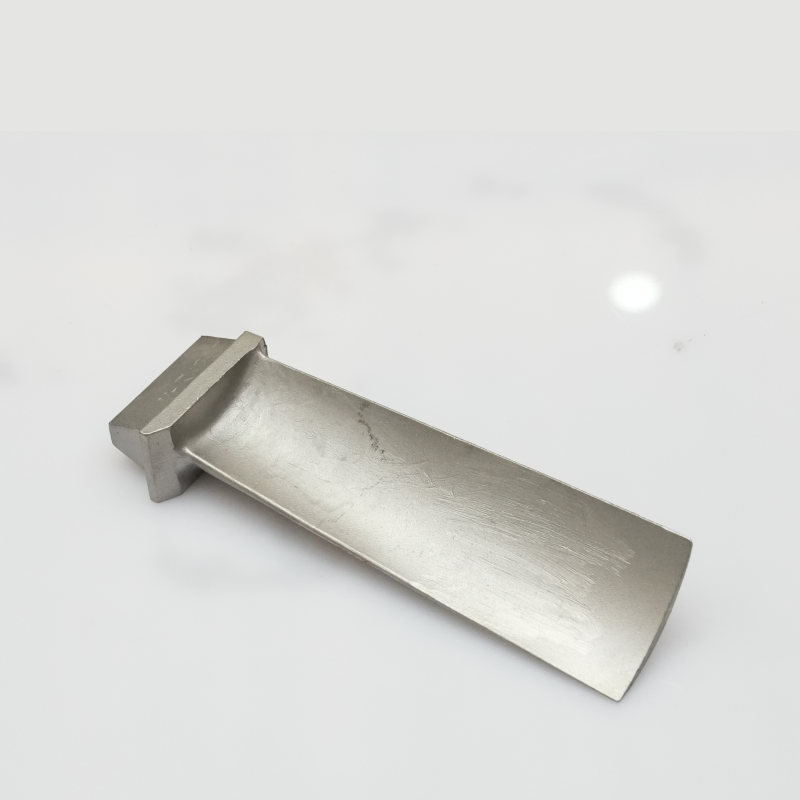
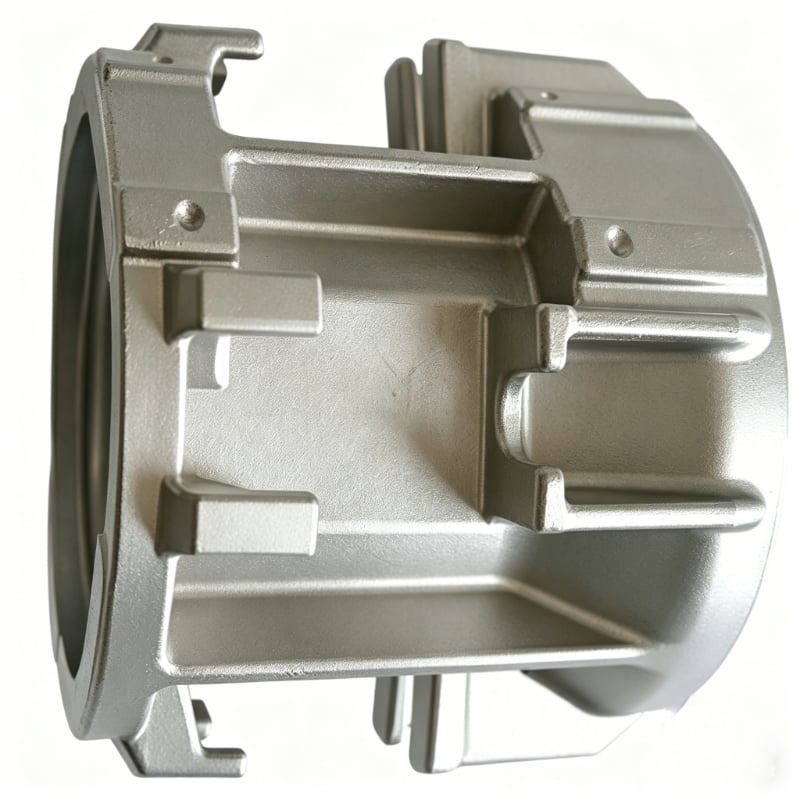
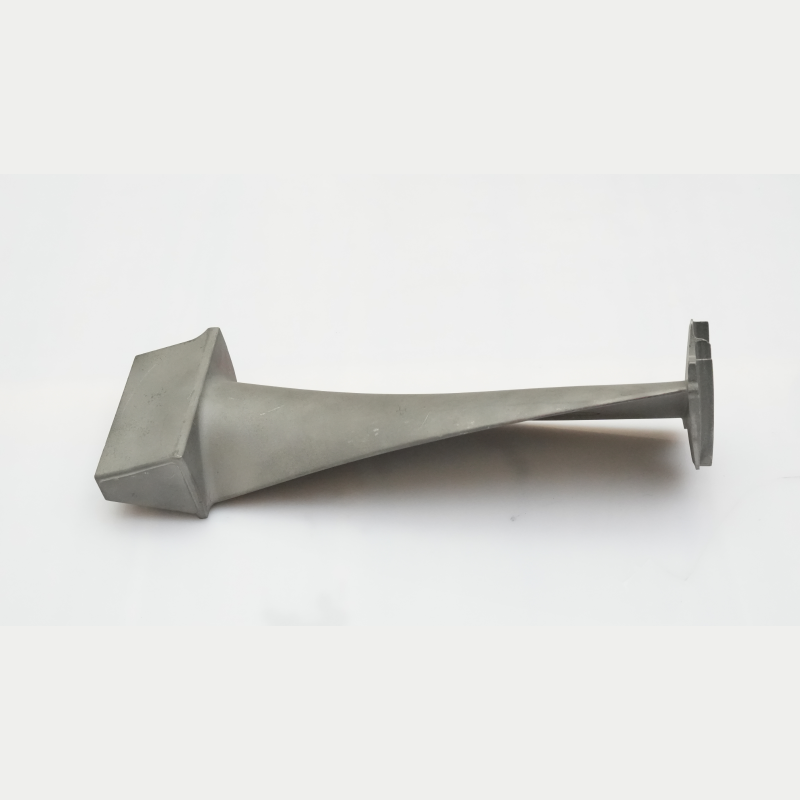
Precision lost wax investment casting represents one of the most sophisticated manufacturing techniques available for producing complex metal components with exceptional accuracy and surface quality. This ancient process, refined by modern technology, creates parts by forming a wax pattern that is coated with ceramic material to create a mold, then melting away the wax to leave a cavity for molten metal. The precision lost wax investment casting method serves multiple critical functions across diverse industries, delivering intricate geometries that would be impossible or economically unfeasible through conventional machining. The technological features of precision lost wax investment casting include its ability to achieve tolerances as tight as plus or minus 0.005 inches, surface finishes reaching 125 micro-inches, and wall thicknesses as thin as 0.015 inches. This manufacturing approach accommodates virtually any castable alloy, from stainless steel and carbon steel to aluminum, bronze, and exotic superalloys used in demanding aerospace applications. The process begins with creating detailed wax patterns through injection molding, which are then assembled onto a tree-like structure called a sprue. Ceramic slurry is applied in multiple layers to build a robust shell around the wax assembly. Once the shell hardens, the wax is melted out in an autoclave, leaving a precise negative cavity. Molten metal is poured or injected into this preheated ceramic mold, filling every intricate detail. After solidification and cooling, the ceramic shell is broken away, revealing the finished castings. Applications for precision lost wax investment casting span numerous sectors including aerospace components such as turbine blades and structural fittings, medical devices like surgical instruments and implants, automotive parts including turbocharger housings and transmission components, industrial machinery parts, firearms components, jewelry, and artistic sculptures. The versatility of precision lost wax investment casting makes it indispensable for producing everything from miniature electronic housings weighing mere grams to substantial industrial components exceeding fifty pounds, all while maintaining dimensional consistency and metallurgical integrity throughout production runs.

New Product Releases

The precision lost wax investment casting process delivers substantial practical benefits that directly impact your bottom line and product performance. First and foremost, this method dramatically reduces your machining costs by producing near-net-shape components that require minimal post-casting operations. Instead of starting with solid metal blocks and cutting away expensive material, you receive parts already close to final dimensions, saving both raw material expenses and machine time. The design freedom offered by precision lost wax investment casting enables your engineers to consolidate multiple parts into single cast components, eliminating assembly steps, reducing inventory complexity, and improving structural integrity by removing potential failure points at joints. You can incorporate features like undercuts, internal passageways, logos, and part numbers directly into the casting, features that would require secondary operations or would be completely unachievable through other manufacturing methods. Surface quality from precision lost wax investment casting typically eliminates the need for extensive finishing work, as cast surfaces often meet functional and aesthetic requirements straight from the mold. This translates to faster time-to-market for your products and lower per-unit costs. The dimensional accuracy inherent in precision lost wax investment casting means your parts fit correctly the first time, reducing assembly problems, warranty claims, and customer dissatisfaction. When you need consistent parts across production runs spanning months or years, this process delivers remarkable repeatability, with each casting matching the original specifications. Material versatility stands as another significant advantage, allowing you to select the optimal alloy for your specific application requirements, whether you need corrosion resistance, high-temperature performance, wear resistance, or specific magnetic properties. The precision lost wax investment casting process accommodates alloys that are difficult or impossible to machine conventionally, expanding your material options beyond what traditional manufacturing methods permit. Weight reduction becomes achievable through optimized wall thicknesses and hollow sections, particularly valuable in aerospace and automotive applications where every gram matters for fuel efficiency and performance. Small to medium production quantities become economically viable with precision lost wax investment casting since tooling costs remain reasonable compared to die casting or forging, making it ideal for specialized components, replacement parts, or products with fluctuating demand. Quality and mechanical properties meet or exceed those of wrought materials when proper casting practices are followed, giving you confidence in component performance under stress, temperature extremes, and harsh environmental conditions. The precision lost wax investment casting method also supports rapid prototyping, allowing you to test designs quickly before committing to large production runs, reducing development risk and accelerating innovation cycles within your organization.

Practical Tips

The Role Of Elements In Castings And The Order Of Addition

11

May

The Role Of Elements In Castings And The Order Of Addition

View More
Stainless Steel Castings for Architectural Posts

11

May

Stainless Steel Castings for Architectural Posts

View More
Stainless Steel Castings for Building Facade Systems

11

May

Stainless Steel Castings for Building Facade Systems

View More
Precision Stainless Steel Exhaust Manifold Casting Solution For Luxury Sedan - With Japanese First-Tier Car Brand

11

May

Precision Stainless Steel Exhaust Manifold Casting Solution For Luxury Sedan - With Japanese First-Tier Car Brand

View More

Get a Free Quote

Our representative will contact you soon.
Email
Name
Company Name
Message
0/1000

precision lost wax investment casting

Exceptional Design Complexity and Geometric Freedom

Exceptional Design Complexity and Geometric Freedom

The precision lost wax investment casting process stands unmatched in its ability to reproduce extraordinarily complex geometries that would challenge or completely defeat alternative manufacturing methods. This capability fundamentally transforms how engineers approach product design, removing traditional constraints imposed by machining limitations, forging die requirements, or fabrication assembly challenges. With precision lost wax investment casting, your design team can create components featuring intricate internal cavities, varying wall thicknesses, sharp corners, fine details, and complex external contours all formed as a single monolithic piece. The process faithfully captures design elements as small as 0.015 inches in dimension, allowing for delicate features like cooling channels in turbine components, lattice structures for weight optimization, or decorative elements for consumer products. This geometric freedom proves particularly valuable when designing parts that must integrate multiple functions previously requiring separate components bolted or welded together. Consider a pump housing that incorporates mounting bosses, fluid passages, sensor ports, and structural reinforcement ribs all cast as one piece through precision lost wax investment casting, eliminating dozens of machining operations, several separate parts, and numerous potential leak paths or failure points. The absence of parting lines in specific orientations means you can optimize part geometry for fluid flow, stress distribution, or aerodynamic performance without compromising design intent to accommodate mold separation. Undercuts, which require complex side actions in conventional molding, are naturally accommodated since the ceramic shell is simply broken away after metal solidification. Internal features completely enclosed within the casting become possible through the use of ceramic cores that are positioned during shell building and later removed chemically or mechanically. This opens possibilities for creating components with internal cooling passages for high-performance engines, lightweighting channels in structural aerospace parts, or hydraulic galleries within manifold blocks. The design flexibility of precision lost wax investment casting extends to surface textures and markings, with logos, part numbers, date codes, and decorative patterns incorporated directly into the wax pattern and subsequently reproduced in the metal casting. This eliminates secondary marking operations while ensuring permanent identification that cannot wear off or be separated from the component. For industries like aerospace, medical devices, and defense where traceability and permanent identification are regulatory requirements, this capability adds significant value beyond mere convenience.
Superior Dimensional Accuracy and Surface Quality

Superior Dimensional Accuracy and Surface Quality

Precision lost wax investment casting delivers dimensional tolerances and surface finishes that dramatically reduce or completely eliminate secondary machining operations, providing substantial cost savings and faster production cycles. The process routinely achieves linear tolerances of plus or minus 0.005 inches per inch, with even tighter control possible for critical dimensions through focused process optimization. This level of accuracy means that features like bolt hole locations, mating surfaces, and critical functional dimensions fall within acceptable ranges immediately after casting, reducing quality control failures and assembly complications. Surface finishes produced through precision lost wax investment casting typically range from 125 to 250 micro-inches roughness average, comparable to many machined surfaces and suitable for numerous functional applications without additional processing. For components where surface texture affects performance, such as fluid-handling parts where smooth internal passages reduce pressure drop or mechanical components where surface finish influences fatigue life, the as-cast quality from precision lost wax investment casting provides immediate functional advantages. The fine ceramic particles used in shell building create smooth mold surfaces that transfer to the cast metal, while the absence of sand particles eliminates the rough, grainy texture associated with sand casting methods. This surface quality proves especially valuable for visible parts in consumer products, architectural hardware, or artistic applications where aesthetic appeal matters alongside functional performance. The dimensional consistency between castings within a production run and across multiple production campaigns enables interchangeability, a critical requirement for spare parts, field replacements, and assembly line operations. When a component must fit with other parts in an assembly, the predictable dimensions from precision lost wax investment casting reduce fit-up problems, eliminate hand-fitting operations, and ensure that assemblies function correctly without adjustment. This consistency results from the stable, controlled nature of the wax injection process, the uniform ceramic shell building procedure, and careful metallurgical control during metal pouring and solidification. Critical dimensions can be further controlled through strategic gating design that directs solidification patterns, minimizing shrinkage-related distortion in sensitive areas. For parts requiring absolute dimensional certainty in specific features, conventional machining can be applied selectively to just those surfaces while leaving the remaining geometry in the as-cast condition, combining the economy of near-net-shape casting with the precision of machining only where truly necessary. The precision lost wax investment casting process maintains dimensional integrity across a wide range of part sizes, from miniature components weighing less than an ounce to substantial castings exceeding fifty pounds, all produced with comparable relative accuracy and surface quality standards that meet demanding application requirements.
Broad Material Selection and Metallurgical Excellence

Broad Material Selection and Metallurgical Excellence

The versatility of precision lost wax investment casting extends to an exceptionally wide range of castable alloys, giving designers and engineers freedom to select the optimal material for specific performance requirements without manufacturing method constraints limiting their choices. This process successfully casts virtually any metal or alloy that can be melted and poured, including stainless steels in grades from martensitic to austenitic to duplex formulations, carbon steels and low-alloy steels for structural applications requiring strength and toughness, aluminum alloys offering lightweight solutions with good corrosion resistance, bronze and brass alloys for decorative applications and bearing surfaces, cobalt-chrome alloys for biomedical implants and wear-resistant components, titanium alloys combining high strength with low density for aerospace and medical applications, nickel-based superalloys withstanding extreme temperatures in turbine engines, and specialized alloys designed for magnetic properties, electrical conductivity, or chemical resistance. This material flexibility means precision lost wax investment casting adapts to your application rather than forcing you to compromise on material selection based on manufacturing limitations. The metallurgical properties achieved through precision lost wax investment casting match or exceed wrought material specifications when proper melting practices, alloy chemistry control, and heat treatment procedures are followed. Cast microstructures can be optimized through controlled solidification rates, directional solidification techniques for specific applications, and post-casting heat treatments including solution annealing, aging, stress relieving, and hardening operations. The result is components with mechanical properties including tensile strength, yield strength, elongation, impact resistance, and fatigue performance suitable for demanding structural, pressure-containing, and safety-critical applications across industries. For applications requiring specific material certifications, precision lost wax investment casting facilities maintain quality systems providing full material traceability, chemical composition verification through spectrographic analysis, mechanical property validation through standardized testing, and non-destructive examination including radiographic inspection, fluorescent penetrant inspection, and ultrasonic testing. These quality assurance capabilities ensure that castings meet stringent specifications for aerospace components, pressure vessels, medical implants, and other regulated applications where material performance and documentation are mandatory. The precision lost wax investment casting process also accommodates specialized material requirements like controlled grain structures for high-temperature creep resistance, specific inclusion content for machinability, or deliberate alloying additions for enhanced corrosion resistance in particular environments. When new alloy developments emerge offering improved performance characteristics, the precision lost wax investment casting process typically adapts readily, allowing your products to benefit from metallurgical innovations without requiring completely new manufacturing approaches or capital equipment investments that would be necessary with less flexible production methods.

Get a Free Quote

Our representative will contact you soon.
Email
Name
Company Name
Message
0/1000