Carbon Steel Lost Wax Casting: Precision Manufacturing Solutions for Complex Components

Get a Free Quote

Our representative will contact you soon.
Email
Name
Mobile
Company Name
Message
0/1000

carbon steel lost wax casting

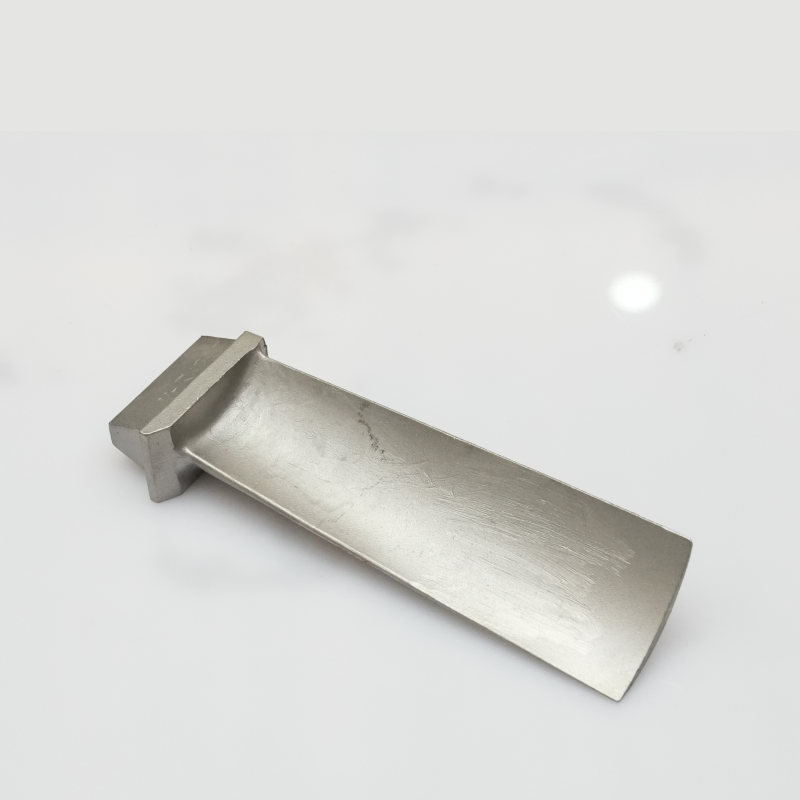
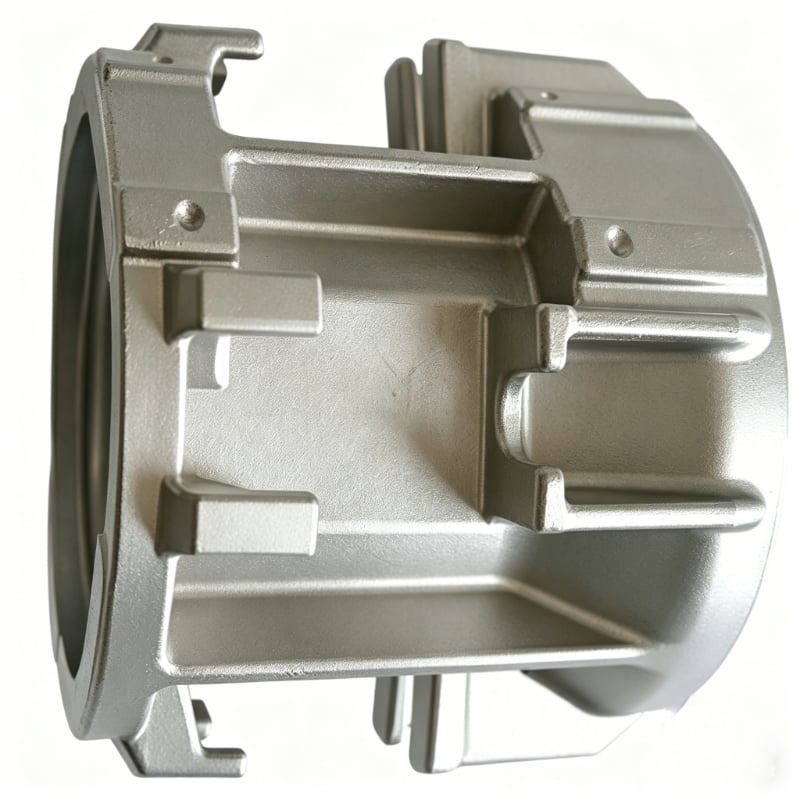
Carbon steel lost wax casting represents a sophisticated manufacturing process that combines traditional investment casting techniques with modern metallurgical practices to produce highly precise metal components. This method, also known as investment casting or precision casting, involves creating detailed wax patterns that are coated with ceramic materials to form molds. Once the ceramic shell hardens, the wax is melted away, leaving a cavity into which molten carbon steel is poured. The carbon steel lost wax casting process enables manufacturers to produce complex geometries with exceptional dimensional accuracy and superior surface finishes that would be difficult or impossible to achieve through conventional machining methods. The main functions of carbon steel lost wax casting include producing intricate parts with tight tolerances, creating components with complex internal passages, and manufacturing near-net-shape products that require minimal post-processing. Technological features of this process include the ability to cast thin walls as delicate as 0.5mm, achieving surface roughness values as fine as Ra 3.2 micrometers, and maintaining dimensional tolerances within plus or minus 0.005 inches per inch. The versatility of carbon steel lost wax casting makes it suitable for a wide range of applications across multiple industries. In the automotive sector, manufacturers utilize this process to create engine components, transmission parts, and structural elements that demand both strength and precision. The aerospace industry relies on carbon steel lost wax casting for producing turbine blades, structural fittings, and critical flight control components where weight reduction and reliability are paramount. Industrial machinery manufacturers employ this technique to fabricate pump housings, valve bodies, and gear components that must withstand demanding operational conditions. The medical device industry benefits from the precision capabilities of carbon steel lost wax casting when producing surgical instruments and implantable components. Additionally, the construction and mining sectors utilize cast carbon steel parts for heavy-duty equipment components, tool holders, and wear-resistant machinery parts that require exceptional durability and performance characteristics under extreme working conditions.

New Product Recommendations

Choosing carbon steel lost wax casting delivers numerous practical benefits that directly impact your production efficiency, product quality, and bottom line profitability. First and foremost, this manufacturing method provides exceptional design freedom, allowing you to create parts with complex shapes, undercuts, and intricate details that traditional manufacturing processes simply cannot accommodate without extensive secondary operations. You can consolidate multiple components into a single casting, reducing assembly time, eliminating potential failure points, and decreasing overall production costs significantly. The near-net-shape capability means your parts emerge from the mold already close to final dimensions, minimizing material waste and reducing the amount of expensive machining required to achieve finished specifications. This translates to substantial savings in both raw material costs and labor hours spent on finishing operations. Carbon steel lost wax casting delivers superior surface quality straight from the mold, often eliminating the need for additional surface treatments or extensive polishing work. The smooth surfaces reduce friction in moving parts, improve wear resistance, and enhance the aesthetic appearance of visible components without additional processing costs. You gain remarkable dimensional consistency across production runs, ensuring that every part meets your exact specifications with minimal variation. This reliability reduces rejection rates, decreases quality control expenses, and builds confidence with your customers who depend on consistent performance from your products. The process accommodates various carbon steel grades, allowing you to select the optimal material composition for your specific application requirements, whether you need enhanced strength, improved corrosion resistance, or better machinability. You benefit from excellent mechanical properties in the finished castings, including uniform grain structure and predictable material behavior under stress, which contributes to longer component life and improved safety margins in critical applications. Production flexibility represents another significant advantage, as carbon steel lost wax casting proves economical for both small prototype runs and large-scale production volumes. You can test designs with limited quantities before committing to full production, reducing development risks and accelerating time-to-market for new products. The process also supports rapid design iterations, enabling you to refine and optimize your components quickly based on testing results or changing customer requirements. Environmental considerations favor carbon steel lost wax casting as well, since the process generates less waste material compared to subtractive manufacturing methods, and excess carbon steel can be recycled efficiently. You also reduce energy consumption associated with extensive machining operations, contributing to more sustainable manufacturing practices while meeting increasingly stringent environmental regulations and corporate sustainability goals.

Latest News

What Makes a Custom Lost Wax Casting Foundry Reliable for Precision Industrial Applications?

05

Jun

What Makes a Custom Lost Wax Casting Foundry Reliable for Precision Industrial Applications?

In precision industrial manufacturing, the reliability of a custom investment casting foundry is not a minor operational detail — it is a fundamental requirement that determines part integrity, production timelines, and ultimately, the safety o...
View More
Why Do Manufacturers Prefer a Silica Sol Investment Casting Supplier for Complex Metal Parts?

05

Jun

Why Do Manufacturers Prefer a Silica Sol Investment Casting Supplier for Complex Metal Parts?

When precision, surface quality, and dimensional accuracy are non-negotiable, manufacturers consistently turn to a trusted silica sol investment casting supplier. This decision is rarely arbitrary. It is driven by a deep understanding of what silica ...
View More
Which Quality Standards Should a Custom Lost Wax Casting Foundry Meet for Export Markets?

05

Jun

Which Quality Standards Should a Custom Lost Wax Casting Foundry Meet for Export Markets?

Selecting a manufacturing partner for precision components intended for international buyers is never a straightforward decision. When the supply chain depends on a custom lost wax casting foundry, procurement engineers and quality managers must go b...
View More
What Should Global Buyers Expect from OEM ODM Precision Casting Services Suppliers?

05

Jun

What Should Global Buyers Expect from OEM ODM Precision Casting Services Suppliers?

For global buyers sourcing complex metal components, selecting a reliable partner for oem odm precision casting services is one of the most consequential procurement decisions in a production cycle. The stakes are high: dimensional inaccuracies, inco...
View More

Get a Free Quote

Our representative will contact you soon.
Email
Name
Mobile
Company Name
Message
0/1000

carbon steel lost wax casting

Unmatched Precision and Complex Geometry Capabilities

Unmatched Precision and Complex Geometry Capabilities

Carbon steel lost wax casting stands out in the manufacturing landscape for its extraordinary ability to produce components with intricate geometries and exceptionally tight tolerances that challenge or exceed the capabilities of alternative production methods. This precision begins with the wax pattern creation process, where modern injection molding techniques produce wax replicas with dimensional accuracy measured in thousandths of an inch. These patterns capture every design detail, from fine surface textures to complex internal passages, ensuring faithful reproduction in the final carbon steel component. The ceramic shell building process further enhances this precision, as multiple layers of increasingly coarse ceramic materials create a rigid mold that maintains dimensional stability even when exposed to the extreme temperatures of molten carbon steel. Unlike sand casting or other traditional methods, carbon steel lost wax casting minimizes mold movement and metal shrinkage variations through precise control of cooling rates and solidification patterns. Manufacturers can achieve wall thicknesses that vary dramatically within a single component, transitioning from robust structural sections to delicate features without compromising integrity or introducing defects. The process readily accommodates internal cavities, passageways, and features that would require complex core arrangements or prove impossible with other casting techniques. Sharp corners, fine threads, logos, part numbers, and identification marks can be cast directly into components, eliminating secondary marking operations and ensuring permanent traceability. The dimensional repeatability of carbon steel lost wax casting means that once you establish a proven pattern and process, every subsequent casting will replicate the same precise dimensions within narrow tolerance bands. This consistency proves invaluable when manufacturing components that must interface with other parts in assemblies, ensuring proper fit and function without manual adjustment or selective assembly procedures. For engineers and designers, this precision capability opens new possibilities for weight optimization through strategic material placement, creating parts that are strong where needed while removing excess material from non-critical areas. You can incorporate ribs, gussets, and reinforcement features exactly where structural analysis indicates they provide maximum benefit, achieving optimal strength-to-weight ratios that improve performance while reducing material costs. The surface finish quality achievable through carbon steel lost wax casting typically ranges from 125 to 250 microinches Ra, significantly smoother than sand castings and approaching the quality of machined surfaces in many applications. This superior finish reduces friction in moving parts, improves fatigue resistance by eliminating surface stress concentrators, and creates an excellent base for subsequent coating or plating operations when additional surface treatments are required.
Superior Material Properties and Structural Integrity

Superior Material Properties and Structural Integrity

The carbon steel lost wax casting process produces components with exceptional mechanical properties and structural integrity that meet or exceed the performance characteristics of wrought carbon steel products in many applications. This advantage stems from the controlled solidification environment and the metallurgical transformations that occur during the casting and cooling phases. When molten carbon steel fills the ceramic mold cavity, it begins solidifying from the surfaces inward, creating a fine-grained structure near the mold walls that transitions to a more uniform grain pattern in the component interior. This grain structure contributes to excellent mechanical properties including high tensile strength, good ductility, and superior impact resistance. The process allows precise control over carbon content and alloying elements, enabling manufacturers to tailor material properties to specific application requirements. Whether you need low-carbon steel for components requiring good formability and weldability, medium-carbon steel for parts demanding higher strength and wear resistance, or high-carbon steel for applications requiring maximum hardness, carbon steel lost wax casting accommodates these variations while maintaining the dimensional precision and surface quality advantages inherent to the process. The directional solidification possible with properly designed gating and risering systems minimizes internal porosity and shrinkage defects that could compromise component strength or create failure initiation sites. Advanced simulation software allows foundries to predict and optimize metal flow patterns, thermal gradients, and solidification sequences before producing actual castings, virtually eliminating trial-and-error development cycles and ensuring first-time success even with challenging geometries. Heat treatment processes integrate seamlessly with carbon steel lost wax casting, allowing you to further enhance mechanical properties through normalizing, annealing, quenching, or tempering operations tailored to your specific performance requirements. The uniform composition and structure of cast components respond predictably to these thermal treatments, achieving consistent hardness values, strength levels, and microstructures across production batches. Non-destructive testing methods including radiographic examination, ultrasonic inspection, and magnetic particle testing can verify internal soundness and detect any discontinuities, providing documented assurance of quality for critical applications where component failure could have serious consequences. The homogeneous nature of carbon steel lost wax casting eliminates the directional property variations sometimes found in wrought products, where rolling or forging operations create preferential grain orientations. Cast components exhibit more isotropic behavior, performing consistently regardless of loading direction. This characteristic proves particularly valuable in components subjected to multi-axial stress states or varying load paths during service. Carbon steel lost wax casting also demonstrates excellent fatigue resistance due to the smooth surface finish and absence of stress concentrations from machining marks or forming operations.
Cost-Effectiveness and Production Efficiency

Cost-Effectiveness and Production Efficiency

Carbon steel lost wax casting delivers remarkable cost-effectiveness and production efficiency advantages that significantly impact your manufacturing economics and competitive positioning in the marketplace. While the initial tooling investment for pattern dies may appear substantial compared to some alternative processes, this cost amortizes rapidly across production volumes, and the tooling life typically extends through tens of thousands of casting cycles before requiring refurbishment or replacement. The near-net-shape capability of carbon steel lost wax casting dramatically reduces the raw material required to produce finished components compared to subtractive manufacturing approaches that machine parts from solid bar stock or forgings. Material utilization rates often exceed eighty-five percent, with the remaining material recycled back into the melting process, minimizing waste disposal costs and reducing your environmental footprint. The reduced machining requirements translate directly to lower manufacturing costs through decreased machine time, reduced cutting tool consumption, and minimized labor hours for secondary operations. Components often require only minimal finish machining on critical surfaces or features, with much of the casting used in the as-cast condition. This efficiency accelerates production throughput, allowing you to fulfill customer orders faster and respond more quickly to market demand fluctuations. The consolidation opportunities enabled by carbon steel lost wax casting deliver additional savings by combining what would traditionally be multiple machined components into a single integral casting. You eliminate the labor and materials associated with separate piece fabrication, reduce inventory complexity by stocking one part instead of many, and improve product reliability by removing mechanical joints that represent potential failure points. Assembly time decreases substantially when fewer parts require handling, positioning, and fastening, reducing labor costs and improving production flow efficiency. Quality costs decrease as well, since carbon steel lost wax casting produces dimensionally consistent parts that require less intensive inspection and generate fewer rejections due to out-of-specification conditions. The process stability means that once you establish proper parameters and controls, production continues reliably without constant adjustment or troubleshooting, freeing your technical staff to focus on continuous improvement initiatives rather than fighting daily production problems. Carbon steel lost wax casting supports flexible manufacturing strategies, accommodating both low-volume custom production and high-volume repetitive manufacturing within the same facility and using similar equipment. This versatility allows you to serve diverse customer needs without maintaining separate production capabilities for different volume scenarios. Design changes can be implemented relatively quickly by modifying pattern tooling, allowing you to incorporate improvements, correct issues, or adapt products to evolving requirements without the lengthy lead times associated with changing forging dies or reconfiguring machining operations. The global availability of experienced carbon steel lost wax casting suppliers provides sourcing flexibility and competitive pricing options, while standardized quality systems and inspection protocols ensure consistent results regardless of manufacturing location. Transportation costs remain reasonable since finished castings represent value-added products rather than raw materials, and the near-net-shape characteristic means you ship less excess material weight compared to rough forgings or oversize machined blanks.

Get a Free Quote

Our representative will contact you soon.
Email
Name
Mobile
Company Name
Message
0/1000