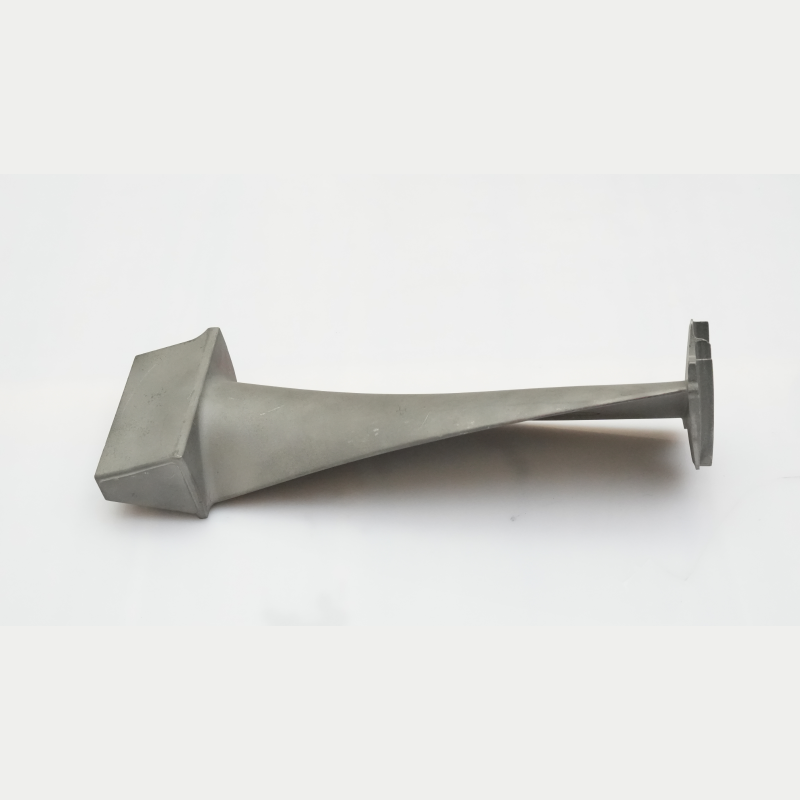
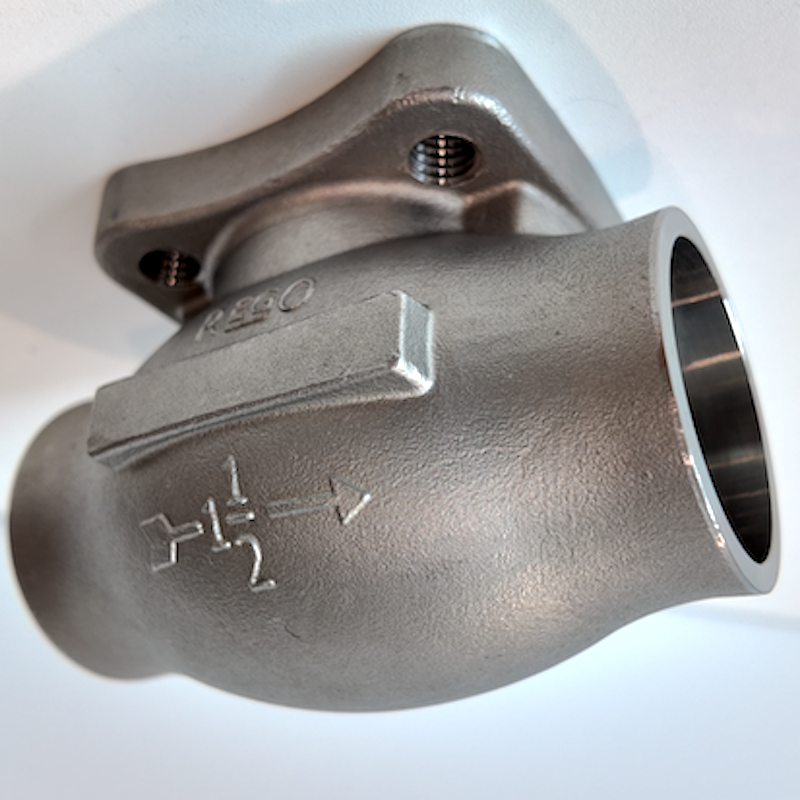
Custom Mechanical Components - Precision Engineered Solutions for Your Exact Specifications

Get a Free Quote

Our representative will contact you soon.
Email
Name
Mobile
Company Name
Message
0/1000

custom mechanical components

Custom mechanical components represent precision-engineered solutions designed to meet specific industrial requirements that standard off-the-shelf parts cannot fulfill. These specialized components are manufactured according to exact specifications provided by clients, encompassing everything from gears and shafts to brackets, housings, and complex assemblies. The primary function of custom mechanical components is to deliver perfectly tailored parts that integrate seamlessly into unique machinery, equipment, or production systems. Unlike generic components, these custom solutions address particular dimensional constraints, material requirements, load capacities, and operational conditions that vary significantly across different applications. The technological features of custom mechanical components include advanced manufacturing processes such as CNC machining, precision casting, forging, stamping, and additive manufacturing techniques. Modern production facilities utilize computer-aided design and computer-aided manufacturing systems to ensure exceptional accuracy, with tolerances often measured in microns. Material selection plays a crucial role, with options ranging from standard carbon steel and aluminum alloys to exotic materials like titanium, Inconel, or specialized polymers, each chosen for specific performance characteristics such as strength, corrosion resistance, temperature tolerance, or weight considerations. Applications for custom mechanical components span virtually every industrial sector, including aerospace engineering, automotive manufacturing, medical device production, robotics, energy generation, agricultural machinery, and consumer electronics. In aerospace applications, these components must meet rigorous safety standards while minimizing weight. Automotive manufacturers rely on custom mechanical components for prototype development and specialty vehicle production. Medical equipment requires components that meet strict biocompatibility and sterilization standards. The versatility of custom mechanical components makes them indispensable for innovation, allowing engineers to push boundaries and create solutions that standard components simply cannot provide.

New Product Recommendations

Choosing custom mechanical components offers numerous practical benefits that directly impact your operational efficiency and bottom line. First and foremost, you gain perfect fit and function for your specific application. When standard parts do not quite match your requirements, you face compromises that can affect performance, reliability, or safety. Custom mechanical components eliminate these compromises entirely, ensuring that every dimension, tolerance, and material property aligns precisely with your needs. This perfect match translates to improved equipment performance, reduced wear and tear, and extended service life. Another significant advantage involves cost effectiveness over the long term. While custom mechanical components may require higher initial investment compared to standard parts, they eliminate the need for modifications, adaptations, or workarounds that consume time and resources. You avoid the expense of purchasing multiple standard components and modifying them to work together. Additionally, custom solutions reduce assembly time and complexity, lowering labor costs and minimizing potential assembly errors. The enhanced durability and optimal performance of properly designed custom mechanical components mean fewer replacements and less downtime, generating substantial savings throughout the product lifecycle. Custom mechanical components also provide competitive advantages by enabling product differentiation. When you can incorporate components designed specifically for your unique product vision, you create offerings that competitors using standard parts cannot easily replicate. This differentiation helps establish market position and brand identity. Furthermore, working with custom mechanical components gives you intellectual property advantages, as your unique designs become harder for competitors to copy. The manufacturing flexibility inherent in custom solutions allows rapid prototyping and iterative design improvements, accelerating your development cycles and reducing time to market. You can test concepts quickly, refine designs based on real-world performance, and implement improvements without waiting for standard component manufacturers to update their catalogs. Quality control represents another crucial advantage. Custom mechanical components undergo rigorous inspection protocols tailored to your specific requirements, ensuring consistent quality that meets your exact standards. You establish direct relationships with manufacturers who understand your quality expectations and implement appropriate testing and verification procedures. This attention to detail reduces defect rates and warranty claims. Finally, custom mechanical components support sustainability goals by eliminating waste associated with modifying standard parts and by enabling designs optimized for material efficiency, energy consumption, and recyclability at end of life.

Tips And Tricks

How Does a Precision Investment Casting Manufacturer Ensure Consistent Quality Across Global Supply Chains?

05

Jun

How Does a Precision Investment Casting Manufacturer Ensure Consistent Quality Across Global Supply Chains?

In today's interconnected industrial landscape, sourcing complex metal components across international borders presents a formidable quality challenge. the manufacturer must navigate an intricate web of raw material sourcing, multi-stage production c...
View More
How Can OEM ODM Precision Casting Services Accelerate New Product Development Cycles?

26

Jun

How Can OEM ODM Precision Casting Services Accelerate New Product Development Cycles?

Bringing a new industrial product from concept to market is rarely a straightforward journey. Engineering teams face relentless pressure to compress timelines, reduce prototype iterations, and deliver production-ready components without sacrificing d...
View More
How Do OEM ODM Precision Casting Services Support Flexible Design and Rapid Prototyping?

26

Jun

How Do OEM ODM Precision Casting Services Support Flexible Design and Rapid Prototyping?

Figure 1: Custom Valve Body Fabricated via Precision Investment Casting, Featuring Crisp Surface Details and Net-Shape Integrity. In today's fast-evolving manufacturing landscape, the ability to move from concept to production-ready component quickly...
View More
What Should Global Buyers Expect from OEM ODM Precision Casting Services Suppliers?

05

Jun

What Should Global Buyers Expect from OEM ODM Precision Casting Services Suppliers?

For global buyers sourcing complex metal components, selecting a reliable partner for oem odm precision casting services is one of the most consequential procurement decisions in a production cycle. The stakes are high: dimensional inaccuracies, inco...
View More

Get a Free Quote

Our representative will contact you soon.
Email
Name
Mobile
Company Name
Message
0/1000

custom mechanical components

Precision Engineering Tailored to Exact Specifications

Precision Engineering Tailored to Exact Specifications

The most compelling aspect of custom mechanical components lies in their ability to deliver precision engineering that matches your exact specifications down to the smallest detail. This precision begins with comprehensive design collaboration, where experienced engineers work directly with your team to understand not just the dimensional requirements, but the functional objectives, operating environment, and performance expectations of each component. Advanced computer-aided design software creates detailed three-dimensional models that can be virtually tested under simulated operating conditions before any metal is cut or material is formed. This digital prototyping identifies potential issues early, saving time and resources while ensuring the final custom mechanical components perform exactly as intended. The manufacturing processes employed for custom mechanical components utilize state-of-the-art equipment capable of maintaining incredibly tight tolerances. Five-axis CNC machining centers can create complex geometries with precision measured in thousandths of a millimeter, while laser cutting and waterjet technologies provide clean edges without heat-affected zones that could compromise material properties. Wire EDM allows creation of intricate internal features and sharp corners impossible with traditional machining. For components requiring specific surface finishes, grinding, lapping, and polishing operations achieve surface roughness values that reduce friction and wear. Material traceability ensures that every piece of raw material used in your custom mechanical components comes with certified test reports documenting chemical composition and mechanical properties, providing complete confidence in component performance. Quality assurance measures include coordinate measuring machines that verify dimensions against design specifications, hardness testing to confirm heat treatment effectiveness, and non-destructive testing methods like ultrasonic inspection or magnetic particle inspection to detect internal defects. This comprehensive approach to precision engineering means your custom mechanical components arrive ready for installation without requiring field modifications or adjustments. The precision extends beyond individual components to assemblies, where multiple custom mechanical components work together with carefully controlled clearances and interference fits. Proper engineering of these relationships ensures smooth operation, appropriate load distribution, and long service life. When precision matters for performance, safety, or regulatory compliance, custom mechanical components deliver the exacting standards your application demands.
Material Selection Optimized for Performance Requirements

Material Selection Optimized for Performance Requirements

Custom mechanical components provide unparalleled flexibility in material selection, allowing you to specify exactly the right material for your application's unique performance requirements rather than accepting whatever material standard components happen to use. This optimization begins with understanding the specific demands your components will face during operation. Will they experience high temperatures that could cause standard materials to lose strength or creep over time? Will they be exposed to corrosive chemicals or saltwater environments that rapidly degrade certain alloys? Must they maintain dimensional stability across wide temperature ranges? Do weight constraints require maximum strength-to-weight ratios? Custom mechanical components address these questions through deliberate material selection from an extensive palette of options. For high-strength applications, precipitation-hardened stainless steels or maraging steels provide exceptional tensile and yield strengths while maintaining good toughness. Titanium alloys offer outstanding strength-to-weight ratios crucial for aerospace and performance automotive applications where every gram matters. In corrosive environments, custom mechanical components can be manufactured from specialized alloys like Hastelloy or duplex stainless steels that resist pitting and crevice corrosion far better than common materials. High-temperature applications benefit from nickel-based superalloys that maintain mechanical properties at temperatures where standard steels would fail. For applications requiring wear resistance, custom mechanical components can incorporate tool steels with specific heat treatments or surface hardening processes like nitriding or carburizing. When electrical or thermal conductivity matters, copper alloys or aluminum bronzes provide excellent performance characteristics. The material selection process for custom mechanical components also considers manufacturability and cost effectiveness, identifying materials that meet performance requirements while remaining practical to machine, form, or cast. Experienced materials engineers can recommend alternatives that provide equivalent performance at lower cost or suggest hybrid approaches combining different materials in a single assembly. Surface treatments and coatings extend material performance even further. Custom mechanical components can receive specialized finishes like electroless nickel plating for uniform corrosion protection and hardness, anodizing for aluminum components requiring improved surface properties, or physical vapor deposition coatings that provide exceptional hardness and low friction. These treatments are selected and applied specifically for your operating conditions, providing performance advantages that generic components with standard finishes cannot match. The result is custom mechanical components that perform reliably throughout their intended service life without premature failure from material-related issues.
Accelerated Development Cycles and Design Flexibility

Accelerated Development Cycles and Design Flexibility

Custom mechanical components fundamentally transform product development by providing the design flexibility and rapid iteration capabilities that fixed standard components cannot offer. This advantage becomes particularly valuable during the development phase of new products or when improving existing designs to enhance performance or reduce costs. Traditional product development constrained by standard component availability often involves compromises where engineers must adjust their designs to accommodate whatever parts they can source. This backwards approach limits innovation and can result in suboptimal solutions. Custom mechanical components reverse this paradigm, allowing form to follow function as it should. Your engineers conceptualize the ideal solution, and custom mechanical components are then created to realize that vision. This freedom unleashes creativity and enables breakthrough innovations that establish competitive advantages in the marketplace. The rapid prototyping capabilities associated with custom mechanical components significantly compress development timelines. Modern manufacturing technologies like additive manufacturing can produce prototype custom mechanical components in days rather than the weeks or months traditional methods required. These prototypes allow physical testing and validation early in the development cycle, revealing real-world performance characteristics and identifying necessary refinements before committing to production tooling. Iterative improvements happen quickly as design changes are implemented and new prototypes manufactured for evaluation. This agile development approach reduces overall time to market, allowing you to capitalize on opportunities before competitors. Design flexibility extends to scalability and future modifications. Custom mechanical components can incorporate features that facilitate planned upgrades or variations, providing growth paths as products evolve. Modular designs using custom mechanical components allow different configurations from common base elements, reducing inventory complexity while serving diverse market segments. When market feedback or field experience suggests improvements, custom mechanical components can be redesigned and updated much more readily than convincing standard component manufacturers to alter their catalog offerings. This responsiveness keeps your products competitive throughout their market lifecycle. The collaborative relationships that develop with custom mechanical component manufacturers become valuable assets in themselves. These partners gain deep understanding of your products, industry, and quality requirements, functioning as extensions of your engineering team. They can proactively suggest improvements, identify emerging technologies or materials that could benefit your applications, and provide design for manufacturability input that optimizes both performance and production efficiency. This partnership approach creates continuous improvement opportunities that drive innovation. Custom mechanical components also support late-stage design changes more gracefully than standard parts, providing risk mitigation during development. When unexpected issues arise or requirements change, adjustments can be incorporated into custom mechanical components without the delays of sourcing new standard parts that may or may not fully address the new requirements.

Get a Free Quote

Our representative will contact you soon.
Email
Name
Mobile
Company Name
Message
0/1000