Industrial Manufacturing Services: Advanced Production Solutions for Business Growth

Get a Free Quote

Our representative will contact you soon.
Email
Name
Mobile
Company Name
Message
0/1000

industrial manufacturing services

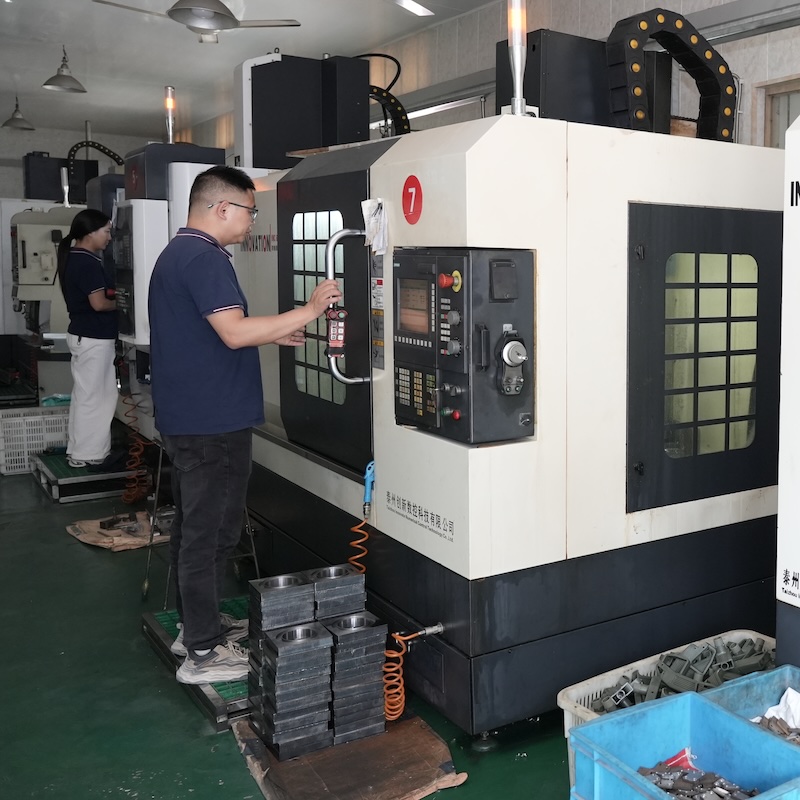
Industrial manufacturing services represent a comprehensive suite of solutions designed to transform raw materials into finished products through systematic production processes. These services encompass everything from initial design and prototyping to full-scale production, quality control, and logistics management. Modern industrial manufacturing services leverage advanced technologies including computer numerical control machinery, robotics, artificial intelligence, and Internet of Things connectivity to deliver precision-engineered products across multiple sectors. The primary functions of industrial manufacturing services include product development support, material selection guidance, process optimization, production scaling, quality assurance testing, supply chain coordination, and post-production support. These services cater to diverse industries such as automotive, aerospace, electronics, medical devices, consumer goods, and heavy machinery. Technological features that distinguish contemporary industrial manufacturing services include automated assembly lines that increase throughput while maintaining consistency, additive manufacturing capabilities for rapid prototyping and complex geometries, precision machining centers capable of achieving tolerances within micrometers, and integrated quality management systems that monitor every production stage. Real-time data analytics enable manufacturers to predict maintenance needs, optimize resource allocation, and reduce waste significantly. Advanced material processing techniques allow for working with specialized alloys, composites, polymers, and hybrid materials that meet specific performance requirements. Industrial manufacturing services also incorporate lean manufacturing principles and Six Sigma methodologies to eliminate inefficiencies and ensure continuous improvement. Applications span from producing intricate components for medical implants requiring biocompatibility to manufacturing robust parts for construction equipment that withstand extreme conditions. The flexibility of modern industrial manufacturing services allows businesses to scale production volumes based on market demand, launch new products faster, and maintain competitive advantages through superior quality and cost management.

New Product Recommendations

Choosing professional industrial manufacturing services delivers tangible benefits that directly impact your bottom line and operational efficiency. Cost reduction stands as one of the most immediate advantages, as partnering with established manufacturers eliminates the need for massive capital investments in equipment, facilities, and specialized workforce training. You gain access to state-of-the-art machinery and experienced technicians without bearing the full ownership costs, converting fixed expenses into variable costs that align with your production needs. This financial flexibility allows you to allocate resources toward core business activities like marketing, research, and customer service. Time savings represent another critical benefit, as industrial manufacturing services accelerate your product journey from concept to market. Experienced manufacturers possess refined processes and established workflows that bypass the learning curve your internal team would face. They identify potential production issues before they become costly problems, ensuring your launch schedules remain on track. Quality improvements occur naturally when you engage industrial manufacturing services because these providers maintain rigorous standards, employ certified quality inspectors, and utilize advanced testing equipment. Their reputation depends on delivering defect-free products, motivating them to maintain excellence throughout every production run. You receive products that meet or exceed industry specifications, reducing warranty claims and enhancing customer satisfaction. Scalability becomes effortless with industrial manufacturing services, as production volumes can increase or decrease based on seasonal demands, market trends, or business growth without requiring you to modify your infrastructure. This elasticity proves invaluable for businesses experiencing rapid expansion or testing new markets where demand remains uncertain. Access to expertise constitutes a substantial advantage, as manufacturing partners bring decades of accumulated knowledge about materials, processes, and problem-solving techniques. They recommend optimal approaches for your specific requirements, suggest cost-effective alternatives, and innovate solutions that improve product performance. Risk mitigation occurs through compliance management, as reputable industrial manufacturing services stay current with regulatory requirements, safety standards, and environmental regulations across different markets. They handle complex certification processes, documentation, and audits, protecting your business from legal complications. Supply chain optimization improves when manufacturers coordinate material procurement, inventory management, and logistics, ensuring components arrive precisely when needed. This coordination reduces storage costs, minimizes material obsolescence, and improves cash flow management. Finally, innovation acceleration happens as manufacturing partners expose you to emerging technologies, novel materials, and advanced techniques that enhance your product competitiveness without requiring independent research investments.

Tips And Tricks

What Makes a Custom Lost Wax Casting Foundry Reliable for Precision Industrial Applications?

05

Jun

What Makes a Custom Lost Wax Casting Foundry Reliable for Precision Industrial Applications?

In precision industrial manufacturing, the reliability of a custom investment casting foundry is not a minor operational detail — it is a fundamental requirement that determines part integrity, production timelines, and ultimately, the safety o...
View More
Which Quality Standards Should a Custom Lost Wax Casting Foundry Meet for Export Markets?

05

Jun

Which Quality Standards Should a Custom Lost Wax Casting Foundry Meet for Export Markets?

Selecting a manufacturing partner for precision components intended for international buyers is never a straightforward decision. When the supply chain depends on a custom lost wax casting foundry, procurement engineers and quality managers must go b...
View More
How Can OEM ODM Precision Casting Services Accelerate New Product Development Cycles?

26

Jun

How Can OEM ODM Precision Casting Services Accelerate New Product Development Cycles?

Bringing a new industrial product from concept to market is rarely a straightforward journey. Engineering teams face relentless pressure to compress timelines, reduce prototype iterations, and deliver production-ready components without sacrificing d...
View More
How Do OEM ODM Precision Casting Services Support Flexible Design and Rapid Prototyping?

26

Jun

How Do OEM ODM Precision Casting Services Support Flexible Design and Rapid Prototyping?

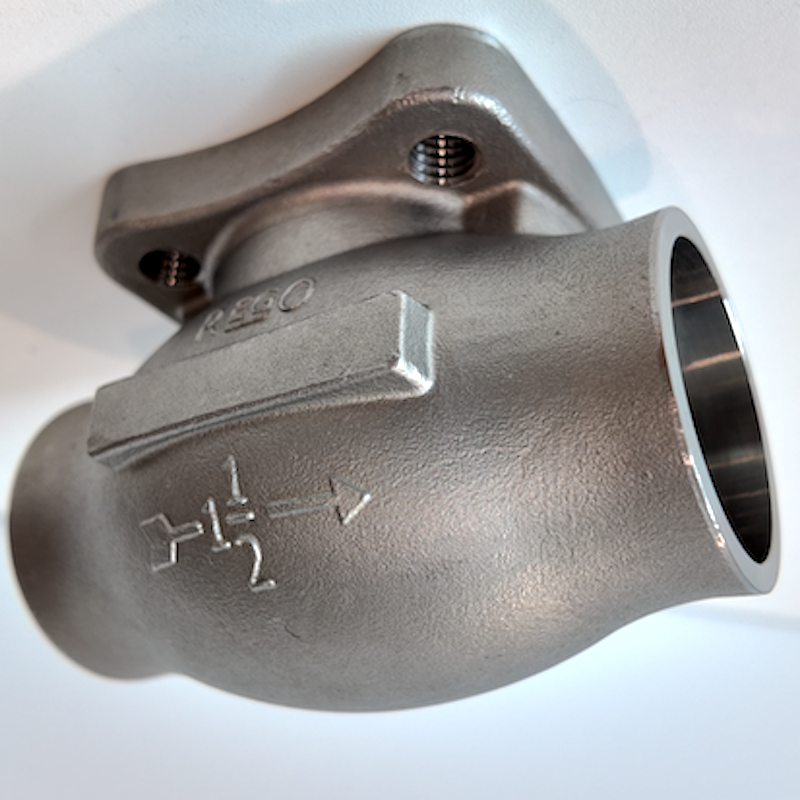
Figure 1: Custom Valve Body Fabricated via Precision Investment Casting, Featuring Crisp Surface Details and Net-Shape Integrity. In today's fast-evolving manufacturing landscape, the ability to move from concept to production-ready component quickly...
View More

Get a Free Quote

Our representative will contact you soon.
Email
Name
Mobile
Company Name
Message
0/1000

industrial manufacturing services

Advanced Technology Integration for Superior Production Outcomes

Advanced Technology Integration for Superior Production Outcomes

Industrial manufacturing services distinguish themselves through sophisticated technology integration that transforms traditional production methods into highly efficient, precision-driven operations. Modern facilities deploy computer numerical control systems that translate digital designs into physical products with remarkable accuracy, eliminating human error and ensuring each unit matches exact specifications. These automated systems operate continuously with minimal supervision, dramatically increasing production capacity while maintaining consistency across thousands or millions of units. Robotic automation handles repetitive tasks with speed and precision that human workers cannot match, performing complex assembly sequences, welding operations, material handling, and quality inspections without fatigue or variation. This automation extends beyond simple repetitive movements to include collaborative robots that work alongside human technicians, combining artificial intelligence with human judgment for optimal results. Industrial manufacturing services incorporate additive manufacturing technologies that build components layer by layer, enabling designs impossible through conventional subtractive methods. This capability proves essential for creating lightweight structures with internal geometries, producing customized medical devices tailored to individual patients, and rapidly iterating prototypes during development phases. Advanced sensor networks embedded throughout production lines collect real-time performance data, monitoring temperature, pressure, vibration, and dimensional accuracy at every stage. This continuous monitoring feeds into analytics platforms that identify patterns, predict equipment failures before they occur, and recommend process adjustments that improve efficiency. Machine learning algorithms analyze historical production data to optimize parameters like cutting speeds, feed rates, and tool paths, constantly refining operations for better outcomes. Industrial manufacturing services utilize enterprise resource planning systems that integrate all business functions from order processing through shipping, providing complete visibility into production status, inventory levels, and delivery schedules. This integration eliminates information silos, reduces administrative overhead, and enables rapid response to changing requirements. Quality management systems built into industrial manufacturing services employ statistical process control techniques that detect variations before they produce defective parts, automatically adjusting parameters to maintain specifications. Vision systems inspect products at production speeds, identifying surface defects, dimensional errors, and assembly mistakes that human inspectors might overlook. The technological sophistication of industrial manufacturing services extends to material processing capabilities, including laser cutting systems that achieve intricate patterns without tool wear, plasma coating equipment that enhances surface properties, and precision grinding machines that achieve mirror finishes. These technologies working in concert deliver products that meet demanding specifications while maintaining cost effectiveness through operational efficiency.
Comprehensive Quality Assurance and Regulatory Compliance Management

Comprehensive Quality Assurance and Regulatory Compliance Management

Industrial manufacturing services provide exhaustive quality assurance frameworks that safeguard product integrity throughout every production phase, delivering peace of mind that finished goods meet exacting standards. These comprehensive systems begin with incoming material inspection, where certified technicians verify that raw materials, components, and supplies conform to specifications before entering production. This initial screening prevents defective materials from compromising finished products, eliminating waste and protecting brand reputation. During production, industrial manufacturing services implement in-process quality checks at critical control points, measuring dimensions, testing functional performance, and verifying assembly accuracy while products remain accessible for correction. This proactive approach catches deviations immediately, preventing entire production runs from falling outside acceptable tolerances. Statistical sampling methods ensure representative testing without slowing production flow, balancing thoroughness with efficiency. Final inspection protocols employed by industrial manufacturing services include comprehensive testing regimens tailored to product categories, encompassing dimensional verification using coordinate measuring machines, functional testing under simulated operating conditions, environmental testing exposing products to temperature extremes and humidity variations, and destructive testing on sample units to validate safety margins. Documentation systems maintain complete traceability from raw materials through final shipment, recording every measurement, test result, operator action, and process parameter. This traceability proves essential during investigations, enables targeted recalls if issues emerge, and satisfies regulatory requirements across industries. Industrial manufacturing services maintain certifications demonstrating compliance with international standards including ISO 9001 for quality management, ISO 13485 for medical devices, AS9100 for aerospace components, and IATF 16949 for automotive suppliers. These certifications require regular audits by independent organizations, ensuring continuous adherence to rigorous protocols. Regulatory compliance management extends beyond quality systems to encompass environmental regulations, workplace safety standards, and product-specific requirements varying by market and application. Industrial manufacturing services navigate complex regulatory landscapes, maintaining current knowledge of changing requirements across multiple jurisdictions. They prepare documentation for regulatory submissions, coordinate testing with approved laboratories, and manage certification processes that authorize market entry. This expertise proves particularly valuable for businesses entering new geographic markets or developing products in heavily regulated sectors where compliance mistakes carry severe consequences. Clean room facilities maintained by industrial manufacturing services enable production of sensitive components for medical, pharmaceutical, and electronics applications where contamination control determines product viability. These controlled environments maintain specific particulate counts, temperature ranges, and humidity levels while implementing strict protocols for personnel, materials, and equipment entering production areas. The comprehensive quality assurance and regulatory compliance management provided by industrial manufacturing services transforms potential vulnerabilities into competitive advantages, assuring customers and regulators that products consistently meet or exceed expectations.
Flexible Capacity Management and Supply Chain Optimization

Flexible Capacity Management and Supply Chain Optimization

Industrial manufacturing services excel at providing flexible capacity management that adapts to fluctuating business demands without requiring clients to invest in excess infrastructure or maintain idle resources during slower periods. This elasticity proves invaluable for businesses experiencing seasonal variations, launching new products with uncertain market reception, or scaling rapidly in response to unexpected opportunities. Unlike fixed in-house production facilities that represent substantial capital commitments and ongoing operational expenses regardless of utilization rates, industrial manufacturing services align costs directly with production volumes. During peak demand periods, manufacturers allocate additional equipment, extend operating hours, and assign supplementary personnel to meet delivery commitments without compromising quality or timelines. This surge capacity prevents stockouts that damage customer relationships and allows businesses to capitalize on market opportunities without hesitation. Conversely, during slower periods, production scales back proportionally, eliminating the financial burden of maintaining underutilized assets. This variable cost structure improves financial performance, enhances cash flow predictability, and reduces business risk associated with demand volatility. Industrial manufacturing services provide geographic flexibility, operating production facilities in multiple locations that serve regional markets efficiently, reduce shipping distances, and mitigate risks associated with natural disasters, political instability, or supply chain disruptions. This distributed manufacturing capability enables businesses to maintain continuity even when individual facilities face challenges, ensuring customer commitments remain fulfilled. Supply chain optimization represents another dimension where industrial manufacturing services create substantial value through established relationships with material suppliers, logistics providers, and component manufacturers. These relationships yield preferential pricing, priority allocation during shortages, and access to specialized materials that individual businesses struggle to source independently. Industrial manufacturing services leverage purchasing power across multiple clients to negotiate favorable terms that reduce material costs, a savings passed through to customers in competitive pricing. Inventory management expertise employed by industrial manufacturing services minimizes working capital requirements through just-in-time delivery systems that synchronize material arrivals with production schedules. This synchronization eliminates warehousing costs, reduces obsolescence risk, and improves cash flow by deferring payment for materials until immediately before use. Advanced planning systems coordinate complex supply networks involving dozens of suppliers and hundreds of components, ensuring materials converge at precisely the right moment for assembly. Industrial manufacturing services also manage component engineering, working with suppliers to optimize parts for manufacturability, cost, and performance. This collaborative approach identifies alternative materials, simplifies designs, and standardizes components across product lines, generating savings and improving reliability. Logistics coordination extends beyond material inbound to finished product distribution, with industrial manufacturing services arranging transportation, managing customs documentation for international shipments, and coordinating delivery schedules that align with customer requirements. This end-to-end supply chain management transforms complex logistics challenges into streamlined operations that enhance competitiveness.

Get a Free Quote

Our representative will contact you soon.
Email
Name
Mobile
Company Name
Message
0/1000