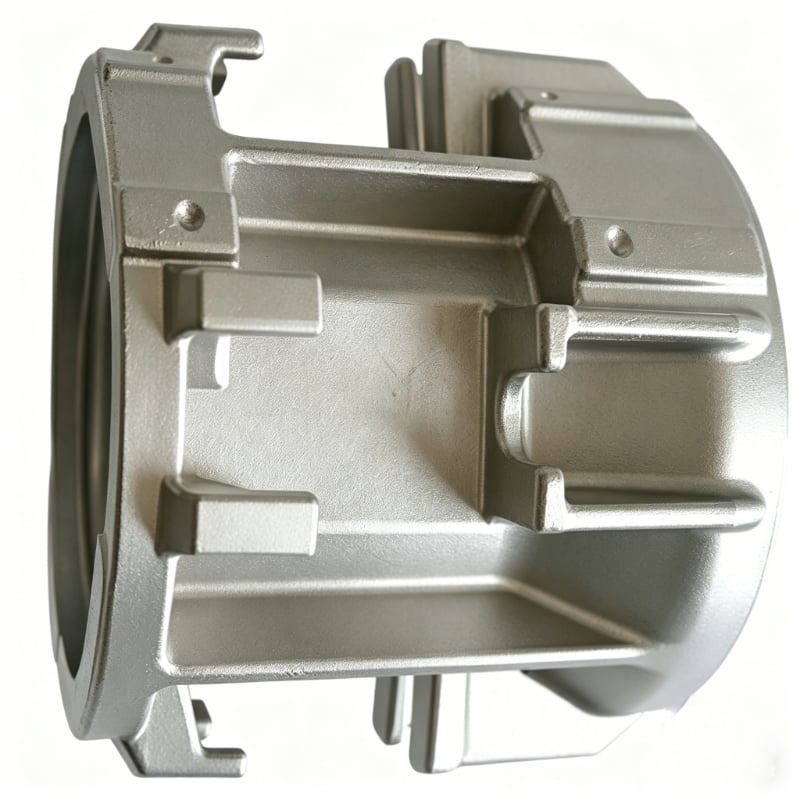
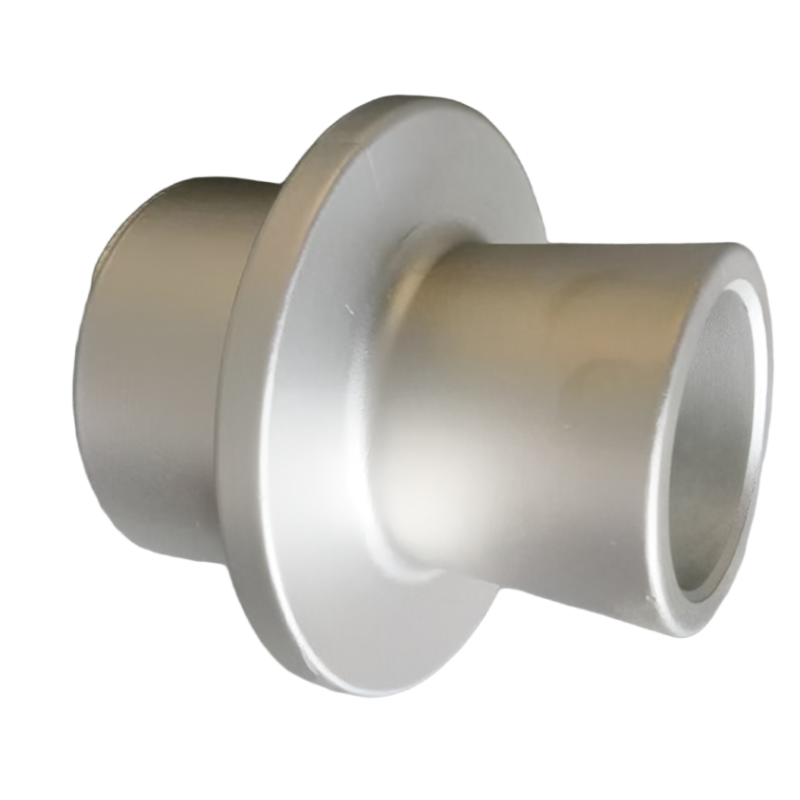
Rapid Prototype Casting Aluminium Services - Fast, Cost-Effective Product Development Solutions

Get a Free Quote

Our representative will contact you soon.
Email
Name
Company Name
Message
0/1000

rapid prototype casting aluminium

Rapid prototype casting aluminium represents a transformative manufacturing process that combines speed, precision, and cost-effectiveness for producing high-quality aluminium components. This innovative approach bridges the gap between initial product design and full-scale production, allowing businesses to test and refine their concepts before committing to expensive tooling and mass manufacturing. The process involves creating aluminium parts quickly using various casting techniques adapted specifically for prototype development, enabling engineers and designers to hold physical samples within days rather than weeks or months. The main functions of rapid prototype casting aluminium include design verification, functional testing, and market validation, giving companies the ability to identify potential issues early in the development cycle. Technological features encompass advanced molding methods, computer-aided design integration, and flexible production capabilities that accommodate complex geometries and intricate details. Unlike traditional casting methods that require substantial lead times and minimum order quantities, rapid prototype casting aluminium offers remarkable flexibility for producing single units or small batches. Applications span multiple industries including automotive, aerospace, consumer electronics, medical devices, and industrial equipment manufacturing. Engineers rely on this process to evaluate mechanical properties, test assembly procedures, and demonstrate concepts to stakeholders. The aluminium material provides excellent strength-to-weight ratios, thermal conductivity, and corrosion resistance, making it ideal for functional prototypes that must perform under real-world conditions. Companies use rapid prototype casting aluminium to accelerate product development timelines, reduce financial risks associated with new product launches, and gain competitive advantages through faster market entry. This technology has revolutionized how organizations approach innovation, enabling iterative design improvements based on actual physical testing rather than theoretical assumptions alone.

New Products

The advantages of rapid prototype casting aluminium deliver tangible benefits that directly impact your product development success and bottom line. First, you gain dramatic time savings compared to traditional manufacturing methods. Where conventional casting might require six to twelve weeks for tooling alone, rapid prototype casting aluminium puts functional parts in your hands within five to ten business days. This speed allows your team to test multiple design iterations quickly, identifying the best solution before investing in production tooling. Second, you reduce financial risk substantially. Traditional die casting demands expensive steel molds costing thousands or tens of thousands of dollars, which becomes problematic if design changes prove necessary. Rapid prototype casting aluminium uses cost-effective temporary tooling or additive manufacturing patterns, slashing initial investments by sixty to eighty percent. You can validate your design completely before committing major resources. Third, you achieve exceptional design freedom. The process accommodates complex internal channels, thin walls, intricate surface details, and challenging geometries that traditional methods struggle to produce. Your designers can push creative boundaries without worrying about manufacturing constraints that typically limit innovation. Fourth, you receive parts with mechanical properties closely matching final production components. Testing with actual aluminium castings provides accurate data about structural performance, thermal behavior, and durability that plastic prototypes simply cannot deliver. Your engineering team makes decisions based on real material characteristics rather than estimates. Fifth, you can produce anywhere from one to several hundred units economically. This scalability supports various needs throughout development, from initial concept models to pre-production validation runs and even bridge production before full manufacturing ramps up. Sixth, you improve communication across your organization and with external stakeholders. Physical prototypes created through rapid prototype casting aluminium allow everyone to see, touch, and evaluate designs directly. Marketing teams can create promotional materials, sales teams can demonstrate functionality to potential customers, and executives can make informed decisions about product viability. Finally, you accelerate your time to market, capturing opportunities before competitors and responding quickly to customer feedback or market trends. Every week saved in development translates to additional revenue potential and stronger market positioning.

Practical Tips

Selection And Application Scope Of Hardness Tester

11

May

Selection And Application Scope Of Hardness Tester

View More
Stainless Steel Castings for Architectural Posts

11

May

Stainless Steel Castings for Architectural Posts

View More
Stainless Steel Castings for Building Facade Systems

11

May

Stainless Steel Castings for Building Facade Systems

View More
Precision Stainless Steel Exhaust Manifold Casting Solution For Luxury Sedan - With Japanese First-Tier Car Brand

11

May

Precision Stainless Steel Exhaust Manifold Casting Solution For Luxury Sedan - With Japanese First-Tier Car Brand

View More

Get a Free Quote

Our representative will contact you soon.
Email
Name
Company Name
Message
0/1000

rapid prototype casting aluminium

Accelerated Product Development Cycles Through Rapid Iteration

Accelerated Product Development Cycles Through Rapid Iteration

Rapid prototype casting aluminium fundamentally transforms how companies approach product development by enabling fast iteration cycles that compress timelines and improve final outcomes. Traditional product development follows a linear path where each stage must complete before the next begins, creating bottlenecks that extend projects for months or years. Design teams create CAD models, wait weeks for prototypes, discover issues during testing, revise designs, and repeat the cycle. Each iteration consumes valuable time and resources, delaying market entry and increasing development costs. Rapid prototype casting aluminium breaks this pattern by delivering functional aluminium prototypes in days rather than weeks. Engineers can test a design on Monday, identify improvements by Wednesday, submit revised specifications on Thursday, and receive updated prototypes the following week. This velocity enables ten or fifteen design iterations within the timeframe traditional methods require for two or three cycles. More iterations mean better products because teams can explore alternative approaches, test edge cases, and refine details that distinguish exceptional products from mediocre ones. The speed advantage extends beyond simple time compression. Rapid iteration maintains project momentum and keeps teams engaged and productive. Designers stay focused on current challenges rather than switching between multiple projects during long waiting periods. Manufacturing partners remain responsive because they handle small, manageable batches rather than massive production runs. Stakeholders maintain interest and provide timely feedback when they see regular progress rather than enduring long silent periods between updates. Furthermore, rapid prototype casting aluminium supports agile development methodologies increasingly popular across industries. Teams can work in short sprints, producing testable prototypes at regular intervals and incorporating lessons learned immediately into subsequent versions. This approach reduces the risk of pursuing flawed concepts too far before discovering fundamental problems. Financial benefits multiply as iteration speed increases. Companies spend less on overnight shipping, rush fees, and premium services because standard production times prove adequate. Teams avoid expensive late-stage design changes that require reworking documentation, retooling manufacturing processes, and scrapping obsolete inventory. Most importantly, faster development cycles translate directly to competitive advantages through earlier product launches that capture market share before rivals introduce competing solutions.
Cost-Effective Design Validation Without Production Tooling Investment

Cost-Effective Design Validation Without Production Tooling Investment

One of the most compelling advantages of rapid prototype casting aluminium involves eliminating the substantial financial commitment traditionally required for design validation. Conventional casting processes demand precision steel molds engineered to withstand hundreds of thousands of cycles at high temperatures and pressures. These production-grade tools represent major capital investments, often costing fifteen thousand to fifty thousand dollars or more depending on part complexity and size. For companies developing new products, this expense creates a painful dilemma. Investing in production tooling before thoroughly validating designs risks wasting enormous sums if modifications prove necessary. Even minor design changes can require completely new molds or expensive modifications that extend timelines and consume budgets. Conversely, skipping prototype phases and proceeding directly to production tooling based on computer simulations alone invites catastrophic failures when parts do not perform as expected in real-world conditions. Rapid prototype casting aluminium resolves this dilemma by providing an intermediate path that delivers genuine aluminium castings without production tooling costs. The process employs alternative approaches such as sand casting with 3D printed patterns, investment casting with rapid pattern production, or bridge tooling designed for limited runs rather than mass production. These methods reduce upfront costs by seventy to eighty-five percent while still producing parts with material properties and geometric accuracy suitable for comprehensive testing. Companies can cast five, ten, or fifty prototypes for thorough evaluation across multiple conditions, use cases, and test scenarios. Engineering teams conduct mechanical testing to verify strength and durability, thermal analysis to understand heat dissipation, assembly trials to confirm fitment with mating components, and functional validation under actual operating conditions. This comprehensive evaluation identifies issues that computer simulations might miss, including unexpected stress concentrations, manufacturing defects, assembly challenges, or performance limitations. When testing reveals necessary changes, designers modify CAD files and produce updated prototypes quickly without writing off major tooling investments. This flexibility encourages experimentation and optimization that ultimately yields superior products. Furthermore, the cost-effectiveness of rapid prototype casting aluminium democratizes innovation by making product development accessible to smaller companies and startups that cannot afford traditional tooling expenses. Entrepreneurs can validate concepts, attract investors, and secure initial customers using functional prototypes before raising capital for production scaling. Established companies can explore more innovative concepts because the financial barriers to experimentation decrease substantially, fostering cultures of innovation that drive competitive differentiation.
Authentic Material Properties for Reliable Engineering Validation

Authentic Material Properties for Reliable Engineering Validation

Rapid prototype casting aluminium delivers a critical advantage that distinguishes it from alternative prototyping methods: parts manufactured from actual aluminium alloys exhibit authentic material properties essential for reliable engineering validation. Many prototyping technologies including 3D printing with plastics, machined foam models, or stereolithography produce shapes that look correct but behave nothing like final production components. These surrogate materials cannot withstand mechanical loads, thermal conditions, or environmental exposures that real products must endure. Testing with non-representative materials generates misleading data that provides false confidence or fails to identify genuine problems, leading to costly surprises during production ramp-up. Aluminium castings produced through rapid prototype processes use the same alloys specified for production parts, including popular grades like A356, A380, or 6061 depending on application requirements. These alloys provide the strength, stiffness, thermal conductivity, electrical properties, and corrosion resistance that engineers expect from aluminium components. Prototypes can undergo the same heat treatments and surface finishing processes planned for production, ensuring complete material authenticity. This authenticity enables rigorous testing that generates reliable data for design validation. Structural components can be load-tested to failure, revealing actual safety margins and identifying potential weak points. Thermal management parts can be evaluated under real operating temperatures to verify heat dissipation performance. Assemblies can be subjected to vibration testing, impact testing, or accelerated life testing that simulates months or years of service. The data collected from these tests directly predicts how production parts will perform because the prototypes and production components share identical material characteristics. Beyond mechanical and physical properties, rapid prototype casting aluminium provides manufacturing process validation. Prototypes reveal potential casting defects like porosity, shrinkage, or incomplete filling that might affect production parts. Engineers can evaluate draft angles, wall thickness transitions, and gating locations to optimize manufacturability before committing to expensive production tooling. Quality teams can develop inspection procedures and acceptance criteria based on actual cast parts rather than theoretical specifications. This comprehensive validation extends to secondary processes including machining operations, surface treatments, and assembly procedures. Shops can program CNC machines using actual cast blanks, confirming that stock material allocations provide adequate material for finishing operations. Coating specialists can test adhesion, coverage, and appearance on genuine aluminium surfaces. Assembly technicians can practice joining procedures and identify potential issues with access, clearances, or tooling requirements. The cumulative effect of testing with authentic materials substantially reduces production launch risks and accelerates the transition from development to manufacturing.

Get a Free Quote

Our representative will contact you soon.
Email
Name
Company Name
Message
0/1000