High Precision Wax Casting Foundry Services - Investment Casting Solutions for Complex Metal Components

Get a Free Quote

Our representative will contact you soon.
Email
Name
Mobile
Company Name
Message
0/1000

high precision wax casting foundry

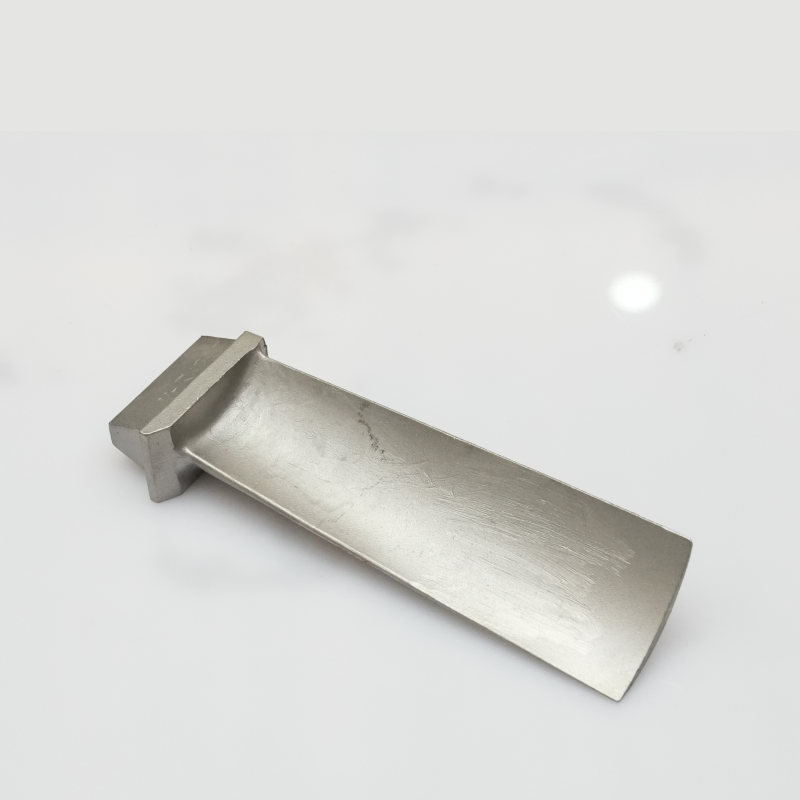
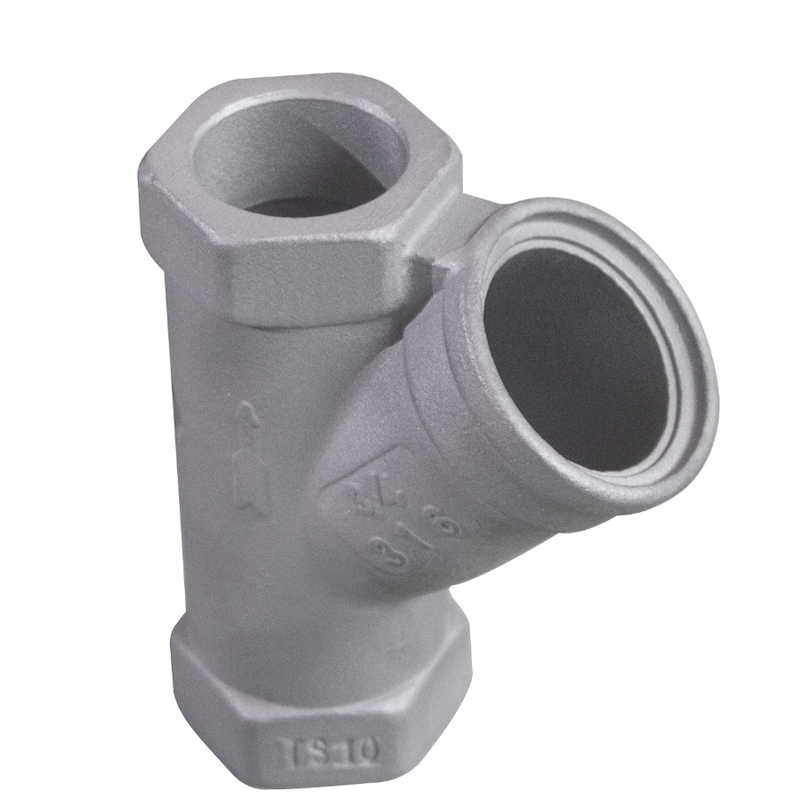
A high precision wax casting foundry represents a sophisticated manufacturing facility that specializes in producing intricate metal components through the investment casting process, also known as lost-wax casting. This advanced metalworking technique has been refined over centuries and now incorporates modern technology to achieve exceptional dimensional accuracy and surface finish quality. The high precision wax casting foundry serves as a comprehensive production center where raw materials are transformed into finished metal parts through a carefully controlled series of steps. The main functions of a high precision wax casting foundry include creating detailed wax patterns, assembling these patterns into tree-like structures, applying ceramic shell coatings, melting out the wax to create hollow molds, pouring molten metal into these cavities, and finishing the solidified castings to exact specifications. The technological features that distinguish a high precision wax casting foundry from conventional casting operations include computer-aided design integration, advanced wax injection systems with precise temperature control, automated shell building equipment, vacuum-assisted metal pouring capabilities, and sophisticated quality control instruments such as coordinate measuring machines and X-ray inspection systems. These foundries typically work with a wide range of metals and alloys including stainless steel, carbon steel, aluminum, bronze, titanium, and various superalloys. The applications of high precision wax casting foundry products span numerous industries where complex geometries and tight tolerances are essential. Aerospace manufacturers rely on these foundries for turbine blades, structural components, and engine parts. Medical device companies utilize investment castings for surgical instruments, implants, and diagnostic equipment. The automotive industry sources transmission components, turbocharger housings, and performance parts from high precision wax casting foundries. Industrial equipment manufacturers depend on this process for pump impellers, valve bodies, and machinery components. The jewelry industry also employs investment casting techniques for creating intricate designs. Additional applications include defense equipment, oil and gas industry components, marine hardware, and architectural fittings. The versatility of the high precision wax casting foundry makes it an indispensable resource for modern manufacturing across multiple sectors.

New Product Releases

Choosing a high precision wax casting foundry for your component manufacturing needs delivers tangible benefits that directly impact your product quality, production efficiency, and bottom line. The first major advantage centers on design flexibility that allows you to create parts with complex internal passages, undercuts, and intricate external features that would be impossible or prohibitively expensive with other manufacturing methods. You can consolidate multiple machined parts into a single cast component, reducing assembly time, eliminating potential failure points, and lowering overall production costs. This design freedom means your engineering team can optimize parts for performance rather than compromising designs to accommodate manufacturing limitations. The second significant benefit involves material efficiency and cost savings. A high precision wax casting foundry produces near-net-shape components that require minimal machining, which means you waste less raw material compared to subtractive manufacturing processes. This efficiency becomes especially valuable when working with expensive alloys like titanium or specialized stainless steels. You pay only for the material that becomes part of your finished product, not for chips and scrap that end up as waste. The third advantage relates to superior surface finish and dimensional accuracy. Parts produced by a high precision wax casting foundry typically achieve surface roughness values between 125 and 250 microinches as-cast, often eliminating secondary finishing operations. Dimensional tolerances routinely reach plus or minus 0.005 inches per inch, with even tighter tolerances achievable through careful process control. This precision reduces your quality control costs and virtually eliminates the risk of parts failing to fit during assembly. The fourth benefit concerns production scalability and consistency. Whether you need ten prototype parts or ten thousand production components, a high precision wax casting foundry can accommodate your volume requirements while maintaining consistent quality across all pieces. The process naturally produces repeatable results because each casting comes from identical molds created from master patterns. This consistency means you can confidently scale production without worrying about part-to-part variations that plague some other manufacturing methods. The fifth advantage involves material versatility that gives you access to virtually any castable alloy. Your high precision wax casting foundry partner can work with standard grades or develop custom alloy compositions tailored to your specific performance requirements. This flexibility ensures your components possess exactly the mechanical properties, corrosion resistance, or thermal characteristics your application demands. Finally, working with a high precision wax casting foundry accelerates your time-to-market by enabling rapid prototyping and iterative design refinement. You can test physical prototypes quickly, identify necessary design changes, and move to production without investing in expensive tooling that becomes obsolete with each design revision. This agility provides a competitive advantage in fast-moving markets where being first to market determines success.

Latest News

What Makes a Custom Lost Wax Casting Foundry Reliable for Precision Industrial Applications?

05

Jun

What Makes a Custom Lost Wax Casting Foundry Reliable for Precision Industrial Applications?

In precision industrial manufacturing, the reliability of a custom investment casting foundry is not a minor operational detail — it is a fundamental requirement that determines part integrity, production timelines, and ultimately, the safety o...
View More
Which Quality Standards Should a Custom Lost Wax Casting Foundry Meet for Export Markets?

05

Jun

Which Quality Standards Should a Custom Lost Wax Casting Foundry Meet for Export Markets?

Selecting a manufacturing partner for precision components intended for international buyers is never a straightforward decision. When the supply chain depends on a custom lost wax casting foundry, procurement engineers and quality managers must go b...
View More
How Should Buyers Choose a Reliable Medium Temperature Wax Casting Service Provider?

26

Jun

How Should Buyers Choose a Reliable Medium Temperature Wax Casting Service Provider?

Selecting the right manufacturing partner for medium temperature wax casting is one of the most consequential decisions a procurement professional or product engineer can make. The process, which involves injecting wax into precision dies at carefull...
View More
What Should Global Buyers Expect from OEM ODM Precision Casting Services Suppliers?

05

Jun

What Should Global Buyers Expect from OEM ODM Precision Casting Services Suppliers?

For global buyers sourcing complex metal components, selecting a reliable partner for oem odm precision casting services is one of the most consequential procurement decisions in a production cycle. The stakes are high: dimensional inaccuracies, inco...
View More

Get a Free Quote

Our representative will contact you soon.
Email
Name
Mobile
Company Name
Message
0/1000

high precision wax casting foundry

Exceptional Dimensional Accuracy Eliminates Costly Secondary Operations

Exceptional Dimensional Accuracy Eliminates Costly Secondary Operations

The dimensional precision achieved by a high precision wax casting foundry stands as one of its most valuable attributes, delivering measurable cost savings and performance improvements to customers across industries. This accuracy begins with the wax pattern creation process, where injection molding systems maintain temperature control within plus or minus one degree Fahrenheit, ensuring that wax patterns replicate every detail of the master die with microscopic fidelity. The high precision wax casting foundry employs aluminum or steel dies machined to tolerances of plus or minus 0.0005 inches, which means the starting point for each cast component already incorporates exceptional accuracy. As the process continues through shell building, the foundry applies ceramic slurries formulated with specific particle size distributions and binder systems that minimize expansion and contraction variations during drying and firing cycles. This careful control means the ceramic mold cavity maintains dimensional stability throughout the high-temperature operations that follow. When molten metal fills the mold cavity in a high precision wax casting foundry, controlled pouring temperatures and solidification rates prevent the distortion and shrinkage irregularities that compromise accuracy in conventional casting operations. The foundry metallurgists calculate precise alloy-specific shrinkage factors and incorporate these into the pattern dimensions, effectively pre-compensating for thermal contraction. Advanced foundries utilize vacuum-assisted pouring and directional solidification techniques that further enhance dimensional consistency by eliminating gas porosity and ensuring uniform grain structure throughout the casting. After solidification, the high precision wax casting foundry removes the ceramic shell through mechanical breaking and chemical cleaning processes that preserve the cast surface integrity. The resulting components typically achieve linear tolerances of plus or minus 0.005 inches per inch of dimension, with some specialized operations reaching plus or minus 0.003 inches per inch for critical features. These tolerance capabilities mean that many cast features require no subsequent machining, eliminating operations that consume time and money while introducing potential errors. For customers, this dimensional accuracy translates directly into reduced manufacturing costs through elimination of machining setups, cutting tool expenses, and skilled machining labor. Components fit properly during assembly without selective fitting or adjustment, reducing assembly time and improving product consistency. The high precision wax casting foundry delivers parts that function correctly the first time, eliminating the quality costs associated with rework, scrap, and warranty claims that result from dimensional variations. In applications where part performance depends on precise geometries such as fluid flow passages, sealing surfaces, or mechanical interfaces, the accuracy provided by a high precision wax casting foundry often determines whether a product succeeds or fails in the marketplace.
Superior Surface Finish Quality Reduces Post-Processing Requirements

Superior Surface Finish Quality Reduces Post-Processing Requirements

The surface finish quality produced by a high precision wax casting foundry represents a significant competitive advantage that impacts both component functionality and manufacturing economics. Unlike sand casting processes that leave rough, grainy surfaces requiring extensive finishing, or machining operations that create visible tool marks, the investment casting process at a high precision wax casting foundry generates smooth, clean surfaces directly from the mold. This superior finish originates from the fine-grain ceramic shell materials used in the mold building process. The high precision wax casting foundry applies multiple layers of ceramic slurry, beginning with a primary coat formulated with extremely fine refractory particles, often in the 200 to 325 mesh size range. These microscopic particles create a mold surface that captures and replicates even the finest details of the wax pattern while producing a smooth interface against the molten metal. As each ceramic layer dries and subsequent coats are applied, the high precision wax casting foundry builds a robust shell structure that maintains this smooth internal surface throughout the high-temperature burnout and metal pouring operations. The result is cast components with as-cast surface roughness values typically ranging from 125 to 250 microinches Ra, with some specialized processes achieving even smoother finishes approaching 63 microinches Ra. For customers, these smooth surfaces deliver multiple practical benefits that enhance product performance and reduce manufacturing costs. Components with superior surface finish exhibit improved fatigue resistance because the absence of surface irregularities eliminates stress concentration points where cracks initiate. This characteristic proves especially valuable in aerospace applications where parts endure cyclic loading, and in medical devices where fatigue failure could have life-threatening consequences. The smooth surfaces produced by a high precision wax casting foundry also enhance corrosion resistance by minimizing the surface area exposed to corrosive environments and eliminating crevices where corrosive agents accumulate. In fluid handling applications such as pump impellers, valve bodies, and turbine components, the smooth internal passages reduce friction losses and improve efficiency while minimizing erosion from particle-laden fluids. From a manufacturing economics perspective, the excellent surface finish from a high precision wax casting foundry substantially reduces or completely eliminates secondary finishing operations. Parts often go directly from casting to final inspection without grinding, polishing, or other surface preparation steps that consume labor hours and introduce handling damage risks. When cosmetic appearance matters, such as architectural hardware or consumer products, the as-cast finish frequently meets aesthetic requirements with minimal buffing or coating preparation. This reduction in post-processing translates directly to lower piece costs, shorter lead times, and simpler manufacturing logistics. The high precision wax casting foundry essentially moves surface finishing from a post-casting operation back into the casting process itself, where it occurs automatically as an inherent characteristic of the investment casting method rather than as a separate value-added step requiring dedicated equipment and specialized labor.
Complex Geometry Capabilities Enable Design Optimization and Part Consolidation

Complex Geometry Capabilities Enable Design Optimization and Part Consolidation

The ability of a high precision wax casting foundry to produce components with extraordinarily complex geometries represents perhaps its most strategically important advantage, enabling product designs that would be impossible through conventional manufacturing methods. This geometric freedom stems from the fundamental nature of the investment casting process, where molten metal flows into and completely fills intricate ceramic mold cavities before solidifying. Unlike machining processes that must maintain tool access to all surfaces, or forging operations limited by die parting lines and material flow constraints, a high precision wax casting foundry can create features such as internal cooling passages, complex curved surfaces, variable wall thicknesses, and undercut details all within a single monolithic component. The process begins when design engineers work with the high precision wax casting foundry to optimize part geometry specifically for the casting process rather than constraining designs to accommodate machining or fabrication limitations. The foundry's experienced pattern makers and process engineers provide design guidance regarding minimum wall thicknesses, draft angles, and core requirements, ensuring that proposed geometries will fill completely and solidify without defects. Modern high precision wax casting foundry operations employ sophisticated computer simulation software that models metal flow, heat transfer, and solidification patterns, allowing designers to identify and correct potential problems before committing to expensive tooling. This collaborative design process frequently reveals opportunities to consolidate multiple components into single castings, eliminating assembly operations, reducing part counts, and improving structural integrity by replacing mechanical joints with continuous material. For example, a high precision wax casting foundry might produce a single cast housing that replaces an assembly of six machined parts previously requiring dozens of fasteners, seal interfaces, and alignment features. The geometric capabilities of a high precision wax casting foundry prove especially valuable when internal features are required. The foundry creates ceramic cores that are positioned within the mold cavity before metal pouring, creating passages and voids that would be impossible to machine into a solid part. Turbine blades with internal cooling channels, manifolds with intersecting fluid passages, and structural components with weight-reducing internal lattices all exemplify this capability. These internal features enable performance optimizations that simply cannot be achieved through assemblies of simpler parts. The ability to vary wall thickness throughout a component allows designers to place material exactly where strength is needed while minimizing weight in less-stressed areas. Complex external contours that optimize aerodynamic performance, fluid flow, or aesthetic appearance can be produced without the tool path limitations that constrain five-axis machining operations. For customers, these geometric capabilities translate into products with superior performance characteristics, reduced weight, improved reliability through elimination of joints and interfaces, and often significantly lower total manufacturing costs despite the specialized nature of the high precision wax casting foundry process. The design freedom provided allows engineers to optimize components for function first, then work with the foundry to ensure manufacturability, rather than compromising functional performance to accommodate manufacturing constraints. This capability becomes increasingly valuable as products face ever-increasing performance demands while simultaneously requiring weight reduction, cost optimization, and accelerated development timelines.

Get a Free Quote

Our representative will contact you soon.
Email
Name
Mobile
Company Name
Message
0/1000