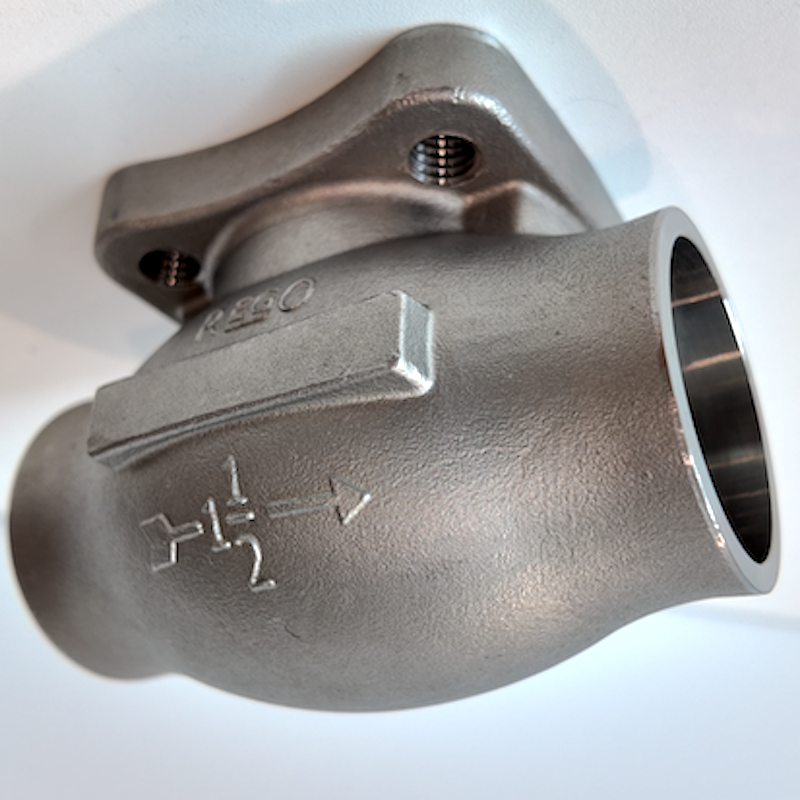
Precision Valve Components - High-Performance Solutions for Critical Flow Control Applications

Get a Free Quote

Our representative will contact you soon.
Email
Name
Company Name
Message
0/1000

precision valve components

Precision valve components represent critical engineering solutions designed to control fluid flow with exceptional accuracy in demanding industrial applications. These sophisticated elements serve as the backbone of hydraulic and pneumatic systems, where exact regulation of liquids and gases determines operational efficiency and safety. The main functions of precision valve components include precise flow control, pressure regulation, directional control of media, and reliable sealing to prevent leakage. These components integrate advanced manufacturing techniques with superior material selection to deliver consistent performance across varied operating conditions. Technological features include tight dimensional tolerances measured in microns, surface finishes that minimize friction and wear, and specialized coatings that enhance corrosion resistance. The manufacturing process employs computer numerical control machining, precision grinding, and stringent quality inspection protocols to ensure every component meets exacting specifications. Materials range from stainless steel alloys for chemical resistance to hardened tool steels for wear resistance, with selection depending on specific application requirements. Applications span numerous industries including aerospace, where reliability is paramount; medical equipment manufacturing, requiring biocompatible materials; automotive systems, demanding high-volume production consistency; and industrial automation, needing long-term durability. Precision valve components find use in fuel injection systems, breathing apparatus, hydraulic actuators, process control equipment, and automated manufacturing lines. The technology behind precision valve components continues evolving with innovations in additive manufacturing, advanced surface treatments, and smart sensor integration. These developments enable enhanced performance characteristics such as faster response times, improved energy efficiency, and predictive maintenance capabilities. The combination of traditional precision engineering with modern manufacturing technologies positions precision valve components as indispensable elements in contemporary fluid power systems, supporting industries that require uncompromising quality and reliability in their operational infrastructure.

New Product Releases

Choosing precision valve components delivers tangible benefits that directly impact your operational success and bottom line. First, these components dramatically improve system reliability by eliminating unexpected failures that cause costly downtime. Unlike standard alternatives, precision valve components undergo rigorous testing that ensures they perform consistently throughout their service life, giving you peace of mind and reducing emergency maintenance expenses. The superior manufacturing quality means fewer replacements and repairs, translating into lower total cost of ownership despite potentially higher initial investment. Second, precision valve components enhance energy efficiency by minimizing internal leakage and reducing pressure drops across the system. This efficiency improvement directly reduces energy consumption, lowering utility bills while supporting environmental sustainability goals. Your operations become more economical to run while simultaneously decreasing carbon footprint, addressing both financial and corporate responsibility objectives. Third, these components enable finer control over process parameters, resulting in improved product quality and reduced material waste. When your systems respond more accurately to control inputs, you achieve better consistency in manufacturing outcomes, fewer defective products, and optimized raw material usage. This precision translates into competitive advantages through higher customer satisfaction and improved profit margins. Fourth, precision valve components extend equipment lifespan by reducing wear on connected components throughout the system. The accurate fit and smooth operation minimize vibration, shock loads, and stress concentrations that typically accelerate component degradation. Your entire system benefits from this protective effect, deferring capital expenditure on major equipment replacement. Fifth, these components offer superior safety characteristics through reliable sealing and predictable performance under emergency conditions. When critical situations arise, you can trust that precision valve components will respond as designed, protecting personnel, equipment, and the environment. The documentation and traceability that accompany precision valve components also simplify compliance with industry regulations and safety standards. Sixth, the versatility of precision valve components allows easy integration into existing systems while providing upgrade paths for future enhancement. You gain flexibility in system design and modification without being locked into proprietary solutions. Finally, working with precision valve components reduces troubleshooting time when issues do arise because their predictable behavior simplifies diagnostic procedures, getting your operations back online faster and minimizing production losses.

Tips And Tricks

The Role Of Elements In Castings And The Order Of Addition

11

May

The Role Of Elements In Castings And The Order Of Addition

View More
Stainless Steel Castings for Architectural Posts

11

May

Stainless Steel Castings for Architectural Posts

View More
Stainless Steel Castings for Building Facade Systems

11

May

Stainless Steel Castings for Building Facade Systems

View More
Precision Stainless Steel Exhaust Manifold Casting Solution For Luxury Sedan - With Japanese First-Tier Car Brand

11

May

Precision Stainless Steel Exhaust Manifold Casting Solution For Luxury Sedan - With Japanese First-Tier Car Brand

View More

Get a Free Quote

Our representative will contact you soon.
Email
Name
Company Name
Message
0/1000

precision valve components

Unmatched Manufacturing Precision and Quality Control

Unmatched Manufacturing Precision and Quality Control

The manufacturing excellence behind precision valve components sets them apart in markets where performance cannot be compromised. Each component begins with carefully selected raw materials that undergo metallurgical testing to verify composition and mechanical properties before entering production. The manufacturing process utilizes state-of-the-art computer numerical control equipment capable of holding tolerances within micrometers, ensuring dimensional accuracy that affects how components interact within assemblies. During machining operations, specialized cutting tools and optimized parameters create surface finishes that reduce friction coefficients and wear rates significantly compared to conventionally manufactured alternatives. Temperature-controlled manufacturing environments prevent thermal expansion from affecting dimensional accuracy, while multi-axis machining centers enable complex geometries that optimize fluid flow characteristics. After initial machining, precision valve components undergo secondary operations including precision grinding, lapping, and honing to achieve final dimensions and surface qualities. These processes remove microscopic imperfections that could compromise sealing effectiveness or create stress concentration points leading to premature failure. Quality control procedures integrated throughout production include coordinate measuring machine inspection, surface roughness analysis, hardness testing, and visual inspection under magnification. Statistical process control monitors dimensional trends to detect tool wear or process drift before out-of-specification components are produced. Final inspection protocols verify that every precision valve component meets documented specifications before packaging and shipment. Traceability systems record manufacturing parameters, inspection results, and material certifications for each production batch, supporting quality audits and failure analysis if needed. This comprehensive approach to manufacturing and quality assurance means that precision valve components arrive at your facility ready to deliver reliable performance without requiring additional sorting, rework, or incoming inspection beyond basic verification. The investment in manufacturing excellence pays dividends through reduced warranty claims, enhanced customer satisfaction, and the reputation for quality that drives repeat business. When system designers specify precision valve components, they access manufacturing capabilities that transform engineering concepts into physical reality with fidelity that preserves intended performance characteristics throughout production volumes ranging from prototype quantities to high-volume series production.
Extended Service Life and Reduced Maintenance Requirements

Extended Service Life and Reduced Maintenance Requirements

Precision valve components deliver exceptional longevity that fundamentally changes lifecycle cost calculations and maintenance planning strategies. The extended service life stems from multiple engineering factors working synergistically to resist degradation mechanisms that limit conventional component lifespan. Material selection focuses on alloys with inherent resistance to the specific operating environment, whether corrosive chemicals, high temperatures, abrasive particles, or extreme pressures. Heat treatment processes optimize material microstructure to balance hardness for wear resistance with toughness to prevent brittle fracture under shock loading. Surface treatments including nitriding, coating application, and specialized finishing create protective barriers that isolate base materials from hostile media while reducing friction at sliding interfaces. The precision fit between mating components minimizes relative movement that causes fretting wear while maintaining clearances that prevent binding or excessive friction. This careful balance of dimensions means precision valve components maintain proper function across temperature variations and pressure cycling that would cause standard components to leak or seize. Engineering design incorporates stress analysis to eliminate geometric features that concentrate loads, distribute forces evenly across load-bearing surfaces, and provide generous safety factors against fatigue failure. The result is components that continue operating reliably through millions of cycles, year after year, without performance degradation. Reduced maintenance requirements emerge naturally from this durability, as components that do not wear out do not need replacement. Maintenance schedules can be extended with confidence, reducing labor costs for technician time while minimizing inventory carrying costs for spare parts. Production planners gain flexibility when maintenance windows can be scheduled around production demands rather than forcing unplanned shutdowns when components fail unexpectedly. The predictable service life of precision valve components also enables condition-based maintenance strategies that monitor actual component condition rather than replacing parts on arbitrary time schedules. Vibration analysis, pressure monitoring, and flow measurement can detect developing issues before complete failure occurs, allowing planned interventions during convenient periods. For operations where downtime carries severe financial penalties or safety risks, the reliability of precision valve components provides insurance against catastrophic system failures. The total cost advantage becomes clear when comparing initial purchase price against years of reliable service versus repeatedly replacing cheaper alternatives that fail prematurely, along with associated downtime costs and maintenance labor expenses.
Superior Performance Across Demanding Operating Conditions

Superior Performance Across Demanding Operating Conditions

Precision valve components excel in challenging environments where conventional alternatives struggle or fail entirely, making them essential for applications with demanding performance requirements. Temperature extremes represent one operational challenge these components handle effectively through material selection and thermal management design. High-temperature applications benefit from alloys that maintain strength and dimensional stability at elevated temperatures, while low-temperature service uses materials that retain ductility and impact resistance in cryogenic conditions. Thermal expansion coefficients are matched between mating components to prevent binding or excessive clearance as temperatures fluctuate during operation. Pressure handling capability extends from deep vacuum to ultra-high pressure thanks to robust mechanical design and appropriate material strength. Sealing interfaces maintain integrity across this pressure range through engineered surface contact that deforms elastically rather than yielding plastically, preserving sealing effectiveness through repeated pressure cycles. Flow characteristic curves remain stable across the operating envelope, providing consistent control authority whether throttling small pilot flows or managing full system capacity. Response time performance meets requirements for applications ranging from slow process control to high-frequency servo systems because precision manufacturing eliminates the clearances and compliance that introduce lag in conventional components. Dynamic response characteristics are predictable and repeatable, enabling accurate system modeling during design and stable control loop performance during operation. Chemical compatibility extends across aggressive media including acids, bases, solvents, and reactive gases through appropriate material selection and surface protection strategies. Precision valve components resist corrosion, chemical attack, and material degradation that would quickly destroy standard components in these environments. Contamination tolerance surpasses typical components because precision manufacturing creates consistent clearances that allow particle passage without jamming while maintaining acceptable internal leakage rates. Filtration requirements can sometimes be relaxed when using precision valve components designed for contaminated service, reducing system complexity and maintenance burden. Vibration and shock resistance ensures reliable operation in mobile equipment and high-dynamic applications where mechanical disturbances would cause conventional components to malfunction. Precision valve components maintain alignment and sealing effectiveness despite external forces that would shift or damage less robust designs. This comprehensive performance capability means system designers can specify precision valve components with confidence across diverse applications, knowing that operational demands will be met consistently regardless of environmental severity or duty cycle intensity.

Get a Free Quote

Our representative will contact you soon.
Email
Name
Company Name
Message
0/1000