Rapid Prototyping Casting Services | Fast Metal Parts Manufacturing & Custom Casting Solutions

Get a Free Quote

Our representative will contact you soon.
Email
Name
Company Name
Message
0/1000

rapid prototyping casting

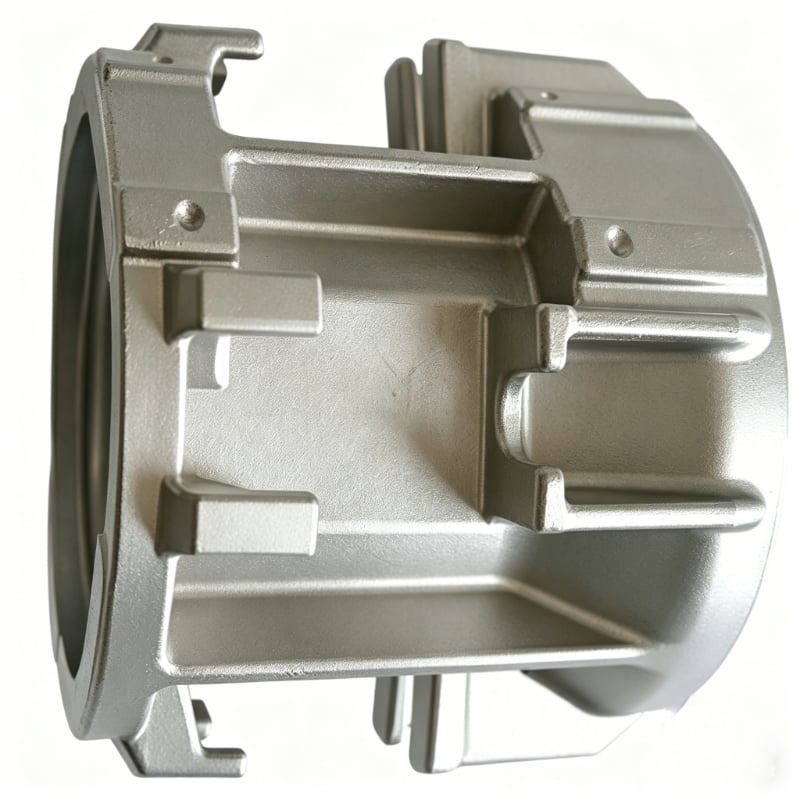
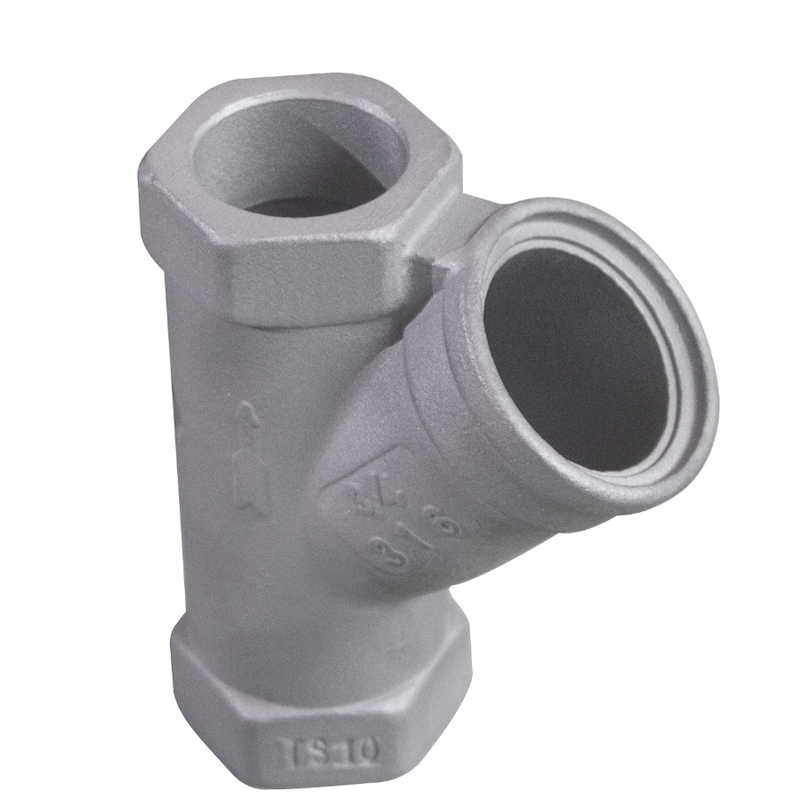
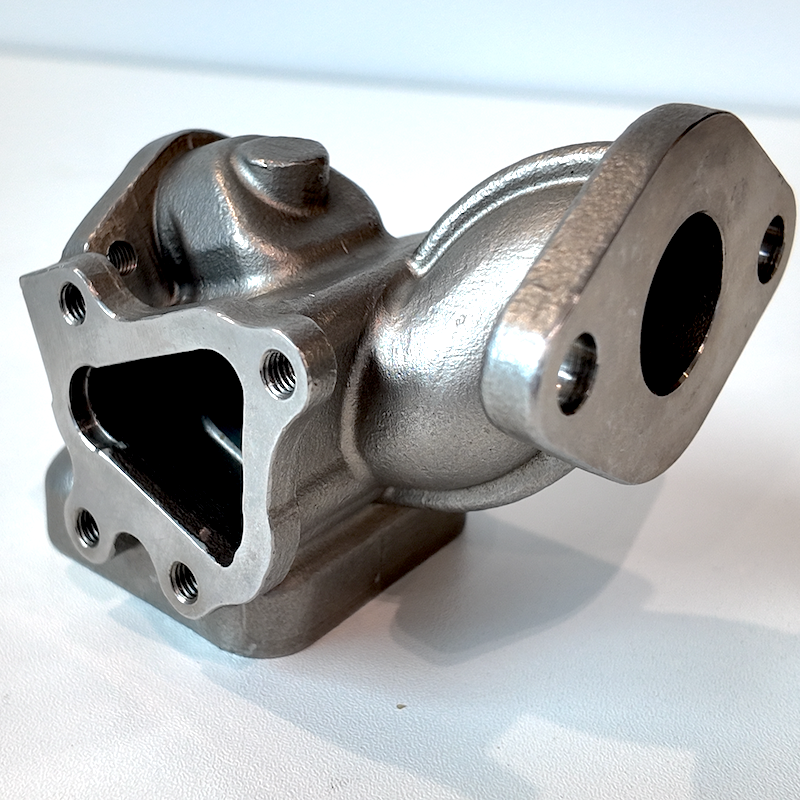
Rapid prototyping casting represents a transformative manufacturing approach that combines the speed of modern prototyping technologies with traditional casting methods to produce high-quality metal parts in significantly reduced timeframes. This innovative process enables manufacturers, engineers, and product developers to move from digital designs to functional metal components within days rather than weeks or months. The main function of rapid prototyping casting is to create accurate metal parts quickly by using 3D printed patterns or molds that replace conventional tooling methods. This technology bridges the gap between initial concept validation and full-scale production, allowing companies to test designs, verify functionality, and make necessary adjustments before committing to expensive production tooling. The technological features of rapid prototyping casting include integration with CAD software for seamless design transfer, compatibility with various casting processes such as investment casting, sand casting, and vacuum casting, and the ability to work with multiple metal alloys including aluminum, steel, bronze, and specialized materials. Advanced rapid prototyping casting systems utilize precise 3D printing technologies to create patterns with exceptional dimensional accuracy, intricate geometries, and complex internal structures that would be difficult or impossible to achieve through traditional pattern-making methods. Applications for rapid prototyping casting span numerous industries including aerospace, automotive, medical devices, consumer products, industrial equipment, and artistic sculpture. Aerospace companies use this technology to develop lightweight structural components and engine parts, while automotive manufacturers create custom performance parts and test prototypes. Medical device companies benefit from the ability to produce patient-specific implants and surgical instruments, and consumer product developers can quickly iterate on designs to optimize both aesthetics and functionality before mass production begins.

New Product Releases

The advantages of rapid prototyping casting deliver tangible benefits that directly impact your bottom line and product development timeline. First and foremost, this technology dramatically reduces the time required to produce functional metal parts. Where traditional casting methods might require four to twelve weeks for pattern creation and tooling, rapid prototyping casting can deliver finished components in as little as one to three weeks. This acceleration means you can bring products to market faster, respond to customer feedback more quickly, and stay ahead of competitors who rely on slower manufacturing processes. Cost savings represent another significant advantage, particularly for low-volume production runs and prototype development. Traditional casting requires expensive tooling and patterns that only become economical when producing hundreds or thousands of identical parts. Rapid prototyping casting eliminates most of these upfront costs, making it financially viable to produce anywhere from a single prototype to several dozen parts without breaking your budget. You can test multiple design variations without the financial risk associated with creating new tooling for each iteration. The design freedom offered by rapid prototyping casting opens possibilities that traditional methods simply cannot match. Complex geometries, undercuts, internal channels, and organic shapes that would require multiple pieces or be completely impossible with conventional patterns become achievable. This freedom allows your design team to optimize parts for performance rather than manufacturing limitations, resulting in better products that weigh less, perform better, or incorporate features that provide competitive advantages. Quality and accuracy remain consistently high throughout the rapid prototyping casting process. Modern 3D printing technologies create patterns with tolerances measured in hundredths of millimeters, ensuring that your final cast parts match digital specifications precisely. This accuracy reduces the need for extensive machining and finishing operations, saving additional time and money while maintaining the mechanical properties and surface finish quality that your applications demand. The iterative improvement capability stands out as perhaps the most valuable advantage for product development teams. You can quickly produce a prototype, test it in real-world conditions, identify improvements, modify the digital design, and have a new version cast within days. This rapid iteration cycle leads to better final products because you can incorporate learnings and refinements that would be too expensive or time-consuming to explore with traditional manufacturing approaches. Finally, rapid prototyping casting provides flexibility in material selection and production volume. You can test the same design in different alloys to determine which material best suits your application, and you can seamlessly transition from prototype quantities to bridge production or low-volume manufacturing without changing processes or suppliers.

Tips And Tricks

Basic Principles Of Design Of Precision Casting Gating System

11

May

Basic Principles Of Design Of Precision Casting Gating System

View More
Selection And Application Scope Of Hardness Tester

11

May

Selection And Application Scope Of Hardness Tester

View More
The Role Of Elements In Castings And The Order Of Addition

11

May

The Role Of Elements In Castings And The Order Of Addition

View More
Stainless Steel Castings for Building Facade Systems

11

May

Stainless Steel Castings for Building Facade Systems

View More

Get a Free Quote

Our representative will contact you soon.
Email
Name
Company Name
Message
0/1000

rapid prototyping casting

Accelerated Product Development Cycles Transform Time-to-Market

Accelerated Product Development Cycles Transform Time-to-Market

Rapid prototyping casting fundamentally changes how quickly companies can move from concept to physical product, delivering competitive advantages that extend far beyond simple speed improvements. In traditional manufacturing environments, the timeline from initial design to first cast part involves multiple sequential steps, each consuming valuable weeks. Pattern makers must interpret drawings, skilled craftspeople must create masters, foundries must prepare molds, and only then can casting begin. This process, while proven and reliable, creates bottlenecks that delay product launches, slow response to market opportunities, and frustrate engineering teams eager to validate their designs. Rapid prototyping casting collapses these extended timelines by eliminating the pattern-making bottleneck entirely. Engineers create digital 3D models using standard CAD software, then transmit these files directly to 3D printing systems that produce patterns within hours or days depending on size and complexity. These printed patterns proceed immediately to the casting process, maintaining the quality and metallurgical properties of traditional methods while cutting weeks from the schedule. The impact on product development extends beyond simple calendar compression. Faster iteration cycles enable engineering teams to explore more design alternatives within the same timeframe, leading to better optimized products that might never have been discovered under traditional development constraints. A team that can produce and test three design variations in the time previously required for one gains insights that lead to superior performance, reduced weight, lower costs, or enhanced functionality. This acceleration proves particularly valuable when responding to customer feedback or addressing issues discovered during testing. Rather than waiting weeks for revised parts, engineers can implement changes and have new components in hand within days, maintaining development momentum and keeping projects on schedule. The technology also enables concurrent engineering approaches where multiple subsystems undergo development and testing simultaneously rather than sequentially, further compressing overall product development timelines. For companies operating in fast-moving markets where being first provides substantial advantages, rapid prototyping casting becomes a strategic capability rather than merely a manufacturing option. The ability to respond quickly to opportunities, test ideas rapidly, and bring refined products to market ahead of competitors translates directly into revenue growth and market share gains that justify investment in this advanced manufacturing approach.
Cost-Effective Manufacturing for Prototypes and Low-Volume Production

Cost-Effective Manufacturing for Prototypes and Low-Volume Production

The economic advantages of rapid prototyping casting reshape manufacturing cost structures in ways that benefit companies across the production spectrum, from entrepreneurs developing first prototypes to established manufacturers serving niche markets. Traditional casting economics operate on a model where high upfront tooling costs must be amortized across large production quantities, creating a financial barrier that makes small quantities prohibitively expensive and forces companies into minimum order quantities that may exceed actual needs. This economic reality has historically forced uncomfortable choices between accepting high per-unit costs for small quantities or committing to inventory investments that tie up capital and risk obsolescence. Rapid prototyping casting disrupts this traditional cost structure by eliminating or dramatically reducing the upfront tooling investment. Instead of spending thousands or tens of thousands of dollars on permanent patterns, tooling, and setup, companies pay primarily for materials and processing time that scale proportionally with the number of parts produced. This transformation makes producing a single prototype economically rational and enables flexible production strategies that align manufacturing quantities with actual demand rather than tooling economics. The financial benefits extend throughout the product development cycle. Engineering teams can afford to produce multiple design iterations, testing and refining concepts without budget constraints that might otherwise force premature design freezes. Marketing departments can commission realistic prototypes for customer evaluation and trade show displays without consuming entire project budgets. Manufacturing operations can produce bridge production quantities that satisfy early customer demand while permanent production tooling undergoes fabrication, capturing revenue that might otherwise be lost to competitors with products already in production. Small and medium-sized production runs become economically viable under rapid prototyping casting economics. Specialized industrial equipment, custom automotive performance parts, limited edition consumer products, and replacement components for legacy systems can all be manufactured profitably in quantities that traditional casting approaches would render financially infeasible. This capability opens market opportunities that remain inaccessible to manufacturers constrained by conventional production economics. Risk reduction represents another crucial financial advantage that affects overall project costs beyond direct manufacturing expenses. The ability to validate designs with functional prototypes before committing to expensive production tooling prevents costly mistakes that have derailed countless product launches. Discovering a design flaw after tooling investment requires either expensive rework or accepting a compromised product, while finding the same issue during rapid prototyping casting allows simple digital corrections with minimal financial impact.
Uncompromising Design Freedom Enables Innovation and Optimization

Uncompromising Design Freedom Enables Innovation and Optimization

Rapid prototyping casting liberates designers and engineers from constraints that have limited product innovation for generations, enabling geometric complexity and design optimization that simply cannot be achieved through traditional manufacturing approaches. Conventional pattern-making imposes significant limitations on what shapes can be produced, requiring draft angles for mold release, restricting undercuts, limiting internal features, and generally forcing designs to accommodate manufacturing processes rather than optimize for performance. These constraints have become so deeply embedded in engineering practice that designers often self-censor ideas before they reach the prototype stage, unconsciously limiting innovation to stay within familiar manufacturing boundaries. The technology removes these artificial limitations by enabling pattern creation for virtually any geometry that can be digitally modeled. Complex organic shapes inspired by natural structures, intricate lattice frameworks that optimize strength-to-weight ratios, internal cooling passages that follow thermal optimization algorithms, and integrated features that eliminate assembly operations all become manufacturable realities. This freedom transforms the design process from an exercise in compromise to genuine optimization where form follows function without manufacturing constraints imposing artificial limitations. Topology optimization, a powerful engineering approach that uses algorithms to determine ideal material distribution for specific loading conditions, produces organic shapes that maximize performance while minimizing weight. These mathematically optimized geometries typically feature irregular curves, variable wall thicknesses, and complex internal structures that would be impossible to pattern using traditional methods. Rapid prototyping casting makes these optimized designs practical, enabling weight reductions of thirty to fifty percent compared to conventionally designed components while maintaining or improving strength and stiffness. The ability to consolidate multiple components into single cast parts delivers benefits that extend beyond manufacturing simplification. Eliminating joints and fasteners removes potential failure points, reduces assembly labor, decreases part count for inventory and logistics management, and often improves overall performance by creating more direct load paths. What might traditionally require five separate castings plus fasteners and assembly can become a single integrated component that costs less to produce and performs better in service. Design iteration becomes a creative exploration rather than an expensive gamble when rapid prototyping casting enables testing of multiple approaches. Engineers can develop three competing design philosophies, cast functional prototypes of each, conduct performance testing, and select the superior approach based on actual data rather than theoretical predictions. This empirical design validation leads to better products because real-world performance sometimes contradicts analytical predictions, revealing opportunities or issues that only physical testing can uncover. The combination of design freedom, rapid iteration, and cost-effective prototyping creates an innovation-friendly environment where creative solutions receive serious consideration rather than dismissal based on manufacturing limitations, ultimately resulting in breakthrough products that provide substantial competitive advantages.

Get a Free Quote

Our representative will contact you soon.
Email
Name
Company Name
Message
0/1000