Steel Precision Casting Parts - High-Quality Investment Cast Steel Components for Industrial Applications

Get a Free Quote

Our representative will contact you soon.
Email
Name
Mobile
Company Name
Message
0/1000

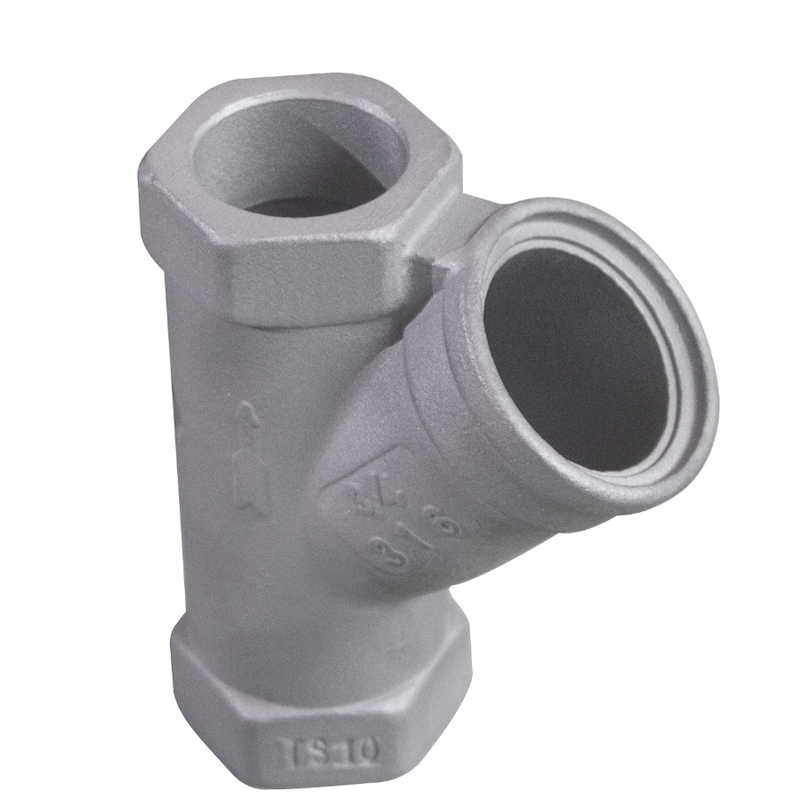
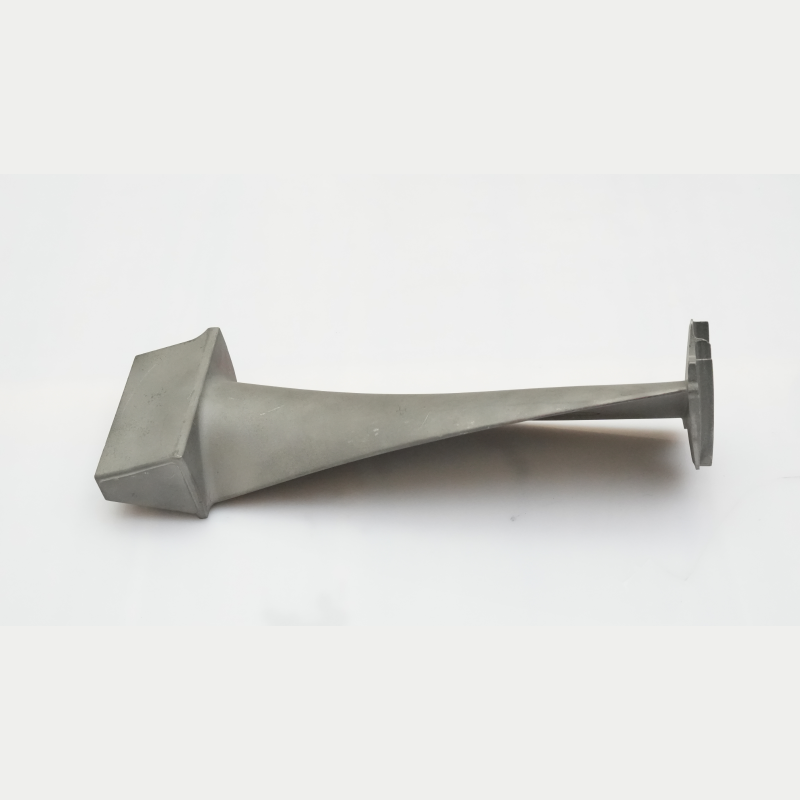
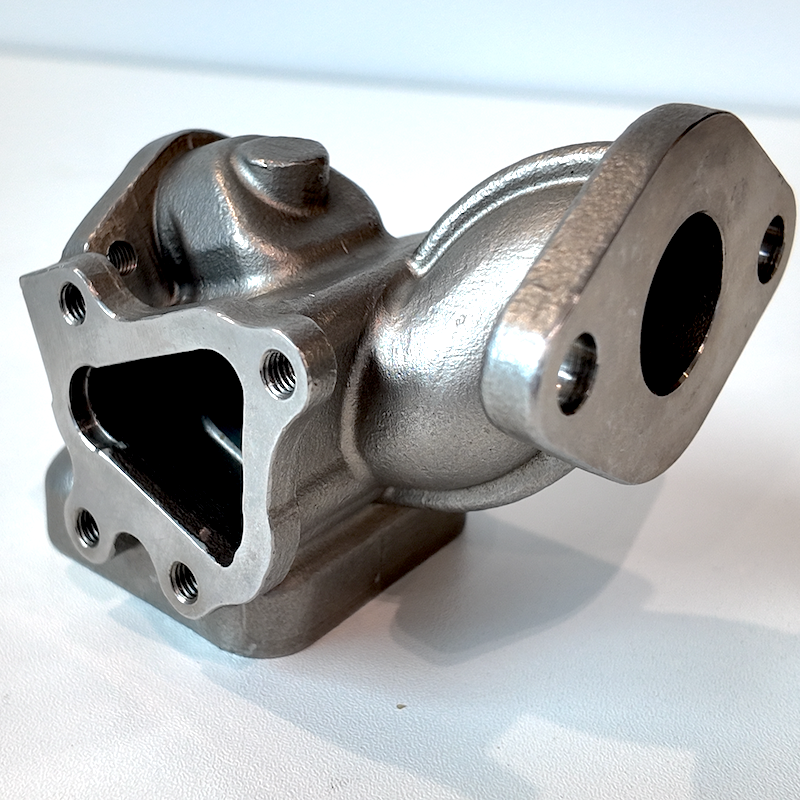
steel precision casting parts

Steel precision casting parts represent a sophisticated manufacturing solution that combines advanced metallurgical processes with intricate design capabilities to produce high-quality metal components. This manufacturing method, also known as investment casting or lost-wax casting, enables the creation of complex geometries with exceptional dimensional accuracy and superior surface finishes. Steel precision casting parts serve as critical components across numerous industries, offering remarkable versatility in producing items ranging from small intricate pieces to large structural elements. The process begins with creating a detailed wax pattern that precisely replicates the final component, which is then coated with ceramic material to form a robust mold. Once the ceramic hardens, the wax is melted away, leaving a hollow cavity into which molten steel is poured. This technique allows manufacturers to achieve tolerances as tight as plus or minus 0.005 inches, significantly reducing the need for secondary machining operations. The main functions of steel precision casting parts include providing structural integrity, ensuring dimensional consistency, delivering wear resistance, and maintaining performance under extreme conditions. These components excel in applications requiring complex internal passages, thin walls, and intricate external features that would be difficult or impossible to achieve through traditional machining methods. The technological features encompass exceptional material properties, including high tensile strength, excellent corrosion resistance, and superior mechanical performance. Industries utilizing steel precision casting parts span automotive, aerospace, medical devices, oil and gas, power generation, and industrial machinery sectors. The ability to cast various steel alloys, including stainless steel, carbon steel, and specialty alloy steels, makes this manufacturing process incredibly adaptable to specific application requirements. Steel precision casting parts deliver consistent quality, reduced material waste, and cost-effectiveness for medium to high-volume production runs while maintaining the flexibility to accommodate custom designs and unique specifications.

New Product Recommendations

Choosing steel precision casting parts for your manufacturing needs delivers tangible benefits that directly impact your bottom line and product performance. First and foremost, this manufacturing method dramatically reduces material waste compared to traditional machining processes. Instead of cutting away excess material from solid blocks, precision casting uses only the amount of steel necessary to form the component, resulting in material savings of up to seventy percent in many applications. This efficiency translates directly into cost savings, particularly when working with expensive specialty steel alloys. The near-net-shape capability of steel precision casting parts means components emerge from the mold requiring minimal finishing work, saving both time and money in secondary operations. You will appreciate the design freedom this process offers, as it accommodates complex geometries, undercuts, internal cavities, and thin-walled sections that would prove extremely difficult or prohibitively expensive to machine conventionally. This flexibility allows engineers to optimize designs for performance rather than limiting creativity based on manufacturing constraints. Steel precision casting parts exhibit excellent mechanical properties throughout the entire component, as the casting process produces uniform grain structure and consistent material characteristics. This homogeneity ensures reliable performance and predictable behavior under stress, which is crucial for safety-critical applications. The superior surface finish achieved through precision casting often eliminates the need for additional surface treatments, further reducing production time and costs. You gain significant advantages in production efficiency, as complex assemblies requiring multiple machined parts and fasteners can often be consolidated into single precision cast components, reducing assembly time, potential failure points, and inventory complexity. The dimensional accuracy inherent in steel precision casting parts minimizes variation between components, ensuring consistent fit and function across production runs. This repeatability proves invaluable for maintaining quality standards and reducing rejection rates. Additionally, the process accommodates a wide range of steel alloys, allowing you to select materials optimized for specific environmental conditions, whether requiring corrosion resistance, high-temperature performance, or exceptional strength-to-weight ratios. Lead times for steel precision casting parts remain competitive once tooling is established, and the process scales efficiently from prototype quantities to high-volume production. The combination of reduced machining requirements, material efficiency, design versatility, and consistent quality makes steel precision casting parts an economically attractive choice that enhances product performance while controlling manufacturing costs. Your investment in precision cast steel components pays dividends through extended service life, reduced maintenance requirements, and improved operational reliability.

Latest News

How Should Buyers Choose a Reliable Medium Temperature Wax Casting Service Provider?

26

Jun

How Should Buyers Choose a Reliable Medium Temperature Wax Casting Service Provider?

Selecting the right manufacturing partner for medium temperature wax casting is one of the most consequential decisions a procurement professional or product engineer can make. The process, which involves injecting wax into precision dies at carefull...
View More
How Can OEM ODM Precision Casting Services Accelerate New Product Development Cycles?

26

Jun

How Can OEM ODM Precision Casting Services Accelerate New Product Development Cycles?

Bringing a new industrial product from concept to market is rarely a straightforward journey. Engineering teams face relentless pressure to compress timelines, reduce prototype iterations, and deliver production-ready components without sacrificing d...
View More
What Should Global Buyers Expect from OEM ODM Precision Casting Services Suppliers?

05

Jun

What Should Global Buyers Expect from OEM ODM Precision Casting Services Suppliers?

For global buyers sourcing complex metal components, selecting a reliable partner for oem odm precision casting services is one of the most consequential procurement decisions in a production cycle. The stakes are high: dimensional inaccuracies, inco...
View More
Why Are Stainless Steel Investment Castings Preferred for Corrosion Resistant Applications?

26

Jun

Why Are Stainless Steel Investment Castings Preferred for Corrosion Resistant Applications?

In demanding industrial environments where moisture, chemicals, and extreme temperatures are constant threats, material selection is one of the most critical engineering decisions a manufacturer can make. Among the available manufacturing methods, st...
View More

Get a Free Quote

Our representative will contact you soon.
Email
Name
Mobile
Company Name
Message
0/1000

steel precision casting parts

Exceptional Dimensional Accuracy and Complex Geometry Capabilities

Exceptional Dimensional Accuracy and Complex Geometry Capabilities

Steel precision casting parts stand out in the manufacturing landscape due to their remarkable ability to achieve exceptional dimensional accuracy while producing extraordinarily complex geometries that challenge or exceed the capabilities of other manufacturing methods. This advantage stems from the fundamental nature of the investment casting process, which creates components by pouring molten steel into ceramic molds formed around exact wax replicas of the desired parts. The precision achievable through this method routinely reaches tolerances of plus or minus 0.005 inches, with even tighter tolerances possible for critical dimensions when specialized techniques are employed. This level of accuracy proves particularly valuable for applications where components must interface precisely with other parts, such as valve bodies, pump housings, and mechanical linkages. The ability to maintain such tight tolerances across the entire component reduces or eliminates the need for costly secondary machining operations, accelerating production timelines and reducing overall manufacturing costs. Beyond dimensional precision, steel precision casting parts excel at forming complex internal passages, intricate external features, variable wall thicknesses, and geometric configurations that would be extraordinarily difficult to produce through conventional machining. Engineers can design components with undercuts, re-entrant angles, and internal cavities that would require multiple machining setups or prove entirely unfeasible with subtractive manufacturing techniques. This design freedom enables functional optimization, allowing components to be shaped for optimal fluid flow, weight reduction, or structural performance without compromise based on manufacturing limitations. The process accommodates thin-walled sections as narrow as 0.040 inches while maintaining structural integrity, enabling significant weight savings without sacrificing strength. Multiple features can be integrated into single steel precision casting parts, consolidating what might otherwise require assemblies of multiple machined components joined with fasteners or welding. This consolidation reduces potential failure points, simplifies assembly procedures, decreases part counts, and improves overall reliability. The ceramic shell molding process captures fine surface details and textures, producing components with smooth finishes that minimize drag in fluid applications and reduce stress concentrations that could initiate fatigue failures. For manufacturers seeking to push the boundaries of component design while maintaining exacting standards for dimensional control, steel precision casting parts provide an unmatched combination of geometric freedom and accuracy.
Superior Material Properties and Alloy Versatility

Superior Material Properties and Alloy Versatility

Steel precision casting parts deliver superior material properties and exceptional versatility in alloy selection, enabling manufacturers to optimize component performance for specific operational environments and functional requirements. The casting process produces components with homogeneous microstructure throughout the entire part, resulting in consistent mechanical properties and predictable behavior under stress. Unlike fabricated assemblies or heavily machined components where grain structure may be disrupted or residual stresses introduced, steel precision casting parts exhibit uniform grain orientation and minimal internal stress, enhancing fatigue resistance and long-term durability. The controlled solidification environment allows metallurgists to fine-tune cooling rates and thermal treatments to achieve desired material characteristics, whether prioritizing tensile strength, impact resistance, or ductility. Steel precision casting parts can be produced from an extensive range of steel alloys, including austenitic stainless steels offering excellent corrosion resistance, martensitic stainless steels providing high hardness and wear resistance, precipitation-hardening stainless steels combining strength with corrosion protection, carbon steels delivering economical strength for structural applications, and exotic alloy steels engineered for extreme temperature performance or specialized chemical resistance. This alloy versatility allows engineers to specify materials precisely matched to application demands, whether components face aggressive chemical exposure, elevated operating temperatures, abrasive wear conditions, or cyclical loading that demands superior fatigue properties. The precision casting process accommodates alloys that would be difficult to machine due to hardness or work-hardening characteristics, expanding material options beyond those practical for conventional manufacturing. Steel precision casting parts maintain their mechanical properties throughout complex geometries, ensuring thin sections possess the same strength and durability as thicker areas, which proves critical for components subject to uniform stress distribution. The process enables heat treatment of finished castings to further enhance properties, with options including annealing for improved machinability, quenching and tempering for increased hardness, or solution treating and aging for precipitation-hardening alloys. Corrosion resistance inherent in many stainless steel precision casting parts eliminates the need for protective coatings, reducing maintenance requirements and ensuring long service life in harsh environments. The material density achieved through precision casting equals or exceeds that of wrought materials, ensuring steel precision casting parts deliver full mechanical performance without porosity concerns that might compromise pressure containment or structural integrity. For applications demanding specific magnetic properties, thermal conductivity, or electrical resistance characteristics, the ability to select and precisely control steel alloy composition in precision casting parts provides critical performance advantages unavailable through other manufacturing methods.
Cost Efficiency and Production Scalability

Cost Efficiency and Production Scalability

Steel precision casting parts offer compelling cost efficiency and production scalability advantages that make them an economically attractive manufacturing solution across diverse volume requirements and product lifecycles. The near-net-shape nature of precision casting dramatically reduces material consumption compared to machining from solid stock, with material utilization rates often exceeding eighty percent versus twenty to thirty percent for heavily machined components. This efficiency proves particularly significant when working with expensive specialty steel alloys, where material costs constitute a substantial portion of total component expense. By using only the material necessary to form the actual part rather than generating extensive machining waste, steel precision casting parts deliver immediate cost savings that compound over production runs. The reduced machining requirements inherent in precision cast components translate directly into lower manufacturing costs through decreased machine time, reduced tool wear, and minimized labor hours for secondary operations. Many steel precision casting parts require only minimal finish machining on critical mating surfaces, with the majority of features usable as-cast, significantly compressing production timelines and reducing manufacturing overhead. The ability to consolidate multiple machined parts and fasteners into single precision cast components generates substantial cost advantages through simplified assembly, reduced inventory complexity, fewer quality inspection points, and elimination of joining operations such as welding or brazing. This consolidation also reduces potential failure modes, as each joint, fastener, or weld represents a possible weakness that precision cast integral construction eliminates. Initial tooling investment for steel precision casting parts amortizes efficiently across production volumes, with break-even points often occurring at surprisingly modest quantities, particularly when factoring in the total cost of alternative manufacturing methods including machining time, material waste, and assembly labor. Once established, the precision casting process scales smoothly from prototype quantities through high-volume production, maintaining consistent quality and unit costs that decrease as volumes increase. The repeatability of steel precision casting parts minimizes rejection rates and rework expenses, as dimensional consistency ensures components meet specifications batch after batch without the variation inherent in processes dependent on operator skill or machine condition. Reduced weight achievable through optimized design of steel precision casting parts lowers shipping costs and, for mobile applications, improves fuel efficiency throughout product service life. The excellent surface finish and dimensional accuracy of steel precision casting parts often eliminate costly secondary treatments such as grinding, polishing, or coating application, further reducing total manufacturing cost. Lead times remain competitive, with production cycles accommodating both rapid prototype development and sustained volume manufacturing. For companies seeking to optimize manufacturing economics while maintaining uncompromising quality standards, steel precision casting parts deliver a compelling value proposition through material efficiency, reduced processing requirements, design consolidation opportunities, and scalable production capabilities that adapt to evolving business needs.

Get a Free Quote

Our representative will contact you soon.
Email
Name
Mobile
Company Name
Message
0/1000