Custom Machined Investment Casting Parts - Precision Components for Critical Applications

Get a Free Quote

Our representative will contact you soon.
Email
Name
Mobile
Company Name
Message
0/1000

custom machined investment casting parts

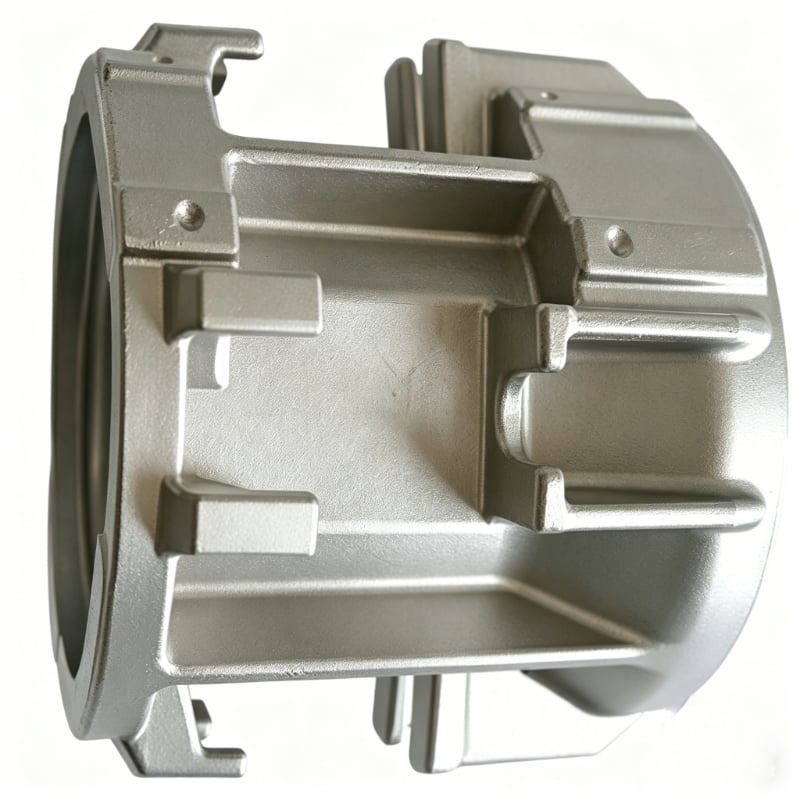
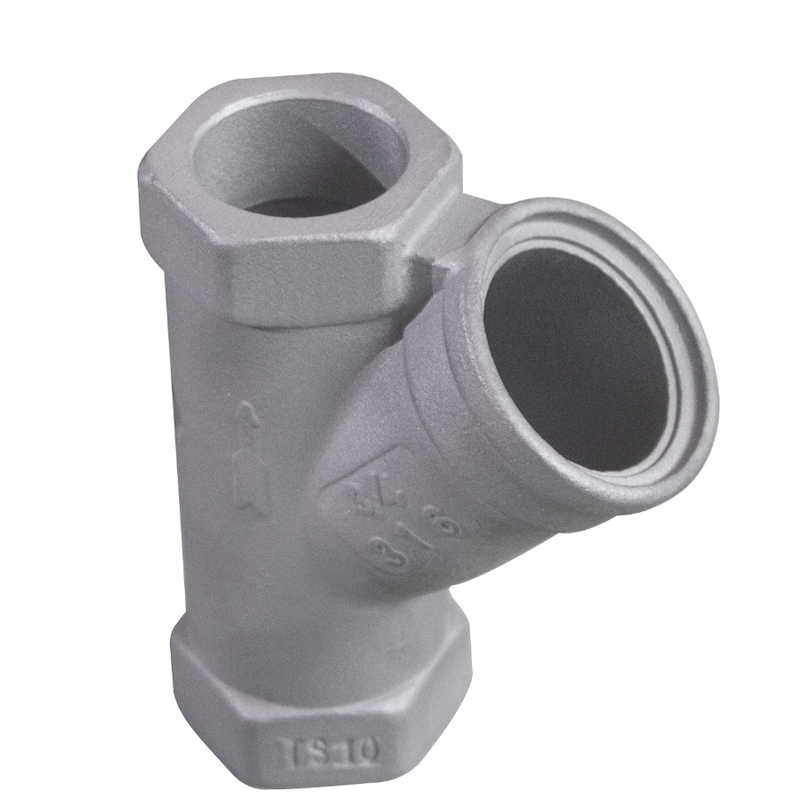
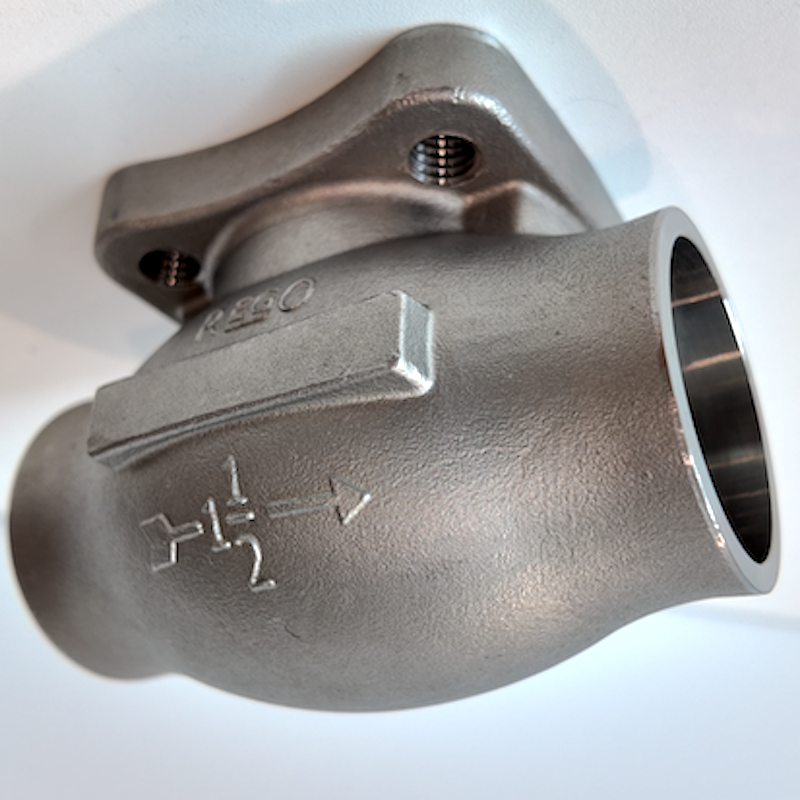
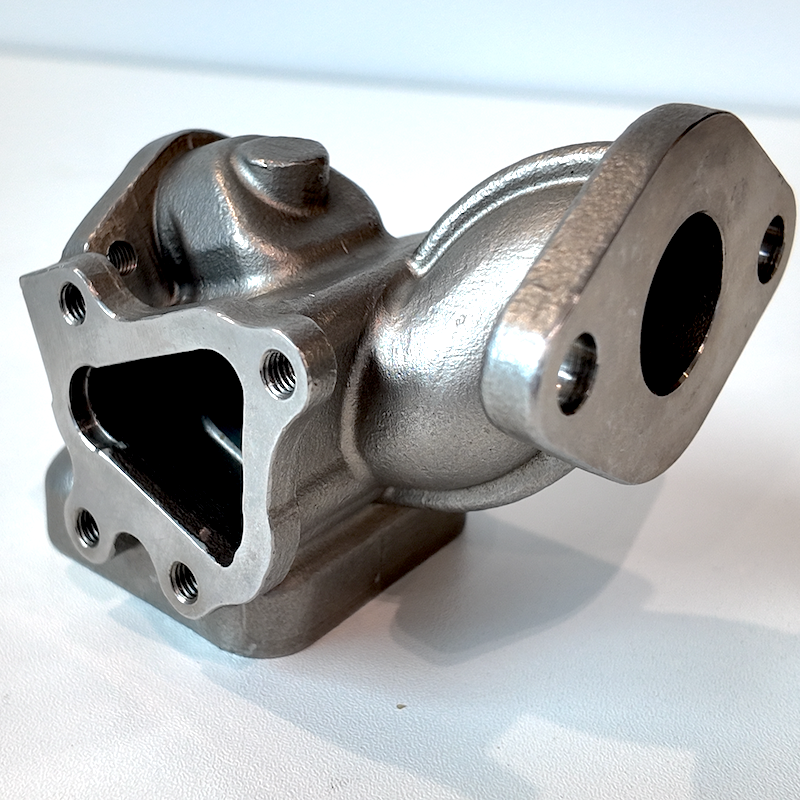
Custom machined investment casting parts represent a sophisticated manufacturing solution that combines the precision of investment casting with advanced machining techniques to deliver components with exceptional accuracy and surface finish. This hybrid manufacturing process begins with investment casting, also known as lost-wax casting, where a wax pattern is coated with ceramic material to create a mold. Once the ceramic hardens, the wax is melted away, leaving a hollow cavity into which molten metal is poured. After cooling and solidification, the ceramic shell is removed, revealing the cast part. However, to achieve the tight tolerances and superior surface characteristics required for demanding applications, additional machining operations are performed on these cast components. The main functions of custom machined investment casting parts include providing complex geometrical shapes that would be difficult or impossible to achieve through machining alone, offering near-net-shape manufacturing that reduces material waste, and delivering components with excellent mechanical properties suitable for high-stress environments. The technological features of this process include the ability to cast intricate internal passages, undercuts, and thin walls with remarkable dimensional accuracy. The combination of casting and machining allows manufacturers to produce parts with tolerances as tight as plus or minus 0.001 inches in critical areas while maintaining the cost-effectiveness of casting for the bulk of the component. These parts find applications across numerous industries including aerospace, where they are used for turbine blades, structural brackets, and engine components; medical devices, where biocompatible materials are cast into surgical instruments and implants; automotive manufacturing, where they serve as transmission components, suspension parts, and engine elements; industrial machinery, where pumps, valves, and gear housings benefit from their durability; and defense sectors, where reliability and precision are paramount. The versatility of material selection, ranging from stainless steels and aluminum alloys to exotic superalloys and titanium, makes custom machined investment casting parts an ideal choice for projects requiring specific material properties combined with complex geometries and tight tolerances.

New Product Recommendations

Custom machined investment casting parts deliver substantial practical benefits that directly impact your bottom line and product performance. First, these components significantly reduce your overall production costs by minimizing material waste. Traditional machining starts with solid stock and cuts away excess material, wasting up to 60 percent of your raw material investment. In contrast, investment casting creates near-net-shape parts that require only minimal machining to achieve final specifications, conserving valuable materials and reducing your procurement expenses. Second, you gain remarkable design freedom that allows your engineering team to create complex geometries without worrying about manufacturing limitations. Internal cavities, intricate contours, and delicate features that would require multiple machined components can be incorporated into a single cast part, eliminating assembly steps and reducing potential failure points. This consolidation simplifies your supply chain and decreases assembly time on your production floor. Third, the superior surface finish achieved through this combined process eliminates secondary finishing operations in many applications. The smooth surfaces resist corrosion better and reduce friction in moving parts, extending component life and reducing maintenance requirements for your customers. Fourth, you benefit from consistent quality across production runs. Once the tooling is created and machining parameters are established, every part emerges with identical characteristics, reducing inspection time and minimizing rejection rates. Fifth, the process accommodates a wide range of materials, allowing you to select the exact alloy that matches your performance requirements without compromising manufacturability. Whether you need the corrosion resistance of stainless steel, the lightweight properties of aluminum, or the high-temperature strength of nickel-based superalloys, investment casting handles these materials effectively. Sixth, faster time-to-market becomes achievable because tooling for investment casting is less expensive and quicker to produce than dies for forging or molds for plastic injection. Your prototypes can transition to production more rapidly, giving you a competitive advantage. Seventh, these parts offer excellent mechanical properties with uniform grain structure and minimal porosity, ensuring reliable performance under stress, vibration, and temperature extremes. Finally, the scalability of this manufacturing method supports both small batch custom orders and large volume production runs, providing flexibility as your business needs evolve without requiring entirely new manufacturing approaches.

Latest News

Why Do Manufacturers Prefer a Silica Sol Investment Casting Supplier for Complex Metal Parts?

05

Jun

Why Do Manufacturers Prefer a Silica Sol Investment Casting Supplier for Complex Metal Parts?

When precision, surface quality, and dimensional accuracy are non-negotiable, manufacturers consistently turn to a trusted silica sol investment casting supplier. This decision is rarely arbitrary. It is driven by a deep understanding of what silica ...
View More
How Should Buyers Choose a Reliable Medium Temperature Wax Casting Service Provider?

26

Jun

How Should Buyers Choose a Reliable Medium Temperature Wax Casting Service Provider?

Selecting the right manufacturing partner for medium temperature wax casting is one of the most consequential decisions a procurement professional or product engineer can make. The process, which involves injecting wax into precision dies at carefull...
View More
How Do OEM ODM Precision Casting Services Support Flexible Design and Rapid Prototyping?

26

Jun

How Do OEM ODM Precision Casting Services Support Flexible Design and Rapid Prototyping?

Figure 1: Custom Valve Body Fabricated via Precision Investment Casting, Featuring Crisp Surface Details and Net-Shape Integrity. In today's fast-evolving manufacturing landscape, the ability to move from concept to production-ready component quickly...
View More
Why Are Stainless Steel Investment Castings Preferred for Corrosion Resistant Applications?

26

Jun

Why Are Stainless Steel Investment Castings Preferred for Corrosion Resistant Applications?

In demanding industrial environments where moisture, chemicals, and extreme temperatures are constant threats, material selection is one of the most critical engineering decisions a manufacturer can make. Among the available manufacturing methods, st...
View More

Get a Free Quote

Our representative will contact you soon.
Email
Name
Mobile
Company Name
Message
0/1000

custom machined investment casting parts

Exceptional Dimensional Accuracy Through Integrated Manufacturing

Exceptional Dimensional Accuracy Through Integrated Manufacturing

The combination of investment casting and precision machining in custom machined investment casting parts delivers dimensional accuracy that surpasses what either process could achieve independently. Investment casting establishes the fundamental shape with tolerances typically in the range of plus or minus 0.005 to 0.015 inches, which is remarkably precise for a casting process. However, for components used in aerospace assemblies, medical devices, or high-performance automotive applications, even tighter tolerances are often necessary. This is where the machining phase becomes critical. Strategic machining operations target specific features that require enhanced precision, such as mounting surfaces, bearing journals, threaded holes, and mating interfaces. By machining only these critical dimensions rather than the entire part, manufacturers maintain the cost advantages of casting while achieving tolerances of plus or minus 0.001 inches or better where needed. This selective machining approach also allows for the incorporation of features that cannot be cast, such as precise threads, keyways, and flat sealing surfaces. The integrated nature of this process means that machining fixtures and programs are developed specifically for the cast geometry, ensuring optimal tool paths and minimizing setup time between operations. Advanced computer-aided manufacturing systems enable manufacturers to simulate the entire process digitally before producing physical parts, identifying potential issues and optimizing both the casting design and machining strategy. This predictive capability reduces trial-and-error during production startup and accelerates your path to qualified parts. Furthermore, the dimensional stability inherent in properly executed investment castings means that machining allowances remain consistent from part to part, enabling automated machining with minimal operator intervention. This consistency translates directly into reduced inspection requirements and higher confidence in part interchangeability. For assemblies with multiple custom machined investment casting parts, this precision ensures proper fit and function without time-consuming hand-fitting operations. The economic impact is substantial: you reduce scrap rates, minimize rework, and deliver products that perform reliably in their intended applications, building your reputation for quality.
Complex Geometry Realization With Material Efficiency

Complex Geometry Realization With Material Efficiency

Custom machined investment casting parts excel at bringing complex designs to life while maximizing material efficiency, a combination that delivers both technical and economic advantages. The investment casting process can reproduce intricate details that would be prohibitively expensive or technically impossible through conventional machining. Thin-walled sections, complex internal passages, organic curves, and multiple features at varying angles can all be incorporated into the initial cast form. This capability allows design engineers to optimize parts for performance rather than manufacturing convenience. For example, cooling channels can be cast directly into a component rather than requiring assembly of multiple pieces, improving thermal management while reducing weight and potential leak paths. Similarly, structural ribs can be positioned exactly where stress analysis indicates they are needed, rather than being limited to locations accessible to cutting tools. The material efficiency aspect becomes particularly valuable when working with expensive alloys. Titanium, nickel-based superalloys, and medical-grade stainless steels carry significant material costs, making waste reduction a priority. Investment casting uses only slightly more material than the finished part requires, with machining removing just a few thousandths of an inch from critical surfaces. Compare this to machining from billet, where a component that weighs one pound in finished form might start as a five-pound block of material, with four pounds becoming expensive chips. The environmental benefits align with the economic advantages, as reduced material consumption means lower energy usage in material production and less waste requiring recycling or disposal. Additionally, the near-net-shape nature of these parts reduces machining time, conserving energy and extending tool life in your machine shop. The design flexibility extends to consolidating multiple machined components into a single cast part, eliminating joints that could become failure points and reducing assembly labor. This consolidation also decreases the number of part numbers in your inventory system, simplifying logistics and reducing administrative overhead. When design changes are necessary, modifying casting patterns is typically faster and less expensive than reconfiguring complex machining setups or creating new forgings dies, providing agility in responding to engineering improvements or customer requests.
Superior Material Properties For Demanding Applications

Superior Material Properties For Demanding Applications

The metallurgical characteristics of custom machined investment casting parts make them exceptionally well-suited for applications where reliability cannot be compromised. During the investment casting process, molten metal fills the ceramic mold completely, creating parts with uniform density and minimal porosity. This microstructural uniformity translates directly into consistent mechanical properties throughout the component. Unlike processes that involve extensive deformation, such as forging, or those that build up material layer by layer, investment casting produces parts with isotropic properties, meaning strength and other characteristics are similar in all directions. This predictability is crucial for components subjected to multi-axial stress states or varying load directions. The controlled cooling inherent in investment casting also allows for favorable grain structures that enhance fatigue resistance and fracture toughness. For applications involving cyclic loading, such as automotive suspension components or aerospace structural elements, this fatigue resistance directly correlates to longer service life and improved safety margins. Furthermore, the process accommodates sophisticated heat treatment protocols that optimize material properties for specific performance requirements. Precipitation hardening, solution annealing, and stress relief treatments can be applied to custom machined investment casting parts with excellent results, achieving hardness levels, tensile strengths, and corrosion resistance that meet or exceed the most demanding specifications. The range of compatible materials spans virtually the entire metallic spectrum. Aluminum alloys provide excellent strength-to-weight ratios for aerospace and automotive applications. Stainless steel grades offer corrosion resistance for marine environments, chemical processing equipment, and medical implants. Tool steels deliver wear resistance for industrial machinery components. Cobalt-chrome alloys serve biomedical applications where biocompatibility is essential. Nickel-based superalloys maintain strength at elevated temperatures in turbine engines and industrial furnaces. This material versatility, combined with the ability to control composition precisely during melting, ensures that your parts possess exactly the properties your application demands. The subsequent machining operations do not compromise these material characteristics because they remove only minimal material from non-critical areas. In fact, machining can enhance surface integrity by removing any minor surface imperfections from casting and creating work-hardened surfaces that resist wear. Quality assurance protocols for custom machined investment casting parts typically include comprehensive testing such as dimensional inspection, non-destructive testing to verify internal soundness, mechanical property testing to confirm strength and ductility, and metallographic examination to assess microstructure. This rigorous validation ensures that every component leaving the manufacturing facility meets your specifications and will perform reliably in its intended service environment.

Get a Free Quote

Our representative will contact you soon.
Email
Name
Mobile
Company Name
Message
0/1000