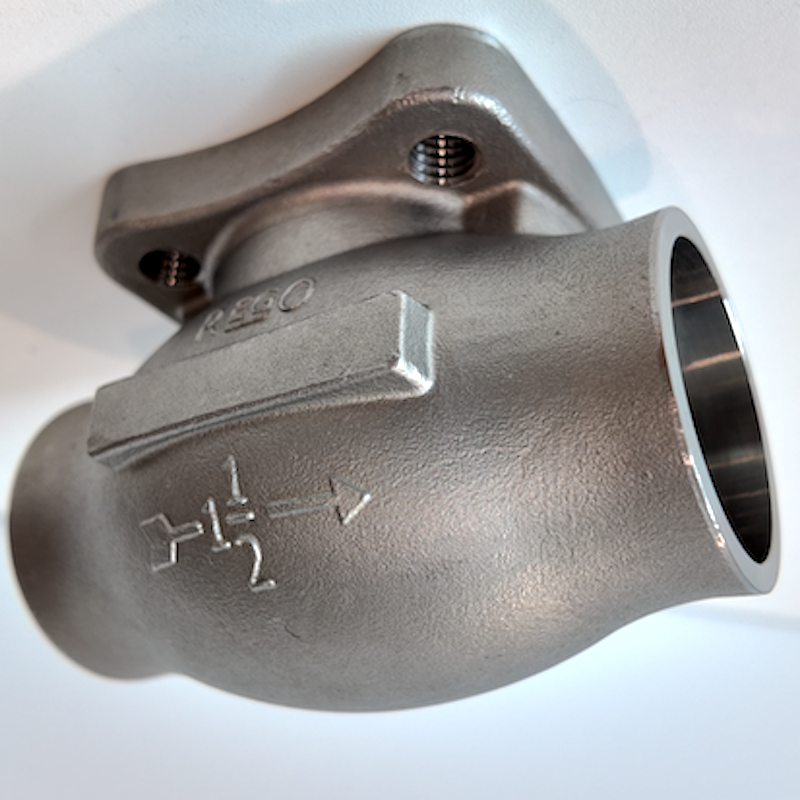
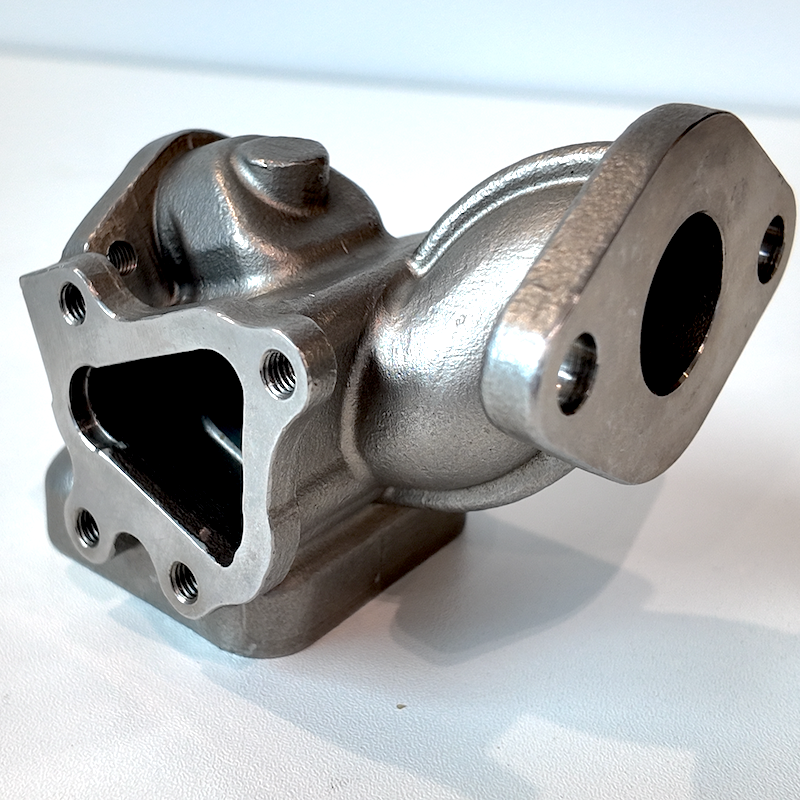
Steel Casting for Automotive Parts: High-Performance Components for Modern Vehicles

Get a Free Quote

Our representative will contact you soon.
Email
Name
Company Name
Message
0/1000

steel casting for automotive parts

Steel casting for automotive parts represents a fundamental manufacturing process that transforms molten steel into precision-engineered components essential for modern vehicle production. This sophisticated method involves pouring liquid steel into carefully designed molds where it solidifies into the desired shape, creating durable parts that meet stringent automotive industry standards. The process encompasses various casting techniques including sand casting, investment casting, and die casting, each selected based on the specific requirements of the component being manufactured. Steel casting for automotive parts serves multiple critical functions within vehicle assembly, primarily providing structural integrity, load-bearing capabilities, and resistance to extreme operating conditions. These cast components form the backbone of essential automotive systems, ranging from engine blocks and transmission housings to suspension components and brake system parts. The technological sophistication behind steel casting for automotive parts has evolved significantly, incorporating advanced metallurgical science, computer-aided design, and precision manufacturing controls. Modern casting facilities utilize state-of-the-art equipment that ensures dimensional accuracy, surface finish quality, and metallurgical consistency throughout production runs. The versatility of this manufacturing approach allows automotive engineers to create complex geometries that would be difficult or impossible to achieve through other fabrication methods such as machining or forging. Applications of steel casting for automotive parts extend across all vehicle categories, from passenger cars and commercial trucks to specialized vehicles and heavy machinery. The process accommodates a wide range of steel alloys, each formulated to deliver specific mechanical properties such as tensile strength, impact resistance, fatigue endurance, and corrosion protection. Quality control measures integrated throughout the casting process include non-destructive testing, dimensional inspection, and metallurgical analysis, ensuring that every steel casting for automotive parts meets or exceeds performance specifications before reaching assembly lines.

New Product Releases

The advantages of steel casting for automotive parts deliver tangible benefits that directly impact vehicle performance, manufacturing efficiency, and overall cost-effectiveness. One primary advantage lies in the exceptional strength-to-weight ratio that steel castings provide, enabling automotive manufacturers to create robust components without adding unnecessary mass to vehicles. This characteristic directly translates to improved fuel efficiency and enhanced vehicle handling, benefits that modern consumers actively seek when purchasing vehicles. The durability of steel casting for automotive parts ensures extended service life, reducing the frequency of replacement and minimizing maintenance costs over the vehicle's operational lifetime. Vehicle owners experience fewer breakdowns and lower repair expenses, making their investment more economical in the long term. Manufacturing flexibility represents another significant advantage, as steel casting for automotive parts accommodates complex shapes and intricate internal passages that other production methods cannot economically replicate. This design freedom allows engineers to optimize component geometry for maximum performance while consolidating multiple parts into single castings, reducing assembly time and potential failure points. The cost efficiency of steel casting for automotive parts becomes particularly evident in medium to high volume production, where tooling investments are amortized across thousands of units, resulting in competitive per-unit costs. Material utilization reaches high efficiency levels since excess material can be recycled and remelted, minimizing waste and supporting environmental sustainability goals. Steel casting for automotive parts offers excellent thermal stability, maintaining dimensional accuracy and mechanical properties across wide temperature ranges encountered in automotive applications, from extreme cold starts to sustained high-temperature operation. The process enables precise control over mechanical properties through alloy selection and heat treatment, allowing manufacturers to tailor components for specific performance requirements without changing production equipment. Quality consistency remains remarkably high with modern casting processes, as automated controls and real-time monitoring systems detect variations before they affect finished parts. This reliability reduces rejection rates and ensures that every steel casting for automotive parts meets stringent safety standards. The scalability of production provides manufacturers with flexibility to adjust output volumes in response to market demand without significant capital expenditure or lengthy retooling periods. These combined advantages make steel casting for automotive parts an indispensable manufacturing solution that balances performance requirements with economic realities.

Tips And Tricks

Basic Principles Of Design Of Precision Casting Gating System

11

May

Basic Principles Of Design Of Precision Casting Gating System

View More
The Role Of Elements In Castings And The Order Of Addition

11

May

The Role Of Elements In Castings And The Order Of Addition

View More
Stainless Steel Castings for Architectural Posts

11

May

Stainless Steel Castings for Architectural Posts

View More
Stainless Steel Castings for Building Facade Systems

11

May

Stainless Steel Castings for Building Facade Systems

View More

Get a Free Quote

Our representative will contact you soon.
Email
Name
Company Name
Message
0/1000

steel casting for automotive parts

Superior Structural Integrity for Critical Automotive Applications

Superior Structural Integrity for Critical Automotive Applications

Steel casting for automotive parts delivers unmatched structural integrity that proves essential for components subjected to continuous stress, vibration, and dynamic loading conditions throughout vehicle operation. The metallurgical characteristics inherent in cast steel create a uniform grain structure that distributes stress evenly throughout the component, eliminating weak points that might develop in welded or mechanically fastened assemblies. This homogeneous material structure ensures that steel casting for automotive parts can withstand the punishing conditions found in powertrain systems, chassis components, and suspension assemblies where failure is not an option. The casting process allows for strategic placement of reinforcement sections and optimized wall thickness variations that strengthen areas experiencing concentrated loads while reducing material in less critical zones. Engineering teams leverage advanced finite element analysis to design steel casting for automotive parts with stress distribution patterns that maximize longevity while minimizing weight. The inherent toughness of cast steel provides excellent impact resistance, a critical property for suspension components and steering system parts that must absorb road shock and collision forces without fracturing or permanently deforming. Fatigue resistance represents another crucial aspect of structural integrity, as automotive components endure millions of loading cycles over their service life. Steel casting for automotive parts exhibits superior fatigue properties compared to many alternative materials, maintaining dimensional stability and mechanical strength even after prolonged exposure to cyclic stresses. The absence of seams, joints, or bonded interfaces eliminates potential crack initiation sites that compromise structural reliability in fabricated assemblies. Quality assurance protocols specific to steel casting for automotive parts include magnetic particle inspection, ultrasonic testing, and radiographic examination that verify internal soundness and detect any subsurface discontinuities before components enter service. This comprehensive approach to structural integrity provides automotive manufacturers with confidence that safety-critical components will perform reliably throughout the vehicle's intended lifespan, protecting occupants and maintaining brand reputation for quality and dependability.
Cost-Effective Manufacturing Solution with Design Flexibility

Cost-Effective Manufacturing Solution with Design Flexibility

Steel casting for automotive parts represents an economically advantageous manufacturing approach that combines low per-unit production costs with remarkable design flexibility, enabling automotive engineers to create optimized components that meet performance requirements while respecting budget constraints. The fundamental economics of casting favor this process for components requiring complex geometries, as tooling costs remain reasonable compared to alternative methods like multi-axis machining or progressive die stamping of comparable complexity. Once pattern equipment and molds are prepared, steel casting for automotive parts can be produced in quantities ranging from prototype batches to full production volumes without substantial additional capital investment. This scalability provides manufacturers with operational flexibility to respond to market fluctuations and model-year changes without stranding expensive specialized equipment. The design freedom inherent in casting processes allows engineers to incorporate features that reduce secondary operations, such as integral mounting bosses, alignment features, and complex internal passages that would require extensive machining if starting from solid stock. By consolidating multiple fabricated pieces into single steel casting for automotive parts, manufacturers eliminate assembly operations, reduce parts inventory complexity, and minimize potential quality issues associated with joining processes. Material efficiency contributes significantly to cost-effectiveness, as steel casting for automotive parts typically achieves near-net shape with minimal machining stock, reducing both material waste and subsequent processing time. Recycling capabilities within foundries ensure that sprues, risers, and rejected castings return to the melting process, capturing material value that would otherwise be lost. The versatility of steel casting for automotive parts extends to material selection, with foundries offering numerous alloy formulations optimized for specific applications without requiring different production equipment. This material flexibility allows automotive designers to specify precisely the mechanical properties, corrosion resistance, and thermal characteristics needed for each application, avoiding over-specification that unnecessarily increases costs. Lead time advantages emerge when compared to forgings or complex machined components, as steel casting for automotive parts can move from design approval to production samples in weeks rather than months, accelerating vehicle development programs and reducing time-to-market for new models.
Enhanced Performance Through Metallurgical Excellence

Enhanced Performance Through Metallurgical Excellence

Steel casting for automotive parts achieves enhanced performance characteristics through sophisticated metallurgical control that optimizes material properties for demanding automotive environments where temperature extremes, corrosive conditions, and mechanical stresses challenge component longevity. Modern foundry practices employ precise alloy formulations that combine carbon, manganese, silicon, chromium, nickel, and other elements in carefully balanced proportions to achieve specific mechanical properties tailored to each application. The solidification process inherent in steel casting for automotive parts creates a refined grain structure that contributes to superior mechanical properties including high tensile strength, excellent ductility, and outstanding toughness. Heat treatment processes applied after casting further enhance these characteristics, with normalizing, annealing, quenching, and tempering operations precisely controlled to develop optimal hardness profiles and residual stress patterns. The ability to through-harden steel casting for automotive parts or apply case-hardening treatments provides design engineers with options to create components with wear-resistant surfaces supported by tough, shock-absorbing cores. Corrosion resistance becomes increasingly important as automotive manufacturers extend warranty periods and consumers expect longer service life from vehicles operating in harsh climates with road salt exposure and extreme humidity. Alloying additions specific to steel casting for automotive parts provide inherent corrosion protection, while surface treatments and coatings applied post-casting further enhance environmental resistance. Thermal performance characteristics prove critical for powertrain components, exhaust system parts, and brake assemblies where steel casting for automotive parts must maintain dimensional stability and mechanical properties at elevated temperatures approaching 800 degrees Celsius. The homogeneous microstructure of cast steel ensures consistent thermal expansion behavior, preventing warpage and maintaining precise clearances essential for proper component function. Dimensional accuracy achievable with modern steel casting for automotive parts minimizes finishing operations while ensuring proper fit and function in assembly, with many components meeting final specifications directly from the casting process or after minimal machining. Quality verification throughout production includes spectrochemical analysis confirming alloy composition, tensile testing validating mechanical properties, and hardness testing ensuring heat treatment effectiveness, guaranteeing that every steel casting for automotive parts delivers the performance characteristics specified by design engineering teams.

Get a Free Quote

Our representative will contact you soon.
Email
Name
Company Name
Message
0/1000