Tight Tolerance Steel Foundry Services - Precision Steel Castings with Superior Accuracy

Get a Free Quote

Our representative will contact you soon.
Email
Name
Company Name
Message
0/1000

tight tolerance steel foundry

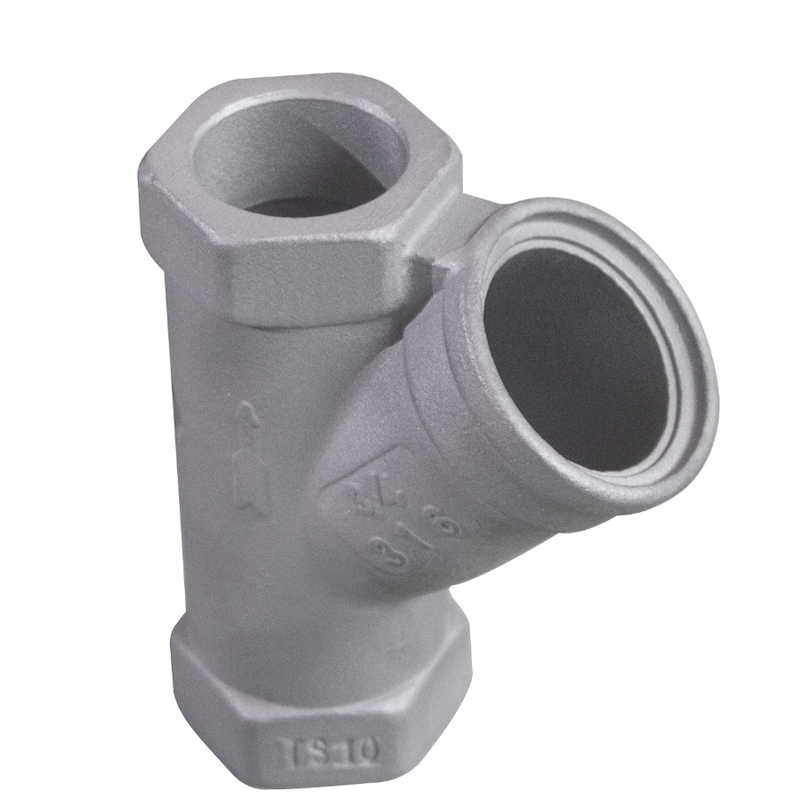
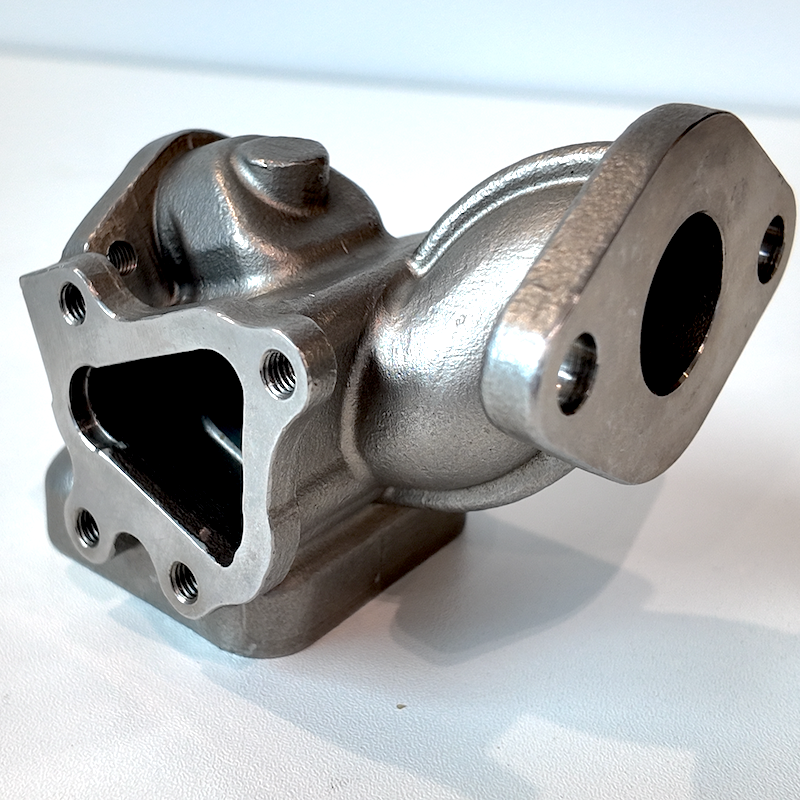
A tight tolerance steel foundry represents a specialized manufacturing facility that produces steel castings with exceptionally precise dimensions and minimal deviation from specified measurements. This type of foundry distinguishes itself through advanced casting processes that achieve dimensional accuracies far superior to conventional steel casting operations. The main function of a tight tolerance steel foundry involves creating complex steel components that meet stringent quality standards while reducing or eliminating the need for extensive post-casting machining operations. These facilities employ sophisticated molding techniques, premium quality steel alloys, and rigorous quality control protocols to ensure every casting conforms to exact specifications. The technological features include computer-aided design integration, automated pouring systems, controlled solidification environments, and precision measurement equipment that verifies dimensional accuracy throughout production. Modern tight tolerance steel foundries utilize investment casting, precision sand casting, and lost foam casting methods depending on component requirements. The manufacturing process incorporates real-time monitoring systems that track temperature, cooling rates, and material composition to maintain consistency across production runs. Applications for tight tolerance steel castings span numerous industries including aerospace, automotive, energy generation, medical equipment, defense systems, and industrial machinery. These castings serve critical functions where dimensional precision directly impacts performance, safety, and operational efficiency. Components produced include turbine housings, engine blocks, transmission cases, valve bodies, pump housings, structural brackets, and specialized tooling. The tight tolerance steel foundry capability proves particularly valuable for producing components with intricate internal passages, complex geometries, or integrated features that would be difficult or impossible to machine from solid stock. This manufacturing approach reduces material waste, shortens production timelines, and lowers overall component costs while delivering superior metallurgical properties and dimensional consistency that modern engineering applications demand.

New Product Recommendations

Choosing a tight tolerance steel foundry for your component manufacturing needs delivers substantial practical benefits that directly impact your bottom line and product performance. First and foremost, you receive parts that fit correctly the first time, eliminating costly rework and assembly delays that plague projects using conventional castings. The precision achieved means your components arrive ready for immediate use or require only minimal finishing operations, saving you significant machining time and expense. You gain access to complex shapes and integrated design features that would cost substantially more if produced through traditional machining methods, as the casting process creates intricate geometries in a single operation rather than requiring multiple setups and cutting procedures. Your production timeline shortens considerably because these foundries deliver near-net-shape components that bypass extensive machining queues, getting your products to market faster than competitors relying on traditional manufacturing routes. The material efficiency proves remarkable since casting to tight tolerances minimizes excess material that would otherwise become expensive scrap during machining, directly reducing your raw material costs and supporting sustainability goals. You benefit from superior metallurgical properties throughout the component because the controlled solidification process creates uniform grain structures and mechanical properties that machined parts cannot match, resulting in stronger, more reliable components. The repeatability offered ensures that every part in your production run maintains consistent dimensions and quality, crucial for assembly line efficiency and interchangeable component requirements. You eliminate the need to maintain large safety stock inventories because the predictable quality and dimensional consistency reduce rejection rates and warranty claims. Your design flexibility expands dramatically as engineers can specify features like internal cooling channels, lightweighting cavities, and integrated mounting points that maximize performance while minimizing weight and part count. The cost predictability improves your project budgeting since tight tolerance castings provide known costs without the uncertainty of variable machining times and tooling wear that affect traditional manufacturing methods. You also gain competitive advantages through faster product development cycles, as prototype castings can be produced quickly to validate designs before committing to full production tooling. The quality assurance protocols employed provide documented traceability and certification that satisfies stringent industry standards and customer requirements, protecting your reputation and ensuring compliance with regulatory frameworks.

Tips And Tricks

Selection And Application Scope Of Hardness Tester

11

May

Selection And Application Scope Of Hardness Tester

View More
Stainless Steel Castings for Architectural Posts

11

May

Stainless Steel Castings for Architectural Posts

View More
Stainless Steel Castings for Building Facade Systems

11

May

Stainless Steel Castings for Building Facade Systems

View More
Precision Stainless Steel Exhaust Manifold Casting Solution For Luxury Sedan - With Japanese First-Tier Car Brand

11

May

Precision Stainless Steel Exhaust Manifold Casting Solution For Luxury Sedan - With Japanese First-Tier Car Brand

View More

Get a Free Quote

Our representative will contact you soon.
Email
Name
Company Name
Message
0/1000

tight tolerance steel foundry

Exceptional Dimensional Accuracy Reduces Manufacturing Costs

Exceptional Dimensional Accuracy Reduces Manufacturing Costs

The defining characteristic of a tight tolerance steel foundry lies in its ability to produce castings with dimensional accuracies that approach machined part tolerances, typically achieving variations within plus or minus 0.005 to 0.015 inches depending on component size and complexity. This exceptional precision stems from carefully controlled processes that begin with high-quality pattern making using CNC machining or 3D printing technologies to create exact mold templates. The foundry employs advanced molding materials with minimal thermal expansion characteristics and superior dimensional stability throughout the heating and cooling cycles inherent in steel casting. Sophisticated computer modeling predicts and compensates for shrinkage patterns specific to different steel alloys and component geometries, allowing engineers to design tooling that accounts for these variables before the first casting is poured. The practical impact of this dimensional accuracy transforms your manufacturing economics by dramatically reducing secondary operations. Components that previously required extensive machining to achieve final dimensions now arrive requiring only light finishing or none at all, cutting your processing costs by sixty to eighty percent in many applications. Your production scheduling becomes more predictable since you eliminate machining bottlenecks that create workflow disruptions and deadline pressures. The assembly process improves significantly because parts fit together properly without requiring hand-fitting, shimming, or modification, reducing assembly labor hours and improving final product quality. Quality control becomes simpler and more reliable since incoming inspection can quickly verify that castings meet specifications without the variability introduced by multiple machining operations performed by different operators or facilities. The tight tolerance steel foundry capability also enables design optimization that reduces component weight while maintaining strength, as engineers can specify thinner wall sections with confidence that actual production parts will match design intent. This precision supports modern manufacturing philosophies like lean production and just-in-time inventory by delivering consistent parts that flow smoothly through assembly operations without quality holds or rework loops that disrupt efficiency.
Superior Metallurgical Properties Enhance Component Performance

Superior Metallurgical Properties Enhance Component Performance

A tight tolerance steel foundry delivers more than dimensional precision; it produces castings with metallurgical properties that meet or exceed wrought steel specifications through carefully controlled melting, pouring, and solidification processes. The foundry begins with premium quality steel alloys, often using virgin materials or carefully selected scrap to ensure chemical composition consistency without tramp elements that compromise properties. Advanced melting furnaces equipped with precise temperature control and chemical analysis systems allow metallurgists to fine-tune alloy composition to exact specifications, adjusting carbon, manganese, chromium, nickel, and other elements to achieve desired strength, toughness, and corrosion resistance. The pouring process employs controlled temperature ranges and filling rates that minimize turbulence and gas entrapment, producing sound castings free from porosity and inclusions that weaken conventional castings. Sophisticated gating and risering designs ensure directional solidification that feeds shrinkage and creates uniform grain structures throughout the component. Many tight tolerance steel foundries incorporate vacuum-assisted pouring or inert atmosphere protection to further enhance metal cleanliness and reduce oxidation. The controlled cooling protocols prevent thermal shock and manage transformation temperatures to develop optimal microstructures, often employing computer-monitored cooling chambers that regulate heat extraction rates. Post-casting heat treatments including normalizing, annealing, quenching, and tempering can be precisely specified and executed to achieve mechanical properties matching your application requirements. The practical benefits of these superior metallurgical properties include longer service life for components operating under demanding conditions, higher load-carrying capacity allowing design weight reduction, better fatigue resistance for cyclically loaded parts, and improved machinability when finish operations are required. Your product reliability increases substantially because the consistent metallurgical quality eliminates weak points and material variability that cause premature failures. Testing and certification capabilities including tensile testing, hardness verification, impact testing, and metallographic examination provide documented evidence that materials meet specifications, essential for critical applications in aerospace, medical, and energy sectors where material properties directly affect safety and performance.
Rapid Prototyping and Production Flexibility Accelerate Time to Market

Rapid Prototyping and Production Flexibility Accelerate Time to Market

Modern tight tolerance steel foundries offer remarkable flexibility in production volumes and timeline acceleration that traditional manufacturing methods cannot match, providing significant competitive advantages for companies developing new products or responding to market opportunities. The prototyping capabilities prove particularly valuable during product development phases when design iterations are frequent and speed matters. Using rapid tooling techniques including 3D-printed patterns, CNC-machined tooling, and expendable pattern processes, the tight tolerance steel foundry can produce prototype castings in weeks rather than the months required for permanent tooling development. This acceleration allows engineering teams to conduct physical testing and validation much earlier in development cycles, identifying and resolving design issues before committing to production tooling investments. The ability to produce small batches economically means you can conduct market testing or limited production runs to validate customer acceptance without the financial risk of large tooling expenditures and inventory commitments. As demand increases, the foundry scales production smoothly by transitioning to optimized production tooling while maintaining the dimensional consistency and metallurgical properties established during prototype phases. This scalability eliminates the quality variations and redesign work that often occur when transferring from prototype to production using different manufacturing methods. The production flexibility extends to accommodating engineering changes and design improvements without scrapping expensive tooling, as modifications can often be incorporated through pattern adjustments or insert replacements at modest cost. Your supply chain resilience improves because tight tolerance steel foundries typically maintain shorter lead times than traditional casting operations, allowing faster response to demand fluctuations and reducing inventory carrying costs. The foundry partnership model supports concurrent engineering approaches where manufacturing input influences design decisions early, optimizing components for both performance and producibility. This collaboration identifies opportunities to consolidate multiple machined parts into single castings, reduce assembly operations, and improve product reliability while lowering total manufacturing costs. Companies entering new markets or launching innovative products gain substantial advantages through the tight tolerance steel foundry relationship, compressing development timelines, reducing capital requirements, and minimizing technical risks that could delay product introduction or compromise competitive positioning in fast-moving market segments.

Get a Free Quote

Our representative will contact you soon.
Email
Name
Company Name
Message
0/1000