Precision Lost Wax Casting Parts - Complex Metal Components with Superior Quality

Get a Free Quote

Our representative will contact you soon.
Email
Name
Mobile
Company Name
Message
0/1000

precision lost wax casting parts

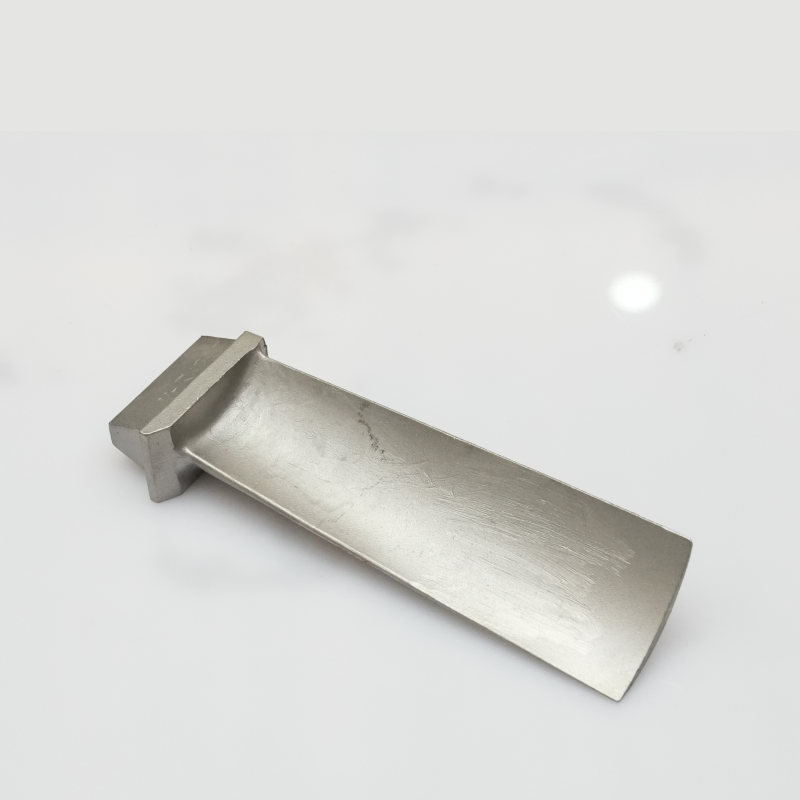
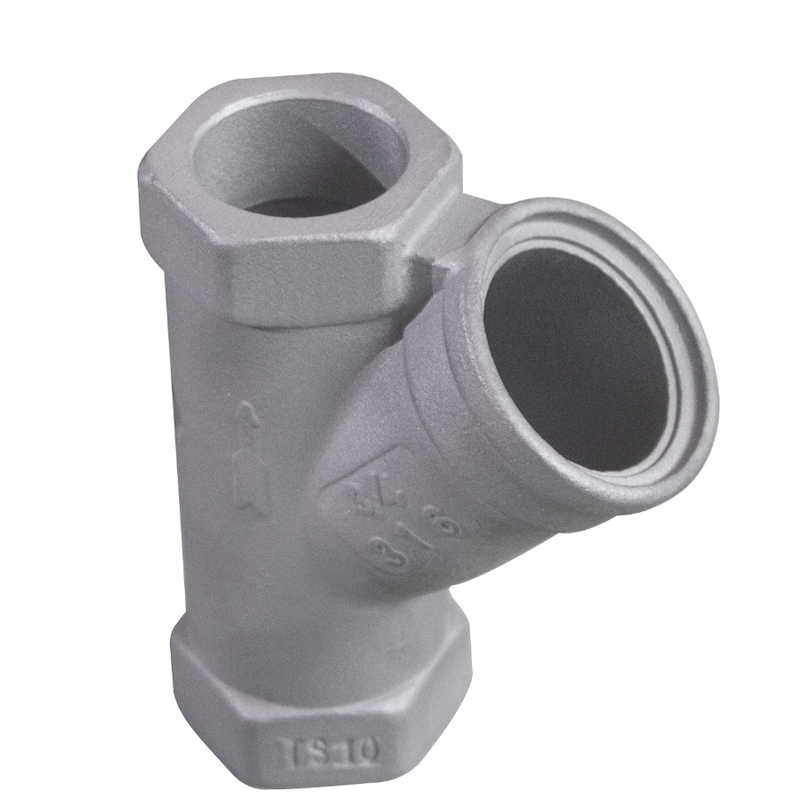
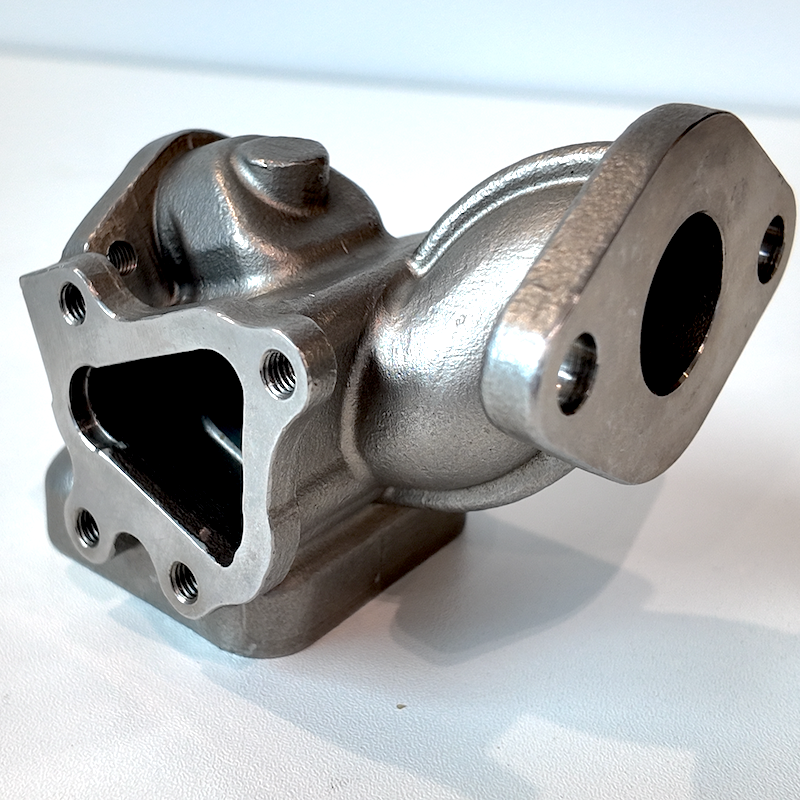
Precision lost wax casting parts represent a sophisticated manufacturing method that delivers exceptional quality components for diverse industrial applications. This ancient technique, modernized with contemporary technology, involves creating a wax pattern that perfectly replicates the desired final product. The wax model is then coated with ceramic material to form a mold shell. Once the ceramic hardens, the wax is melted away, leaving a hollow cavity that receives molten metal. This process enables manufacturers to produce precision lost wax casting parts with intricate geometries, smooth surface finishes, and tight dimensional tolerances. The main functions of precision lost wax casting parts include providing reliable components for mechanical assemblies, delivering structural integrity in demanding environments, and offering cost-effective solutions for complex shapes that would be difficult or expensive to machine. Technological features of this manufacturing process include the ability to cast virtually any metal alloy, from stainless steel and carbon steel to aluminum, bronze, and specialty alloys. The process accommodates wall thickness variations, internal passages, and complex external features without requiring extensive secondary operations. Precision lost wax casting parts find applications across numerous industries including aerospace, where they serve as turbine blades, structural brackets, and hydraulic components; automotive manufacturing, where they function as transmission parts, engine components, and suspension elements; medical devices, where biocompatible materials form surgical instruments and implant components; energy sector applications including valve bodies, pump housings, and connector fittings; and industrial equipment manufacturing, where they create tooling components, machine parts, and specialized hardware. The versatility of precision lost wax casting parts makes them indispensable for projects requiring dimensional accuracy, material consistency, and production flexibility, whether for prototype development or high-volume manufacturing runs.

Popular Products

Choosing precision lost wax casting parts for your manufacturing needs delivers multiple practical benefits that directly impact your bottom line and product quality. First, this process produces components with exceptional dimensional accuracy, typically achieving tolerances within plus or minus 0.005 inches, which means parts fit together perfectly during assembly without costly adjustments or rework. You receive components that meet exact specifications consistently, batch after batch, reducing quality control headaches and assembly line delays. Second, the smooth surface finish produced by precision lost wax casting parts eliminates or minimizes the need for expensive secondary machining operations. Components emerge from the casting process with surface qualities that often meet final requirements immediately, saving you time and money on additional processing steps. Third, design freedom stands as a major advantage because precision lost wax casting parts can incorporate complex features, undercuts, fine details, and intricate geometries that would be impossible or prohibitively expensive to achieve through machining or other manufacturing methods. You can consolidate multiple machined pieces into a single cast component, reducing assembly requirements, eliminating potential failure points, and lowering overall production costs. Fourth, material efficiency makes precision lost wax casting parts an environmentally responsible and economically smart choice, as the process generates minimal waste compared to subtractive manufacturing methods that cut away excess material. You pay only for the metal that becomes your finished part, not for chips and scraps destined for recycling. Fifth, the process accommodates both small prototype runs and large production volumes with equal effectiveness, providing flexibility as your project scales from development through full production. Sixth, precision lost wax casting parts can be produced from an extensive range of metal alloys, allowing you to select materials with specific properties such as corrosion resistance, high temperature performance, magnetic characteristics, or biocompatibility to match your exact application requirements. Seventh, the casting process creates parts with uniform material properties throughout, without the directional grain structures that can create weak points in machined components, resulting in more reliable performance under stress. Finally, lead times for precision lost wax casting parts remain competitive, especially for complex geometries, because the process eliminates multiple setup and machining operations, getting quality components into your hands faster so you can meet project deadlines and market windows.

Practical Tips

What Makes a Custom Lost Wax Casting Foundry Reliable for Precision Industrial Applications?

05

Jun

What Makes a Custom Lost Wax Casting Foundry Reliable for Precision Industrial Applications?

In precision industrial manufacturing, the reliability of a custom investment casting foundry is not a minor operational detail — it is a fundamental requirement that determines part integrity, production timelines, and ultimately, the safety o...
View More
How Does a Precision Investment Casting Manufacturer Ensure Consistent Quality Across Global Supply Chains?

05

Jun

How Does a Precision Investment Casting Manufacturer Ensure Consistent Quality Across Global Supply Chains?

In today's interconnected industrial landscape, sourcing complex metal components across international borders presents a formidable quality challenge. the manufacturer must navigate an intricate web of raw material sourcing, multi-stage production c...
View More
How Should Buyers Choose a Reliable Medium Temperature Wax Casting Service Provider?

26

Jun

How Should Buyers Choose a Reliable Medium Temperature Wax Casting Service Provider?

Selecting the right manufacturing partner for medium temperature wax casting is one of the most consequential decisions a procurement professional or product engineer can make. The process, which involves injecting wax into precision dies at carefull...
View More
Why Are Stainless Steel Investment Castings Preferred for Corrosion Resistant Applications?

26

Jun

Why Are Stainless Steel Investment Castings Preferred for Corrosion Resistant Applications?

In demanding industrial environments where moisture, chemicals, and extreme temperatures are constant threats, material selection is one of the most critical engineering decisions a manufacturer can make. Among the available manufacturing methods, st...
View More

Get a Free Quote

Our representative will contact you soon.
Email
Name
Mobile
Company Name
Message
0/1000

precision lost wax casting parts

Unmatched Design Complexity and Geometric Freedom

Unmatched Design Complexity and Geometric Freedom

Precision lost wax casting parts excel at producing components with intricate shapes, complex internal passages, and detailed features that challenge or defeat other manufacturing methods. This capability stems from the fundamental nature of the wax pattern creation process, where designers can incorporate virtually any geometric feature into the pattern without concern for tool access, cutting angles, or machining limitations. When your engineering team designs precision lost wax casting parts, they can include internal cooling channels, honeycomb structures for weight reduction, organic flowing shapes for optimal stress distribution, and fine surface details such as logos, part numbers, or functional textures, all cast directly into the component. This design freedom eliminates the need to compromise between ideal part geometry and manufacturing feasibility. Consider a component requiring internal fluid passages with multiple directional changes, such as a hydraulic manifold block. Traditional machining would require drilling intersecting holes from multiple angles, often necessitating plugs to seal unused passages, creating potential leak points and adding assembly steps. Precision lost wax casting parts solve this challenge elegantly by casting the passages directly into the component with smooth, flowing transitions exactly where fluid dynamics demand them, without any secondary drilling or plugging operations. The same advantage applies to external features like undercuts, which normally require complex multi-axis machining setups or multiple operations with special fixtures. Precision lost wax casting parts incorporate undercuts naturally during the pattern creation phase, with the ceramic shell accommodating these features and the shell removal process accessing areas that machining tools never could reach. This geometric capability also enables weight optimization through strategic material placement, casting thick sections only where strength demands while thinning walls in low-stress areas, creating lightweight components that maintain structural integrity. The process handles fine details with remarkable precision, casting features as small as 0.015 inches with sharp definition, allowing functional details like gear teeth, splines, or mounting bosses to be cast directly rather than machined later, saving significant production time and cost while ensuring perfect integration with the overall component geometry.
Superior Material Integrity and Mechanical Properties

Superior Material Integrity and Mechanical Properties

Precision lost wax casting parts deliver exceptional material integrity and mechanical properties that equal or surpass components produced through other manufacturing methods, providing reliability and performance that meet the most demanding application requirements. The casting process creates a uniform microstructure throughout the component, without the directional grain patterns that develop in wrought materials during rolling or forging processes. This uniformity means precision lost wax casting parts exhibit consistent mechanical properties in all directions, eliminating weak planes that might fail under complex loading conditions. The controlled solidification environment during casting allows metallurgists to optimize cooling rates for specific alloys, promoting desirable grain structures and minimizing defects such as porosity, inclusions, or segregation that could compromise performance. Modern foundries producing precision lost wax casting parts employ vacuum casting techniques that remove dissolved gases from molten metal before pouring, virtually eliminating gas porosity and producing components with density approaching theoretical maximum values for the alloy. This material quality makes precision lost wax casting parts suitable for critical applications where failure could have serious consequences, such as aerospace components, medical implants, or safety equipment. Heat treatment options further enhance the mechanical properties of precision lost wax casting parts, with processes like solution annealing, precipitation hardening, or stress relieving tailored to specific alloys and applications. Stainless steel precision lost wax casting parts can achieve tensile strengths exceeding 100,000 psi with excellent corrosion resistance, while aluminum alloy castings offer high strength-to-weight ratios ideal for aerospace and automotive applications, and specialty alloys provide unique properties like non-magnetic characteristics, extreme temperature performance, or biocompatibility for medical use. The homogeneous composition of precision lost wax casting parts, combined with controlled processing parameters, results in predictable and repeatable mechanical properties, allowing engineers to design with confidence knowing that material behavior will match specifications across all production units. Fatigue resistance, another critical performance factor, benefits from the smooth internal structure of precision lost wax casting parts, which lack the machining marks, tool chatter patterns, or subsurface damage that can initiate crack formation in components produced through cutting operations, resulting in longer service life in cyclically loaded applications.
Cost Efficiency Across Production Volumes and Complexity Levels

Cost Efficiency Across Production Volumes and Complexity Levels

Precision lost wax casting parts offer compelling cost advantages that become increasingly significant as component complexity increases, making this manufacturing method financially attractive for projects ranging from small prototype batches to high-volume production runs. The economic benefits begin with tooling costs, where precision lost wax casting parts require relatively inexpensive wax injection molds compared to the hardened steel dies needed for processes like die casting or the elaborate fixturing required for multi-axis machining of complex parts. This lower initial investment means projects reach profitability sooner and prototype development costs remain manageable even for intricate components. For precision lost wax casting parts with complex geometries, the cost comparison becomes even more favorable when you consider that a single casting operation produces a near-net-shape component that might otherwise require dozens of machining operations, multiple setups, specialized cutting tools, and extensive programming time. Each eliminated operation saves direct labor costs, reduces production time, minimizes work-in-process inventory, and decreases the likelihood of errors that could scrap expensive partially completed components. Material costs favor precision lost wax casting parts because the process uses only slightly more metal than the finished component weight, with sprues and gates representing minimal material addition that can be recycled back into the melting process. Contrast this with subtractive manufacturing, where complex parts might start as solid blocks with eighty percent of the material machined away into chips, representing significant wasted material cost even with recycling programs. The smooth surface finish of precision lost wax casting parts reduces or eliminates finishing operations like grinding, polishing, or coating, each of which adds cost, handling, and processing time. When your application requires multiple identical features, such as mounting holes, cooling fins, or reinforcing ribs, precision lost wax casting parts cast all features simultaneously, while machining would process each feature individually with cumulative time and cost. Quality costs also favor precision lost wax casting parts because the process produces consistent dimensions and properties with minimal variation, reducing inspection requirements, scrap rates, and warranty claims. Assembly cost savings emerge when precision lost wax casting parts consolidate what would otherwise be multiple machined and welded components into a single integrated casting, eliminating joining operations, reducing part count, improving reliability by removing potential failure points, and simplifying inventory management by reducing the number of individual items to track and stock.

Get a Free Quote

Our representative will contact you soon.
Email
Name
Mobile
Company Name
Message
0/1000