
 EN
EN
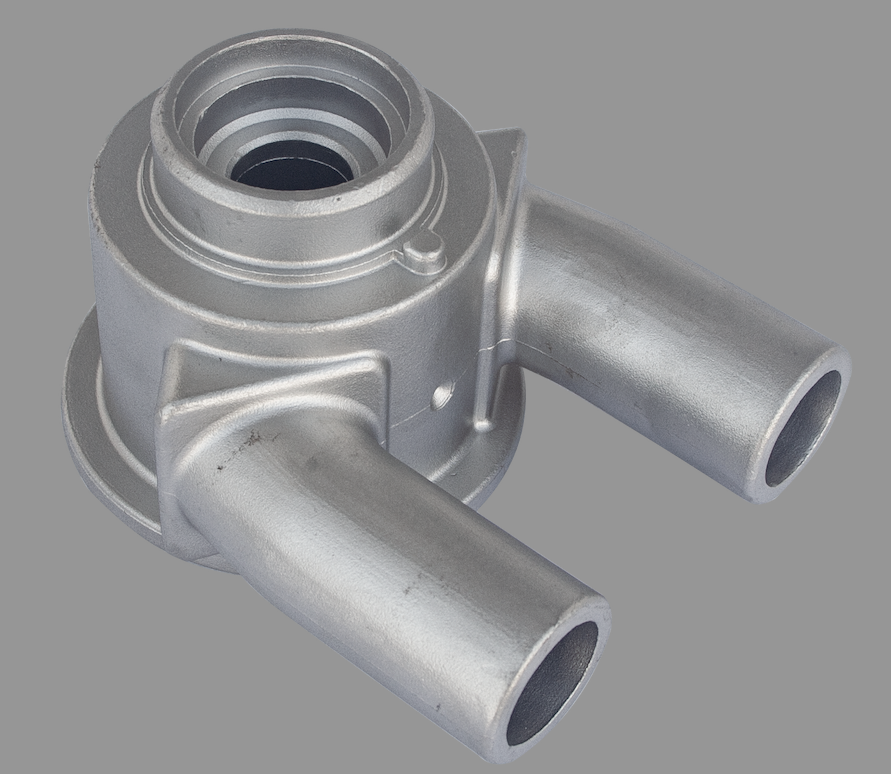
Selecting the optimal alloy for liquid cooling manifold castings requires balancing thermal efficiency, mechanical strength, corrosion resistance, and total lifecycle costs. Choosing an experienced investment casting manufacturer or china precision casting supplier ensures your manifold designs achieve pressure tightness and optimal microstructural density across demanding thermal cycles.
Material Performance Comparison Matrix
Material Category |
Primary Alloys / Grades |
Thermal Conductivity |
Density (Weight) |
Corrosion Resistance |
Best Application Context |
Aluminum Alloys |
A380, A356-T6, ADC12 |
Moderate–High (~96–160 W/m·K) |
Low (~2.7 g/cm³) |
Good (requires compatible inhibitors or anodizing) |
EV battery management, power electronics, data centers, weight-sensitive industrial automation |
Copper Alloys |
Pure Copper, Brass, Bronze |
Extremely High (~385–400 W/m·K) |
High (~8.9 g/cm³) |
Excellent in standard/inhibited water loops |
Ultra-high heat flux systems, industrial laser cooling, semiconductor manufacturing |
Stainless Steel |
304, 316L |
Low (~14–16 W/m·K) |
Moderate–High (~7.9 g/cm³) |
Superior (resists aggressive chemicals and deionized water) |
Food processing, chemical processing, pharmaceutical manufacturing, high-purity fluid loops |
Magnesium Alloys |
AZ91D, AM60B |
Moderate (~51–72 W/m·K) |
Extremely Low (~1.74 g/cm³) |
Low (requires advanced surface coatings) |
Advanced aerospace, mobile industrial gear, weight-critical EV platforms |
Application-Driven Selection Guide
1.High Volume & Weight-Sensitive Systems (Specify Aluminum)
Alloy Choice: A380 / ADC12 for high-volume die-cast manifolds; A356-T6 for higher structural strength and dynamic thermal cycling.
Design Consideration: Ensure coolant chemistry is buffered (pH 6.5–8.5) or apply internal coatings to suppress galvanic corrosion in mixed-metal loops when sourcing custom steel casting parts or aluminum manifolds.
2.High Heat Flux & Concentrated Loads (Specify Copper Alloys)
Alloy Choice: Cast brass or bronze for fluid distribution needing machinability and wear resistance; cast copper for direct thermal contact blocks.
Design Consideration: Factor in the ~3x weight penalty over aluminum. Avoid uninhibited high-velocity deionized water to prevent erosion-corrosion on these custom precision casting fabrication setups.
3.Corrosive or Hygienic Environments (Specify Stainless Steel)
Alloy Choice: Stainless steel investment casting (such as 316L) for aggressive media, deionized water, or washdown environments.
Design Consideration: Offset lower thermal conductivity by optimizing internal turbulators or utilizing hybrid designs (e.g., cast bodies with embedded stainless steel fluid tubes).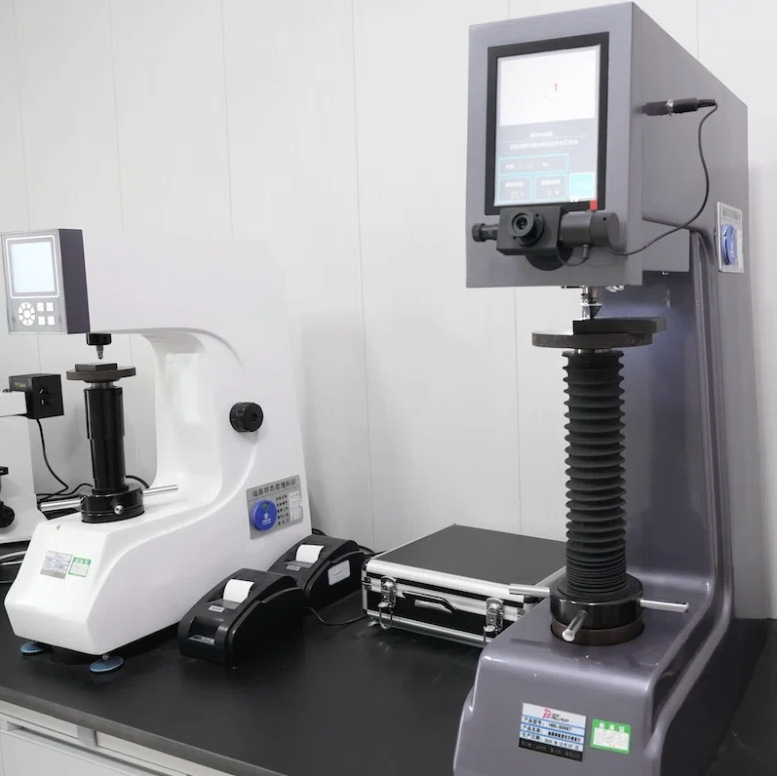
Inspecting the hardness of metal materials (such as aluminum alloys) used for liquid cooling manifold castings in industrial projects.
Key Manufacturing & Verification Steps
Porosity Control: Utilize vacuum-assisted die casting or low-pressure sand casting to minimize gas porosity, preventing micro-leaks under pressure spikes.
Leak Validation: Perform 100% helium mass spectrometry leak testing or hydro-pressure testing on all oem precision casting components before final integration.
Galvanic Isolation: Incorporate non-conductive isolation fittings or non-metallic spacers when joining aluminum manifolds to copper heat exchangers.