Stainless Steel Investment Casting Process - Precision Manufacturing Solutions

Get a Free Quote

Our representative will contact you soon.
Email
Name
Company Name
Message
0/1000

stainless steel investment casting process

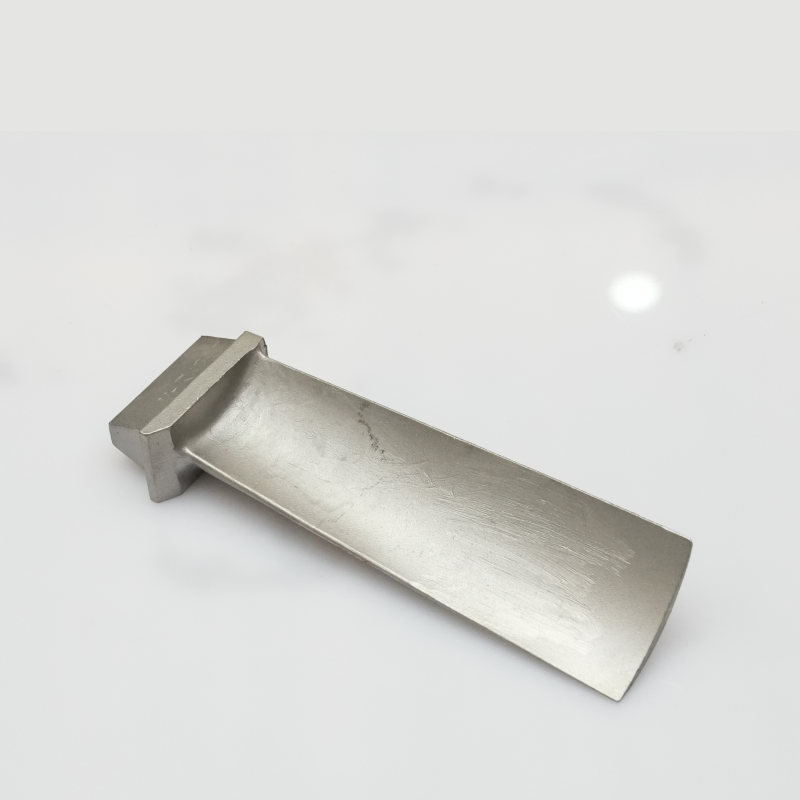
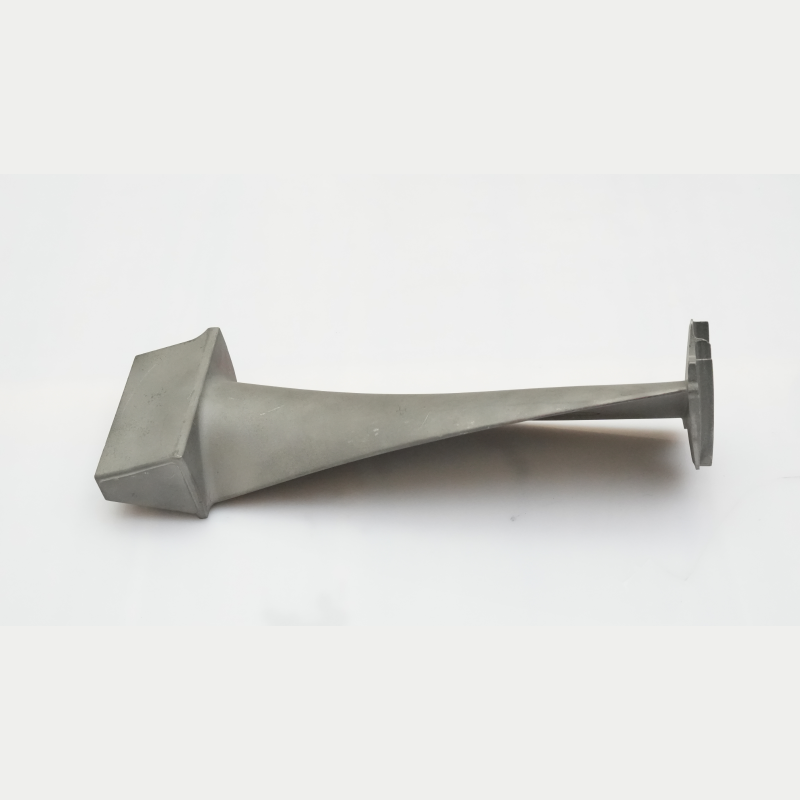
The stainless steel investment casting process represents a sophisticated manufacturing technique that transforms molten stainless steel into precision components with exceptional accuracy and surface quality. This centuries-old method, also known as lost-wax casting, has evolved into a modern industrial solution for producing complex metal parts that would be difficult or impossible to create through traditional machining methods. The stainless steel investment casting process begins with creating a detailed wax pattern that exactly replicates the desired final component. Multiple wax patterns are assembled onto a central sprue system, forming a tree-like structure that allows simultaneous casting of numerous parts. This assembly is then repeatedly dipped into a ceramic slurry and coated with fine refractory materials, building up a robust shell around the wax patterns. Once the ceramic shell reaches sufficient thickness and strength, it undergoes a heating process that melts away the wax, leaving behind a hollow ceramic mold. Molten stainless steel, heated to temperatures exceeding 1500 degrees Celsius, is poured into this cavity, filling every intricate detail of the mold. After solidification and cooling, the ceramic shell is broken away, revealing the cast stainless steel components. The stainless steel investment casting process excels in producing parts with complex geometries, thin walls, intricate internal passages, and tight tolerances that typically range from 0.003 to 0.005 inches per inch. This manufacturing method finds extensive applications across diverse industries including aerospace, medical devices, automotive, food processing, marine equipment, and industrial machinery. Components produced through this process include turbine blades, surgical instruments, pump housings, valve bodies, firearm components, and decorative architectural elements. The technological features of this process enable manufacturers to consolidate multiple parts into single castings, reduce material waste, minimize secondary machining operations, and achieve superior surface finishes directly from the mold. The versatility of working with various stainless steel alloys, from austenitic grades like 304 and 316 to martensitic and precipitation-hardening varieties, makes this process invaluable for applications requiring corrosion resistance, strength, and biocompatibility.

Popular Products

Choosing the stainless steel investment casting process delivers substantial practical benefits that directly impact your bottom line and product performance. This manufacturing approach saves you significant money by reducing material waste to minimal levels, as the process creates near-net-shape parts that require little additional machining. You eliminate the need to purchase oversized raw materials and cut away excess metal, which means more of your material budget goes into finished products rather than scrap bins. The process allows you to create incredibly complex shapes in a single piece, eliminating the need to design, manufacture, and assemble multiple components. This consolidation reduces your assembly time, lowers labor costs, and removes potential failure points where separate parts might come together. You gain design freedom that other manufacturing methods simply cannot match, enabling engineers to incorporate undercuts, internal cavities, complex curvatures, and fine details without worrying about tool access limitations that restrict machining or forging operations. The smooth surface finish produced directly from the casting process often eliminates or significantly reduces the need for expensive grinding, polishing, or finishing operations. Your parts come out of production looking professional and meeting aesthetic requirements without additional processing steps that consume time and resources. The dimensional accuracy inherent in this process means your components fit properly the first time, reducing rejection rates, rework costs, and customer complaints. You achieve consistent quality across production runs because each part is cast from the same master pattern, ensuring uniformity that becomes increasingly difficult to maintain with manual machining operations. The ability to work with a wide range of stainless steel alloys gives you flexibility to select materials that precisely match your application requirements for corrosion resistance, mechanical strength, temperature tolerance, and regulatory compliance. Medical device manufacturers particularly appreciate the biocompatibility of cast stainless steel components, while food processing companies value the sanitary properties and ease of cleaning. The process scales efficiently from prototype quantities to high-volume production runs, allowing you to test designs and market response before committing to large investments in tooling or inventory. Lead times remain competitive because pattern creation using modern methods like 3D printing has accelerated dramatically, letting you move from concept to production parts in weeks rather than months. Environmental considerations increasingly matter to businesses and consumers, and this process generates less waste, consumes less energy compared to extensive machining operations, and allows for complete recycling of any rejected castings. The structural integrity of cast components often exceeds that of welded assemblies because you create a homogeneous part without heat-affected zones or potential weld defects. These combined advantages make the stainless steel investment casting process a smart manufacturing choice that delivers tangible value through cost reduction, quality improvement, design innovation, and operational efficiency.

Practical Tips

Basic Principles Of Design Of Precision Casting Gating System

11

May

Basic Principles Of Design Of Precision Casting Gating System

View More
Stainless Steel Castings for Architectural Posts

11

May

Stainless Steel Castings for Architectural Posts

View More
Stainless Steel Castings for Building Facade Systems

11

May

Stainless Steel Castings for Building Facade Systems

View More
Precision Stainless Steel Exhaust Manifold Casting Solution For Luxury Sedan - With Japanese First-Tier Car Brand

11

May

Precision Stainless Steel Exhaust Manifold Casting Solution For Luxury Sedan - With Japanese First-Tier Car Brand

View More

Get a Free Quote

Our representative will contact you soon.
Email
Name
Company Name
Message
0/1000

stainless steel investment casting process

Exceptional Design Flexibility for Complex Geometries

Exceptional Design Flexibility for Complex Geometries

The stainless steel investment casting process stands apart from conventional manufacturing methods by offering unparalleled design flexibility that empowers engineers and product developers to push the boundaries of what is possible in metal component design. Traditional machining approaches impose significant constraints because cutting tools must physically access all surfaces being shaped, limiting designs to relatively simple geometries with straightforward tool paths. Forging processes similarly restrict complexity because metal must flow within die cavities that can be opened and closed, eliminating the possibility of creating truly enclosed internal features. In contrast, this casting method builds a ceramic mold around a disposable pattern, then destroys that mold to extract the finished part, which fundamentally removes the geometric limitations that plague other techniques. Designers can incorporate internal cooling channels, honeycomb structures, variable wall thicknesses, sharp internal corners, intricate surface textures, and organic shapes that would require dozens of machining operations or prove completely impossible to manufacture through subtractive methods. This capability transforms how products are engineered, enabling optimization for performance rather than manufacturing convenience. Aerospace applications particularly benefit from this design freedom, as engineers create turbine blades with sophisticated internal cooling passages that improve engine efficiency and extend component life in extreme operating environments. Medical instrument manufacturers utilize these capabilities to produce surgical tools with ergonomic handles, precise working surfaces, and integrated features that enhance functionality while reducing part count. The stainless steel investment casting process accommodates undercuts and reverse draft angles that would prevent part removal from traditional molds, opening creative possibilities for locking mechanisms, snap-fit features, and aesthetic details. Wall thicknesses can vary dramatically within a single component, transitioning from heavy structural sections to delicate thin-walled areas measuring less than one millimeter, all within the same casting. This variability allows engineers to place material exactly where strength is needed while minimizing weight in non-critical areas, an approach that proves essential in weight-sensitive applications like aircraft components, racing equipment, and portable devices. The surface finish emerging directly from the casting process captures fine details from the original pattern, reproducing textures, logos, part numbers, and decorative elements without secondary operations. Companies leverage this capability to create branded components, incorporate assembly instructions directly into parts, and achieve aesthetic qualities that enhance product appeal. The economic implications of this design flexibility extend beyond initial manufacturing, as simplified assemblies with fewer fasteners reduce inventory complexity, streamline quality control, and lower warranty costs associated with mechanical failures at joint interfaces.
Superior Material Properties and Performance Characteristics

Superior Material Properties and Performance Characteristics

Components produced through the stainless steel investment casting process exhibit material properties and performance characteristics that meet or exceed the demanding requirements of critical applications across industries where failure is not an option. The metallurgical integrity achieved through this manufacturing method results from carefully controlled solidification that occurs within the ceramic mold, creating a fine-grained microstructure with uniform composition throughout the entire component. Unlike welded assemblies where heat-affected zones create regions of varying hardness, grain structure, and potential weakness, cast components maintain consistent properties from surface to core, eliminating microstructural discontinuities that serve as initiation sites for cracks and fatigue failures. The stainless steel investment casting process accommodates an extensive range of alloy compositions, including austenitic stainless steels that offer excellent corrosion resistance and cryogenic toughness, martensitic grades that provide high strength and hardness, ferritic varieties with superior stress corrosion cracking resistance, and precipitation-hardening alloys that combine strength with corrosion protection. This material versatility allows engineers to precisely match component properties to application demands, whether facing saltwater exposure in marine environments, aggressive chemicals in processing equipment, extreme temperatures in power generation, or stringent biocompatibility requirements in medical implants. The homogeneous structure of cast components provides isotropic mechanical properties, meaning strength and ductility remain consistent regardless of loading direction, unlike forged or machined parts where material properties follow the grain flow direction and may exhibit weakness across grain boundaries. This characteristic proves particularly valuable in components experiencing complex stress states or cyclic loading from multiple directions, as engineers can predict performance with confidence without accounting for directional property variations. Surface quality emerging from the casting process includes a naturally formed oxide layer that enhances corrosion resistance, while the smooth as-cast finish reduces stress concentrations that accelerate crack propagation and premature failure. The ability to cast thin sections allows designers to reduce component weight without sacrificing structural integrity, achieving strength-to-weight ratios that rival or surpass those of machined parts while eliminating the work hardening that occurs during cutting operations and may introduce residual stresses. Quality control throughout the stainless steel investment casting process includes spectrographic analysis verifying alloy composition, mechanical testing confirming strength and ductility, and non-destructive examination detecting any internal defects, ensuring that delivered components meet specifications and perform reliably throughout their service life. Industries with stringent certification requirements, including aerospace, nuclear, and medical sectors, rely on the documented traceability and proven performance history of investment cast stainless steel components in applications where human safety depends on absolute reliability.
Cost Efficiency Through Reduced Waste and Minimal Secondary Operations

Cost Efficiency Through Reduced Waste and Minimal Secondary Operations

The economic advantages inherent in the stainless steel investment casting process extend far beyond simple piece price comparisons, delivering comprehensive cost savings that accumulate throughout the entire product lifecycle from initial development through production, assembly, and field service. Material utilization efficiency stands as one of the most compelling economic benefits, as this casting method achieves near-net-shape production that minimizes the gap between raw material input and finished component output. Traditional machining starts with oversized bar stock, plate, or forgings, then removes substantial material through cutting operations that convert expensive stainless steel into worthless chips requiring disposal or recycling at a fraction of original cost. The investment casting approach instead uses material efficiently by forming components very close to final dimensions, with typical machining allowances of only 0.010 to 0.030 inches on critical surfaces. This efficiency becomes increasingly significant as component size grows and material costs rise, with complex parts potentially saving 40 to 60 percent of material compared to machined alternatives. The reduction in secondary machining operations translates directly into lower manufacturing costs through decreased machine time, reduced tooling wear, lower energy consumption, and minimized labor requirements. Many cast components require only minor finish machining on sealing surfaces or precision bores, while non-critical areas remain in the as-cast condition, eliminating hours of unnecessary machining that adds cost without improving functionality. The stainless steel investment casting process enables part consolidation strategies that combine multiple machined components into a single casting, eliminating fabrication steps, reducing purchased part counts, simplifying inventory management, and removing assembly operations that consume labor and introduce quality variability. A pump housing that might require welding together five machined pieces can be produced as a single casting, eliminating weld preparation, fixturing, welding labor, post-weld heat treatment, and inspection of weld integrity. Tooling costs for investment casting remain moderate compared to forging dies or complex machining fixtures, particularly for low to medium production volumes where the ability to produce multiple parts per mold tree amortizes pattern costs across many components. The dimensional consistency achieved through casting from master patterns reduces inspection requirements and rejection rates, lowering quality control costs and minimizing expensive scrap of partially completed components. Setup time advantages emerge because each mold tree produces multiple parts simultaneously, increasing effective production capacity without proportional increases in equipment or labor. The flexibility to adjust production volumes without significant tooling changes accommodates market demand fluctuations, preventing excess inventory carrying costs during slow periods while enabling rapid response to increased orders. Long-term cost benefits include extended service life of components due to superior material properties, reduced warranty claims from field failures, and lower maintenance costs as durable cast parts resist wear and corrosion better than fabricated alternatives. These cumulative economic advantages make the stainless steel investment casting process a financially prudent manufacturing choice that optimizes total cost of ownership rather than focusing solely on initial piece price.

Get a Free Quote

Our representative will contact you soon.
Email
Name
Company Name
Message
0/1000