
 EN
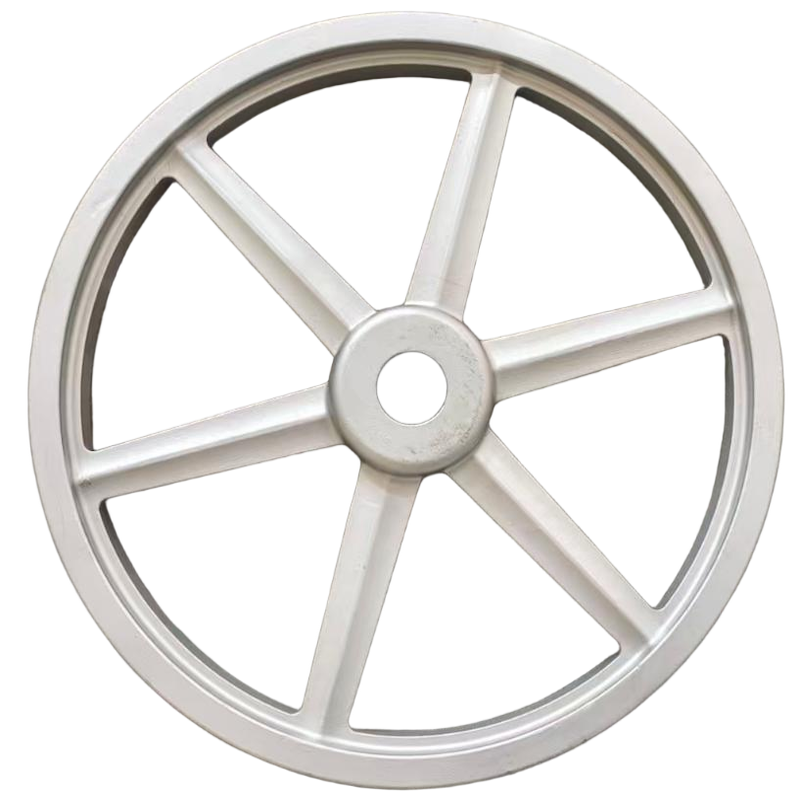
In demanding industrial environments, components must do far more than simply fit into a machine — they must endure relentless forces, friction, heat, and cyclic stress without failing. mechanical transmission castings are engineered precisely for this purpose, providing the structural backbone that keeps power transmission systems operating reliably under the most punishing conditions. From heavy-duty gearboxes to high-speed driveshafts and crankshaft assemblies, cast components form the foundation of load-bearing and wear-critical applications across countless industries.
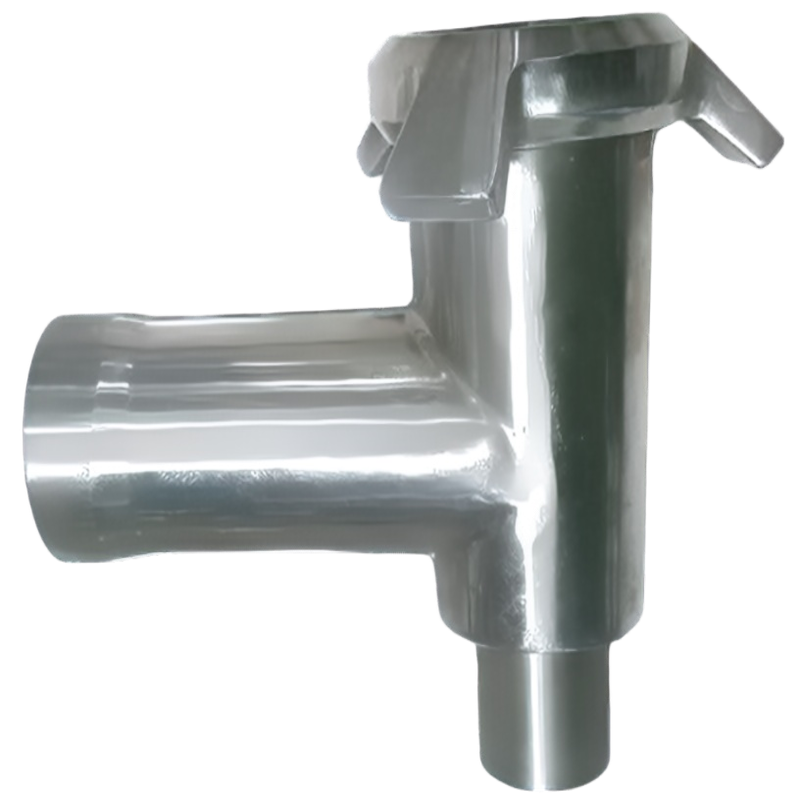
Understanding how mechanical transmission castings support high-load and wear-resistant applications requires a close look at material selection, casting process engineering, microstructural design, and the relationship between component geometry and in-service performance. This article explores the technical and practical mechanisms that make these castings uniquely suited to the world's most demanding power transmission environments, helping engineers and procurement specialists make more informed design and sourcing decisions.
The Role of Mechanical Transmission Castings in Power Transmission Systems
What Makes Transmission Components Structurally Demanding
Power transmission systems are subjected to a complex combination of mechanical loads — including tensile, compressive, torsional, and bending stresses — that alternate rapidly during operation. These dynamic loading conditions mean that mechanical transmission castings must exhibit not only high static strength but also excellent fatigue resistance over millions of operating cycles. A single weak point in the microstructure or geometry can initiate crack propagation that leads to catastrophic failure.
Beyond fatigue, transmission components regularly experience sliding and rolling contact against mating surfaces, which introduces wear as a primary failure mode. The tribological environment inside a gearbox, for instance, demands that cast housings and gear carriers resist abrasive and adhesive wear without dimensional degradation. Mechanical transmission castings that cannot maintain tolerances under these conditions will cause noise, vibration, and ultimately premature system failure.
Thermal loads further complicate the picture. Friction-generated heat combined with thermal cycles from startup and shutdown creates expansion and contraction stresses within the casting. Materials and process parameters must be selected with thermal stability in mind, ensuring that mechanical transmission castings retain their mechanical properties across a broad operating temperature range.
Key Application Categories for High-Load Cast Transmission Parts
Mechanical transmission castings appear in a wide range of high-load applications. In automotive and heavy transport, they include crankshaft main bearing caps, differential housings, gearbox cases, and torque converter covers — all of which manage enormous power throughput in compact packages. In industrial machinery, cast components form the housings of planetary gearboxes, worm reducers, and parallel-shaft drives that power conveyors, mills, and presses.
Construction equipment and mining machinery represent some of the harshest operating environments for mechanical transmission castings. Track drive housings, swing drive assemblies, and final drive carriers must handle shock loads, abrasive contamination, and constant vibration without distortion. The wall thickness, rib geometry, and alloy composition of castings in these segments are specifically engineered to absorb impact while minimizing weight.
Wind energy and marine propulsion systems also depend heavily on mechanical transmission castings. Nacelle gearbox housings and marine gearbox cases must deliver decades of reliable service in environments where maintenance access is limited and failure consequences are severe. These applications reinforce why material integrity, dimensional accuracy, and process control are non-negotiable requirements in casting production.
Material Selection and Microstructural Engineering for Wear Resistance
Alloy Families Commonly Used in Transmission Castings
The performance of mechanical transmission castings begins with material selection. Grey cast iron remains widely used for gearbox housings and bearing housings due to its excellent damping capacity, good machinability, and sufficient compressive strength for many moderate-load applications. The graphite flake structure in grey iron absorbs vibrational energy, which is valuable in reducing noise transmission through gearbox cases.
Ductile iron, also known as nodular or spheroidal graphite iron, represents a significant upgrade in terms of tensile strength, elongation, and impact resistance. By converting graphite morphology from flakes to spheroids through magnesium treatment, ductile iron achieves mechanical properties that approach low-carbon steel. Mechanical transmission castings made from grades such as GGG-50 through GGG-70 are routinely used in highly stressed carrier plates, housings, and crankshaft components where fatigue life is critical.
Alloyed cast steels and austempered ductile iron (ADI) push performance even further. ADI combines high strength, good toughness, and excellent wear resistance in a single material system, making it attractive for gears and cam follower components where surface wear is the primary concern. Steel castings are preferred in the most severely loaded structural components, offering tensile strengths exceeding 700 MPa with good ductility and weldability for repair applications.
Microstructure Control and Its Impact on Wear Performance
For mechanical transmission castings, achieving the correct microstructure is just as important as selecting the right alloy. The distribution, size, and morphology of carbides, pearlite, and graphite phases all directly influence hardness, toughness, and wear resistance. A casting with an inconsistent microstructure — caused by uncontrolled cooling rates or poor inoculation practice — will exhibit variable hardness across its cross-section, leading to uneven wear patterns in service.
Controlled solidification through optimized mold design and cooling rate management helps ensure that mechanical transmission castings achieve a uniform microstructure throughout their walls. Foundries producing high-performance transmission parts invest significantly in computer-aided solidification simulation to predict hot spot formation, shrinkage porosity, and secondary dendrite arm spacing — all of which affect the final mechanical properties of the casting.
Post-cast heat treatment further refines microstructure. Normalizing, quenching, and tempering sequences for steel castings, or austempering cycles for ADI components, transform the as-cast microstructure into one optimized for the specific load and wear regime of the application. These thermal treatments are not optional finishing steps — they are integral to the design of mechanical transmission castings intended for high-load service.
Casting Process Selection and Its Effect on Structural Integrity
Sand Casting Versus Investment Casting for Transmission Parts
The choice of casting process has a direct bearing on the structural integrity and surface quality of mechanical transmission castings. Sand casting, in both green sand and chemically bonded varieties, is the most widely used process for medium and large transmission housings. Its flexibility in accommodating complex internal geometries — through the use of cores — makes it ideal for gearbox cases with integrated oil channels, bearing bores, and mounting faces.
Investment casting, or lost-wax casting, offers superior dimensional accuracy and surface finish for smaller, more intricate transmission components. Parts produced by investment casting require less machining allowance, which is advantageous when dimensional precision is critical and material removal would intersect with optimally stressed regions of the casting. For components such as planetary carriers, valve bodies, and small gear housings, investment casting delivers the tightest tolerances in the mechanical transmission castings category.
Shell molding and cold-box processes occupy a middle ground, providing better surface finish and dimensional repeatability than green sand casting while remaining economically viable at medium production volumes. These processes are increasingly specified for mechanical transmission castings in automotive and agricultural equipment sectors where high volumes demand process consistency and tight dimensional envelopes.
Porosity Control and Non-Destructive Testing in Load-Bearing Castings
Porosity is the most critical quality concern for mechanical transmission castings in high-load applications. Gas porosity, shrinkage porosity, and microporosity can all reduce effective load-bearing cross-section, create stress concentration sites, and provide initiation points for fatigue cracking. Advanced gating and risering system design — validated through simulation — is the primary tool for minimizing shrinkage porosity in heavy-section castings.
Non-destructive testing (NDT) protocols are essential for ensuring that mechanical transmission castings shipped to customers meet internal soundness requirements. Radiographic testing (RT) is the gold standard for detecting volumetric defects such as shrinkage and gas porosity, while ultrasonic testing (UT) is preferred for detecting planar defects and delaminations in thicker sections. Magnetic particle inspection (MPI) is routinely applied to ferromagnetic castings to detect surface and near-surface cracks after machining.
Acceptance criteria for NDT are typically defined by international standards such as EN 1369, EN 1371, or ASTM E446, and must be specified clearly in customer drawings and purchase orders. Foundries producing mechanical transmission castings for critical applications maintain rigorous NDT qualification programs and traceability systems that allow any quality anomaly to be traced back to the specific melt charge, mold lot, and heat treatment batch.
Design Engineering Principles That Maximize Load and Wear Performance
Geometric Design Features That Enhance Load Distribution
The geometry of mechanical transmission castings is as important as their material properties. Ribs, bosses, and wall thickness transitions must be designed to transfer loads efficiently without creating stress concentrations. Finite element analysis (FEA) is now standard practice in the design of complex transmission housings, allowing engineers to identify high-stress zones and optimize geometry before committing to tooling investment.
Fillets and radii at section transitions are critical features in mechanical transmission castings. Sharp corners act as geometric stress risers that amplify local stress values and dramatically reduce fatigue life. Industry experience and FEA studies consistently show that generous internal radii at rib-to-wall junctions can reduce peak stress concentrations by 30 to 50 percent, directly translating into longer component service life under cyclic loading.
Draft angles, parting line placement, and core design must all be considered early in the casting design process to ensure that the finished geometry accurately matches the intended load-path design. Mechanical transmission castings that are redesigned late in the process to accommodate tooling constraints often end up with geometric compromises that reduce structural performance — a costly outcome that proper design-for-casting practices help prevent.
Surface Treatment and Coating Technologies for Enhanced Wear Life
Even the most carefully designed and produced mechanical transmission castings can benefit from surface treatment to extend wear life in aggressive tribological environments. Case hardening processes — including carburizing, nitriding, and induction hardening — create a hard, wear-resistant surface layer over a tough, ductile core. This combination is ideal for components such as gear carriers and cam lobes that experience concentrated contact stresses on their surfaces while requiring impact toughness in their bulk material.
Thermal spray coatings, such as high-velocity oxygen fuel (HVOF) tungsten carbide or chromium carbide deposits, can be applied to bearing journals and sealing surfaces of mechanical transmission castings to provide extreme wear resistance where base metal properties alone are insufficient. These coatings are particularly valuable in refurbishment scenarios, where worn surfaces on otherwise sound castings can be restored to original dimensions and performance.
Shot peening is another widely used surface treatment for mechanical transmission castings subject to fatigue loading. By inducing a layer of compressive residual stress at the surface, shot peening delays fatigue crack initiation under cyclic bending and torsion loads. Combined with appropriate alloy selection and microstructure control, surface treatments allow mechanical transmission castings to meet performance targets that would be impossible to achieve through material design alone.
Quality Assurance and Long-Term Reliability of Transmission Castings
Process Control Systems in High-Performance Casting Foundries
Consistency in production is what separates reliable mechanical transmission castings from those that pass initial inspection but fail prematurely in service. Leading foundries implement statistical process control (SPC) systems that monitor critical process variables — including metal chemistry, pouring temperature, mold hardness, and cooling time — in real time. Deviations from control limits trigger immediate corrective action before non-conforming product reaches downstream operations.
Melt chemistry control is particularly critical for mechanical transmission castings. Spectrometric analysis of each heat ensures that carbon equivalent, silicon, manganese, and alloying element levels fall within the narrow windows needed to achieve the target microstructure after solidification and heat treatment. Even small deviations in magnesium content in ductile iron production can shift nodularity from acceptable to deficient, with direct consequences for elongation and impact toughness.
Dimensional inspection using coordinate measuring machines (CMM) verifies that critical bore diameters, bearing seat locations, and mounting face flatness of mechanical transmission castings meet drawing tolerances. First-article inspection reports (FAIR) are typically required by automotive and industrial OEM customers before production approval, providing documented evidence that the casting process can consistently deliver parts within specification.
Lifecycle Considerations and Maintenance Planning for Cast Transmission Components
The total cost of ownership for mechanical transmission castings extends well beyond the initial purchase price. Engineers and maintenance planners must account for the expected service life of castings under specific load and environmental conditions, the availability of replacement parts, and the consequences of unplanned downtime if a casting fails in service. Specifying castings with appropriate safety factors and confirmed material certifications is the foundation of responsible maintenance planning.
Condition monitoring technologies, including vibration analysis, oil debris monitoring, and thermographic inspection, can detect the early signs of wear and fatigue in mechanical transmission castings before failure occurs. By integrating these monitoring approaches into planned maintenance schedules, plant operators can extend the useful life of transmission assemblies and avoid the expensive consequences of sudden mechanical failure.
When mechanical transmission castings do reach the end of their service life, repair welding and dimensional restoration through machining and thermal spray can often extend component life at a fraction of replacement cost. Foundries and machining service providers with expertise in transmission components can assess worn parts, define repair scope, and return components to service with validated quality — a valuable option in industries where lead times for new castings are measured in weeks or months.
FAQ
What materials are most commonly used in mechanical transmission castings for high-load applications?
Ductile iron, alloyed cast steel, and austempered ductile iron (ADI) are the most commonly specified materials for mechanical transmission castings in high-load applications. Ductile iron grades offer an excellent balance of strength, ductility, and cost-effectiveness, while cast steels are chosen when maximum tensile strength and weldability are required. ADI is increasingly used where superior surface wear resistance combined with high core toughness is the primary design driver.
How does porosity affect the performance of mechanical transmission castings?
Porosity reduces the effective load-bearing cross-section of mechanical transmission castings and acts as a stress concentration site that accelerates fatigue crack initiation. Even small shrinkage or gas pores in highly stressed regions can dramatically reduce the fatigue life of a component. This is why rigorous NDT protocols — including radiographic and ultrasonic testing — are mandatory quality gates for transmission castings intended for demanding service environments.
Can surface treatments improve the wear resistance of mechanical transmission castings?
Yes, surface treatments significantly enhance the wear resistance of mechanical transmission castings without compromising bulk toughness. Nitriding, induction hardening, HVOF thermal spray coatings, and shot peening are all proven techniques that extend wear life, delay fatigue crack initiation, and restore worn surfaces to original dimensions. The appropriate treatment depends on the specific wear mechanism — whether abrasive, adhesive, or fatigue-driven — and the base material of the casting.
How should engineers specify mechanical transmission castings to ensure dimensional consistency in production?
Engineers should specify mechanical transmission castings with clearly defined dimensional tolerances, material grade and heat treatment requirements, NDT acceptance criteria referenced to recognized standards, and requirements for first-article inspection reports. Partnering with foundries that operate certified quality management systems and use CMM-based dimensional inspection helps ensure that production castings consistently meet drawing requirements throughout the supply program.
Table of Contents
- The Role of Mechanical Transmission Castings in Power Transmission Systems
- Material Selection and Microstructural Engineering for Wear Resistance
- Casting Process Selection and Its Effect on Structural Integrity
- Design Engineering Principles That Maximize Load and Wear Performance
- Quality Assurance and Long-Term Reliability of Transmission Castings
-
FAQ
- What materials are most commonly used in mechanical transmission castings for high-load applications?
- How does porosity affect the performance of mechanical transmission castings?
- Can surface treatments improve the wear resistance of mechanical transmission castings?
- How should engineers specify mechanical transmission castings to ensure dimensional consistency in production?